
Chef Juliette
Mayonnaise de Volaille
Cold roast chicken, ciseled lettuce, and a shining coat of homemade mayonnaise, arranged with capers, olives, anchovies, eggs, and lettuce hearts, then tossed at the table as the canon intends.
A cooking platform built around craft, culture, and the stories behind what we eat.

Created by Chef Juliette
Based on No. 2006, Salade à la Flamande, from Le Guide Culinaire (1907) by Auguste Escoffier
Half crisp endive, one quarter potato, then mellow baked onion and cured herring: a northern composed salad whose exact proportions make a modest weeknight bowl taste deliberate and complete.
Salade à la Flamande (Flemish-style composed salad) teaches proportion. Endive must make half the bowl, potato one quarter, while baked onion and herring share the final quarter. Before you touch a pan, know the one true thing: the onion bakes inside its skin, where the heat softens its bite and develops sweetness without letting it outshout the fish.
The original entry assumed brigade quantities and a cold larder where cooked potatoes and baked onions waited for service. It needed no saucier, stockpot, or salamander, only prepared mise en place and a cook who understood the ratio. At home, one onion bakes while two potatoes simmer, then everything cools before cutting. The ready-to-mix weights preserve the original proportions exactly, scaled for four. One cook, one stove, one evening.
The finished Salade à la Flamande is crisp, yielding, salty, sweet, and sharply dressed, with chervil lifting the deep northern flavors. Its brigade scaffolding was advance preparation, and that can go. The baked onion, coarse julienne, and exact proportions are the dish, so they stay. Cool the onion and potato completely before cutting; warmth wilts the endive and makes the potato crumble, and that is the step that matters most.
Salade à la Flamande belongs to French Flanders and the tables of the Nord, where endive is called chicon and potatoes, onions, and preserved herring form a natural cold-weather larder. Household cooks carried these ingredients into the formal repertoire as a salade composée, a composed salad governed by balance rather than decoration. Baking the onion in its skin is essential northern practicality: it mellows the onion while preserving enough character to stand beside cured fish.
Quantity
4 medium, trimmed to 4½ cups (14 oz / 400 g)
cut julienne-fashion into coarse matchsticks
Quantity
2 medium (about 9 oz / 250 g raw), to yield 1½ cups (7 oz / 200 g) cooked and peeled
cut julienne-fashion into coarse matchsticks
Quantity
1 medium (about 5½ oz / 155 g raw), to yield ⅔ cup (3½ oz / 100 g) baked and peeled
chopped
Quantity
⅔ cup (3½ oz / 100 g)
drained and diced
Quantity
3 tablespoons (45 ml / 41 g)
Quantity
1 tablespoon (15 ml / 15 g)
Quantity
2 tablespoons (30 ml / 8 g)
finely chopped
Quantity
1 tablespoon (15 ml / 3 g)
finely chopped
| Ingredient | Quantity |
|---|---|
| Belgian endives (chicons)cut julienne-fashion into coarse matchsticks | 4 medium, trimmed to 4½ cups (14 oz / 400 g) |
| waxy potatoescut julienne-fashion into coarse matchsticks | 2 medium (about 9 oz / 250 g raw), to yield 1½ cups (7 oz / 200 g) cooked and peeled |
| yellow onionchopped | 1 medium (about 5½ oz / 155 g raw), to yield ⅔ cup (3½ oz / 100 g) baked and peeled |
| ready-to-eat salt-cured herring filletsdrained and diced | ⅔ cup (3½ oz / 100 g) |
| neutral oil | 3 tablespoons (45 ml / 41 g) |
| white wine vinegar | 1 tablespoon (15 ml / 15 g) |
| flat-leaf parsleyfinely chopped | 2 tablespoons (30 ml / 8 g) |
| fresh chervilfinely chopped | 1 tablespoon (15 ml / 3 g) |
Heat the oven to 400°F (200°C). Leave the onion whole and unpeeled, set it in a small baking dish, and bake for 45 to 55 minutes, until it yields gently under tongs and a thin knife passes through the center without resistance. The skin acts as its own little cocotte, concentrating sweetness without browning the flesh hard. If the skin splits, wrap the onion loosely in foil and finish baking; the flavor remains safely inside.
While the onion bakes, put the unpeeled potatoes in a small saucepan and cover them with cold water. Bring to a gentle simmer and cook for 18 to 25 minutes, until a knife enters with slight resistance at the center. Drain immediately. A hard boil or excessive cooking makes the flesh waterlogged, and waterlogged potato will not hold a julienne.
Let the potatoes and baked onion cool completely, then chill them for 20 minutes if the kitchen is warm. Peel both. Weigh out 7 ounces (200 g) of potato and 3½ ounces (100 g) of baked onion so the original proportions remain intact. Taste a corner of the herring; if it is fiercely salty, soak the fillets in cold water for 10 minutes, drain, dry well, and taste again.
Cut the cold potato julienne-fashion into coarse matchsticks about 2 inches (5 cm) long and ¼ inch (5 mm) thick. Chop the baked onion and dice the herring to roughly the same thickness. Cut the endives last into a similar coarse julienne, weighing 14 ounces (400 g) after trimming. If the potato begins to crumble, stop and chill it for another 15 minutes, then cut slightly broader sticks. Ça se rattrape; neat enough is better than mashed.
Whisk the white wine vinegar in a large bowl, then add the oil gradually while whisking until the vinaigrette, the oil-and-vinegar dressing, looks lightly thickened. With no mustard to hold it, this is a temporary emulsion and should be used at once. If the oil gathers into separate beads, whisk briskly again. Ça se rattrape.
Add the potato, baked onion, and herring to the vinaigrette and turn them gently until coated. Fold in the endive, parsley, and chervil without crushing the matchsticks. The herring supplies the salt, so taste before deciding the salad needs anything further. Serve immediately while the endive remains crisp and the dressing gleams lightly over every cut surface. À table!
1 serving (about 217g)
Culinary guides, cultural storytelling, and the editorial depth that makes cooking meaningful.
Discover Culinary ExplorerChef Juliette
Cold roast chicken, ciseled lettuce, and a shining coat of homemade mayonnaise, arranged with capers, olives, anchovies, eggs, and lettuce hearts, then tossed at the table as the canon intends.

Chef Juliette
Cold roast or poached chicken with fine ribbons of lettuce, dressed at the final moment with oil and vinegar: a composed salad whose freshness depends entirely on timing.
Chef Juliette
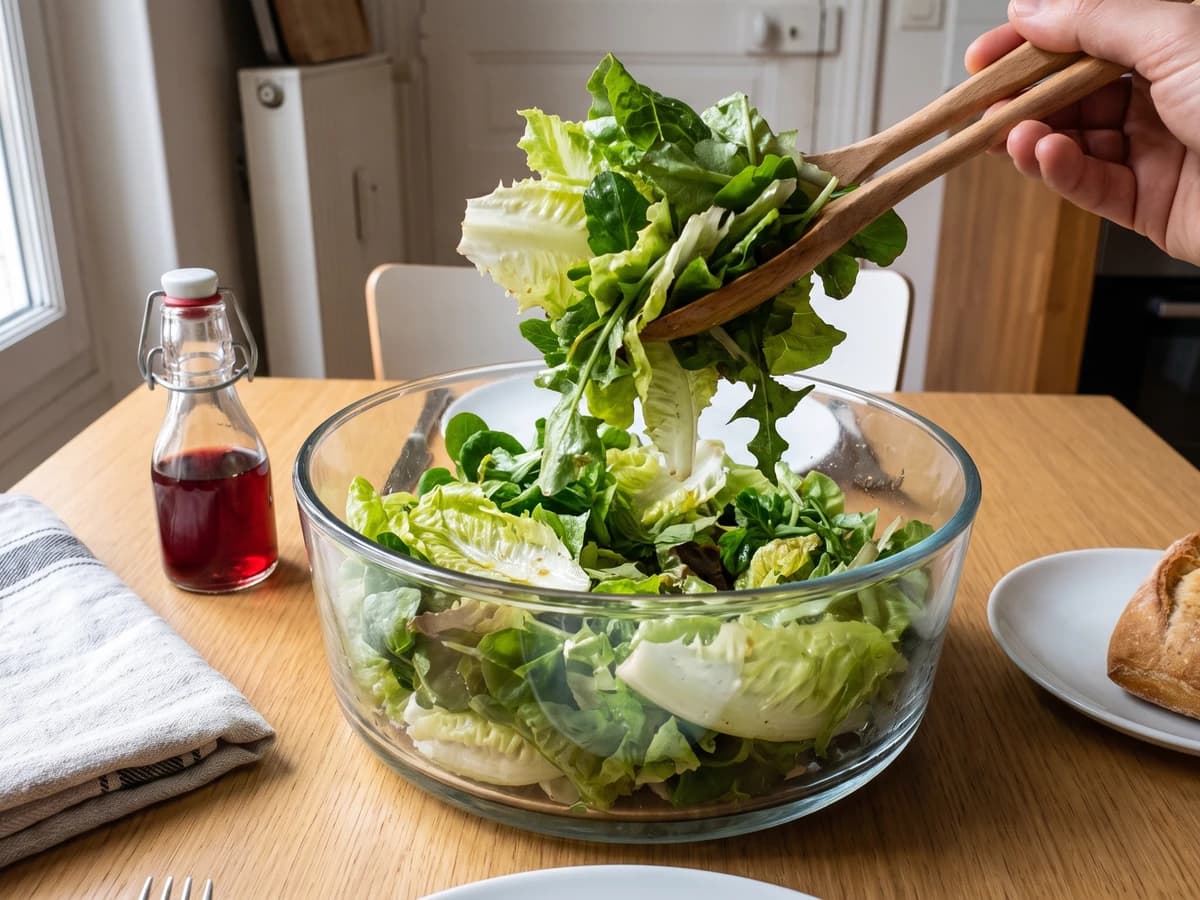
Five leaves, one living rule: laitue, romaine, chicorée, mâche, or pissenlit must be washed, dried, and dressed only as they go to the table, while every leaf still carries its light vinaigrette.
Chef Juliette
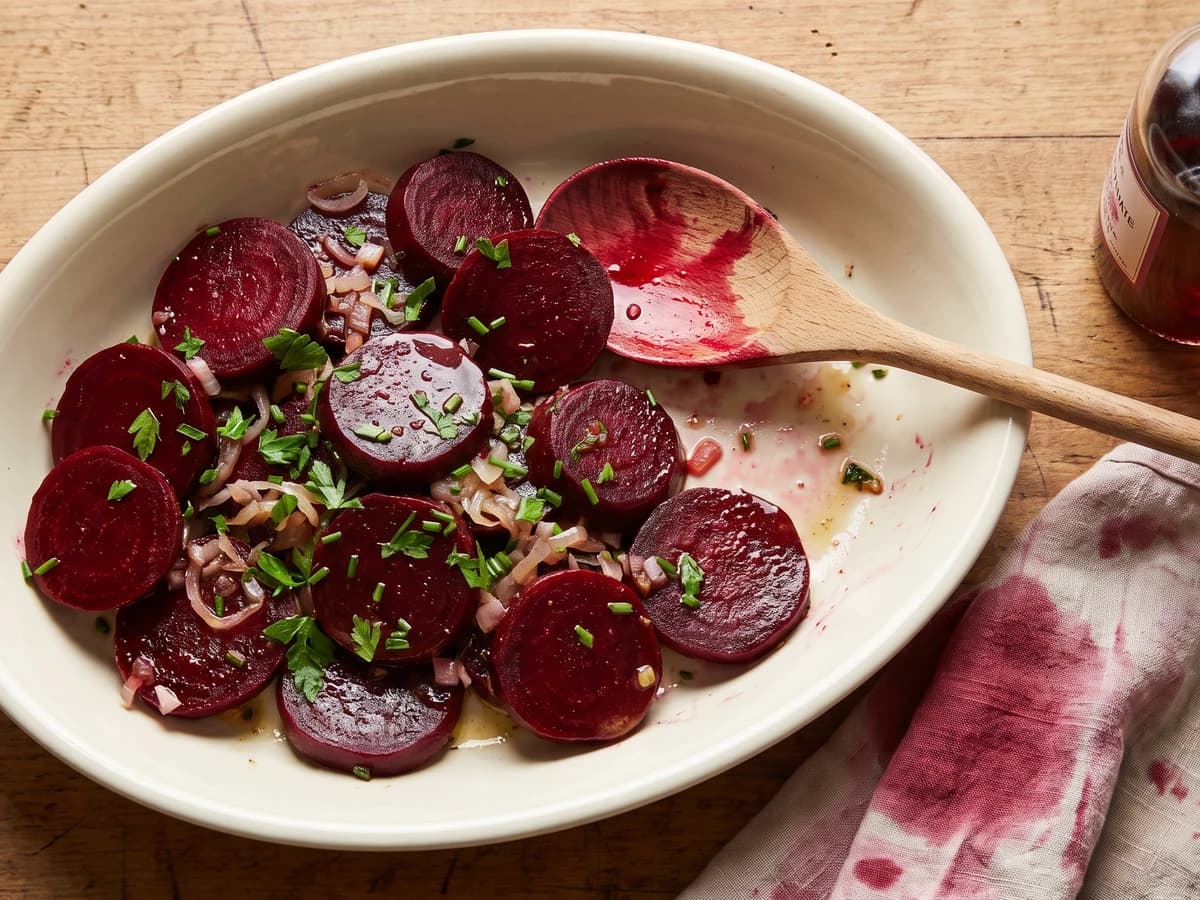
Salade de Betteraves proves that baking, not boiling, is the whole argument: concentrated garnet sweetness, tender baked onion, sharp mustard, and herbs cut into a weeknight salad worth making ahead.