
Chef Juliette
Mayonnaise de Volaille
Cold roast chicken, ciseled lettuce, and a shining coat of homemade mayonnaise, arranged with capers, olives, anchovies, eggs, and lettuce hearts, then tossed at the table as the canon intends.
A cooking platform built around craft, culture, and the stories behind what we eat.

Created by Chef Juliette
Based on No. 1999, Salade Andalouse, from Le Guide Culinaire (1907) by Auguste Escoffier
Salade Andalouse turns plainly boiled rice, peeled tomato, mild pepper, garlic, onion, and parsley into a bright cold salad, provided every grain stays distinct and the dressing coats without drowning it.
Salade Andalouse (Andalusian-style rice salad) teaches the discipline of plainly boiled rice: every grain must stand apart before the tomato, capsicum, garlic, onion, and parsley touch it. The vinaigrette (oil-and-vinegar emulsion) should give those grains a bright sheen, never a puddle, while the vegetables keep their own shapes and freshness.
The brigade formula assumed a garde-manger station where quantities were judged by eye, vegetables arrived already prepared, and cooked rice could be spread across broad trays. No saucier or salamander belongs here; this is cold-station work. The home equivalent is one saucepan used first to loosen the tomato skins and then to boil the rice, a sieve, and a small baking sheet. The proportions are now explicit and scaled for four. Brigade volume was scaffolding and goes; peeled tomatoes, an exact julienne, raw crushed garlic, and separate rice grains are the dish itself and stay.
Rice waits for nobody. Begin tasting before you think it can be ready, drain it while each grain is tender but still holds its shape, and spread it immediately so trapped heat cannot finish the cooking. That is the one step that decides the Salade Andalouse.
Salade Andalouse takes its geographical cue from Andalusia in southern Spain, but its culinary home is the French classical garde-manger, the cold station where rice salads and composed hors d'oeuvres were assembled. The label à l'andalouse commonly signaled tomato, mild pepper, garlic, oil, and often rice, ingredients associated with the Andalusian larder but disciplined by French cutting and seasoning. It is not a claim to one codified Andalusian household salad; it is a French named composition that carried those southern Spanish associations onto buffet and dining-room tables.
Quantity
1 cup (240 ml / 185 g)
Quantity
8 cups (1.9 L / 1.9 kg), plus more for rinsing and cooling
Quantity
2½ teaspoons (12.5 ml / 15 g)
divided
Quantity
4 small (about 1¾ cups / 400 g)
peeled, cored, and quartered
Quantity
1 large (about 1½ cups / 180 g)
cut julienne-fashion
Quantity
¼ cup (60 ml / 40 g)
finely chopped
Quantity
1 small clove (about 4 g)
crushed to a paste
Quantity
¼ cup (60 ml / 15 g)
chopped
Quantity
¼ cup (60 ml / 54 g)
Quantity
1½ tablespoons (22 ml / 22 g)
| Ingredient | Quantity |
|---|---|
| long-grain white rice | 1 cup (240 ml / 185 g) |
| water | 8 cups (1.9 L / 1.9 kg), plus more for rinsing and cooling |
| fine sea saltdivided | 2½ teaspoons (12.5 ml / 15 g) |
| small ripe tomatoespeeled, cored, and quartered | 4 small (about 1¾ cups / 400 g) |
| mild red capsicum or red bell peppercut julienne-fashion | 1 large (about 1½ cups / 180 g) |
| yellow onionfinely chopped | ¼ cup (60 ml / 40 g) |
| garliccrushed to a paste | 1 small clove (about 4 g) |
| flat-leaf parsleychopped | ¼ cup (60 ml / 15 g) |
| mild olive oil | ¼ cup (60 ml / 54 g) |
| red wine vinegar | 1½ tablespoons (22 ml / 22 g) |
Rinse the rice in a fine-mesh sieve under cold running water, moving the grains gently with your fingers, until the water runs nearly clear. Leave it to drain. Bring the measured water to a full boil in a saucepan. Cut a shallow cross in the base of each tomato, lower them into the boiling water for 20 to 30 seconds, and remove them as soon as the skins begin to loosen. Cool them under cold water. Return the saucepan to the boil and add 2 teaspoons of the salt.
Rain the drained rice into the boiling salted water and stir once to prevent it settling on the bottom. Boil uncovered for 10 to 12 minutes, beginning to taste at 9 minutes. A finished grain should be tender through, with no chalky centre, but it must retain its shape. Drain it immediately. If the grains merely cling, ça se rattrape: rinse them very briefly under cold water, drain thoroughly, and spread them out at once. If they have split and collapsed into paste, no rinse can rebuild them; begin a fresh batch, because separate rice is the dish.
Shake the sieve well, then spread the rice in a thin layer across a rimmed baking sheet. Lift and separate the grains once with a fork, without pressing or raking them. Let the rice cool for 20 to 25 minutes. As soon as it is no longer warm, proceed with the salad or refrigerate it; cooked rice should not sit at room temperature for more than one hour.
Slip the loosened skins from the tomatoes, remove the firm cores, and quarter them. If they are exceptionally juicy, rest them cut-side down on a clean towel for 5 minutes, but do not squeeze them. Cut the mild capsicum julienne-fashion into match-shaped rods about 3 mm wide and 4 cm long. Chop the onion finely, crush the garlic to a smooth paste, and chop the parsley. The tomato quarters remain generous while the other flavorings are cut small enough to travel through every spoonful.
Turn the completely cooled rice into a wide mixing bowl. Add the tomato quarters, capsicum julienne, crushed garlic, chopped onion, and parsley. Fold everything together with two large spoons, lifting from beneath rather than stirring in circles. This keeps the tomato intact and prevents the rice from clapping together under pressure.
Whisk the vinegar with the remaining ½ teaspoon salt until the salt dissolves, then whisk in the olive oil to make a loose vinaigrette. Pour it over the salad and fold gently until every grain carries a light sheen. Chill for 20 minutes, then taste again because cold softens both salt and acidity. If tomato juice has left liquid at the bottom, lift the salad into its serving bowl and leave the excess behind. Serve cool rather than icy. À table!
1 serving (about 315g)
Culinary guides, cultural storytelling, and the editorial depth that makes cooking meaningful.
Discover Culinary ExplorerChef Juliette
Cold roast chicken, ciseled lettuce, and a shining coat of homemade mayonnaise, arranged with capers, olives, anchovies, eggs, and lettuce hearts, then tossed at the table as the canon intends.

Chef Juliette
Cold roast or poached chicken with fine ribbons of lettuce, dressed at the final moment with oil and vinegar: a composed salad whose freshness depends entirely on timing.
Chef Juliette
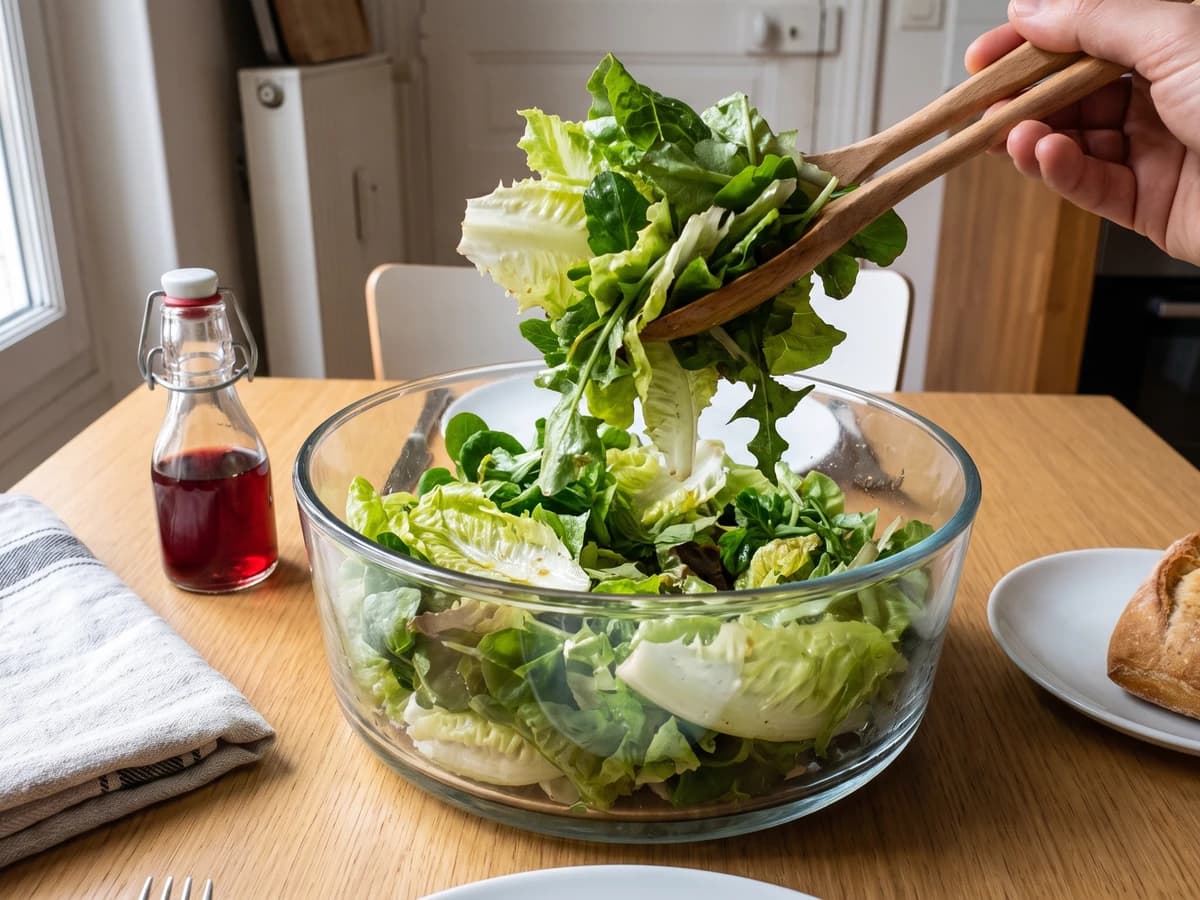
Five leaves, one living rule: laitue, romaine, chicorée, mâche, or pissenlit must be washed, dried, and dressed only as they go to the table, while every leaf still carries its light vinaigrette.
Chef Juliette
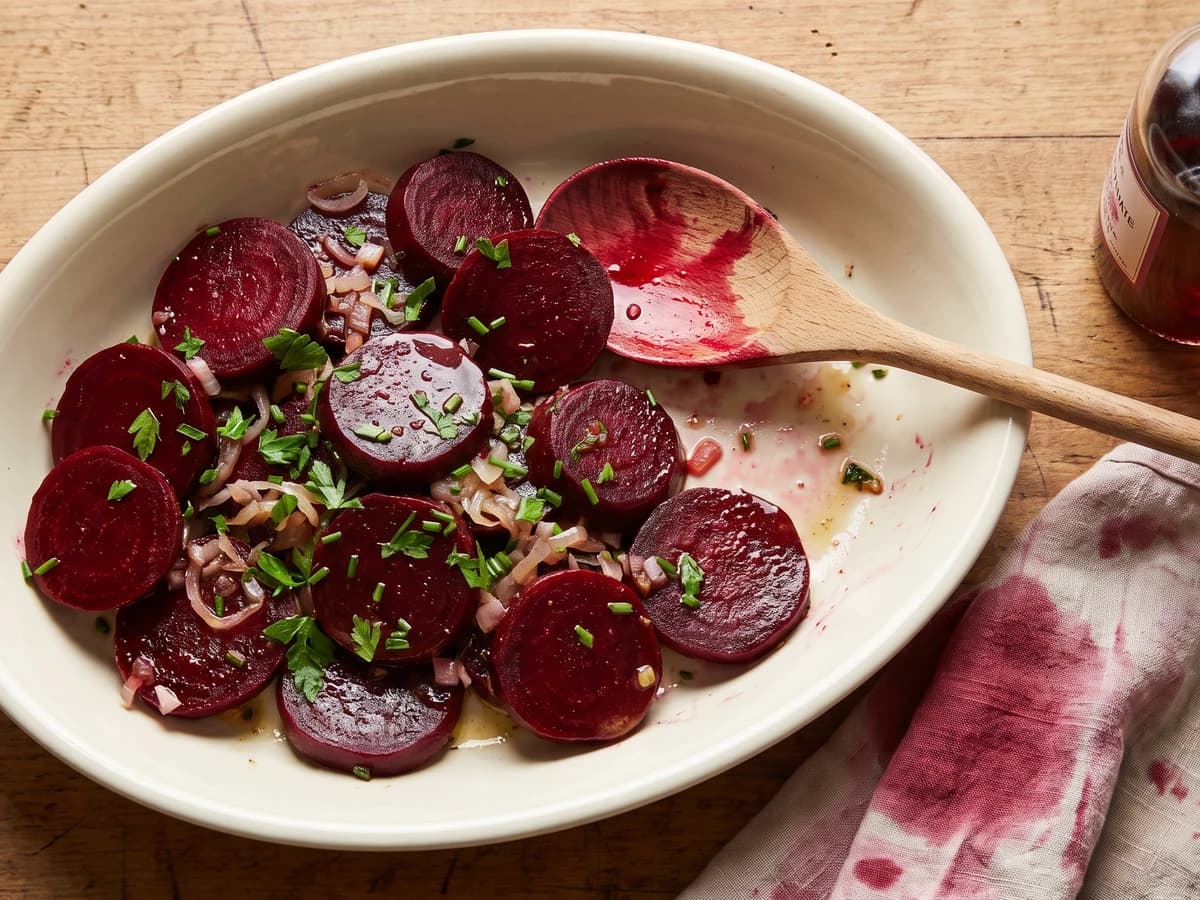
Salade de Betteraves proves that baking, not boiling, is the whole argument: concentrated garnet sweetness, tender baked onion, sharp mustard, and herbs cut into a weeknight salad worth making ahead.