
Chef Juliette
Mayonnaise de Volaille
Cold roast chicken, ciseled lettuce, and a shining coat of homemade mayonnaise, arranged with capers, olives, anchovies, eggs, and lettuce hearts, then tossed at the table as the canon intends.
A cooking platform built around craft, culture, and the stories behind what we eat.

Created by Chef Juliette
Based on No. 1994, Potato Salad à la Parisienne, from Le Guide Culinaire (1907) by Auguste Escoffier
Waxy potato roundels take two dressings in order: dry white wine while lukewarm, then oil and vinegar, with chervil and parsley folded through so every slice stays distinct.
Salade de pommes de terre à la Parisienne (Parisian potato salad) teaches one clean rule: wine goes onto the potatoes while they are still lukewarm, before oil touches them. Warm starch drinks; oil coats. Reverse the order and the wine can only skid over the surface.
The classical instruction assumed a commis for tournage, the careful trimming of every potato into a perfect cork before slicing. For one cook, one stove, one evening, small potatoes of one size provide even roundels without wasting their sides. The tournage is brigade scaffolding and goes; the wine-first dressing and the source's full two-thirds-pint proportion stay because they are the dish. Its two-pound measure already gives four generous side servings, so the ratio needs no further shrinking.
You are after intact violet or ivory coins, lightly glossy with vinaigrette and freckled green with chervil and parsley. The decisive moment is the final fold: lift from underneath with a flexible spatula, turn only enough to distribute the herbs, and stop. Stir as though mixing dough and the roundels disappear.
Salade de pommes de terre à la Parisienne belongs to the Parisian bourgeois table and the city's professional cold buffet, where waxy potatoes could be prepared ahead without surrendering their shape. Parisienne names more than one treatment in the classical repertoire; here it means wine-soaked roundels with chervil and parsley, not the small browned potato balls that also carry the adjective. For generations, the salad has passed easily from buffet service to picnic cloths and home tables because it is dressed by absorption rather than bound with mayonnaise.
Quantity
2 lb (907 g)
scrubbed and sorted to a similar size
Quantity
3 quarts (2.8 L / 2.8 kg)
Quantity
1½ tablespoons (22 ml / 27 g)
for the cooking water
Quantity
⅔ Imperial pint, about 1.6 US cups (380 ml / 380 g)
Quantity
2 tablespoons (30 ml / 30 g)
Quantity
¼ teaspoon (1.25 ml / 1.5 g)
for the vinaigrette
Quantity
6 tablespoons (90 ml / 82 g)
Quantity
2 tablespoons (30 ml / 4 g)
finely chopped
Quantity
2 tablespoons (30 ml / 8 g)
finely chopped
| Ingredient | Quantity |
|---|---|
| waxy vitelotte potatoes or new kidney potatoesscrubbed and sorted to a similar size | 2 lb (907 g) |
| cold water | 3 quarts (2.8 L / 2.8 kg) |
| fine sea saltfor the cooking water | 1½ tablespoons (22 ml / 27 g) |
| dry white wine | ⅔ Imperial pint, about 1.6 US cups (380 ml / 380 g) |
| white wine vinegar | 2 tablespoons (30 ml / 30 g) |
| fine sea saltfor the vinaigrette | ¼ teaspoon (1.25 ml / 1.5 g) |
| mild olive oil | 6 tablespoons (90 ml / 82 g) |
| fresh chervilfinely chopped | 2 tablespoons (30 ml / 4 g) |
| flat-leaf parsleyfinely chopped | 2 tablespoons (30 ml / 8 g) |
Put the potatoes in a wide saucepan, add the cold water and 1½ tablespoons of salt, and bring just to a boil. Lower the heat immediately and hold the water at a steady, quiet simmer for 18 to 25 minutes, depending on size. They are ready when a thin knife reaches the centre with faint resistance but finds no chalky core. A rolling boil knocks the potatoes together and opens their skins, so keep the movement gentle.
Drain the potatoes and leave them uncovered for about 5 minutes, just until you can handle them comfortably. Peel them thinly with a paring knife, trim only the two ends, and cut crosswise into roundels about ¼ inch (6 mm) thick. Tournage gave the brigade identical circles at the cost of useful potato; evenly sized potatoes give the home cook the same clean slices without the waste. If the roundels begin to fracture under the knife, stop for 3 minutes and let the potatoes firm slightly before continuing.
Lay the lukewarm roundels in a wide, shallow bowl, no more than two or three layers deep. Sprinkle the measured white wine evenly over them in three additions, waiting about 2 minutes between each and gently tipping the bowl so the wine reaches the lower slices. Do not stir. Let them stand for 10 minutes, spooning any wine at the bottom back over the top once. The quantity will look generous at first. It is exactly right. If the potatoes have cooled completely, warm the wine only to body temperature in the empty saucepan before adding it. Ça se rattrape; never reboil the potatoes.
Whisk the vinegar with the remaining ¼ teaspoon salt until the salt dissolves, then whisk in the oil in a thin stream to make a light vinaigrette, the oil-and-vinegar dressing. Pour it over the wine-dressed potatoes and scatter on the chervil and parsley. Slide a flexible spatula underneath and fold from bottom to top two or three times, turning the bowl as you work. If slices begin to break, stop immediately. Ça se rattrape: spoon the dressing from the bottom over the untouched roundels and serve from this bowl without another turn.
Let the salad rest for 20 minutes so the wine, vinegar, and herbs settle through every slice. Taste one roundel: the wine should arrive first, followed by clean acidity, mild oil, and the soft anise note of chervil. Serve cool or at room temperature, with the slices loosely layered rather than packed into a mound. À table!
1 serving (about 290g)
Culinary guides, cultural storytelling, and the editorial depth that makes cooking meaningful.
Discover Culinary ExplorerChef Juliette
Cold roast chicken, ciseled lettuce, and a shining coat of homemade mayonnaise, arranged with capers, olives, anchovies, eggs, and lettuce hearts, then tossed at the table as the canon intends.

Chef Juliette
Cold roast or poached chicken with fine ribbons of lettuce, dressed at the final moment with oil and vinegar: a composed salad whose freshness depends entirely on timing.
Chef Juliette
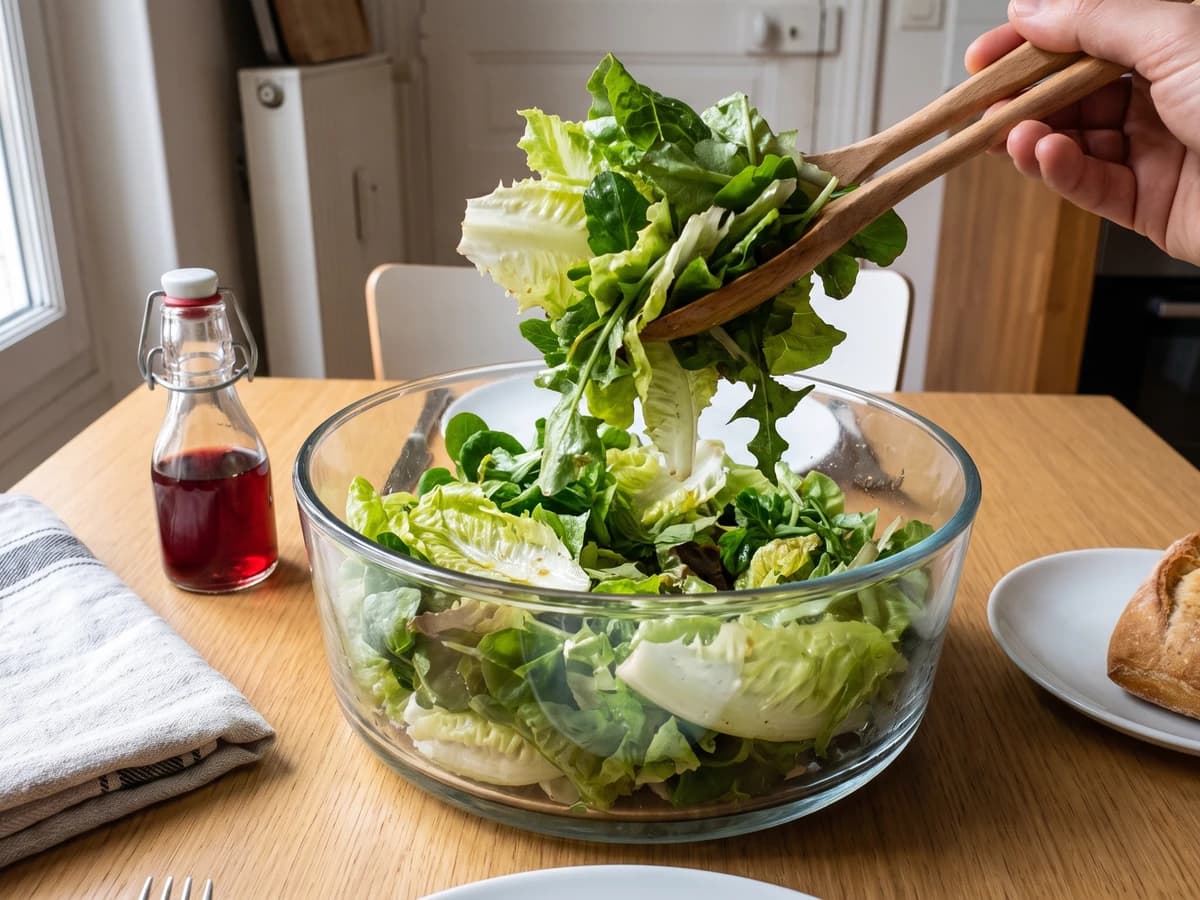
Five leaves, one living rule: laitue, romaine, chicorée, mâche, or pissenlit must be washed, dried, and dressed only as they go to the table, while every leaf still carries its light vinaigrette.
Chef Juliette
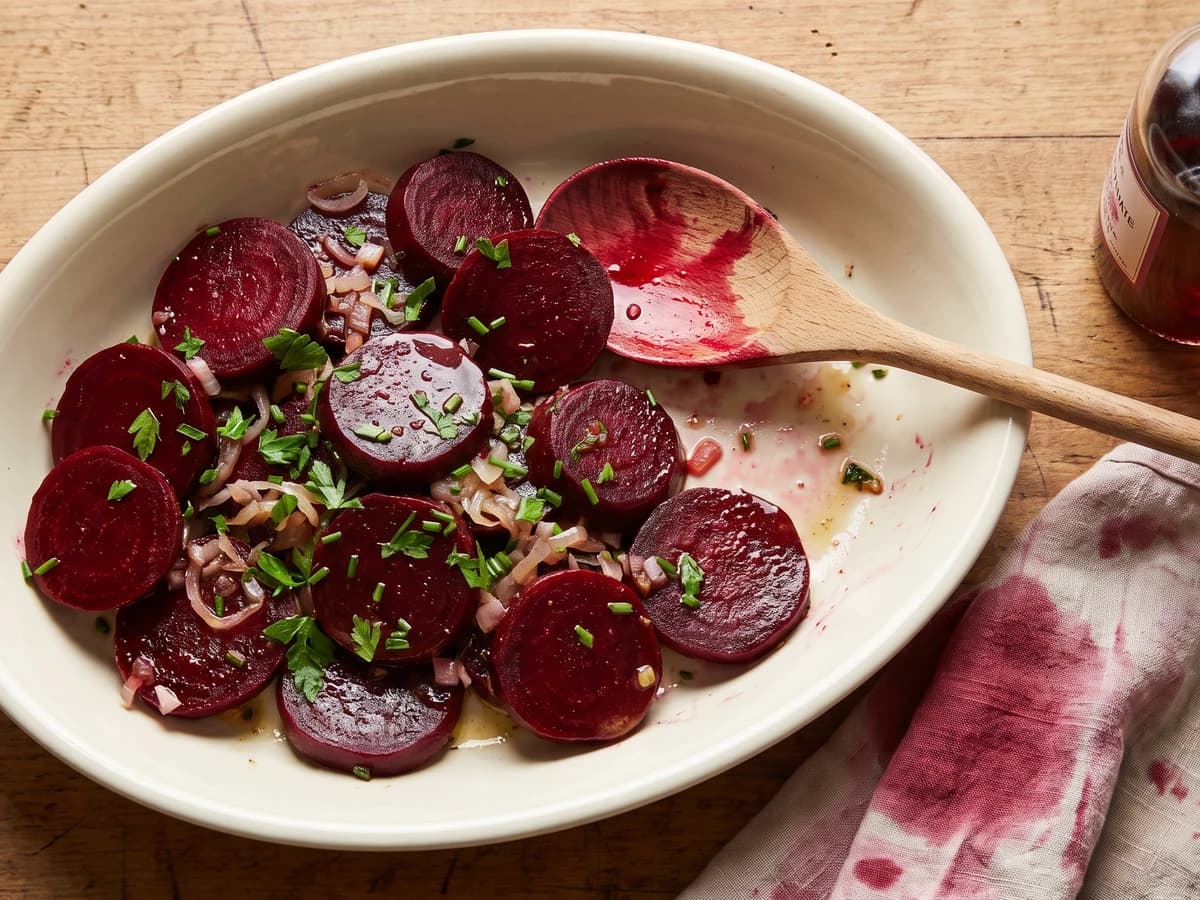
Salade de Betteraves proves that baking, not boiling, is the whole argument: concentrated garnet sweetness, tender baked onion, sharp mustard, and herbs cut into a weeknight salad worth making ahead.