
Chef Juliette
Mayonnaise de Volaille
Cold roast chicken, ciseled lettuce, and a shining coat of homemade mayonnaise, arranged with capers, olives, anchovies, eggs, and lettuce hearts, then tossed at the table as the canon intends.
A cooking platform built around craft, culture, and the stories behind what we eat.

Created by Chef Juliette
Based on No. 1991, Cucumber Salad, from Le Guide Culinaire (1907) by Auguste Escoffier
Concombres en salade teaches the discipline of drawing out water before dressing: two patient hours with salt, then oil, vinegar, and chervil cling brightly to every cool, crisp slice.
Concombres en salade (cucumber salad) teaches one severe little truth: cucumber is mostly water. Dress it straight from the knife and that water escapes into the bowl, thinning the oil and vinegar to nothing. Dégorger, to draw out water with salt, is what gives these delicate slices their concentrated flavor and supple crunch.
The original entry assumed no saucier, stockpot, or salamander. It assumed something quieter: a brigade cook who could salt a tray by feel, leave it undisturbed for two hours, and reach for clean cloths when service approached. The home equivalent is a colander, two towels, and measured quantities for four servings. The flavorings and sequence remain untouched. One cook, one stove, one evening, though the stove gets this one off.
The colander and towels are scaffolding. The full two-hour salting is the dish and must stay. Dry every slice thoroughly before the oil touches it; if moisture remains, another clean towel and ten patient minutes will rescue the work.
Concombres en salade belongs to the French bourgeois table and the Parisian classical repertoire of hors-d'oeuvre, rather than to one province with a protected local formula. Classical manuals codified a household practice that moved easily into bistros and formal dining rooms: peel, slice, dégorger, dry, then season at the last moment. Salting is often mistaken for seasoning alone, but its purpose here is structural, removing enough cucumber water that the oil and wine vinegar remain distinct and bright.
Quantity
2 medium (about 1½ lb / 700 g)
peeled and sliced 2 mm thick
Quantity
2 teaspoons (10 ml / 12 g)
Quantity
3 tablespoons (45 ml / 41 g)
Quantity
1 tablespoon (15 ml / 15 g)
Quantity
2 tablespoons (30 ml / 5 g)
finely chopped at the last moment
| Ingredient | Quantity |
|---|---|
| English cucumberspeeled and sliced 2 mm thick | 2 medium (about 1½ lb / 700 g) |
| fine table salt | 2 teaspoons (10 ml / 12 g) |
| mild salad oil | 3 tablespoons (45 ml / 41 g) |
| white wine vinegar | 1 tablespoon (15 ml / 15 g) |
| fresh chervil leavesfinely chopped at the last moment | 2 tablespoons (30 ml / 5 g) |
Peel the cucumbers completely, as the source directs. Slice them crosswise about 2 mm thick with a mandoline or sharp knife, keeping the rounds even so they dégorger at the same rate. Use the mandoline guard from the first slice, not when your fingers are already near the blade.
Set a large colander over a bowl. Add the cucumber slices in three loose layers, scattering some of the table salt over each, then toss gently until the salt is evenly distributed. Refrigerate for two full hours while the liquid drains below. Do not shorten this rest. It is not brigade waiting that can be cut away; it is the technique that keeps the finished dressing from disappearing into cucumber water.
Let the slices drain for five minutes, then spread them over a clean, lint-free towel. Cover with a second towel and press firmly but gently, changing to a dry section until no beads of moisture remain. Do not rinse unless a test slice tastes sharply salty. If it does, give the batch one swift rinse under very cold water and dry it twice as thoroughly. Ça se rattrape.
Hold back a small spoonful of the measured oil and a few drops of vinegar in the same three-to-one proportion. Put the cucumbers in a completely dry bowl, add the remaining oil first, and toss until every slice carries a light sheen. Add the remaining vinegar, toss again, then fold through the chopped chervil. If liquid pools within a minute, lift the slices out, blot them once more, empty and dry the bowl, then return them with the reserved oil and vinegar. The slices should glisten, not swim.
Transfer the salad to a shallow chilled bowl, letting the slices fall into loose folds rather than compressing them. Serve at once, while the vinegar is lively and the chervil still smells fresh. À table!
1 serving (about 160g)
Culinary guides, cultural storytelling, and the editorial depth that makes cooking meaningful.
Discover Culinary ExplorerChef Juliette
Cold roast chicken, ciseled lettuce, and a shining coat of homemade mayonnaise, arranged with capers, olives, anchovies, eggs, and lettuce hearts, then tossed at the table as the canon intends.

Chef Juliette
Cold roast or poached chicken with fine ribbons of lettuce, dressed at the final moment with oil and vinegar: a composed salad whose freshness depends entirely on timing.
Chef Juliette
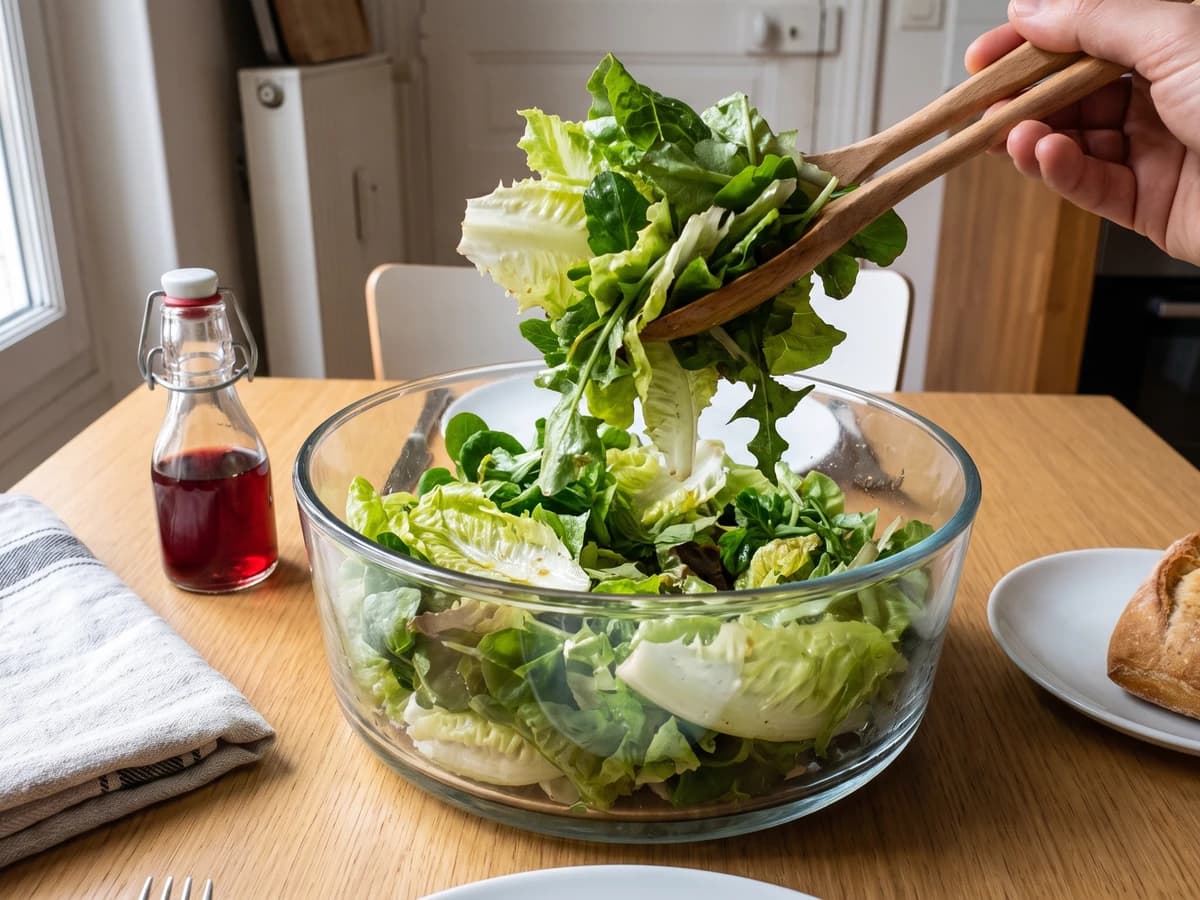
Five leaves, one living rule: laitue, romaine, chicorée, mâche, or pissenlit must be washed, dried, and dressed only as they go to the table, while every leaf still carries its light vinaigrette.
Chef Juliette
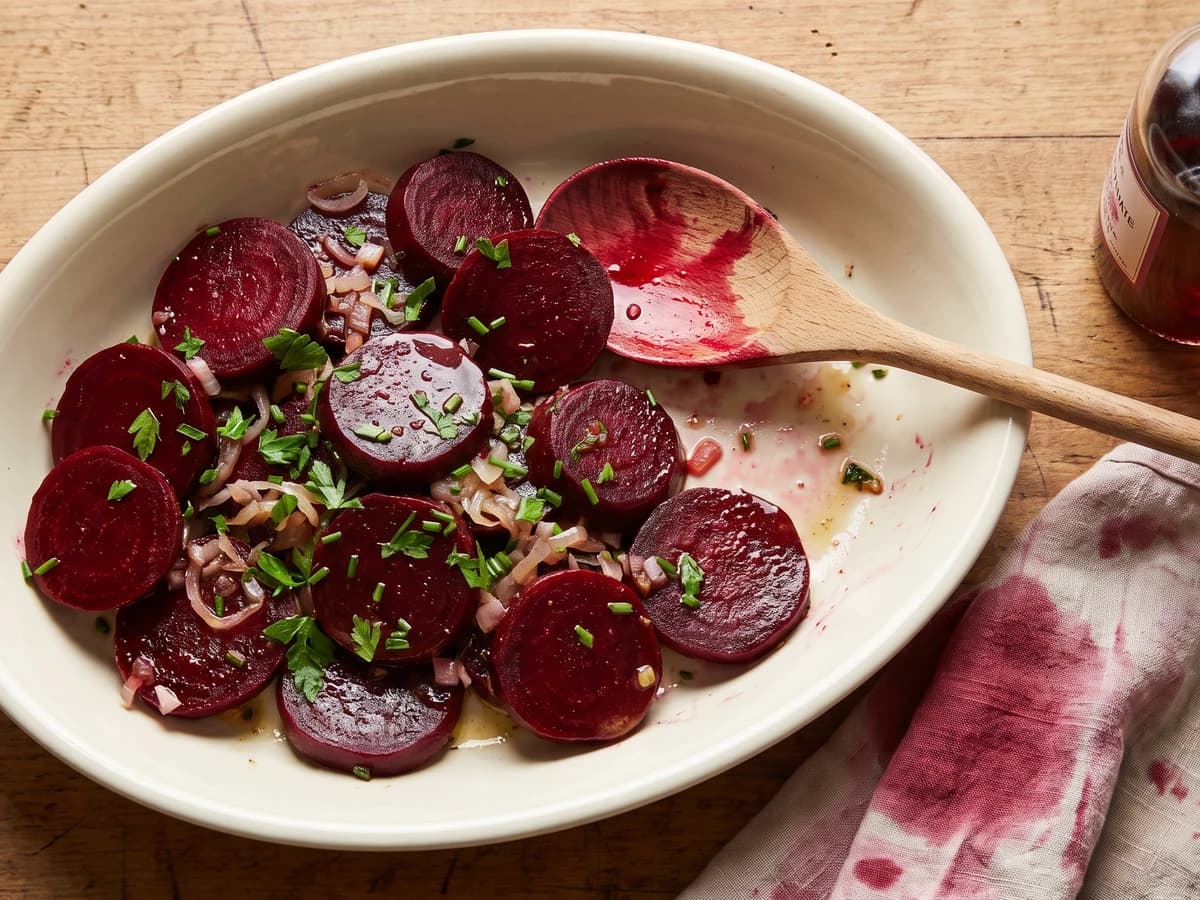
Salade de Betteraves proves that baking, not boiling, is the whole argument: concentrated garnet sweetness, tender baked onion, sharp mustard, and herbs cut into a weeknight salad worth making ahead.