
Chef Joost
Aardappelschotel met Gehakt
A plain name for a quietly clever dish: fresh mince, sweet fried onion, nutmeg, and mashed potato baked until the top goes golden and the table goes silent.
A cooking platform built around craft, culture, and the stories behind what we eat.
Created by
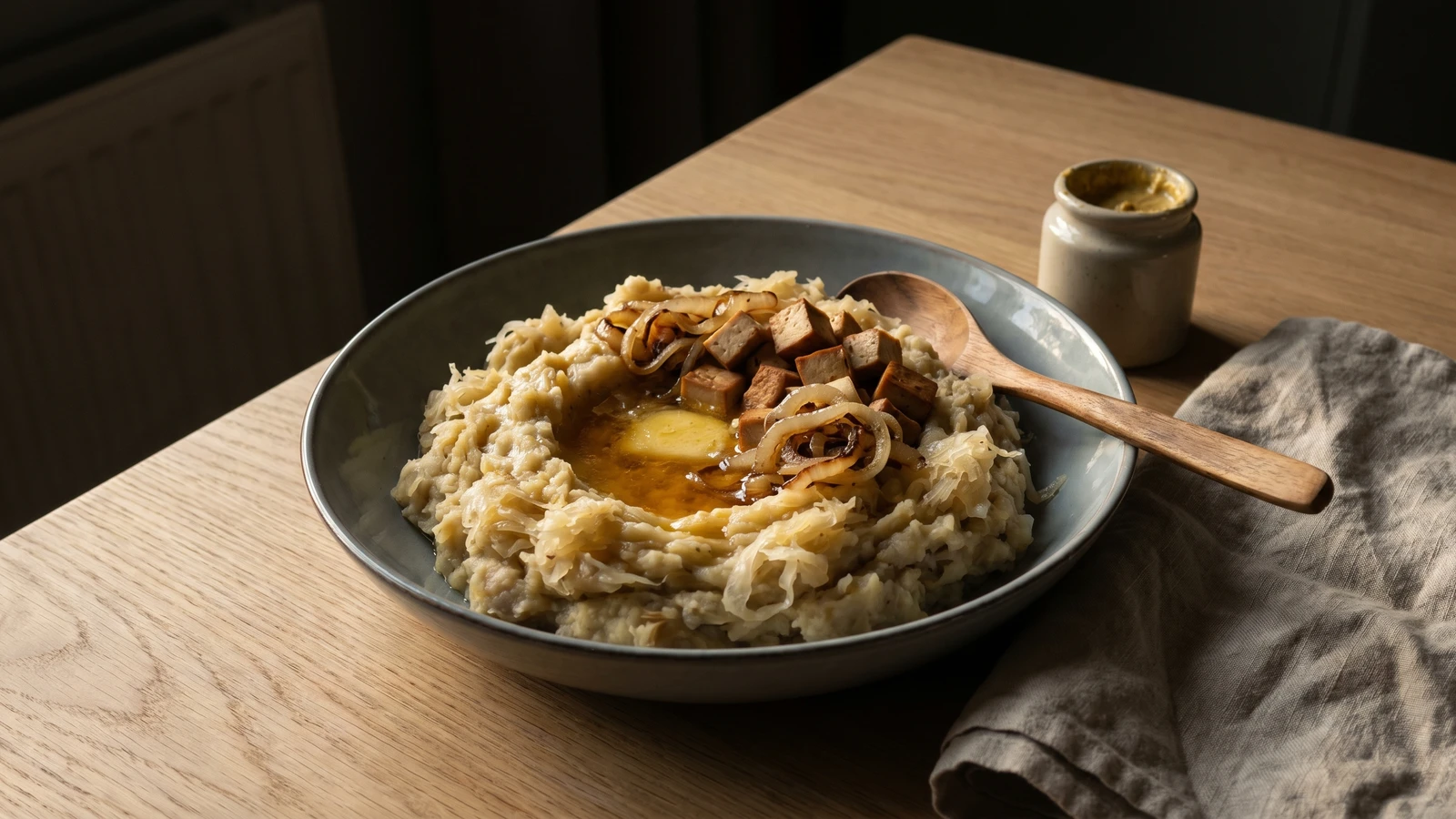
A winter cellar dish with a sharp tongue: zuurkool folded through soft potatoes, rich onion butter, and mustard, proving the Dutch larder knew preservation could still taste bright.
My grandmother's second notebook has several recipes that look almost too plain to deserve writing down. Potatoes. Zuurkool. Butter. Onion. Then you cook them and remember why she copied them carefully after the flood took the first book. Humble food is the easiest food to lose, because everyone thinks they know it already.
The name already tells you nearly the whole dish: zuurkool is sour cabbage, cabbage preserved by lactic fermentation, and stamppot is the mashed pot, the Dutch winter grammar of potato and whatever the cellar kept safe. But let me tell you a secret. The sour cabbage must not boil with the potatoes from the beginning. Its acid keeps the potato cells stubborn, so the spud stays hard while the cook grows philosophical for no good reason.
So we keep it simple, hou het altijd simpel. Boil the potatoes in salted water until they surrender, warm the zuurkool separately, then bring them together with onion cooked sweet in butter, a spoon of mustard, and enough milk to make the mash generous. No sausage is needed here. A vegetarian zuurkoolstamppot has its own backbone: sour, creamy, a little smoky if you add caraway or smoked tofu, and exactly the sort of dish that makes a dark weekday feel managed.
Sauerkraut entered Dutch winter cookery through the broader Central and Northern European practice of preserving cabbage by lactic fermentation, a method valued because it kept vegetables edible through the months when gardens gave little. Stamppot became strongly associated with Dutch home cooking in the nineteenth and twentieth centuries, when potatoes were cheap, filling, and adaptable to stored vegetables such as kale, carrot, endive, and zuurkool. The practical rule of cooking sauerkraut apart from potatoes is kitchen chemistry rather than folklore: acid slows the softening of pectin in potato cell walls, so the mash works best when the two meet only after the potatoes are tender.
Quantity
1.2kg
peeled and cut into even chunks
Quantity
500g
drained but not rinsed
Quantity
2 medium
thinly sliced
Quantity
60g
Quantity
150ml
warmed
Quantity
1 tablespoon
Quantity
1 teaspoon
Quantity
1
Quantity
to taste
Quantity
200g
diced and browned
| Ingredient | Quantity |
|---|---|
| floury potatoespeeled and cut into even chunks | 1.2kg |
| sauerkraut (zuurkool)drained but not rinsed | 500g |
| onionsthinly sliced | 2 medium |
| unsalted butter or plant-based butter | 60g |
| whole milk or unsweetened oat milkwarmed | 150ml |
| Dutch mustard or wholegrain mustard | 1 tablespoon |
| caraway seeds (optional) | 1 teaspoon |
| bay leaf | 1 |
| salt and freshly ground black pepper | to taste |
| smoked tofu (optional)diced and browned | 200g |
Put the potatoes in a large pot, cover with cold water, and add enough salt that the water tastes properly seasoned. Bring to a boil, then simmer until the potatoes are completely tender, about 20 minutes. Test with a knife; it should slide through without the potato pushing back. This is where you win the mash.
While the potatoes cook, put the drained zuurkool in a steamer basket or metal sieve set above the potato pot, add the bay leaf, cover, and let it warm through for 10 to 12 minutes. If you have no basket, warm it gently in a small pan with a spoonful of water. Do not boil it with the potatoes; the acid is useful in the cabbage and troublesome in the spud.
Melt the butter in a frying pan over medium-low heat and add the onions with a pinch of salt. Cook slowly for 15 minutes, stirring now and then, until they are soft, golden at the edges, and sweet. Add the caraway seeds for the last minute if you like them. They belong naturally with cabbage, but they should whisper, not shout.
Lift off the sauerkraut and discard the bay leaf. Drain the potatoes very well, return them to the hot pot for a minute, and let their surface dry. Mash them with the warm milk and mustard, then fold in the warm zuurkool and most of the onion butter. Taste before salting; sauerkraut brings its own salt to the table.
Spoon the stamppot into shallow bowls and make a kuiltje, a little well, in the top with the back of the spoon. Pour the remaining onion butter into it. If using smoked tofu, scatter the browned cubes over the mash. Serve at once, with extra mustard on the table and no ceremony beyond passing the bowl.
1 serving (about 475g)
Culinary guides, cultural storytelling, and the editorial depth that makes cooking meaningful.
Discover Culinary ExplorerChef Joost
A plain name for a quietly clever dish: fresh mince, sweet fried onion, nutmeg, and mashed potato baked until the top goes golden and the table goes silent.

Chef Joost
Ajam Besengek is the golden chicken stew of the Indo-Dutch table: coconut milk, turmeric, and candlenut cooked down until the sauce clings to the meat like memory.

Chef Joost
The old Dutch spelling says ajam, the city says Batavia, and the pot says exactly what the rijsttafel always was: memory, trade, and dinner in one dish.

Chef Joost
The name means simply fried chicken, but the Dutch spelling carries a whole Indies kitchen: turmeric, coriander, garlic, and a golden crust that remembers the boemboe.