Culinary Explorer
A cooking platform built around craft, culture, and the stories behind what we eat.
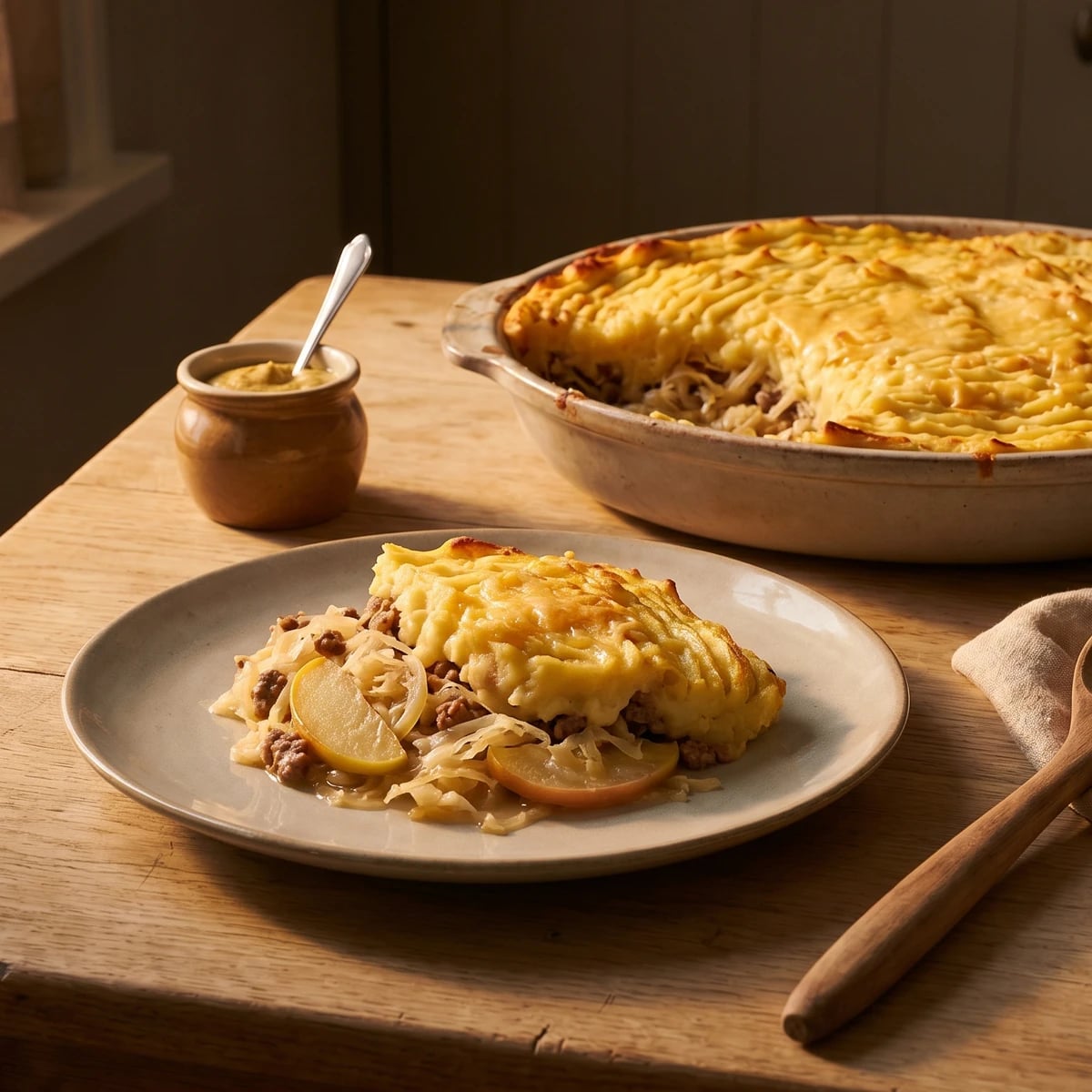
Zuurkoolovenschotel
Created by Chef Joost
Sour cabbage, spiced gehakt, and potato mash go into the oven, and the old winter stamppot returns with a golden roof and a little Sunday ambition.
In my grandmother's second notebook, the recipes that mattered most were often the least poetic on the page. Zuurkoolovenschotel: sour cabbage oven dish. There it was, blunt as a shopping list, and all the better for it. The name already tells you the Dutch trick: take something sharp from the preserving jar, something soft from the potato pot, something browned from the pan, and let the oven make peace between them.
But let me tell you a secret. This is not an ancient farmhouse relic, however much it smells like one. The older dish is zuurkoolstamppot, sauerkraut mashed with potatoes, the winter food of storage cellars and hard weather. The oven version belongs to the Dutch home kitchen that got a reliable oven and immediately began putting roofs on things: cheese on top, apples tucked underneath, minced meat spiced with nutmeg because the VOC never really left the cupboard.
The method is plain, so don't complicate it. Rinse the zuurkool only if it bites harder than you like; its sourness is the spine of the dish. Brown the gehakt, minced meat, until it gives you dark little edges, because pale meat under potato is a sad administrative error. Mash the potatoes with enough butter and milk to spread softly, then bake until the top bubbles gold. Hou het altijd simpel. A winter casserole should ask for a spoon, not a committee.
Ingredients
floury potatoes
Quantity
1 kg
peeled and cut into chunks
zuurkool (sauerkraut)
Quantity
500g
drained
butter for frying
Quantity
1 tablespoon
| Ingredient | Quantity |
|---|---|
| floury potatoespeeled and cut into chunks | 1 kg |
| zuurkool (sauerkraut)drained | 500g |
| butter for frying | 1 tablespoon |
Where cooking meets culture.
Culinary guides, cultural storytelling, and the editorial depth that makes cooking meaningful.
Discover Culinary Explorer