
Chef Joost
Acar Ketimun (Indo-Dutch Cucumber Pickle)
Acar means pickle, ketimun means cucumber, and this little bowl of sweet vinegar, chilli, and crunch is the cool note that lets an Indo-Dutch rijsttafel keep its balance.
A cooking platform built around craft, culture, and the stories behind what we eat.
Created by
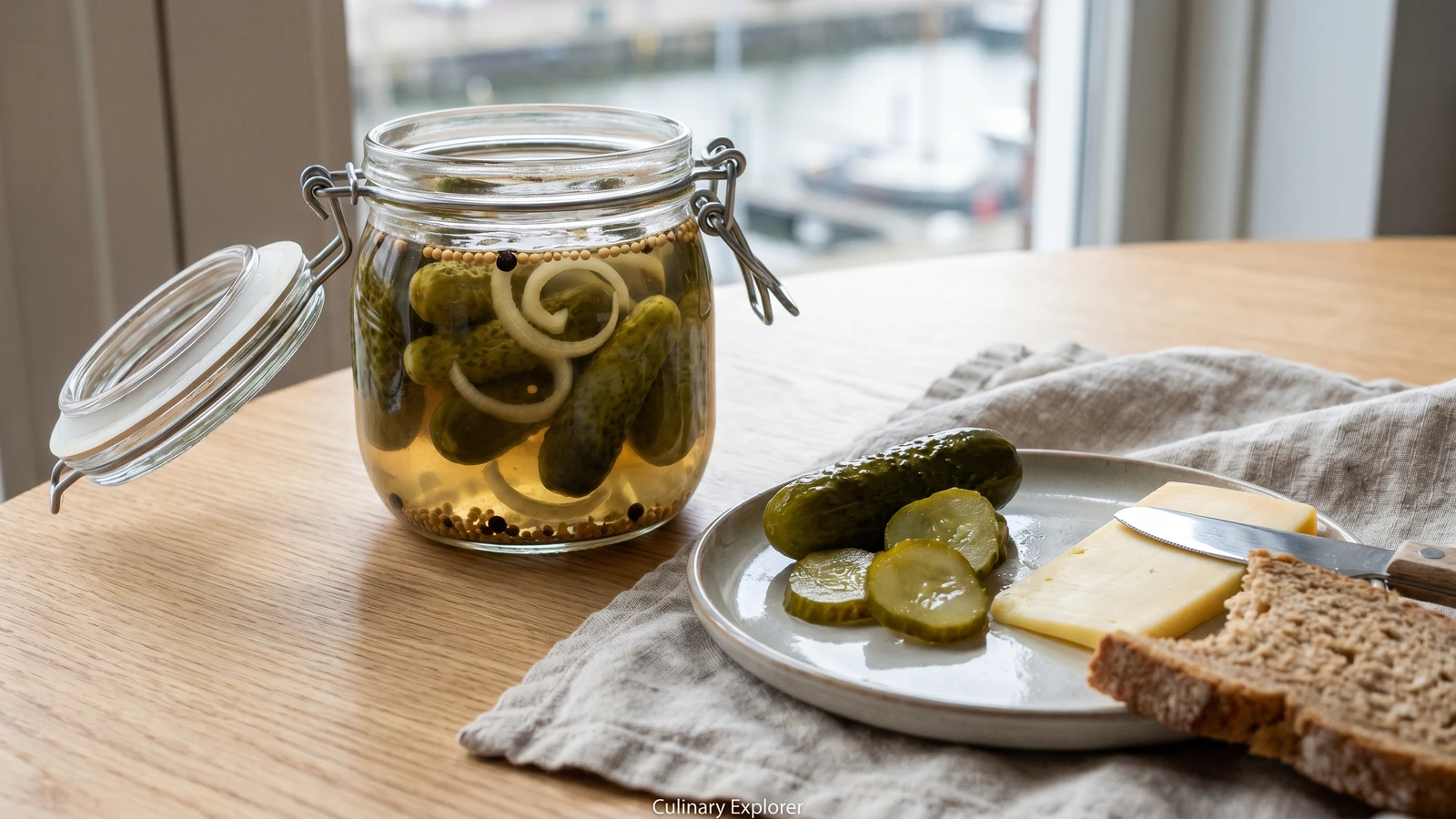
Small cucumbers, salt, vinegar, sugar, and patience: zoetzure augurken are the Dutch larder at its sharpest, a jar of summer kept for the bread-and-cheese table.
In my grandmother's second notebook, the pickle page is stained more than written. That tells you everything. Augurken were never grand food; they were the little sharp thing beside the cheese, the cold sliced meat, the boiled egg, the brown bread. The thing you missed when it wasn't there.
The name already tells you the method, if not the whole history. Zoetzuur means sweet-sour, and augurk is the small cucumber made for preserving, firm-skinned and full of snap. But let me tell you a secret: the sweetness is not there to make dessert of a pickle. It rounds the vinegar so the cucumber stays bright, crisp, and useful at the table. Dutch tafelzuur, table sour, is not decoration. It is balance.
This is summer work. Use small, fresh gherkins when the skins are tight and the seeds barely formed; tired cucumbers make tired pickles, and no amount of clove can rescue them. Salt draws out water first, then the hot sugared vinegar goes in. Hou het altijd simpel, always keep it simple. A clean jar, a good rest, and a week of waiting are doing most of the cooking for you.
Sweet-sour pickles became part of the Dutch household larder through the older northern European practice of preserving summer vegetables in salt and vinegar, with sugar becoming more common as colonial trade made it cheaper in the seventeenth and eighteenth centuries. Augurken appear in Dutch household cookbooks as tafelzuur, table sour, served with cheese, cold meats, boiled potatoes, and rich stews to cut fat and salt. The spice profile, often mustard seed, dill, bay, clove, and pepper, reflects the Dutch pantry after the VOC period, where imported spices became everyday preserving tools rather than luxuries.
Quantity
750g
scrubbed
Quantity
1 small
thinly sliced
Quantity
35g
Quantity
500ml
5 percent acidity
Quantity
175g
Quantity
150ml
Quantity
2 teaspoons
Quantity
1 teaspoon
Quantity
1 teaspoon
Quantity
2
Quantity
4
Quantity
2 small
| Ingredient | Quantity |
|---|---|
| small fresh gherkinsscrubbed | 750g |
| onionthinly sliced | 1 small |
| coarse sea salt | 35g |
| white wine vinegar or natural vinegar5 percent acidity | 500ml |
| granulated sugar | 175g |
| water | 150ml |
| yellow mustard seeds | 2 teaspoons |
| black peppercorns | 1 teaspoon |
| coriander seeds | 1 teaspoon |
| bay leaves | 2 |
| whole cloves | 4 |
| dill sprigs | 2 small |
Put the scrubbed gherkins and sliced onion in a large bowl and toss with the coarse salt. Cover and leave in the refrigerator for 12 to 24 hours. The salt pulls out water, firms the flesh, and gives the vinegar room to enter; skip this and the pickle tastes watery, which is a sad little lesson.
Rinse the gherkins and onion quickly under cold water, then drain very well and pat dry with a clean cloth. Do not soak them. You want excess salt gone, not all the character washed out.
Pack the gherkins and onion into two clean 500ml jars, tucking in a dill sprig and a bay leaf in each. Leave about 2cm of space at the top. The jars should look full but not crushed; a bruised gherkin softens faster than a careful one.
Combine the vinegar, sugar, water, mustard seeds, peppercorns, coriander seeds, and cloves in a small pan. Bring to a boil, stirring until the sugar dissolves, then simmer for 2 minutes. Taste the air above the pan, not the brine itself; it should smell sharp first, sweet second.
Pour the hot brine over the gherkins, making sure they are fully covered. Tap the jars gently on the counter to release trapped air, then close with clean lids. Let them cool on the counter before refrigerating.
Refrigerate for at least 7 days before eating. The first day tastes like cucumber in vinegar; by the end of the week the sweet, sour, salt, and spice have stopped arguing and become tafelzuur, the crisp little sour that belongs beside almost everything.
1 serving (about 50g)
Culinary guides, cultural storytelling, and the editorial depth that makes cooking meaningful.
Discover Culinary ExplorerChef Joost
Acar means pickle, ketimun means cucumber, and this little bowl of sweet vinegar, chilli, and crunch is the cool note that lets an Indo-Dutch rijsttafel keep its balance.

Chef Joost
Appelcompote is the apple left with its dignity: soft enough to spoon beside pork or potatoes, still chunky enough to remind you autumn did the real work.
Chef Joost
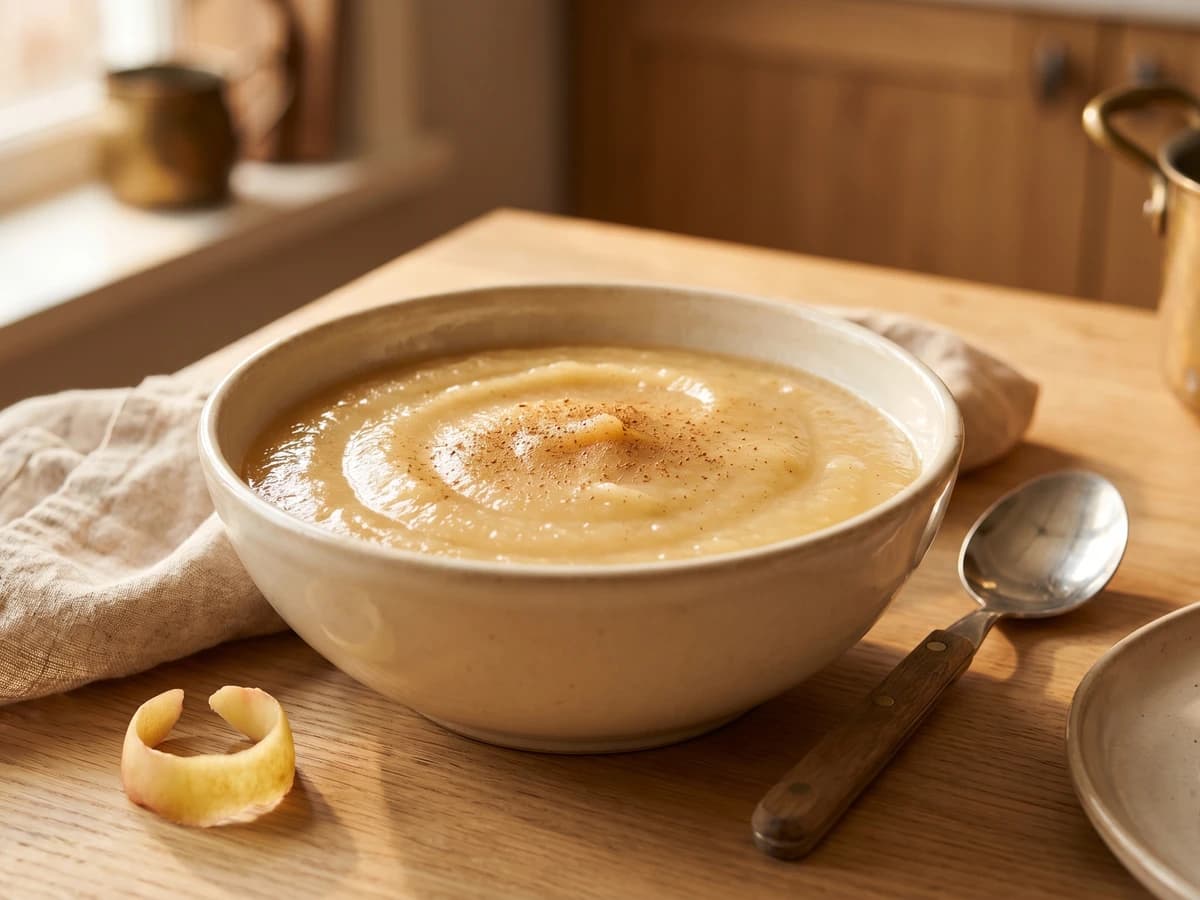
The little bowl beside the plate is never decoration: appelmoes is the Dutch treaty between sweet and savoury, spooned beside sausage, potatoes, pancakes, and childhood itself.

Chef Joost
Appelstroop is the orchard made patient: apples, pears, and beet syrup boiled down until morning bread, farmhouse cheese, and zuurvlees taste of Limburg in autumn.