Culinary Explorer

A cooking platform built around craft, culture, and the stories behind what we eat.
Discover Culinary Explorer
Yukgaejang (Spicy Shredded Beef Soup)

Yukgaejang (Spicy Shredded Beef Soup)

Created by

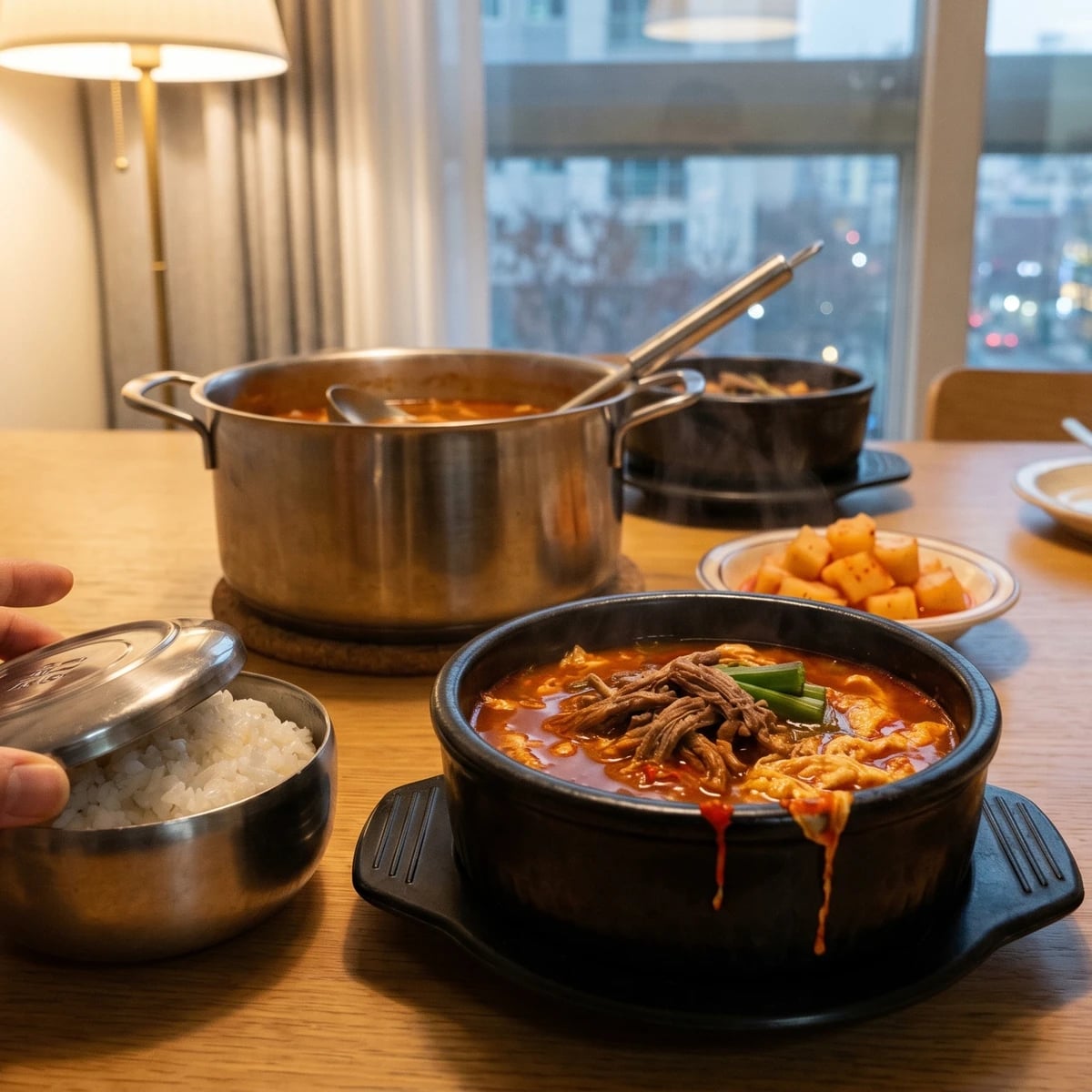
A batch pot of spicy shredded beef soup, built on patient broth, hand-torn brisket, fernbrake, and long scallions, with chili oil bloomed gently so the soup tastes deep instead of harsh.

Soups & Stews
Korean
Comfort Food
Make Ahead
Batch Cooking
35 min
Active Time
2 hr 40 min cook3 hr 15 min total
Yield6 servings

Yukgaejang lives or dies in your hands, not in the chili. The beef is boiled until it gives way, then torn with your fingers into long strands. My teacher, Master Seong-nyeo, would tap the board if a student reached for a knife. Cubes make a stew. Strands make yukgaejang.

This is a pot for a cold day, or for a house that needs feeding twice. It looks fierce because the broth runs red, but it should not taste like raw chili. You bloom gochugaru (Korean chili flakes) gently in oil, season the beef and fernbrake before they meet the broth, and use more scallion than a shy cook thinks proper. The scallion sweetens and softens. The gosari (fernbrake) gives chew. Bean sprouts go late so they keep their snap.

I won't tell you this is quick. The work is boiling, cooling, tearing, and waiting while the broth takes the seasoning. A pressure cooker may shorten the boiling, and prepared gosari may save you a night of soaking. Those are honest changes. The tearing is not optional, and neither is tasting the salt at the end. 손맛 is real; I measure it anyway.

The name yukgaejang keeps an older word inside it: gaejang, a spicy dog-meat soup associated with sambok, the three hottest days of summer, and described in the 1849 seasonal record Dongguk Sesigi. As beef versions spread in the late Joseon and modern periods, the dish became a red beef soup for homes and restaurants, especially suited to tough cuts boiled until they could be pulled apart. Daegu's red beef soups and ttaro-gukbap show how this strengthening soup moved from seasonal eating into everyday public food.

The technique, the tradition, and the story behind every dish.

Discover Culinary Explorer

Ingredients

beef brisket or beef shank

Quantity

900g

cold water

Quantity

14 cups, plus more as needed

onion

Quantity

1 medium

halved

garlic cloves for broth

Quantity

6 cloves

smashed

fresh ginger

Quantity

3 thin slices

whole black peppercorns

Quantity

1 teaspoon

prepared gosari (fernbrake)

Quantity

250g

rinsed, squeezed dry, cut into 3-inch lengths

large scallions or Korean daepa

Quantity

6 large, about 350g

cut into 3-inch lengths, thick whites split lengthwise

oyster mushrooms

Quantity

200g

torn into strips

mung bean sprouts

Quantity

250g

rinsed

neutral oil

Quantity

4 tablespoons

toasted sesame oil (optional)

Quantity

2 tablespoons, plus 1 teaspoon for finishing

gochugaru (Korean chili flakes)

Quantity

5 tablespoons

guk-ganjang (Korean soup soy sauce)

Quantity

5 tablespoons

garlic

Quantity

2 tablespoons

minced

fine sea salt

Quantity

1 teaspoon, plus more as needed

black pepper

Quantity

1 teaspoon

freshly ground

fish sauce or anchovy sauce (optional)

Quantity

1 tablespoon

eggs (optional)

Quantity

2

beaten

cooked short-grain rice (optional)

Quantity

to serve

Equipment Needed

  • 6 to 8 quart heavy pot
  • Fine-mesh strainer
  • Large mixing bowl or tray for shredding beef
  • Tongs or disposable food-safe gloves

Instructions

  1. 1

    Clean the beef

    Put the brisket or shank in a large bowl and cover it with cold water for 20 minutes, changing the water once if it turns very red. Drain and rinse the beef. This is not washing away flavor; it keeps the broth clean enough that the chili oil will taste clear later, not muddy.

  2. 2

    Boil the broth

    Put the beef in a 6 to 8 quart pot with 14 cups cold water, the halved onion, smashed garlic, ginger, and peppercorns. Bring it to a boil over medium-high heat, skim the gray foam for the first 10 minutes, then lower the heat to a steady simmer. Cover with the lid slightly ajar and cook 1 hour 45 minutes to 2 hours 15 minutes, until a chopstick slides into the thickest part easily and the meat begins to separate along its grain.

    Keep the beef covered with liquid. If the water drops below the meat, add a cup of hot water. Cold water shocks the simmer and clouds the broth.
  3. 3

    Measure the broth

    Lift the beef onto a tray and strain the broth through a fine strainer. Discard the onion, garlic, ginger, and peppercorns. Skim off heavy fat, but leave a few droplets because a completely stripped broth tastes thin. Measure 10 cups broth for the soup. If you have less, add water. If you have much more, boil it down until it reaches 10 cups. The measure matters because the salt and chili are written for that amount.

  4. 4

    Prepare the vegetables

    While the beef cools, cut the prepared gosari into 3-inch lengths, cut the scallions the same length and split any thick white parts lengthwise, tear the oyster mushrooms into strips, and rinse the mung bean sprouts. If vacuum-packed gosari smells sharp or tastes bitter, boil it in plain water for 5 minutes, rinse, and squeeze it dry before using. Fernbrake should be chewy and earthy, not harsh.

  5. 5

    Tear the beef

    When the beef is cool enough to handle, tear it by hand along the grain into long strands about 1/4 inch thick and 2 to 3 inches long. Discard hard gristle. Do not cube the beef. Cubes sit in the broth like stew meat; strands catch the seasoning and become part of the soup itself. My teacher, Master Seong-nyeo, would tap the board if a student reached for a knife here.

  6. 6

    Bloom the chili

    Wipe the soup pot clean and set it over low heat. Add the neutral oil and 2 tablespoons sesame oil, then stir in the gochugaru for 30 to 45 seconds, just until the oil turns a clear brick red and glossy. Pull the pot off the heat if the chili darkens. This is chili oil, not fried chili, and burnt gochugaru turns the whole pot bitter.

    Sesame oil alone scorches easily, which is why it is mixed with neutral oil here. That small modern kindness keeps the old flavor steady.
  7. 7

    Season the strands

    Add the torn beef, gosari, oyster mushrooms, and scallions to the chili oil. Add the guk-ganjang, minced garlic, salt, and black pepper, then toss everything over medium heat for 2 to 3 minutes until the strands are evenly red and the scallions begin to soften. Seasoning the solids first gives you a soup with depth. If you pour chili into broth and hope, you get red water.

  8. 8

    Simmer the soup

    Pour in the measured 10 cups beef broth and scrape the bottom of the pot clean. Bring it to a boil, then lower to a lively simmer and cook uncovered for 25 minutes. The scallions should collapse into the broth, the fernbrake should soften without losing its chew, and the red oil should bead across the surface.

  9. 9

    Add the sprouts

    Add the mung bean sprouts and keep the lid off from this point. Simmer 8 minutes, until the sprouts are cooked but still have a clean bite. Taste the broth. If it tastes flat, add the optional fish sauce. If it only needs salt, add fine sea salt 1/4 teaspoon at a time. Soup soy sauce varies from bottle to bottle, so this last tasting is not a decoration. It is the cook's work.

  10. 10

    Finish and serve

    If using eggs, drizzle the beaten eggs in a thin circle over the simmering soup, wait 20 seconds, then stir once so they set in soft ribbons. Turn off the heat and rest the soup 10 minutes before serving; yukgaejang tastes better when the broth has stopped shouting and started settling. Finish with 1 teaspoon sesame oil if the pot needs roundness. Serve with hot rice and kimchi.

Chef Tips

  • Buy brisket with visible grain, or use beef shank if you like a deeper broth. The meat must shred cleanly. A tender steak cut is wasted here and will not give the broth enough body.
  • Prepared gosari is a safe corner to cut. If starting with dried gosari, soak 60g dried fernbrake overnight, boil it 30 to 40 minutes until bendable, rinse well, and squeeze dry. That gives about 250g prepared gosari.
  • Do not replace gochugaru with gochujang. Yukgaejang needs chili fragrance and red oil, not sweetness and paste thickness.
  • A pressure cooker is allowed for the broth: cook the beef with the broth aromatics under high pressure for 45 minutes, then let the pressure release naturally. Tear the beef by hand afterward. The machine may shorten time; it cannot do the hand work.
  • This soup is better the next day. Cool it within 2 hours, refrigerate in shallow containers, and reheat only what you need. If freezing, freeze before adding bean sprouts and egg, because both suffer in the thaw.

Advance Preparation

  • The beef and broth can be made 1 day ahead. Refrigerate them separately, then lift off the hardened fat before continuing. Keep a little fat if you want a rounder broth.
  • Dried gosari must be soaked overnight and boiled before it goes into the soup. Do this up to 3 days ahead and keep it refrigerated, squeezed dry, in a covered container.
  • The finished soup keeps 4 days refrigerated. Reheat at a steady simmer and refresh with a small handful of new bean sprouts if the old ones have softened too much.

Frequently Asked Questions

Nutrition Information

1 serving (about 850g)

Calories
765 calories
Total Fat
38 g
Saturated Fat
10 g
Trans Fat
0 g
Unsaturated Fat
28 g
Cholesterol
165 mg
Sodium
1600 mg
Total Carbohydrates
63 g
Dietary Fiber
7 g
Sugars
5 g
Protein
43 g

Note: Chef personas and recipes are created with AI assistance. Cook with care: follow safe food-handling practices, check doneness with a thermometer when needed, and adapt for allergies and your kitchen.

Where cooking meets culture.

Culinary guides, cultural storytelling, and the editorial depth that makes cooking meaningful.

Discover Culinary Explorer

More from Tang: The Long Simmer

Browse the full collection