Chef Jeong-sun
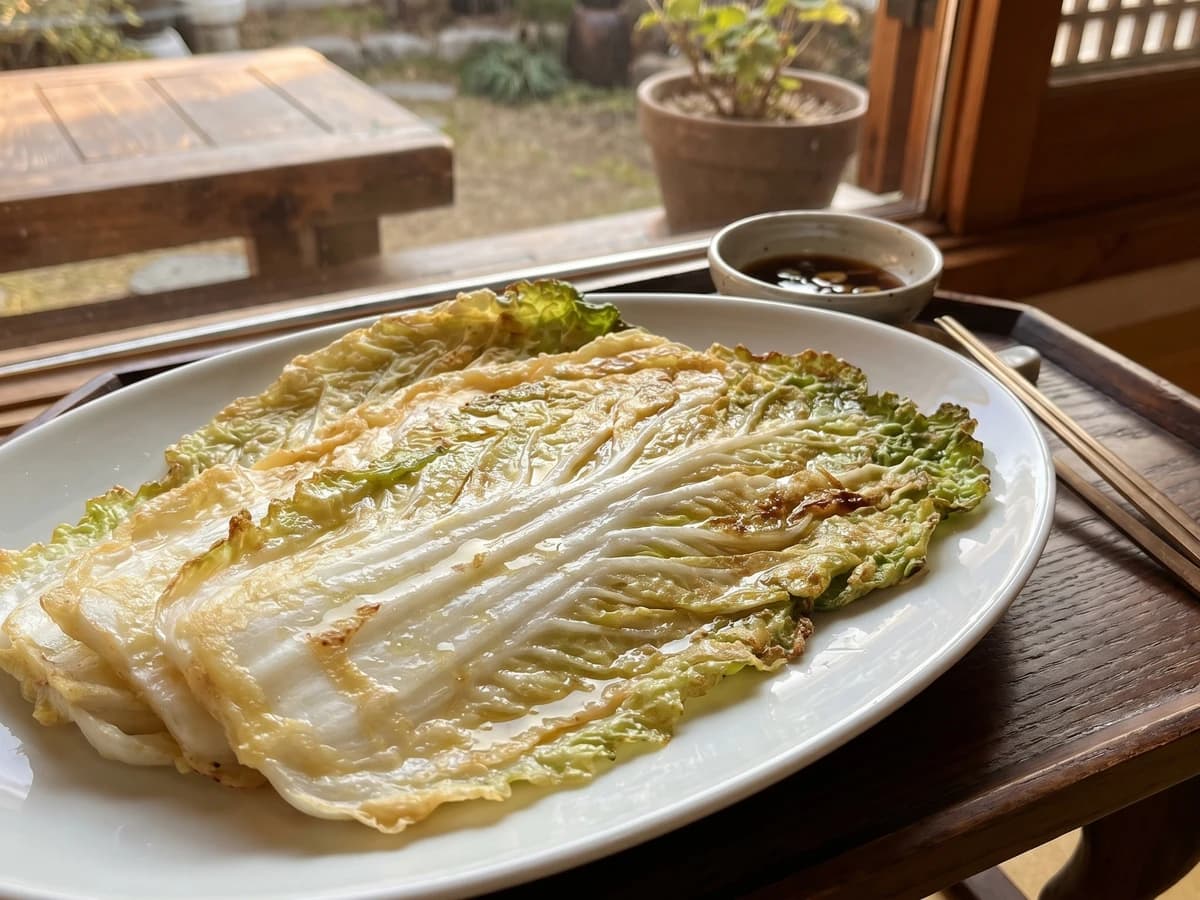
Baechu-jeon (배추전, Napa Cabbage Pancake)
A Gyeongsang home pancake made from one whole napa cabbage leaf at a time, flattened at the rib, brushed in thin salted batter, and fried until sweet, tender, and quietly crisp at the edges.
A cooking platform built around craft, culture, and the stories behind what we eat.

Created by
Paper-thin beef slices seasoned lightly, touched with flour and egg, then pan-fried just long enough to set the coat while the meat stays tender underneath.
Yuk-jeon lives or dies in the heat of the pan. Too low, and the egg drinks oil. Too high, and the egg browns before the beef relaxes. The right pan gives you pale gold edges, a tender center, and a coat thin enough that you still know you are eating beef.
My teacher made us lay every slice flat before the first pan was heated. No folding, no clumping, no guessing. Beef cut this thin cooks in seconds, so all the slow work comes first: pat it dry, season it lightly, dust it cleanly, dip it in beaten egg, then move with steady hands. 눈동냥, 귀동냥 (borrowing with the eyes and ears), she would say. Watch the first slice. It tells you how the whole batch will go.
This is celebration food, often on a holiday table or a Jeolla feast table, where many small efforts gather into one generous meal. It is not difficult, but it asks for attention. Season so the beef still tastes like beef. Keep the coating thin. Wipe the pan when brown bits collect. Write down the heat setting that works on your stove, because 손맛 is real; I measure it anyway, so it can be handed on.
Jeon, foods coated in flour and egg and pan-fried, appears in Joseon-era cooking records under names such as jeonyueo, covering fish, meat, and vegetables prepared for formal and household tables. Yuk-jeon is especially associated today with Jeolla-style feasts and holiday meals, and Gwangju is known for restaurants that serve thin beef jeon with sharp scallion salad or dipping sauce. It is festive not because it is grand, but because every slice requires the cook's hands.
Quantity
400g
sliced 2 mm thick against the grain
Quantity
1/2 teaspoon
Quantity
1/4 teaspoon
Quantity
1 tablespoon
Quantity
1/3 cup
lightly packed
Quantity
3 large
beaten
Quantity
1/8 teaspoon
for the eggs
Quantity
3 tablespoons
divided
Quantity
1 teaspoon
for the final batch only
Quantity
2 tablespoons
for dipping sauce
Quantity
1 tablespoon
for dipping sauce
Quantity
1 tablespoon
for dipping sauce
Quantity
1 teaspoon
for dipping sauce
Quantity
1 teaspoon
for dipping sauce
Quantity
1
finely sliced, for dipping sauce
Quantity
1 small
finely sliced, for dipping sauce
| Ingredient | Quantity |
|---|---|
| beef eye of round, sirloin, or tenderloinsliced 2 mm thick against the grain | 400g |
| fine sea salt | 1/2 teaspoon |
| freshly ground black pepper | 1/4 teaspoon |
| rice wine or mirim | 1 tablespoon |
| all-purpose flour or Korean buchimgarulightly packed | 1/3 cup |
| eggsbeaten | 3 large |
| fine sea saltfor the eggs | 1/8 teaspoon |
| neutral oildivided | 3 tablespoons |
| toasted sesame oil (optional)for the final batch only | 1 teaspoon |
| soy saucefor dipping sauce | 2 tablespoons |
| rice vinegarfor dipping sauce | 1 tablespoon |
| waterfor dipping sauce | 1 tablespoon |
| sugarfor dipping sauce | 1 teaspoon |
| toasted sesame seedsfor dipping sauce | 1 teaspoon |
| scallionfinely sliced, for dipping sauce | 1 |
| green chili (optional)finely sliced, for dipping sauce | 1 small |
Lay the beef slices flat on a tray lined with paper towels and pat both sides dry. Sprinkle evenly with 1/2 teaspoon salt, the black pepper, and the rice wine, then let the beef sit 10 minutes. The salt seasons the meat itself, not the egg coat, and the rice wine softens the smell of raw beef without making the dish sweet.
Put the flour in a shallow plate. Beat the eggs with 1/8 teaspoon salt in a wide bowl until no white streaks remain, then set a clean tray beside the stove. This dish moves quickly, so the station has to be ready before oil touches the pan.
Dredge each beef slice in flour, then shake it well so only a thin film remains. Do not leave patches of dry flour. The flour is there to help the egg cling, not to make a thick crust, and too much flour turns pasty under the egg.
Dip the floured beef into the beaten egg and let the excess drip back into the bowl. Lay the slices in a single layer near the stove. Coat only as many as you can fry within a few minutes, because egg sitting on flour too long becomes gluey.
Heat a wide nonstick or well-seasoned skillet over medium heat and add 1 tablespoon neutral oil. When the oil looks glossy, lay in the beef slices without overlapping. Fry 35 to 45 seconds on the first side, then turn and cook 25 to 35 seconds on the second side, just until the egg sets pale gold and the beef is cooked through. If the egg browns hard, lower the heat. If it stays wet and oily, raise it a little.
Repeat with the remaining beef, adding oil by the teaspoon as needed rather than pouring in too much at once. Wipe the pan with a folded paper towel whenever brown egg bits collect, because they darken the next batch and make the clean egg coat taste bitter. Add the sesame oil only at the end if you want a faint nuttiness; use too much and it will cover the beef.
Stir together the soy sauce, rice vinegar, water, sugar, sesame seeds, sliced scallion, and green chili if using. Taste it. It should be salty first, then sharp, with just enough sugar to round the vinegar. The sauce is a dip, not a bath.
Arrange the yuk-jeon slightly overlapping on a platter and serve warm or at room temperature with the dipping sauce. Do not stack it too high while hot, or the egg coat softens underneath. At a holiday table, it can sit beside other jeon, but give it its own plate. Beef deserves to taste like itself.
1 serving (about 155g)
Culinary guides, cultural storytelling, and the editorial depth that makes cooking meaningful.
Discover Culinary ExplorerChef Jeong-sun
A Gyeongsang home pancake made from one whole napa cabbage leaf at a time, flattened at the rib, brushed in thin salted batter, and fried until sweet, tender, and quietly crisp at the edges.

Chef Jeong-sun
A holiday jeon of fresh shiitake or oyster mushrooms, salted lightly, dusted thinly, and carried through egg in a quiet pan until the mushroom stays earthy and the coating stays tender.
Chef Jeong-sun
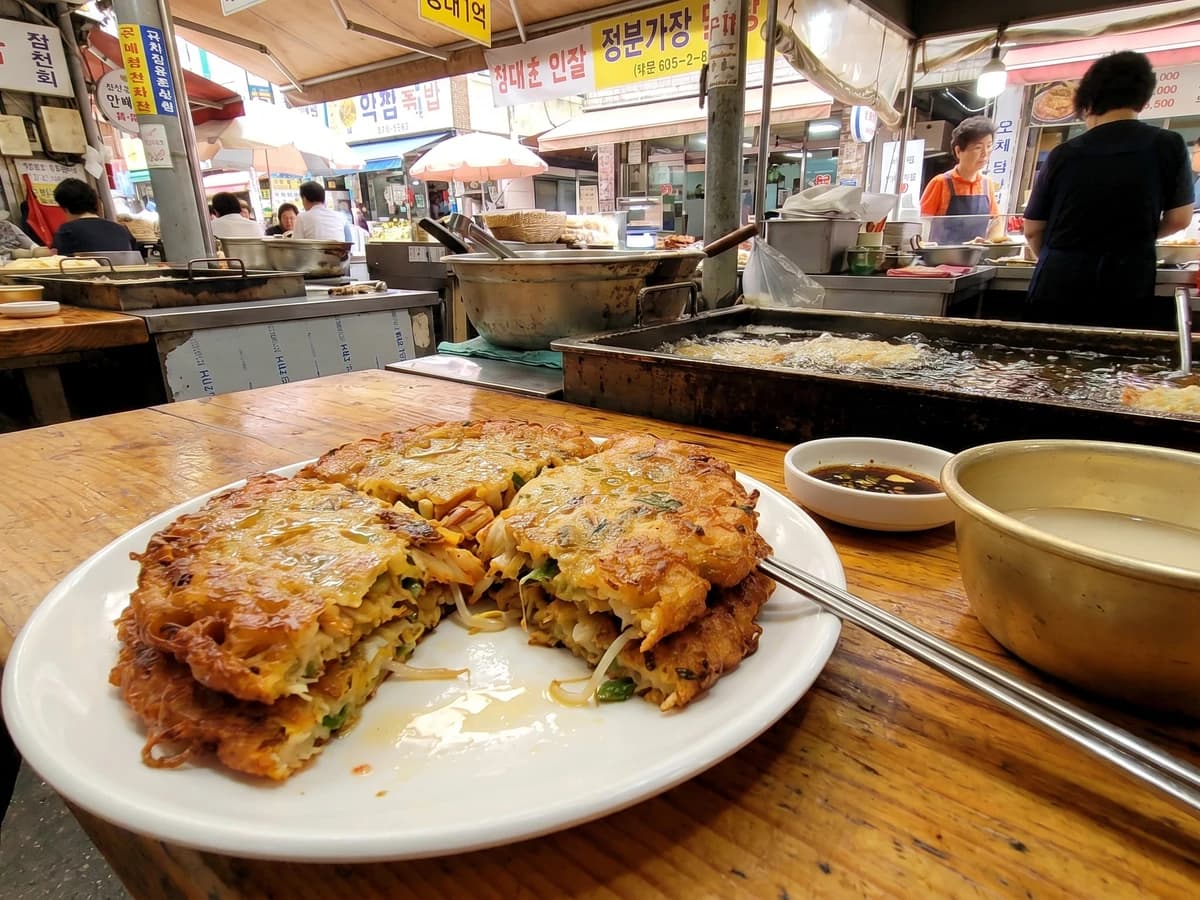
Soaked mung beans ground coarse, folded with pork, bracken, sprouts, and kimchi, then fried thick until the edges crisp and the center stays tender enough for a shared table.
Chef Jeong-sun
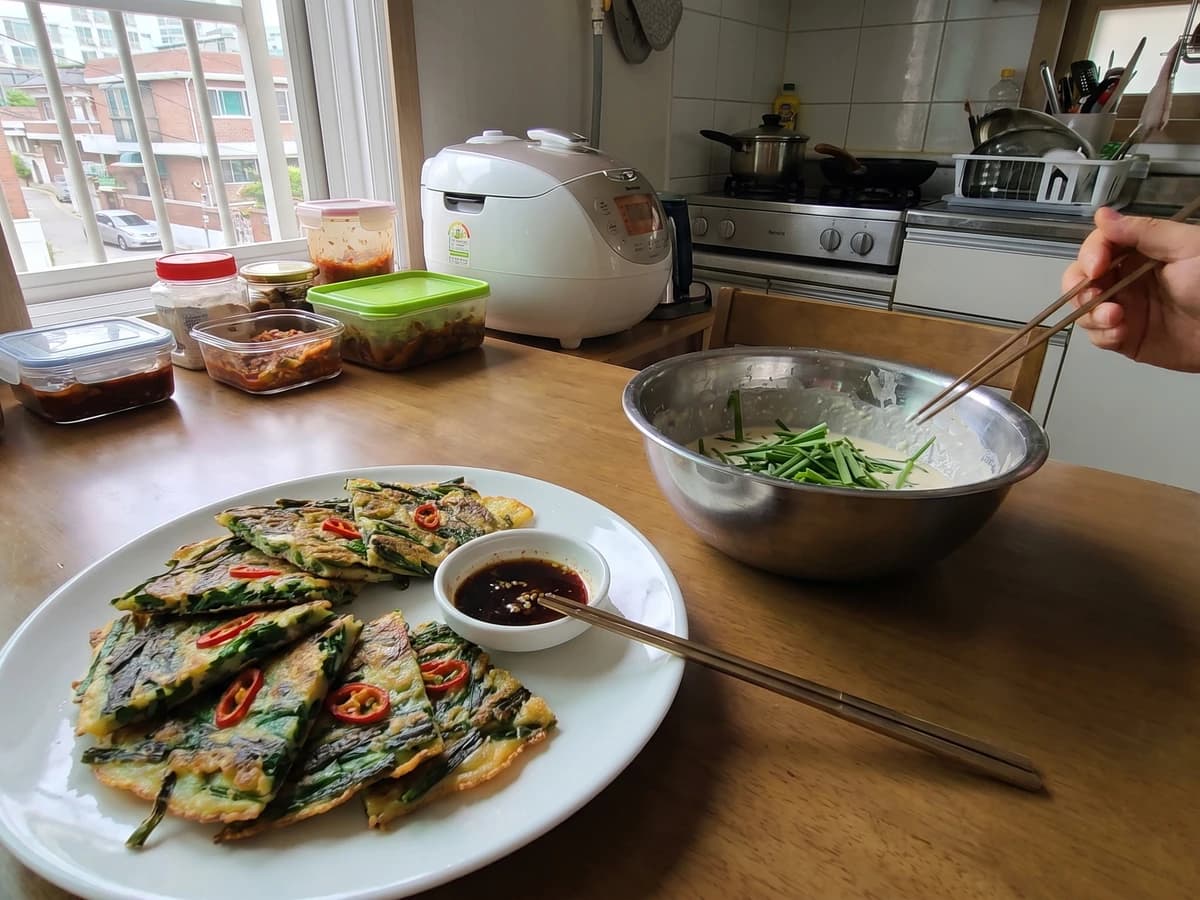
A summer garlic chive pancake fried thin, crisp at the edges and chewy in the center, with just enough batter to hold the green pile together and a sharp soy-vinegar dip.