
Chef Jeong-sun
Albaechu-mul-kimchi (Baby Cabbage Water Kimchi)
Tender baby napa cabbage in a clear pear-garlic brine, lightly fermented until the broth turns clean and bright, the summer kimchi a beginner can make without a kimjang floor.
A cooking platform built around craft, culture, and the stories behind what we eat.
Created by
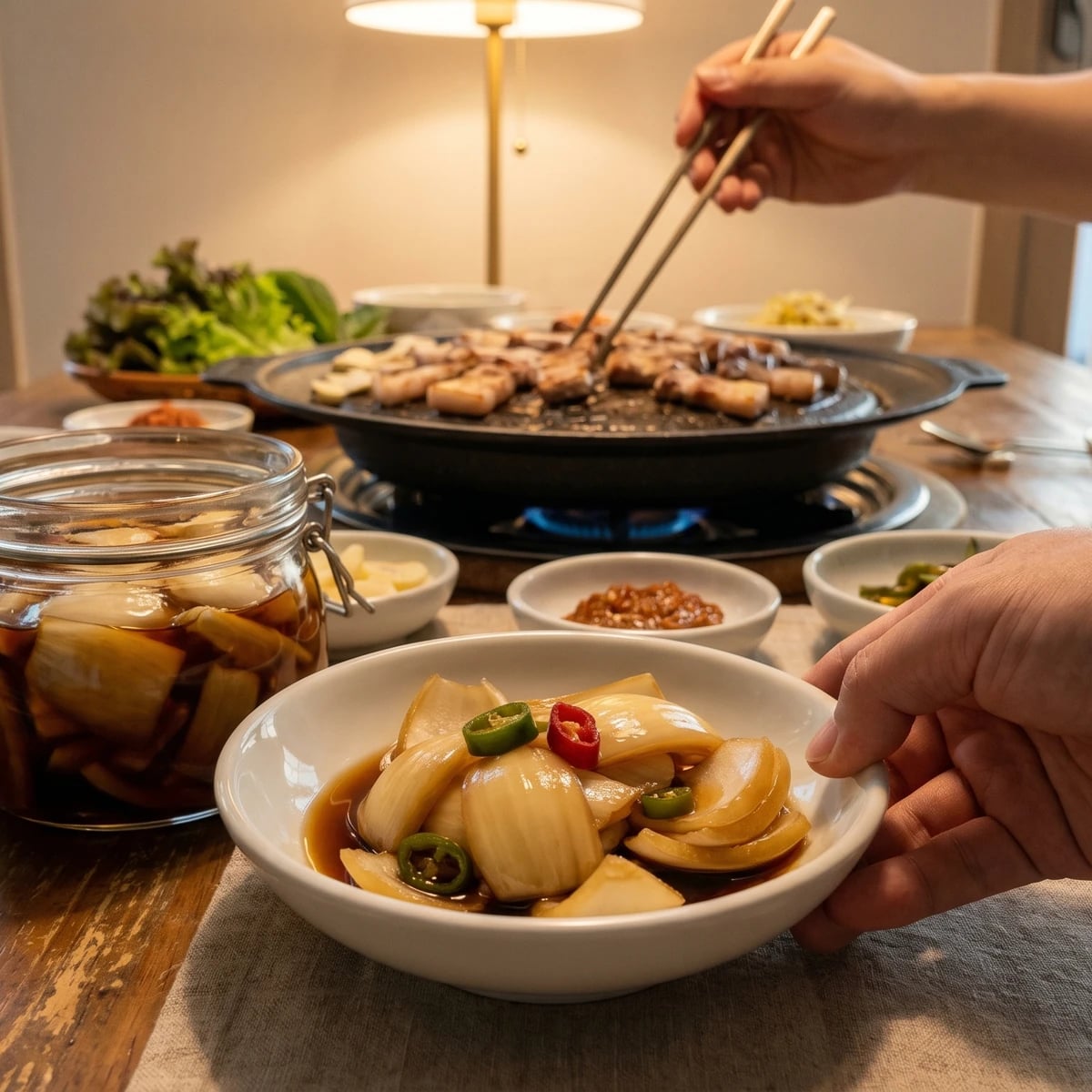
Quartered onions cured in soy, vinegar, and sugar, the modern home jangajji that waits in the refrigerator and rescues any table heavy with grilled meat.
Spring onions are when I like this best, the small firm ones with tight layers and no green sprout pushing from the top. Cook the month you're standing in. In late spring and early summer, make yangpa-jangajji. In winter, when the onions are harsh and tired, make mu-jangajji (soy-pickled radish) instead.
This is not old grandeur. It is refrigerator food, budget food, the little bowl you set beside samgyeopsal, galbi, or a plain fried egg over rice. The onion gives sweetness, the vinegar gives the cut, and the soy sauce gives salt without making the whole thing heavy. The trick is the hot brine. Pour it over the onions once, while boiling, and they relax just enough but keep their bite. Boil the onions in the pot and you've made something else.
My teacher Master Seong-nyeo measured brine by ratios before she trusted anyone's hand. Notebook 31 says 1 part soy sauce, 1 part vinegar, 1 part water, and just under 1 part sugar for onions, because onions bring their own sweetness. 손맛 is real. I still measure it anyway, so it can be handed on. Tonight this asks very little of you: cut evenly, pack cleanly, pour hot, cool, and wait one day before judging it.
Jangajji is the Korean family of preserved vegetables cured in jang, the fermented sauces and pastes that held a household pantry together before refrigeration. Yangpa-jangajji is a newer member of that family because onions, called yangpa or western scallions, became common in Korea only in the twentieth century. Its place at the modern table grew with home refrigeration and tabletop grilling, where a sharp soy-vinegar pickle cuts through fatty meat.
Quantity
600g
peeled and quartered through the root
Quantity
1
sliced on the diagonal
Quantity
1
sliced on the diagonal
Quantity
1 cup
Quantity
1 cup
Quantity
1 cup
Quantity
3/4 cup
Quantity
2 tablespoons
| Ingredient | Quantity |
|---|---|
| small yellow or white onionspeeled and quartered through the root | 600g |
| green chili (optional)sliced on the diagonal | 1 |
| red chili (optional)sliced on the diagonal | 1 |
| soy sauce | 1 cup |
| rice vinegar | 1 cup |
| water | 1 cup |
| sugar | 3/4 cup |
| maesil-cheong (Korean green plum syrup) (optional) | 2 tablespoons |
Wash a 1 quart glass jar and lid with hot soapy water, rinse well, and let them dry. This is a refrigerator pickle, not shelf-stable canning, but a clean jar still matters because the onions will sit in brine for weeks.
Peel the onions and quarter them through the root so the layers stay partly attached. If the onions are large, cut each half into 3 wedges instead of 2. Even pieces cure at the same speed; careless cutting gives you sharp raw centers and soft outer pieces in the same jar.
Pack the onion wedges into the jar with the sliced chilies, if using. Do not crush them. Leave about 1 inch of space at the top so the hot brine can cover everything without spilling.
Combine the soy sauce, rice vinegar, water, sugar, and maesil-cheong, if using, in a small saucepan. Bring to a full boil over medium heat, stirring until the sugar dissolves. The boil is short, just 30 seconds once it bubbles hard. You are dissolving and unifying the brine, not cooking it down.
Pour the boiling brine directly over the onions until they are fully covered. Press the onions down gently with a clean spoon so trapped air rises. This hot pour is the whole technique: it takes away the raw bite while leaving the onion crisp.
Let the jar stand uncovered until it is no longer hot, about 45 minutes, then seal and refrigerate. If a few onion tips float above the brine, turn the jar once after 2 hours or weigh them down with a clean small dish that fits inside the mouth.
Start tasting after 24 hours. The onions should be crisp, sweet-sour, and soy-salty all the way through the outer layers, with a little raw snap left in the center. Serve cold in a small banchan dish, spooning over just enough brine to shine at the bottom.
1 serving (about 75g)
Culinary guides, cultural storytelling, and the editorial depth that makes cooking meaningful.
Discover Culinary Explorer
Chef Jeong-sun
Tender baby napa cabbage in a clear pear-garlic brine, lightly fermented until the broth turns clean and bright, the summer kimchi a beginner can make without a kimjang floor.

Chef Jeong-sun
The kimchi from before chili, salted napa cabbage packed with radish, pear, jujube, and pine nuts in a clear brine that turns quietly tart in the jar.

Chef Jeong-sun
A pale summer cucumber kimchi, split and stuffed with radish and chives, then held in a cool pear brine so the cucumber stays clean, crunchy, and plainly itself.

Chef Jeong-sun
Flat spring bomdong cabbage, lightly brined and tucked into a clear pear-radish kimchi broth, made without chili and eaten young while the leaves still taste like spring.