Chef Fai
Isan Beef Larb (Larb Nua)
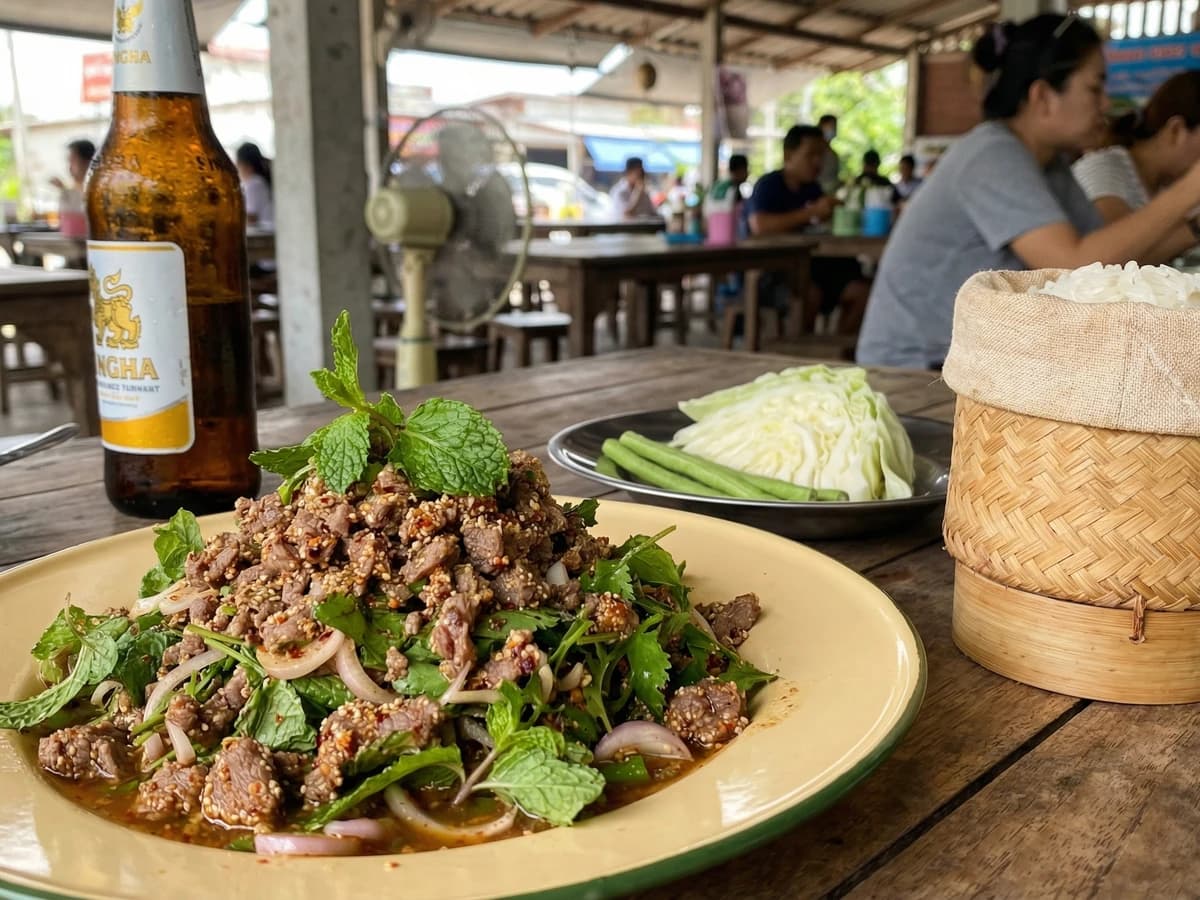
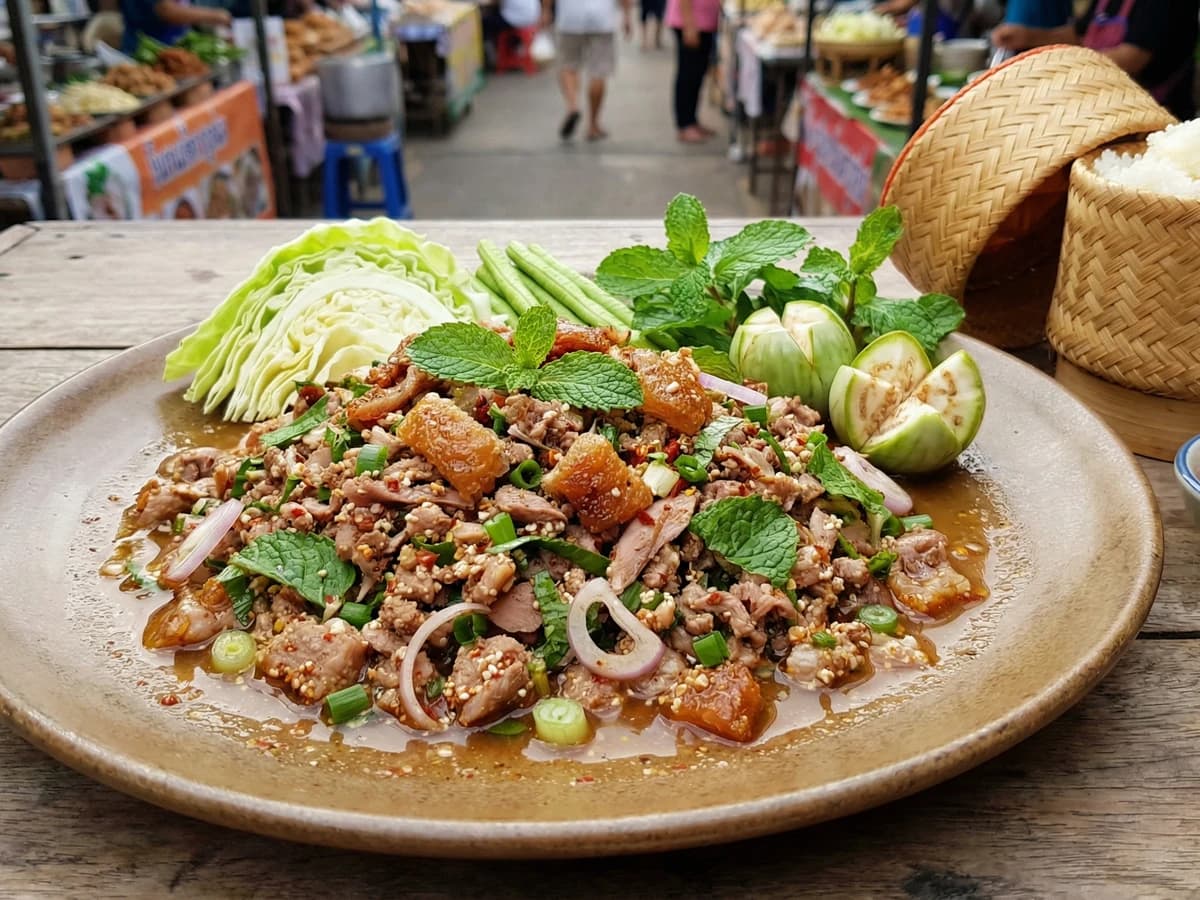
No sugar. That's the rule. Isan larb strips Thai cuisine down to three pillars: nam pla for salt, manao for sour, prik for heat, bound by the smoky crunch of freshly pounded khao khua. The absence defines the dish.
A cooking platform built around craft, culture, and the stories behind what we eat.
Created by
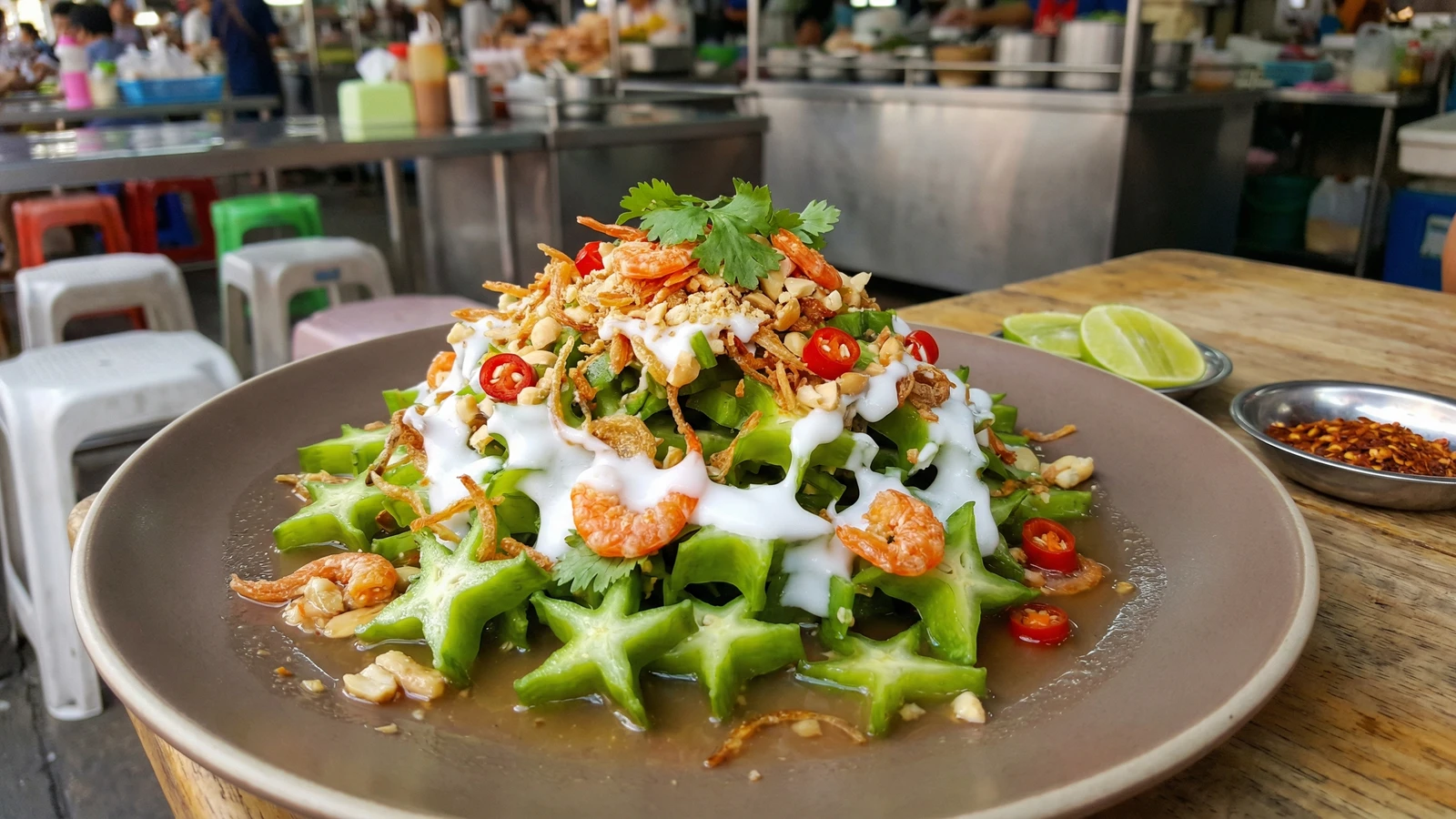
Central Thai yam where coconut cream isn't poured thin but cooked down to a thick, sweet blanket over crunchy winged beans, dried shrimp, and fried shallots. The four pillars plus fat. That's the architecture.
Coconut cream is a pillar amplifier. That's the principle this dish teaches.
The yam dressing formula is the four pillars made portable: nam pla (fish sauce) for salt, nam manao (lime juice) for sour, nam tan pip (palm sugar) for sweet, prik (chili) for heat. Every Central Thai yam follows this ratio. Every single one. But yam thua phoo adds a fifth element: hua kathi (coconut cream), cooked down until it's thick and almost broken, spooned over the top like a rich, sweet blanket that ties the whole dish together.
Ajarn always said the four pillars are the skeleton. Fat is the muscle. In most yam, the dressing is lean, just the four pillars doing their work. But certain Central Thai yam, thua phoo and hua plee (banana blossom) among them, use reduced coconut cream as a structural layer. Not a drizzle. Not a thin pour. You cook the cream down in a pan until the oil starts to separate and the liquid turns dense and glossy. That concentration is the difference between a good yam and one that makes people stop talking at the table.
I teach this dish at Fai Thai workshops because it forces people to understand what the dressing actually does. The winged beans are blanched for thirty seconds, just enough to kill the raw edge but keep the crunch. They come out of the water with almost no flavor of their own. They're a vehicle. The dressing, the coconut cream, the dried shrimp, the fried shallots: those are the flavor. The bean is the architecture that holds it all. If you can dress thua phoo properly, you can dress any yam. Principles, not recipes.
Winged beans have four ridged flanges running their length. When you slice them crosswise, each piece looks like a tiny green four-pointed star. That geometry isn't decoration. Those ridges catch and hold the dressing in their crevices. The bean was designed for this dish. Or the dish was designed for this bean. Either way, the structure and the sauce work together. That's Thai food thinking: nothing is accidental.
Winged beans (Psophocarpus tetragonolobus, ถั่วพู) are native to tropical Southeast Asia and have been cultivated in central Thailand for centuries, thriving in the humid lowlands around Bangkok. Yam thua phoo is a distinctly Central Thai preparation tied to the tradition of coconut cream-dressed salads that also includes yam hua plee (banana blossom salad). The dish's reliance on coconut cream reflects Central Thailand's geography: the coconut palms of the Gulf coast provinces supplied Bangkok's kitchens with fresh cream daily, making it a staple fat in the region's cuisine in a way that never took hold in Isan or the North.
Quantity
300g
trimmed and sliced crosswise into 1/4-inch pieces
Quantity
200ml
thick head of the can only
Quantity
50g
medium-sized
Quantity
4
2 thinly sliced for frying, 2 thinly sliced raw
Quantity
3 tablespoons
Quantity
3 tablespoons (about 2-3 limes)
Quantity
1 tablespoon
shaved or grated
Quantity
5
sliced thin
Quantity
for frying shallots
Quantity
for finishing
Quantity
2 tablespoons
lightly crushed
| Ingredient | Quantity |
|---|---|
| winged beans (thua phoo)trimmed and sliced crosswise into 1/4-inch pieces | 300g |
| coconut cream (hua kathi)thick head of the can only | 200ml |
| dried shrimp (goong haeng)medium-sized | 50g |
| shallots (hom daeng)2 thinly sliced for frying, 2 thinly sliced raw | 4 |
| fish sauce (nam pla) | 3 tablespoons |
| lime juice (nam manao) | 3 tablespoons (about 2-3 limes) |
| palm sugar (nam tan pip)shaved or grated | 1 tablespoon |
| bird's eye chilies (prik khi nu)sliced thin | 5 |
| vegetable oil | for frying shallots |
| fresh cilantro leaves (pak chi) | for finishing |
| roasted unsalted peanutslightly crushed | 2 tablespoons |
Slice two of the shallots as thinly and evenly as you can. Uneven slices mean some burn while others stay pale. Heat about 1 cm of vegetable oil in a small pan over medium heat. Add the shallot slices and fry slowly, stirring often. They'll take 4-5 minutes to turn golden. Pull them out with a slotted spoon just before they look done. They darken as they drain. Spread them on paper towels. They should be crisp within a minute. If they're not, they weren't fried long enough.
Bring a pot of water to a rolling boil. Drop the sliced winged beans in. Thirty seconds. That's it. Not a minute. Not two minutes. Thirty seconds. You want the raw edge gone and the color to turn vivid green, but the crunch has to stay. Immediately drain and spread them on a plate to cool at room temperature. Do not shock in ice water. You want them warm, not cold. A warm bean absorbs the dressing better than a cold one.
Pour the coconut cream into a small saucepan over medium heat. Use only the thick head of the can, not the thin watery milk underneath. Stir constantly as it heats. Within 3-4 minutes, the cream will start to reduce and thicken. You'll see the oil begin to separate at the edges, tiny pools of clear coconut oil forming on the surface. That's the sign. The cream should be dense, glossy, and coat a spoon thickly. Take it off the heat. This is not a pour. It's a spoon-over. If it's thin enough to pour easily, it's not ready.
Soak the dried shrimp in warm water for 5 minutes. Drain and squeeze out the excess water. You want them plump but not waterlogged. If they're the tiny variety, leave them whole. If they're larger, roughly chop them. The shrimp add salt, umami, and a chewy texture that plays against the crunch of the beans. They're not a garnish. They're a structural ingredient.
In a small bowl, combine the fish sauce, lime juice, and palm sugar. Stir until the sugar dissolves. Taste it. The dressing should be: sour first, salty second, sweet underneath. That's the Central Thai yam ratio. If the lime is too aggressive, a pinch more sugar. If it tastes flat, more fish sauce. Add the sliced bird's eye chilies directly to the dressing. Their heat will bloom in the acid. This is the four pillars in liquid form.
Arrange the blanched winged beans on a serving plate while they're still slightly warm. Scatter the drained dried shrimp and raw sliced shallots over the beans. Pour the yam dressing evenly over the top. Toss gently with your hands or two spoons, lifting from the bottom so every piece gets dressed. Now spoon the reduced coconut cream over the top. Don't mix it in. It sits on top like a rich layer. Scatter the fried shallots, crushed peanuts, and cilantro leaves. Serve immediately at room temperature.
1 serving (about 190g)
Culinary guides, cultural storytelling, and the editorial depth that makes cooking meaningful.
Discover Culinary ExplorerChef Fai
No sugar. That's the rule. Isan larb strips Thai cuisine down to three pillars: nam pla for salt, manao for sour, prik for heat, bound by the smoky crunch of freshly pounded khao khua. The absence defines the dish.
Chef Fai
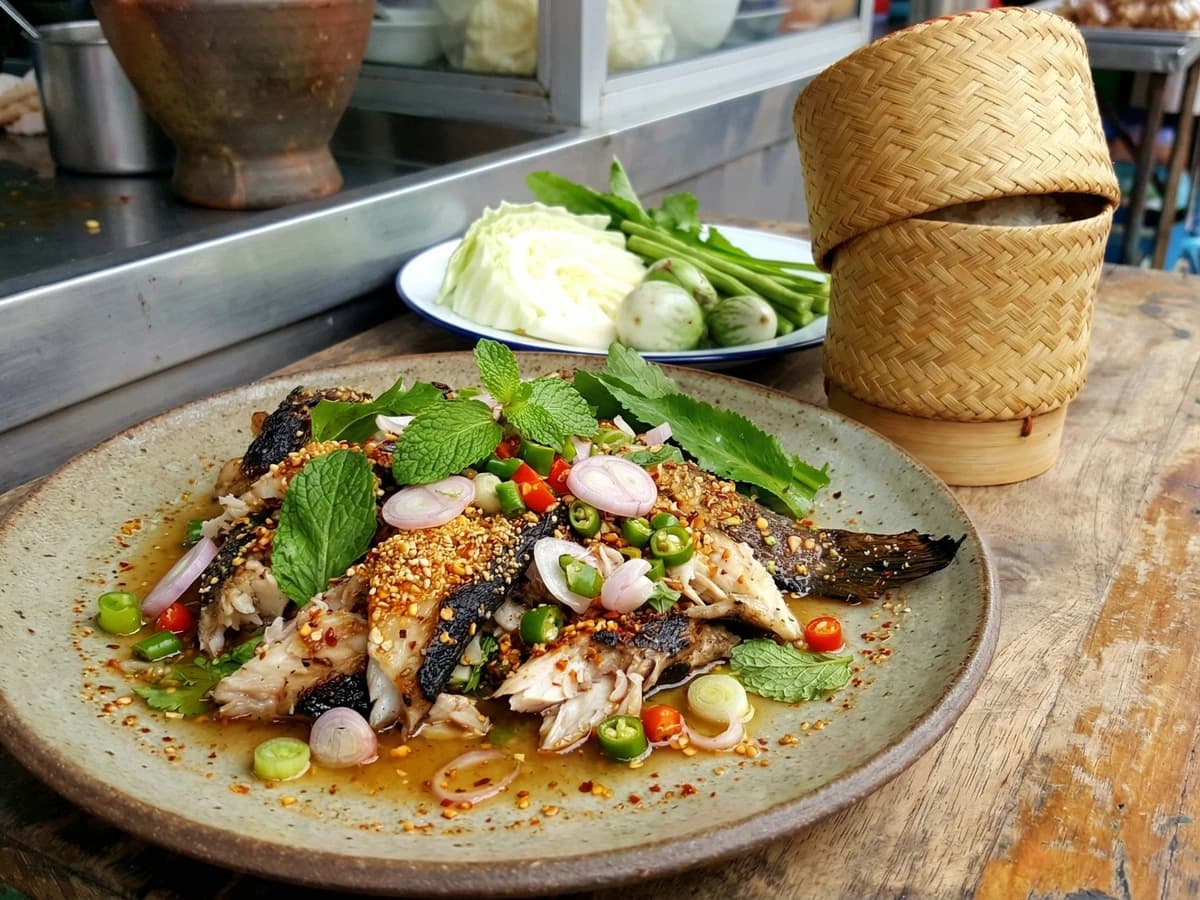
No sugar. That's the line between Isan and Central Thai larb. Grilled catfish flaked while warm, dressed with nam pla, manao, khao khua, prik pon, and a storm of fresh herbs. The plateau on a plate.
Chef Fai
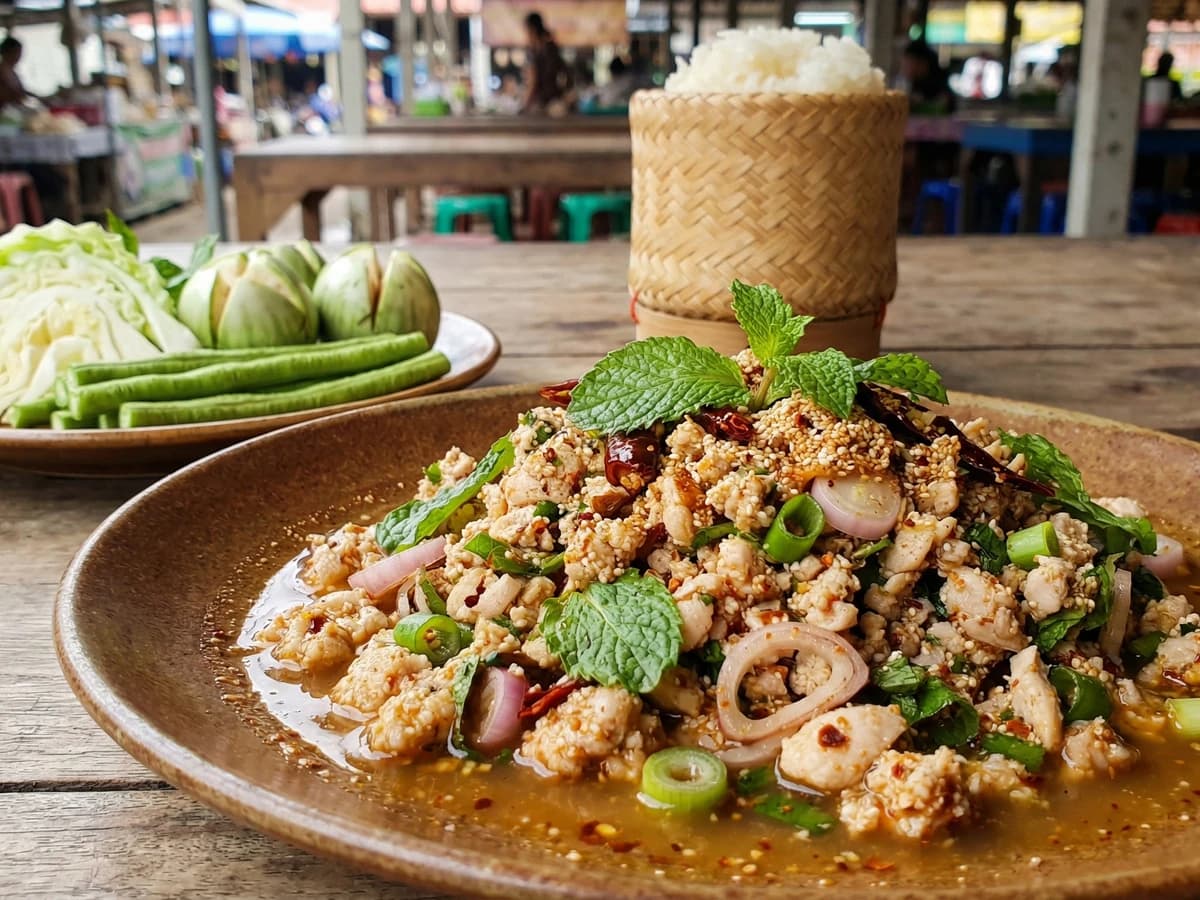
No sugar. That's the rule. Isan larb strips Thai cuisine down to three pillars: nam pla for salt, manao for sour, prik for heat, with khao khua tying it together in a way nothing else can.
Chef Fai
Duck brings gamey depth to the Isan larb formula. No sugar. Lime, fish sauce, khao khua, prik pon, and a wall of fresh herbs. This is the celebration table standard, and the governing rule is restraint.