Chef Fai
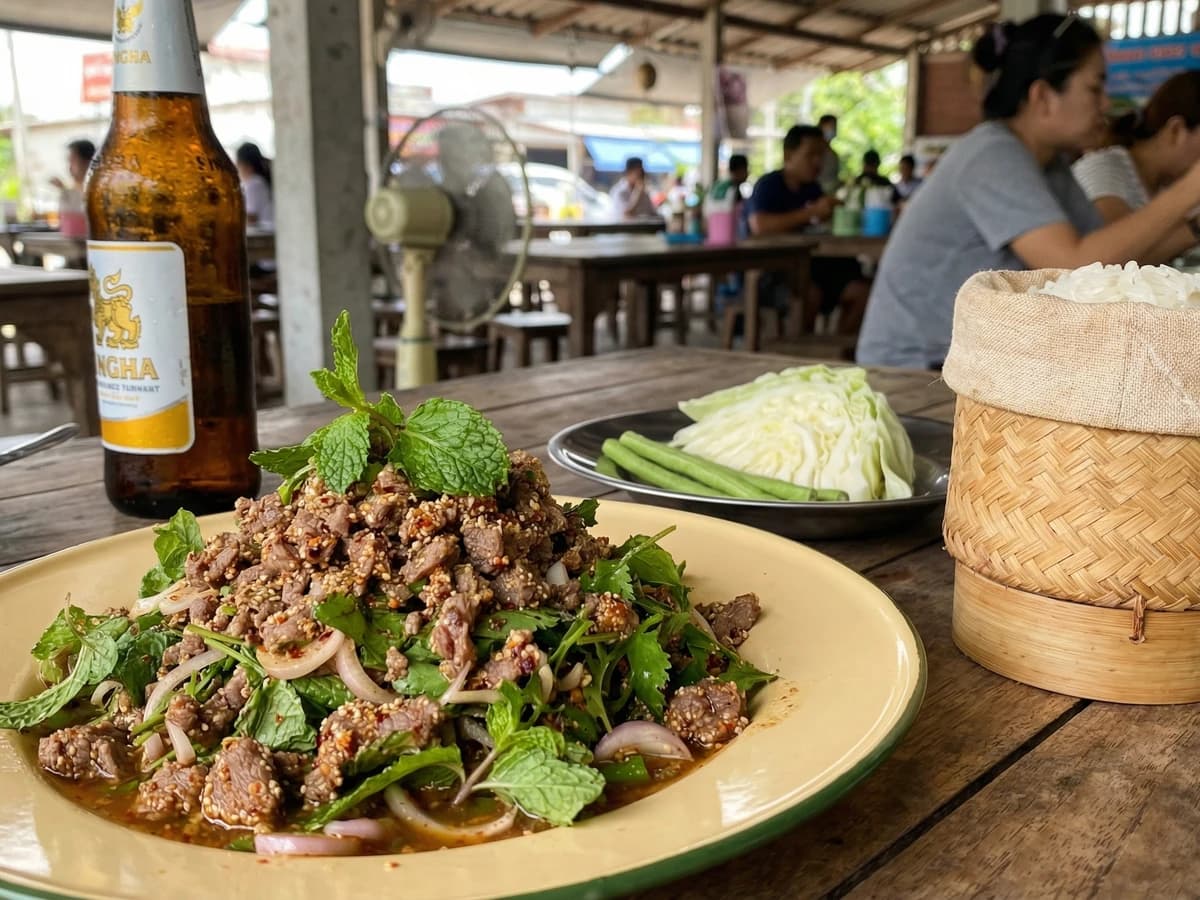
Isan Beef Larb (Larb Nua)
No sugar. That's the rule. Isan larb strips Thai cuisine down to three pillars: nam pla for salt, manao for sour, prik for heat, bound by the smoky crunch of freshly pounded khao khua. The absence defines the dish.
A cooking platform built around craft, culture, and the stories behind what we eat.

Created by
The dinner party yam. Shrimp, squid, and mussels blanched just right and dressed while still warm, because heat opens the four-pillar dressing and pulls it into every piece of seafood. Central Thai principles on a sharing plate.
Yam is not a salad. It's a dressed dish governed by a formula. Fish sauce for salt. Palm sugar for sweet. Lime for sour. Chili for spice. That ratio is the law, and every Central Thai yam follows it. The protein changes. The vegetables change. The dressing doesn't. If you understand the dressing, you can yam anything.
Yam talay is the dinner party version. Mixed seafood: shrimp, squid, mussels, sometimes scallops if you're feeling generous. Each one blanched separately because each one cooks at a different rate. Shrimp curls in ninety seconds. Squid turns opaque in forty-five. Mussels open in their own time. Overcook any of them and you've ruined the whole plate. This is a dish that demands attention.
Here's the principle Ajarn drilled into me: dress while warm. When protein is still hot from blanching, the surface is open. Porous. The dressing doesn't just coat it, it gets pulled inside. You taste the fish sauce and lime in the flesh of the shrimp, not sitting on top of it. If you let the seafood cool completely and then dress it, you get a salad with dressing on it. If you dress it warm, you get yam.
The herbs are structural. Cilantro, mint, sawtooth coriander (pak chi farang), Chinese celery. These aren't decoration you scatter at the end for a photograph. They go in with the seafood, tossed together, so their oils mix with the dressing and the residual heat wilts them just enough to release flavor. Shallots are sliced thin and left raw because their sharpness cuts through the richness of the seafood. Every element has a job. Nothing is garnish.
Yam talay is a Central Thai preparation that became a staple of Bangkok seafood restaurants and dinner tables from the 1970s onward, as Thailand's coastal fishing industry expanded and fresh seafood became widely available in the capital's markets. The yam dressing formula (nam pla, manao, nam tan pip, prik) predates any specific yam dish and functions as a portable expression of the four pillars. Yam talay distinguished itself from Isan-influenced salads by using no toasted rice powder and relying entirely on the acid-salt-sweet-heat balance of the dressing itself.
Quantity
200g
shell-on
Quantity
200g
cleaned, scored in crosshatch, cut into bite-size pieces
Quantity
200g
scrubbed and debearded
Quantity
3 tablespoons
Quantity
4 tablespoons (about 4 limes)
Quantity
1 tablespoon
shaved or finely chopped
Quantity
5
sliced thin
Quantity
3
sliced thin
Quantity
2 stalks
cut into 1-inch pieces, leaves included
Quantity
1/2 small
sliced thin
Quantity
1/4 cup
leaves and stems, roughly chopped
Quantity
1/4 cup
Quantity
2 sprigs
cut into 1-inch pieces
Quantity
1 tablespoon
| Ingredient | Quantity |
|---|---|
| medium shrimp (goong)shell-on | 200g |
| squid (pla muek)cleaned, scored in crosshatch, cut into bite-size pieces | 200g |
| mussels (hoi malaeng phu)scrubbed and debearded | 200g |
| fish sauce (nam pla) | 3 tablespoons |
| lime juice (nam manao) | 4 tablespoons (about 4 limes) |
| palm sugar (nam tan pip)shaved or finely chopped | 1 tablespoon |
| bird's eye chilies (prik khi nu)sliced thin | 5 |
| shallots (hom daeng)sliced thin | 3 |
| Chinese celery (kheun chai)cut into 1-inch pieces, leaves included | 2 stalks |
| white onionsliced thin | 1/2 small |
| fresh cilantro (pak chi)leaves and stems, roughly chopped | 1/4 cup |
| fresh mint leaves (saranae) | 1/4 cup |
| sawtooth coriander (pak chi farang)cut into 1-inch pieces | 2 sprigs |
| roasted chili flakes (prik pon) | 1 tablespoon |
In a mixing bowl large enough to hold everything, combine the fish sauce, lime juice, and palm sugar. Stir until the sugar dissolves completely. Add the sliced chilies and prik pon (roasted chili flakes). Taste. Sour should lead. Salty supports. Sweet is barely there, just enough to round the edges. Heat builds. This is the four-pillar formula. It governs every yam you will ever make. Adjust now, before the seafood goes in, because once you start tossing, the window closes fast.
Bring a large pot of water to a rolling boil. No salt. The fish sauce is your salt. Drop the mussels in and cook until they open, about 2 to 3 minutes. Pull them out with a slotted spoon the moment they open. Discard any that stay shut. Remove the mussels from their shells (leave a few in the half-shell if you want the visual) and add them directly to the dressing bowl while still hot. The heat matters. Warm protein absorbs the dressing. Cold protein wears it like a jacket.
Return the water to a boil. Drop the shrimp in, shell-on. Blanch until they curl and turn pink, about 90 seconds. Not two minutes. Not three. Ninety seconds. Pull them out immediately and peel them while they're still hot (use a towel if you need to, but don't run them under cold water, you'll wash away the residual heat and stop the absorption). Add the peeled shrimp to the dressing bowl with the mussels.
Back to the same boiling water. Drop the scored squid pieces in. This is the fastest cook of the three. Forty-five seconds. The squid curls, turns opaque white, and the crosshatch scoring opens up like tiny flowers. That scoring isn't decoration. It increases surface area so the dressing gets into the flesh. Pull the squid out the moment it curls. Overcook squid by even thirty seconds and it turns to rubber bands. Add it to the bowl immediately.
Now: the shallots, onion, Chinese celery, cilantro, mint, and sawtooth coriander all go into the bowl with the warm, dressed seafood. Toss everything together with your hands or two spoons. The residual heat from the seafood will slightly wilt the herbs, releasing their oils into the dressing. That's intentional. You're not building a composed plate. You're building a tossed, integrated dish where every bite has protein, herb, heat, and acid. Taste a piece of shrimp. The dressing should be inside the flesh, not just sitting on the surface. If it tastes flat, add more lime. If it needs depth, a splash more fish sauce. Pound, taste, adjust. Same principle, different dish.
Transfer to a serving plate. Don't fuss with it. Pile it generously and let the herbs tumble where they want. Scatter a few extra mint leaves and cilantro on top. Lime wedges on the side for the people who want more acid (they always do). Serve at room temperature. Not cold. Never cold from a fridge. The dressing tightens and the seafood loses its tenderness when chilled. This dish is alive at room temperature. Eat it within twenty minutes of tossing. Yam talay doesn't wait.
1 serving (about 170g)
Culinary guides, cultural storytelling, and the editorial depth that makes cooking meaningful.
Discover Culinary ExplorerChef Fai
No sugar. That's the rule. Isan larb strips Thai cuisine down to three pillars: nam pla for salt, manao for sour, prik for heat, bound by the smoky crunch of freshly pounded khao khua. The absence defines the dish.
Chef Fai
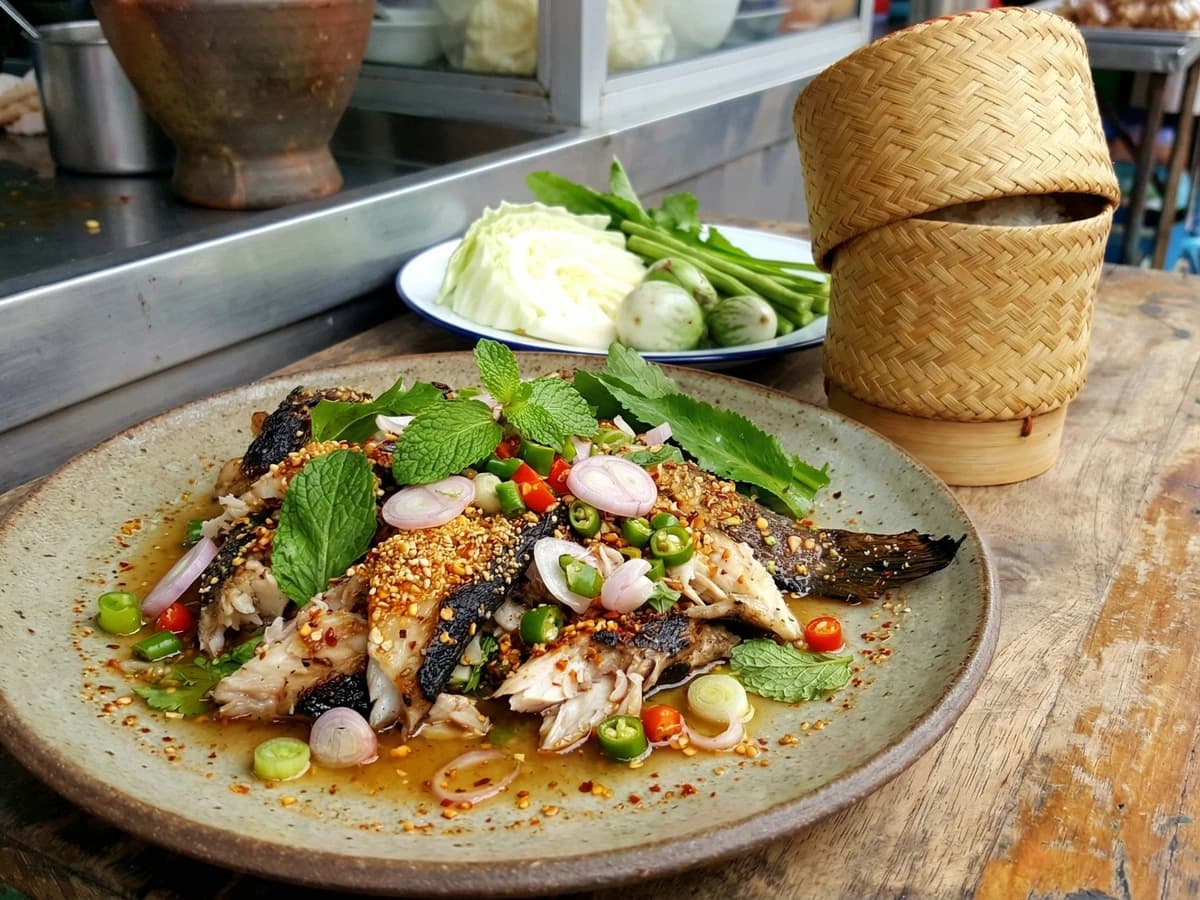
No sugar. That's the line between Isan and Central Thai larb. Grilled catfish flaked while warm, dressed with nam pla, manao, khao khua, prik pon, and a storm of fresh herbs. The plateau on a plate.
Chef Fai
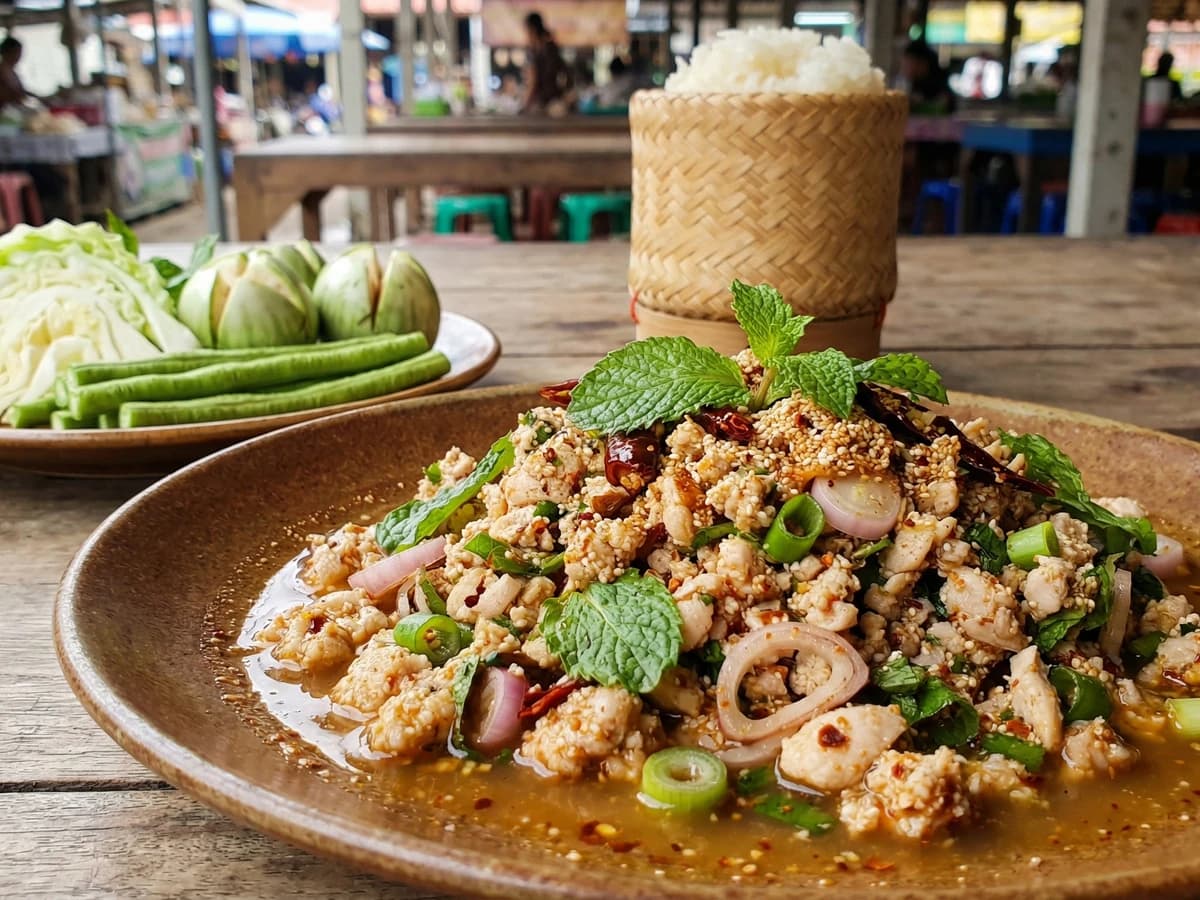
No sugar. That's the rule. Isan larb strips Thai cuisine down to three pillars: nam pla for salt, manao for sour, prik for heat, with khao khua tying it together in a way nothing else can.
Chef Fai
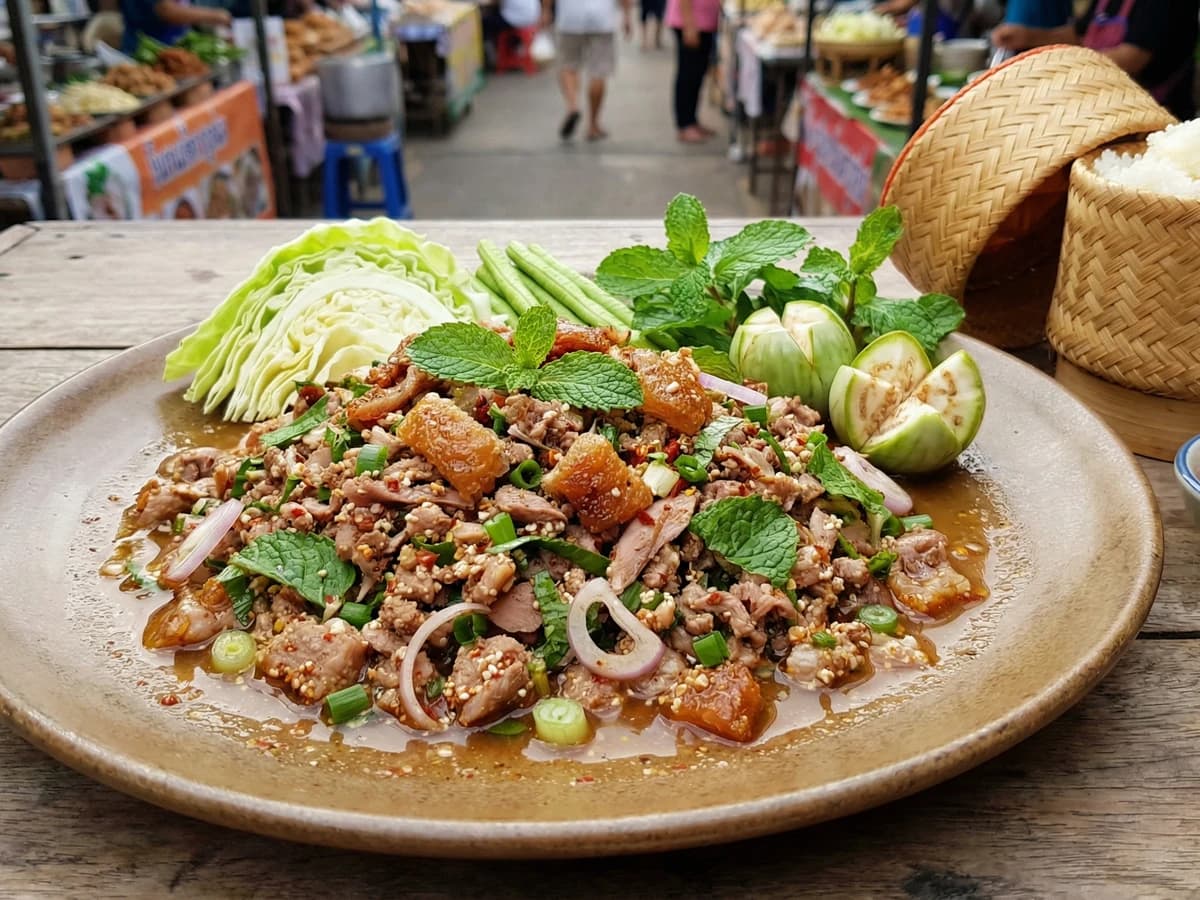
Duck brings gamey depth to the Isan larb formula. No sugar. Lime, fish sauce, khao khua, prik pon, and a wall of fresh herbs. This is the celebration table standard, and the governing rule is restraint.