Chef Fai
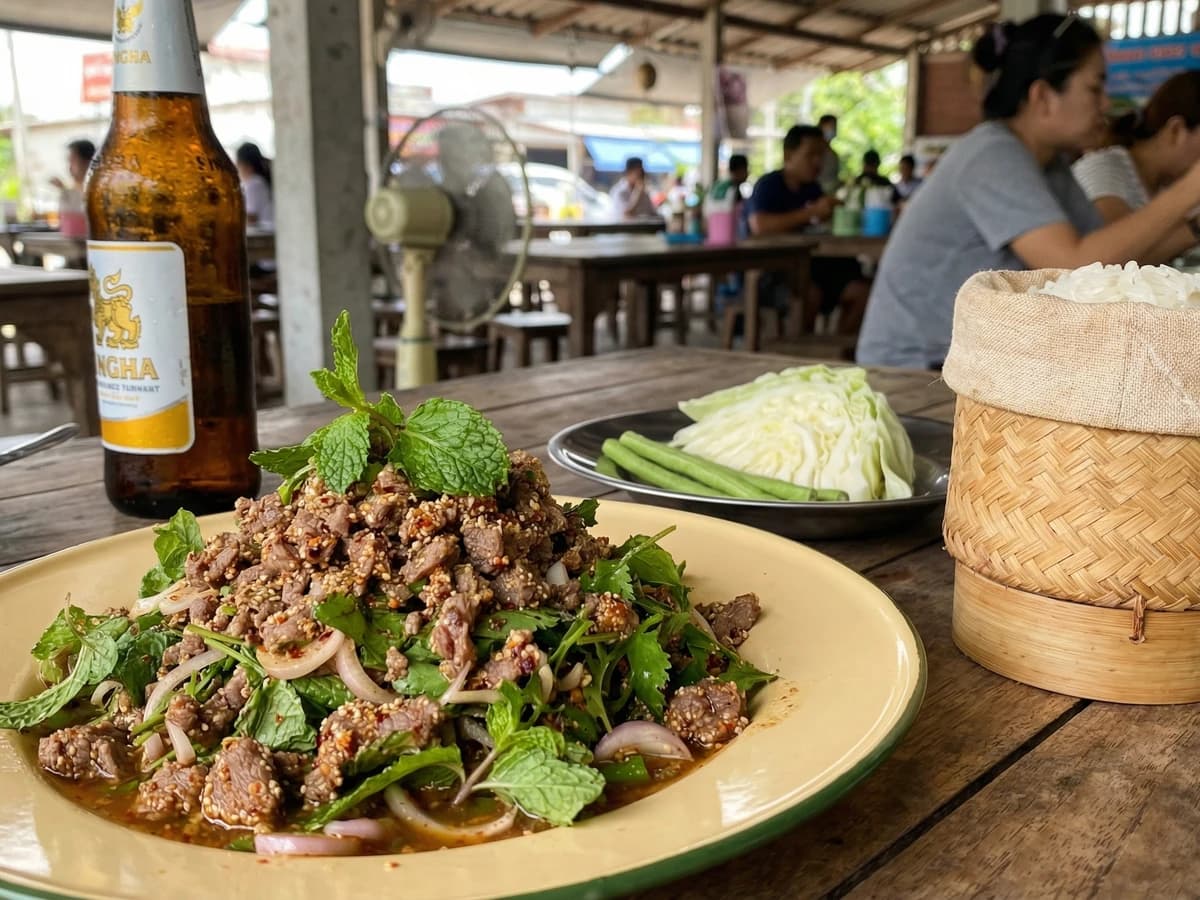
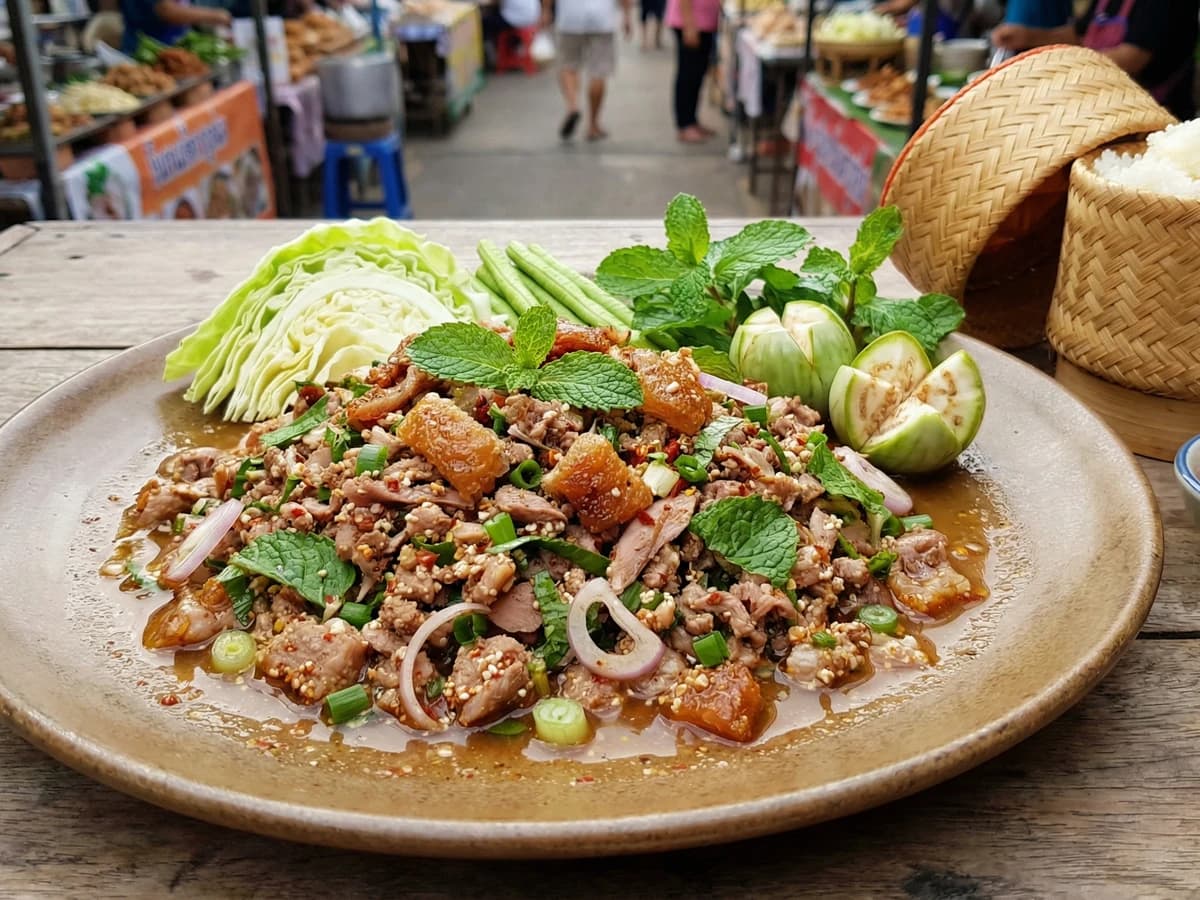
Isan Beef Larb (Larb Nua)
No sugar. That's the rule. Isan larb strips Thai cuisine down to three pillars: nam pla for salt, manao for sour, prik for heat, bound by the smoky crunch of freshly pounded khao khua. The absence defines the dish.
A cooking platform built around craft, culture, and the stories behind what we eat.
Created by
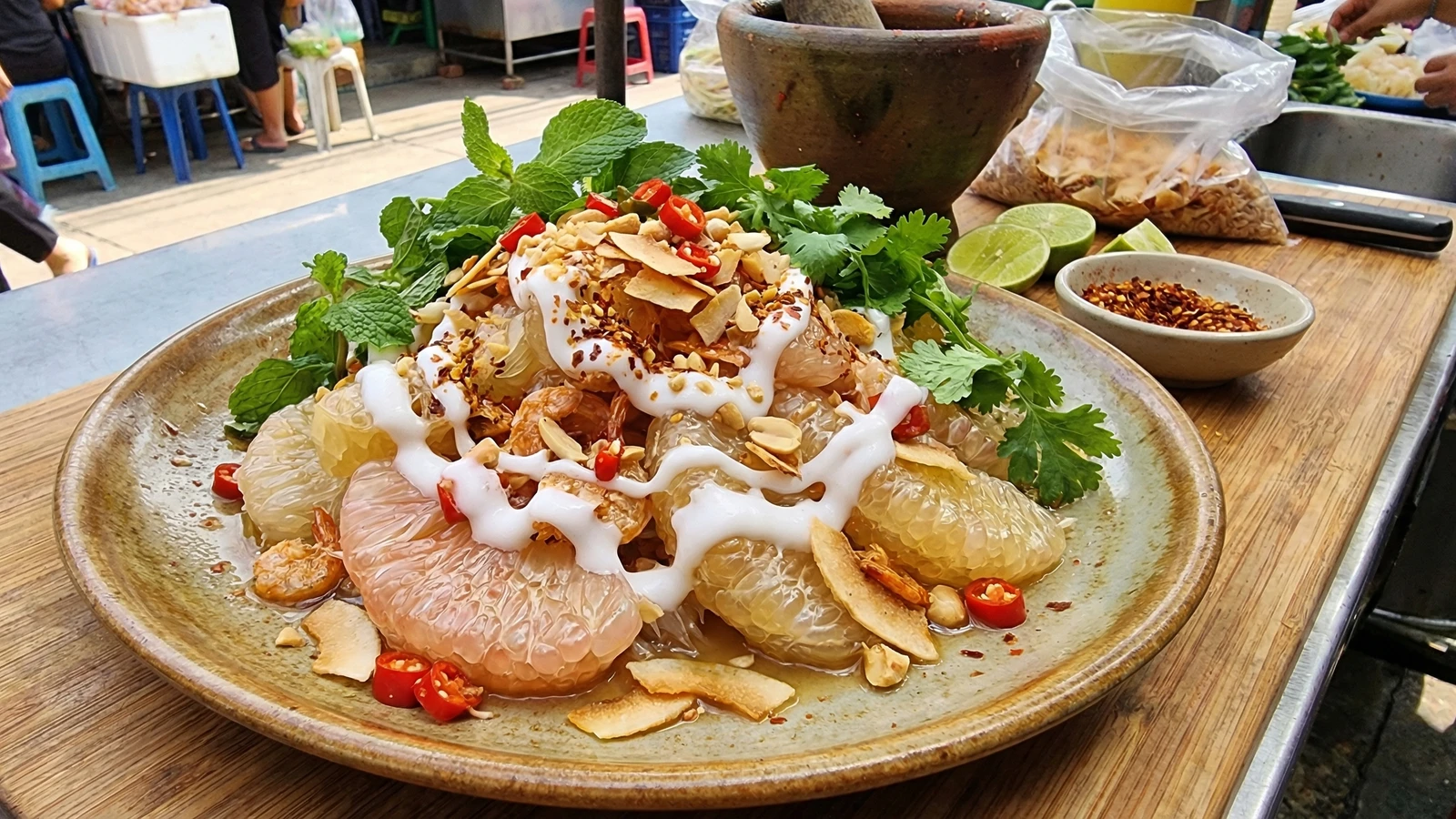
The sour pillar doesn't always come from lime. Pomelo carries the acid in this Central Thai yam, proving that tropical fruit is the principle and lime is just one expression of it. Ajarn taught me this distinction and it changed everything.
The sour pillar is not lime. Lime is one expression of the sour pillar. This is the distinction that rewires your understanding of Thai food.
Ajarn always said that the four pillars of Thai cuisine are fish sauce for salt, palm sugar for sweet, tropical fruit acids for sour, and chili for spice. Notice he never said "lime for sour." He said tropical fruit acids. Lime is the most common source. But pomelo, tamarind, green mango, unripe pineapple: these are all expressions of the same governing principle. Yam som oh is the dish that proves it. The pomelo itself carries the sour pillar. Its juice, its pulp, its natural tartness does the structural work that lime does in som tam or yam woon sen. Lime still shows up in the dressing, but it's playing backup. The fruit is the star.
This is a Central Thai yam. The dressing formula is the four pillars made portable: nam pla for salt, nam tan pip for sweet, manao for sour, prik for spice. Every yam in the Central Thai repertoire follows this ratio. But yam som oh adds a fifth element that makes it special: coconut cream, cooked down thick until it's almost a paste, spooned over the top. Not poured thin like you're making a curry. Thick. Rich. It rounds the sharp edges of the dressing and gives the whole dish a luxurious body that makes it worthy of a dinner party.
I learned this dish from watching the yam vendors at Khlong Toei market serve it on special occasions. Som oh is not cheap fruit. It's big, it takes time to peel and segment, and you need a good one with firm, juicy flesh. When a vendor makes yam som oh, she's telling you this isn't an ordinary lunch. This is a dish that says something. The technique is simple. The ingredient quality has to be high. That's the trade-off.
Yam som oh is a Central Thai salad with roots in the aristocratic kitchens of old Bangkok, where pomelo (Citrus maxima) was prized as an offering fruit and a symbol of prosperity. The dish appears in early 20th-century Central Thai recipe collections alongside other coconut cream-dressed yam like yam thua phoo and yam hua plee, all sharing the technique of reducing coconut cream to a thick, spoonable consistency. Unlike Isan salads that rely on toasted rice powder and pla ra, this is firmly Central Thai in its use of coconut cream, roasted coconut, and the refined balance of its dressing.
Quantity
1 large, about 600g of fruit
peeled, segmented, and pulled apart by hand into bite-sized pieces
Quantity
200ml
thick first pressing
Quantity
100g
roughly chopped
Quantity
3 tablespoons
Quantity
3 tablespoons
Quantity
2 tablespoons
roughly crushed
Quantity
3
thinly sliced
Quantity
3
thinly sliced
Quantity
2 tablespoons
Quantity
1 tablespoon
shaved
Quantity
2 tablespoons (about 2 limes)
Quantity
1 tablespoon
Quantity
a generous handful
Quantity
a small handful
| Ingredient | Quantity |
|---|---|
| pomelo (som oh)peeled, segmented, and pulled apart by hand into bite-sized pieces | 1 large, about 600g of fruit |
| coconut cream (hua kathi)thick first pressing | 200ml |
| cooked shrimproughly chopped | 100g |
| dried shrimp (goong haeng) | 3 tablespoons |
| roasted coconut flakes (maprao khua) | 3 tablespoons |
| roasted peanutsroughly crushed | 2 tablespoons |
| shallots (hom daeng)thinly sliced | 3 |
| bird's eye chilies (prik khi nu)thinly sliced | 3 |
| fish sauce (nam pla) | 2 tablespoons |
| palm sugar (nam tan pip)shaved | 1 tablespoon |
| lime juice (nam manao) | 2 tablespoons (about 2 limes) |
| roasted chili flakes (prik pon) | 1 tablespoon |
| fresh mint leaves (saranae) | a generous handful |
| fresh cilantro leaves (pak chi) | a small handful |
Cut the pomelo in half and then into quarters. Peel away the thick rind and the white pith. Separate each segment and pull away the membrane skin that encases the flesh. Now, pull the flesh apart by hand into bite-sized pieces. Not with a knife. By hand. You want irregular, ragged pieces that have surface area to catch the dressing. If you cut pomelo with a blade, the cells rupture and you lose juice to the cutting board. Pulled apart, the juice stays inside each little vesicle until it bursts in your mouth. That's the difference between a good yam som oh and a great one.
Pour the coconut cream into a small saucepan over medium heat. Stir constantly. You're reducing it, cooking out the water until it thickens into something that coats the back of a spoon and starts to look slightly oily. This takes about 5 to 7 minutes. Don't let it brown. Don't let it split completely. You want it thick, rich, and pourable but not liquid. Think of the consistency of condensed milk, not water. Set it aside to cool to room temperature.
If your coconut flakes aren't already toasted, put them in a dry pan over medium-low heat. Stir constantly. They go from white to golden to burnt in about ninety seconds. Pull them the moment they're golden and fragrant. Set aside. Crush the roasted peanuts lightly in a mortar, just a few strikes to break them into rough pieces, not powder. Slice the shallots thin. Slice the chilies thin. Have everything ready before you start assembling.
In a small bowl, combine the fish sauce, lime juice, and palm sugar. Stir until the sugar dissolves. Taste it. This is the four-pillar dressing in its purest form: salty, sour, sweet. The chili comes separately. The balance should lean sour, with the salt right behind and the sweet barely there to round it. Remember, the pomelo is already bringing sourness and sweetness. Your dressing needs to complement the fruit, not overpower it. Adjust now, before it touches the pomelo.
In a large mixing bowl, combine the pomelo pieces, chopped cooked shrimp, dried shrimp, sliced shallots, and half the roasted coconut flakes. Pour the dressing over and toss gently with your hands. Gently. The pomelo pieces are delicate. You're coating, not crushing. The dried shrimp will hydrate slightly from the dressing and give you little pockets of concentrated umami throughout the salad. Taste a piece of pomelo with a bit of shrimp and dressing. Adjust if needed. More fish sauce if it's flat. More lime if it's dull.
Transfer the salad to a serving plate. Spoon the cooled coconut cream over the top. Not mixed in. Spooned over. The coconut cream is a topping, a rich counterpoint to the sharp dressing below. Scatter the remaining toasted coconut, crushed peanuts, roasted chili flakes, sliced chilies, mint leaves, and cilantro over the top. The herbs are structural. The mint cuts through the richness of the coconut cream. The cilantro bridges the sweet and the sour. Eat at room temperature. Never cold from the fridge. Cold kills the aromatics and tightens the coconut cream into a waxy layer. Room temperature is where this dish lives.
1 serving (about 250g)
Culinary guides, cultural storytelling, and the editorial depth that makes cooking meaningful.
Discover Culinary ExplorerChef Fai
No sugar. That's the rule. Isan larb strips Thai cuisine down to three pillars: nam pla for salt, manao for sour, prik for heat, bound by the smoky crunch of freshly pounded khao khua. The absence defines the dish.
Chef Fai
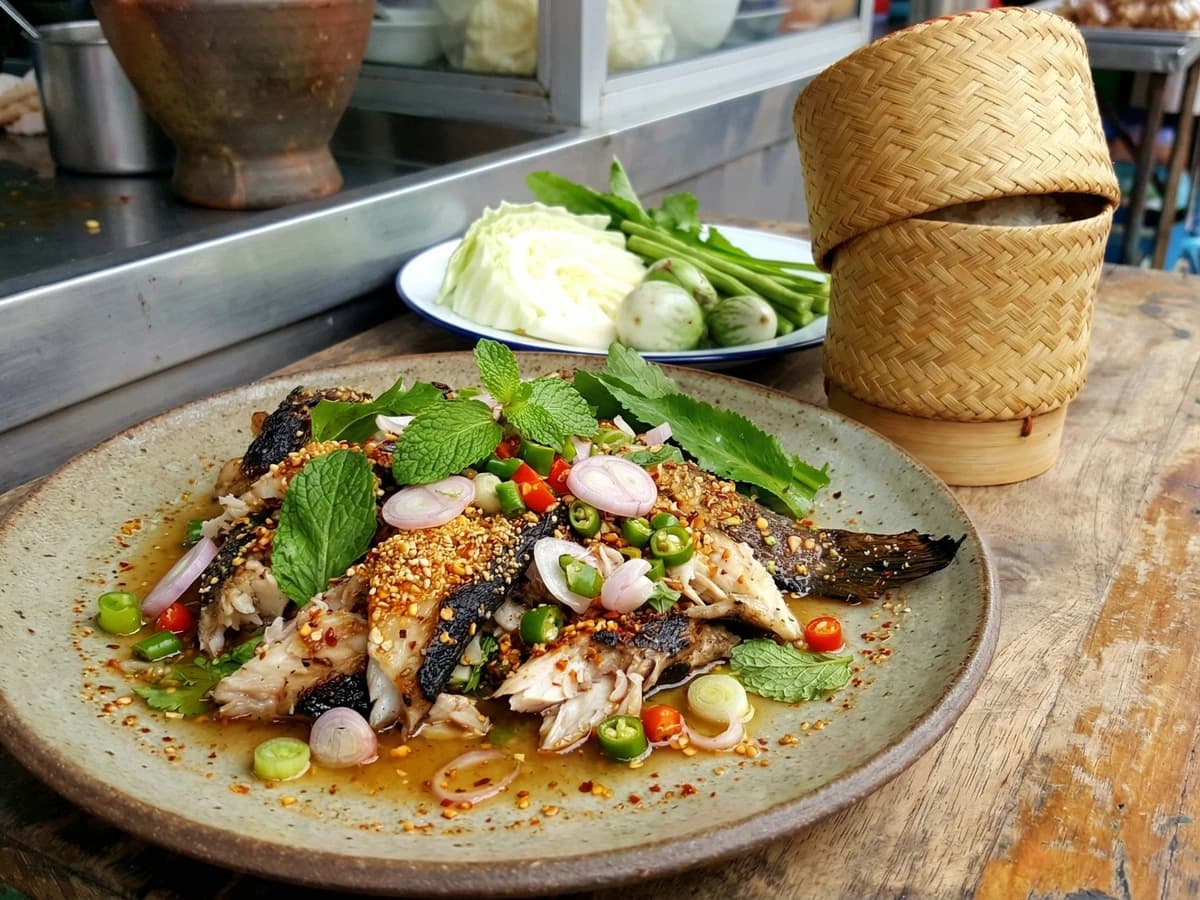
No sugar. That's the line between Isan and Central Thai larb. Grilled catfish flaked while warm, dressed with nam pla, manao, khao khua, prik pon, and a storm of fresh herbs. The plateau on a plate.
Chef Fai
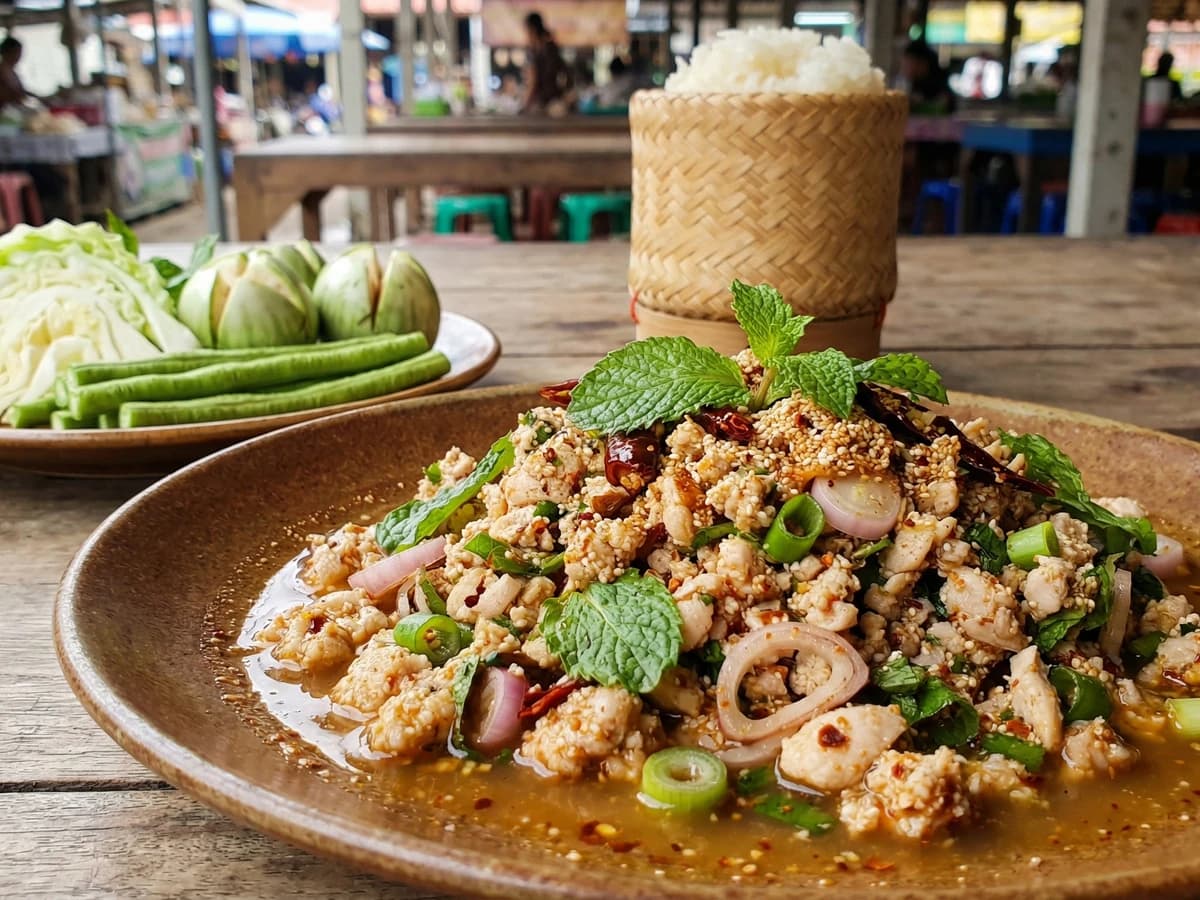
No sugar. That's the rule. Isan larb strips Thai cuisine down to three pillars: nam pla for salt, manao for sour, prik for heat, with khao khua tying it together in a way nothing else can.
Chef Fai
Duck brings gamey depth to the Isan larb formula. No sugar. Lime, fish sauce, khao khua, prik pon, and a wall of fresh herbs. This is the celebration table standard, and the governing rule is restraint.