Chef Fai
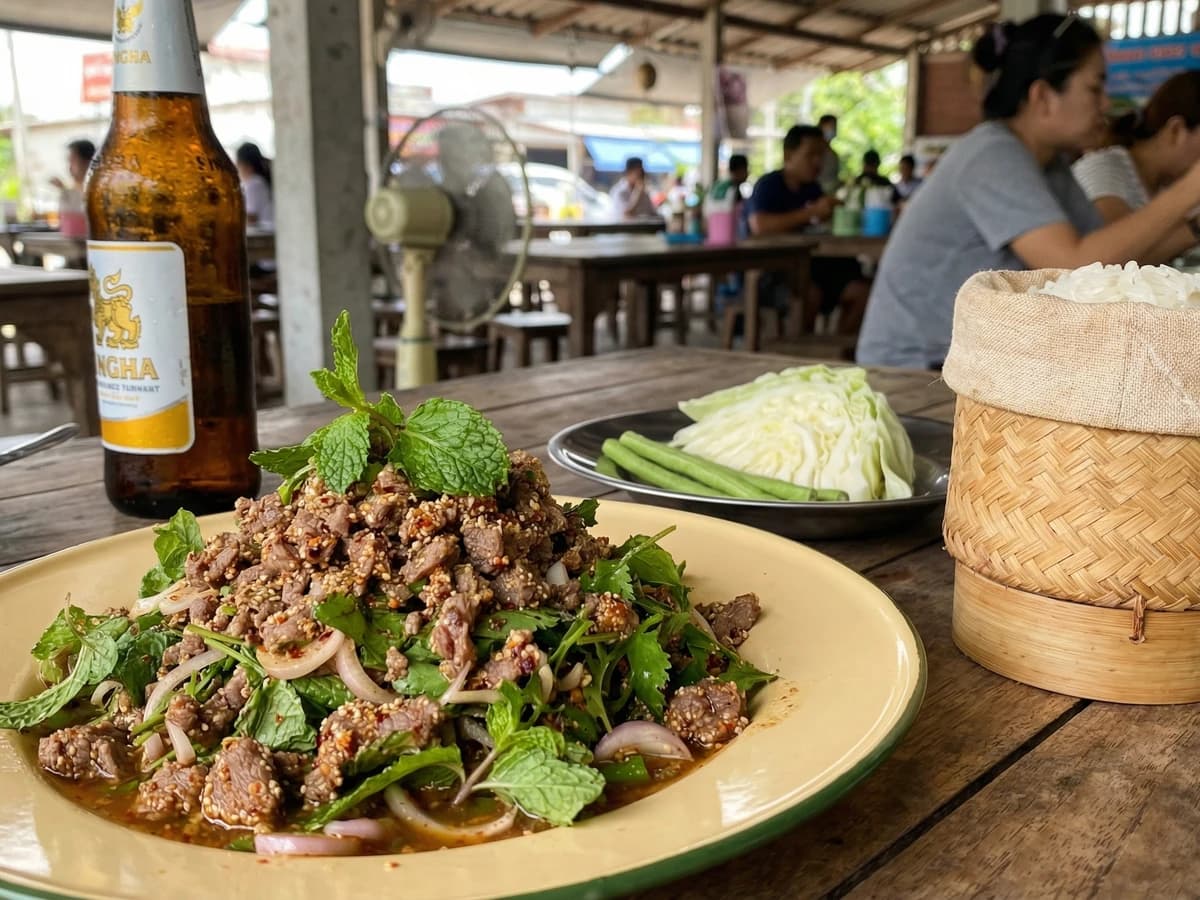
Isan Beef Larb (Larb Nua)
No sugar. That's the rule. Isan larb strips Thai cuisine down to three pillars: nam pla for salt, manao for sour, prik for heat, bound by the smoky crunch of freshly pounded khao khua. The absence defines the dish.
A cooking platform built around craft, culture, and the stories behind what we eat.

Created by
The four-pillar yam dressing doesn't care if your base ingredient costs seven baht from 7-Eleven. Fish sauce, lime, palm sugar, chili: the law applies to instant noodles the same way it applies to grilled squid.
The yam dressing is the most portable principle in Thai cooking. Fish sauce for salt. Lime for sour. Palm sugar for sweet. Chili for heat. That ratio governs every yam in the Central Thai repertoire, from yam pla muek to yam wun sen. And it works just as hard on a packet of instant noodles.
Yam mama is not a joke dish. It's not a "hack." It's the four pillars applied to the most democratic ingredient in Thailand. Every college student in Bangkok knows this. Every construction worker eating between shifts. Every market vendor who needs something fast, cheap, and satisfying at two in the afternoon. The ingredient is humble. The dressing is not. The dressing is the same principled formula your grandmother uses on everything she calls yam.
Here's what matters: dress the noodles while they're warm. Not hot from the pot, but warm. The heat opens the noodles and lets the dressing absorb instead of sitting on the surface. Cold noodles reject the dressing. Warm noodles drink it. That's not opinion. That's how starch works. Then the herbs go in last: mint, cilantro, shallots, Chinese celery. Raw. Structural. They're not decoration. They're half the dish.
Ajarn always said the system doesn't require expensive ingredients. It requires correct principles applied with intention. Yam mama is that lesson distilled to its cheapest, fastest form. If you can nail this dressing ratio on a packet of Mama noodles, you can nail it on anything. Principles, not recipes.
Mama brand instant noodles arrived in Thailand in 1972, manufactured by Thai President Foods, and within a decade "mama" had become the generic Thai word for all instant noodles. Yam mama emerged organically from dorm rooms, construction sites, and late-night market stalls through the 1980s as cooks applied the Central Thai yam dressing formula to the cheapest carbohydrate available. The dish has no single inventor: it's the system recognizing a new ingredient and absorbing it without breaking a single rule.
Quantity
2 packets
seasoning packets reserved
Quantity
150g
Quantity
2 tablespoons
Quantity
3 tablespoons (about 2-3 limes)
Quantity
1 tablespoon
Quantity
5
sliced thin
Quantity
1 tablespoon
Quantity
3
sliced thin
Quantity
2 stalks
cut into 1-inch pieces
Quantity
1 handful
Quantity
1 handful
roughly torn
Quantity
1 tablespoon
Quantity
1 tablespoon
| Ingredient | Quantity |
|---|---|
| Mama instant noodles (tom yam or pork flavor)seasoning packets reserved | 2 packets |
| minced pork | 150g |
| fish sauce (nam pla) | 2 tablespoons |
| lime juice (nam manao) | 3 tablespoons (about 2-3 limes) |
| palm sugar (nam tan pip) | 1 tablespoon |
| bird's eye chilies (prik khi nu)sliced thin | 5 |
| roasted chili flakes (prik pon) | 1 tablespoon |
| shallots (hom daeng)sliced thin | 3 |
| Chinese celery (khuen chai)cut into 1-inch pieces | 2 stalks |
| mint leaves (bai saranae) | 1 handful |
| cilantro (pak chi)roughly torn | 1 handful |
| dried shrimp (goong haeng) (optional) | 1 tablespoon |
| roasted peanuts (optional) | 1 tablespoon |
Bring a pot of water to a boil. Drop in the minced pork, breaking it apart with a fork as it hits the water. Let it cook for about 2 minutes until just done, no pink remaining. Scoop the pork out with a slotted spoon and set it aside. Keep the water boiling. You're using it again in ten seconds.
Drop the noodle blocks into the same boiling water. Cook for 60 seconds. Not the 3 minutes on the packet. One minute. You want them pliable but still firm, because they'll soften further when the warm dressing hits them. Drain immediately and shake off the excess water. Soggy noodles can't absorb a dressing. They just drown in it.
In a mixing bowl, combine the fish sauce, lime juice, and palm sugar. Stir until the sugar dissolves. Add the sliced chilies and prik pon (roasted chili flakes). Taste the dressing on its own. It should be sour first, salty second, sweet just barely rounding the edges, with heat building underneath. If it's too sharp, a touch more sugar. Too flat, more lime. This is the yam formula. It governs every dish in this family. Learn it here, use it everywhere.
Add the warm noodles and blanched pork to the dressing immediately. Toss everything together. The noodles should be warm, not scorching. Warm starch absorbs liquid. Cold starch rejects it. This is the window. You dress now or you lose the dish. Toss until every strand is glossy and coated. If you're using dried shrimp or peanuts, they go in now so they soften slightly in the warm dressing and release their oils.
Add the sliced shallots, Chinese celery, mint, and cilantro. Toss once. Gently. The herbs are raw and stay raw. They're not garnish. They're structural: the crunch of raw shallot, the cool bite of mint, the grassy sharpness of cilantro and celery. Together they cut through the richness and keep every bite alive. Taste. Adjust. More lime if it needs brightness, more nam pla if it needs depth. Transfer to a plate and serve at room temperature. Not from the fridge. Never from the fridge. Yam is a room-temperature dish. Cold kills the aromatics.
1 serving (about 280g)
Culinary guides, cultural storytelling, and the editorial depth that makes cooking meaningful.
Discover Culinary ExplorerChef Fai
No sugar. That's the rule. Isan larb strips Thai cuisine down to three pillars: nam pla for salt, manao for sour, prik for heat, bound by the smoky crunch of freshly pounded khao khua. The absence defines the dish.
Chef Fai
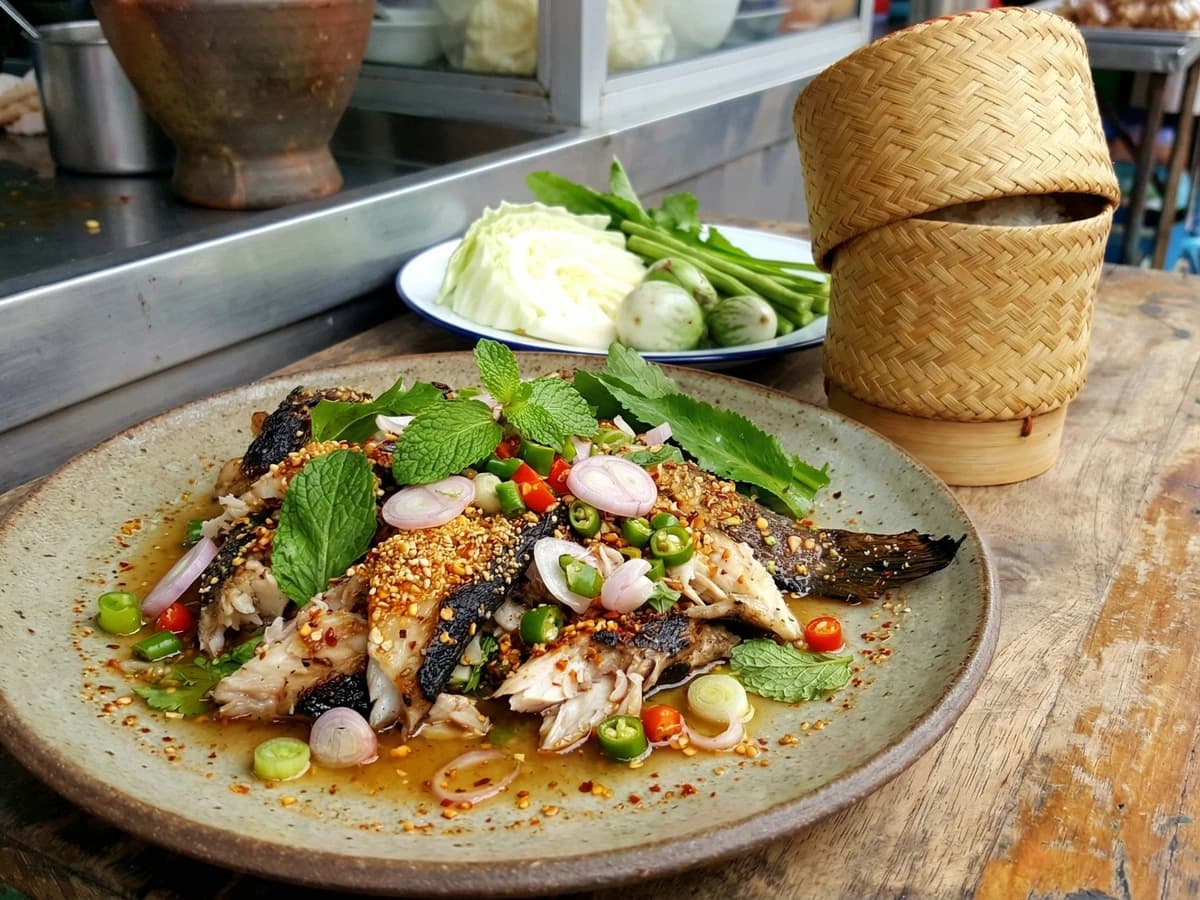
No sugar. That's the line between Isan and Central Thai larb. Grilled catfish flaked while warm, dressed with nam pla, manao, khao khua, prik pon, and a storm of fresh herbs. The plateau on a plate.
Chef Fai
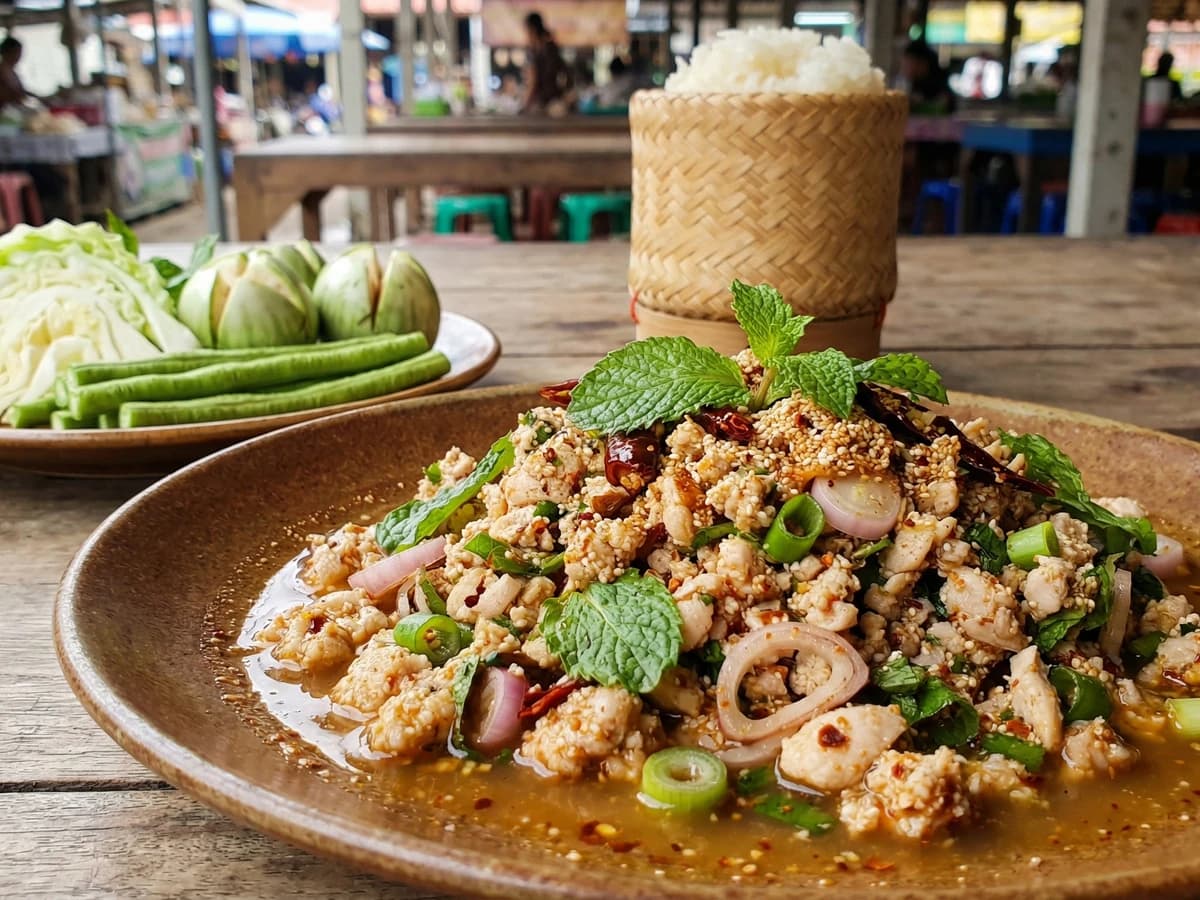
No sugar. That's the rule. Isan larb strips Thai cuisine down to three pillars: nam pla for salt, manao for sour, prik for heat, with khao khua tying it together in a way nothing else can.
Chef Fai
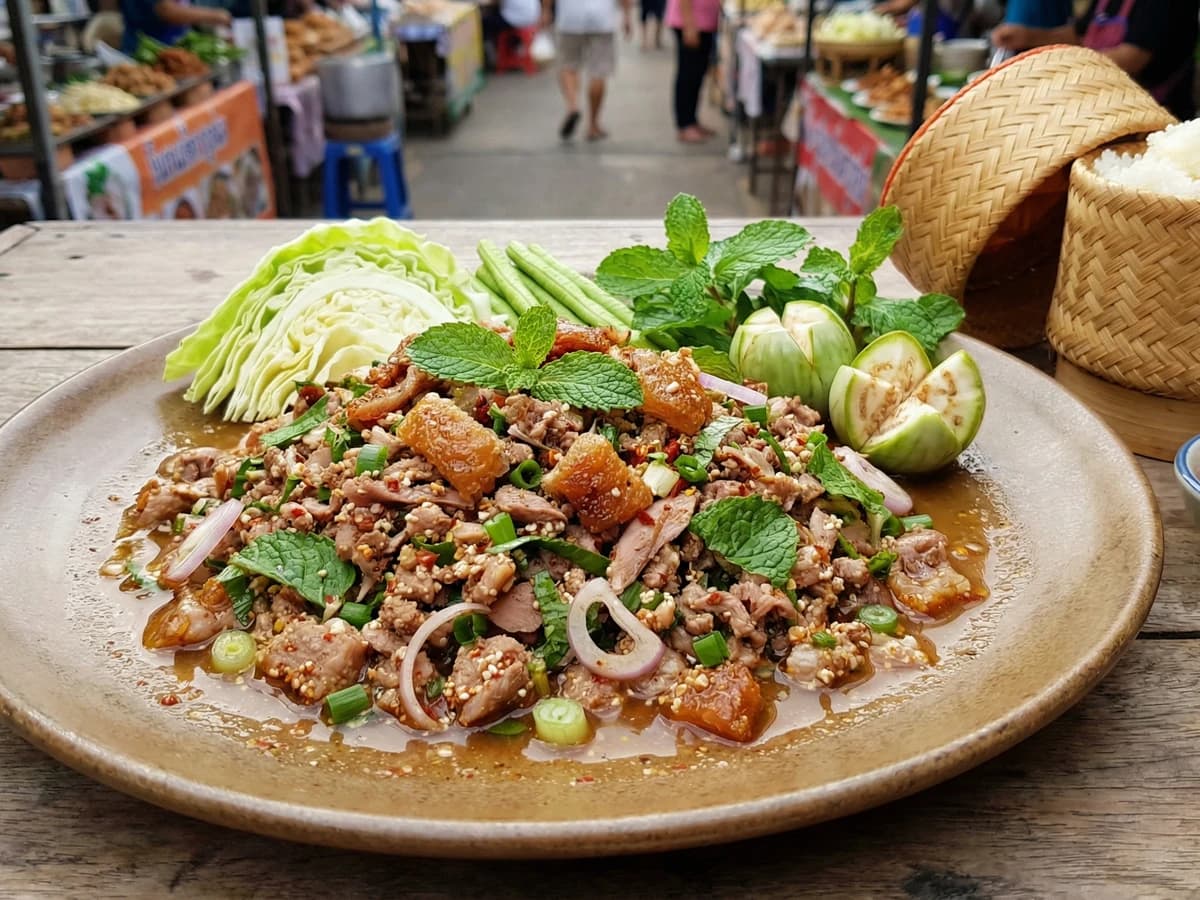
Duck brings gamey depth to the Isan larb formula. No sugar. Lime, fish sauce, khao khua, prik pon, and a wall of fresh herbs. This is the celebration table standard, and the governing rule is restraint.