Chef Fai
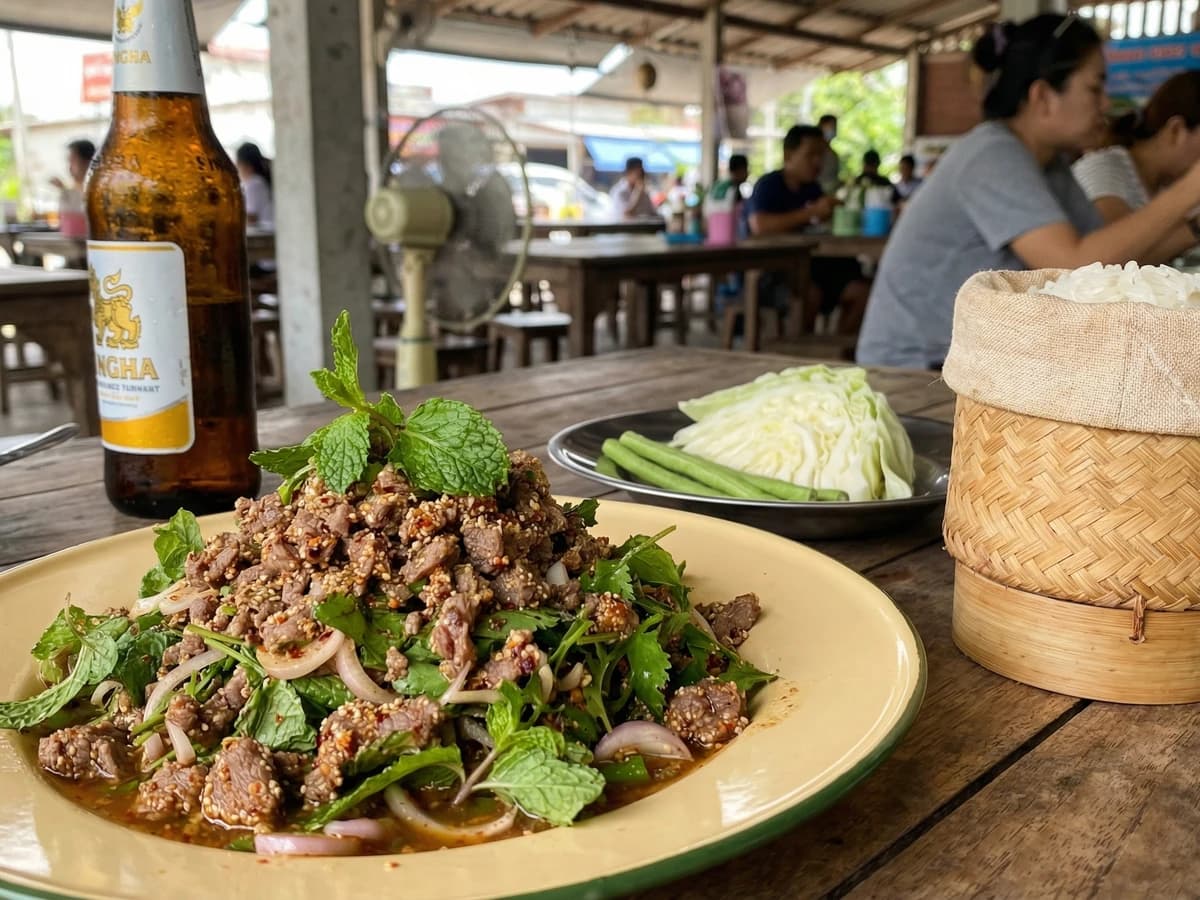
Isan Beef Larb (Larb Nua)
No sugar. That's the rule. Isan larb strips Thai cuisine down to three pillars: nam pla for salt, manao for sour, prik for heat, bound by the smoky crunch of freshly pounded khao khua. The absence defines the dish.
A cooking platform built around craft, culture, and the stories behind what we eat.

Created by
The yam dressing is the four pillars made portable: nam pla for salt, nam tan pip for sweet, manao for sour, prik for spice. Blanch the mushrooms, dress them warm, and the system does the rest.
The yam dressing is the most powerful formula in Thai cooking that nobody talks about. Everyone obsesses over curry pastes and stir-fry technique. But the yam? Three ingredients in a bowl, balanced right, and you can dress anything.
Fish sauce for salt. Palm sugar for sweet. Lime for sour. Chili for heat. That's the law. That's the yam dressing. It's the four pillars stripped to their purest form, no paste, no wok, no coconut cream. Just the governing principles in a spoon. Ajarn always said if you understand the balance of these four, you can cook Thai food. The yam is where you prove it.
Here's what makes yam het work: you dress the mushrooms while they're still warm from the blanching water. Warm protein (or in this case, warm fungi) opens up. The surface is porous, receptive. The dressing doesn't sit on top. It gets absorbed. Cold mushrooms from a fridge reject the dressing. They taste like mushrooms with sauce on them. Warm mushrooms dressed immediately taste like yam. That's not philosophy. That's food science.
I teach this dish first at every Fai Thai workshop. Not because it's easy (it is), but because it strips away every distraction and forces you to taste. There's no paste to hide behind. No coconut cream to smooth things over. It's you, the dressing, and the balance. If your yam is flat, your ratio is wrong. If it's too sharp, too much lime. Too dull, not enough. Pound, taste, adjust. The yam teaches you to trust your tongue, and that skill carries into every other dish you'll ever cook.
Yam (ยำ) is one of the five mother categories of Thai cooking, alongside gaeng (curries), tam (pounded dishes), tom (soups), and pad (stir-fries). The yam dressing formula predates written Thai recipe collections, appearing in oral tradition as a portable acid-salt-sweet-heat balance applied to whatever protein or vegetable was available. Mushroom yam reflects the Buddhist tradition of meatless cooking during wan phra (holy days), when Central Thai households would substitute foraged mushrooms for the usual squid, shrimp, or pork.
Quantity
300g
torn or sliced into bite-sized pieces
Quantity
3 tablespoons (about 2-3 limes)
Quantity
2 tablespoons
Quantity
1 tablespoon
shaved or grated
Quantity
3-5
sliced thin
Quantity
3
sliced thin
Quantity
1 stalk
tender inner part only, sliced paper-thin
Quantity
1 handful
torn
Quantity
1 handful
roughly chopped
Quantity
1 stalk
sliced thin
| Ingredient | Quantity |
|---|---|
| mixed mushrooms (oyster, king oyster, straw, or shiitake)torn or sliced into bite-sized pieces | 300g |
| lime juice (nam manao) | 3 tablespoons (about 2-3 limes) |
| fish sauce (nam pla) | 2 tablespoons |
| palm sugar (nam tan pip)shaved or grated | 1 tablespoon |
| bird's eye chilies (prik khi nu)sliced thin | 3-5 |
| shallots (hom daeng)sliced thin | 3 |
| lemongrass (takhrai)tender inner part only, sliced paper-thin | 1 stalk |
| fresh mint leaves (saranae)torn | 1 handful |
| fresh cilantro (pak chi)roughly chopped | 1 handful |
| Chinese celery (kheun chai)sliced thin | 1 stalk |
Bring a pot of water to a rolling boil. No salt. Drop the mushrooms in and blanch for 60 to 90 seconds, just until they soften and lose their raw squeak. Oyster mushrooms cook faster than king oyster. Straw mushrooms barely need a minute. Watch them, not the clock. When they look slightly translucent and feel tender when pressed, they're done. Pull them out with a slotted spoon and spread them on a plate. Do not rinse with cold water. Do not refrigerate. You want them warm.
In a mixing bowl, combine the fish sauce, lime juice, and palm sugar. Stir until the sugar dissolves completely. Palm sugar is slow to dissolve, so press any lumps with the back of a spoon. Taste it. You should taste sour first, then salt, then a gentle sweetness rounding the edges. If the lime punches too hard, add a tiny bit more sugar. If it's flat, more fish sauce. Add the sliced chilies now. They steep in the dressing and release their heat while you assemble everything else.
Add the warm mushrooms to the dressing. Toss gently with a spoon or your hands. Let them sit for one minute. That minute matters. The mushrooms are drinking the dressing right now. Then add the sliced shallots, lemongrass, and Chinese celery. Toss again. The shallots stay raw. Their bite is part of the architecture.
Add the torn mint and chopped cilantro. Toss once more, gently. The herbs are not garnish. They're structural. The mint gives a cool contrast to the chili heat. The cilantro adds a grassy, citrus layer that locks the whole thing together. Taste the salad one final time. Adjust: more lime for brightness, more fish sauce for depth, more chili if you want fire. Transfer to a serving plate. Room temperature. Never cold. Eat it now.
1 serving (about 230g)
Culinary guides, cultural storytelling, and the editorial depth that makes cooking meaningful.
Discover Culinary ExplorerChef Fai
No sugar. That's the rule. Isan larb strips Thai cuisine down to three pillars: nam pla for salt, manao for sour, prik for heat, bound by the smoky crunch of freshly pounded khao khua. The absence defines the dish.
Chef Fai
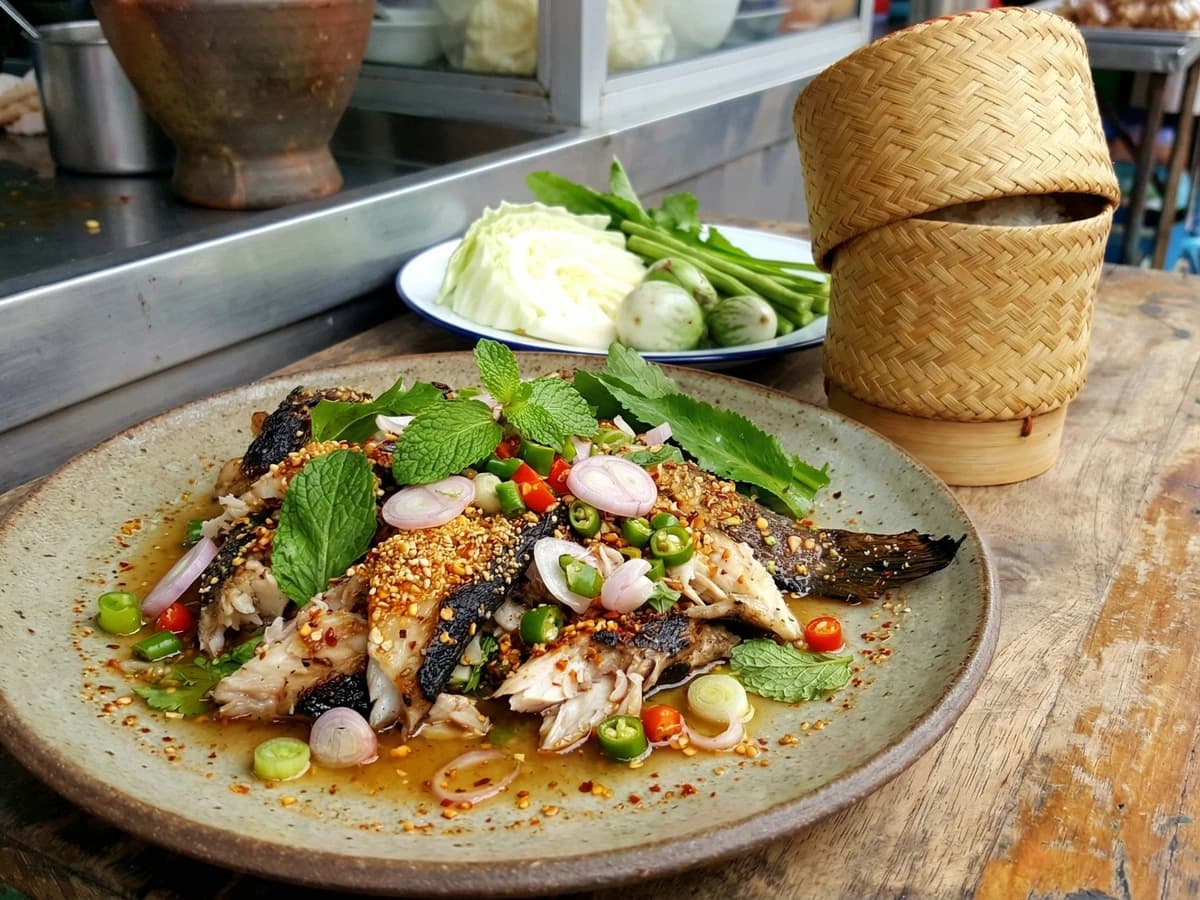
No sugar. That's the line between Isan and Central Thai larb. Grilled catfish flaked while warm, dressed with nam pla, manao, khao khua, prik pon, and a storm of fresh herbs. The plateau on a plate.
Chef Fai
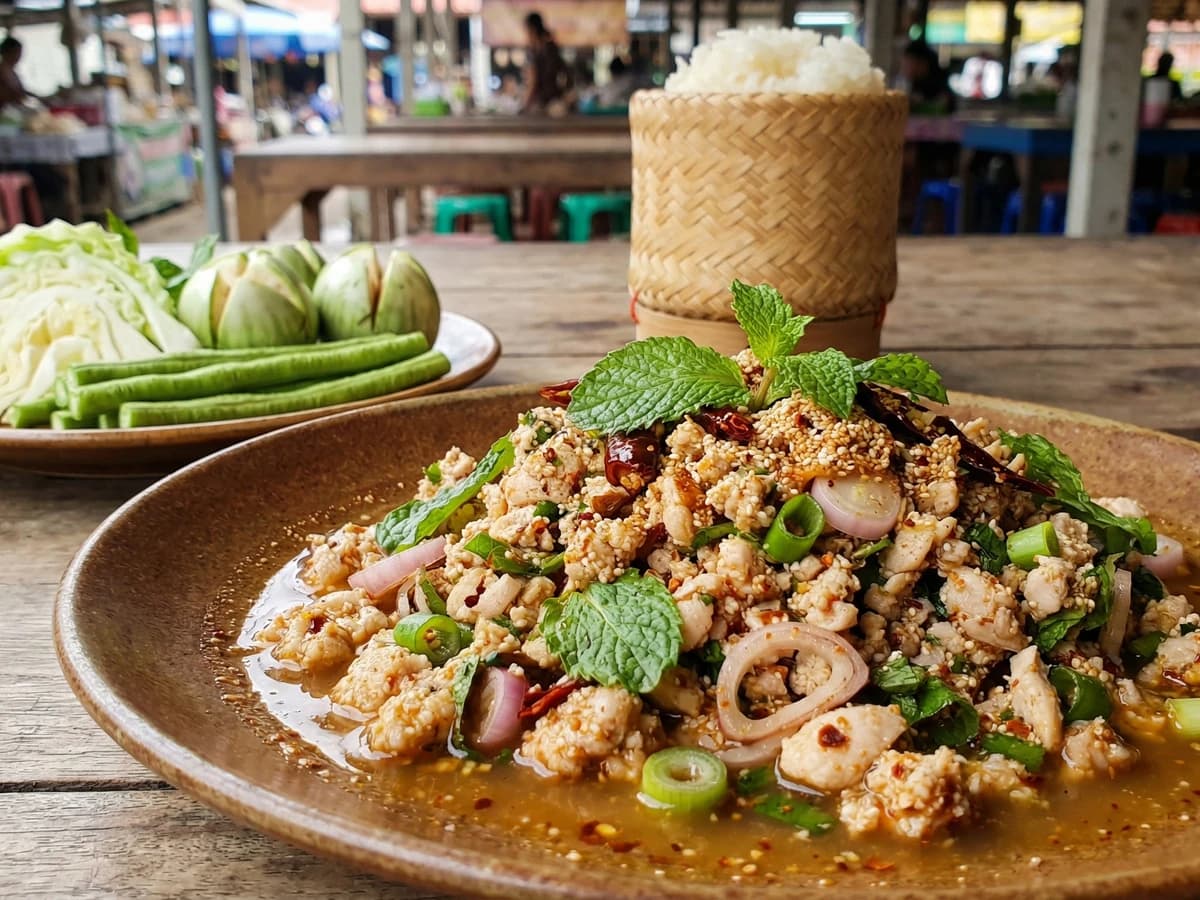
No sugar. That's the rule. Isan larb strips Thai cuisine down to three pillars: nam pla for salt, manao for sour, prik for heat, with khao khua tying it together in a way nothing else can.
Chef Fai
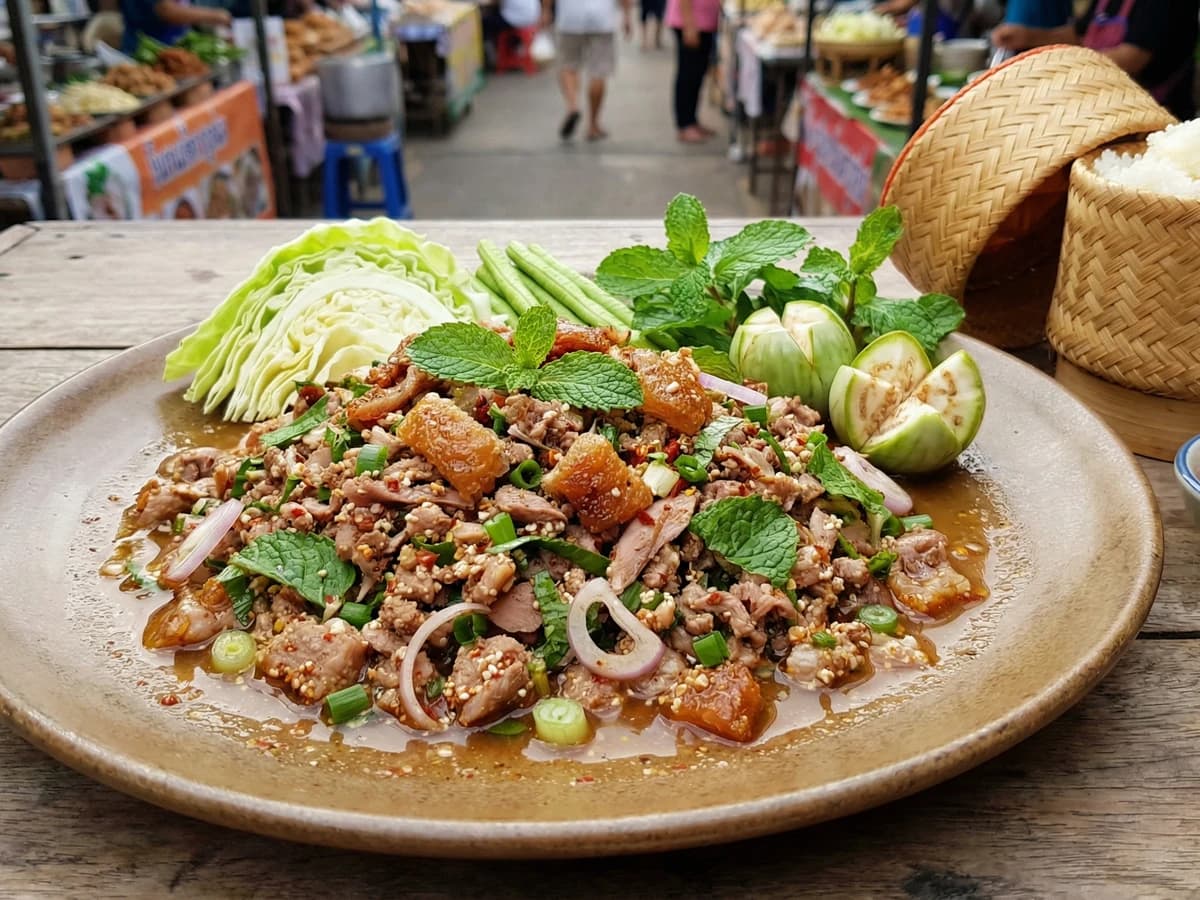
Duck brings gamey depth to the Isan larb formula. No sugar. Lime, fish sauce, khao khua, prik pon, and a wall of fresh herbs. This is the celebration table standard, and the governing rule is restraint.