Chef Lupita
Aceite de Chiltepin Bajacaliforniano
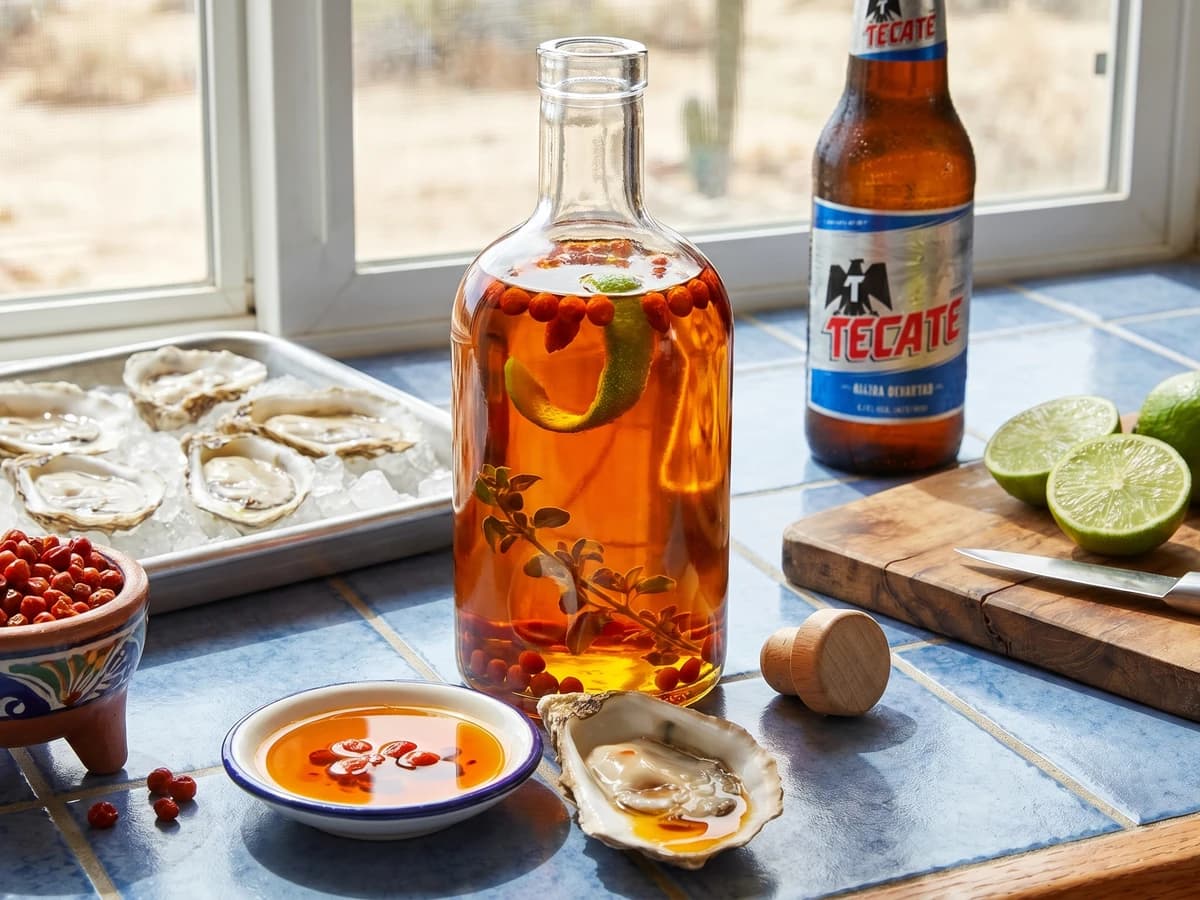
Baja California's wild chiltepin steeped in olive oil with garlic, orejon, and lime peel, until the oil turns ruby-amber and carries the slow, sneaky burn of the desert coast.
A cooking platform built around craft, culture, and the stories behind what we eat.
Created by
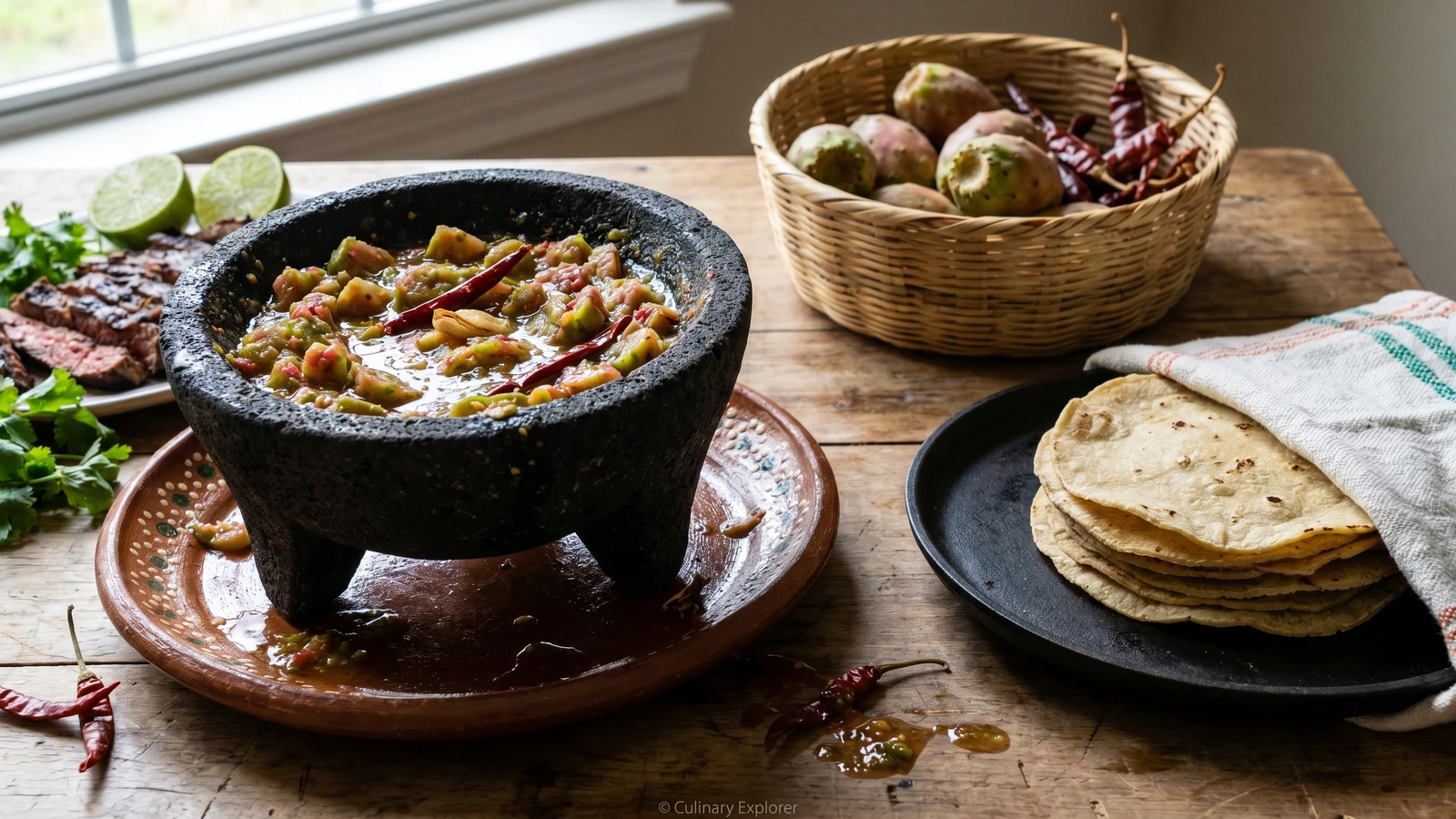
Querétaro's Sierra Gorda turns sour xoconostle into a coarse molcajete salsa with chile de árbol, roasted garlic, and sal de grano, built to cut through arrachera, cabrito asado, and charred nopales.
Querétaro's Sierra Gorda, especially the dry mountain edge where the semidesert climbs toward Jalpan de Serra and Pinal de Amoles, is where this xoconostle molido belongs. At the market stalls, the fruit sits in small green-pink piles, firm and sour, not sweet like tuna. If your vendor does not know the difference, find another vendor. Si no conoces el mercado, no conoces la cocina.
This salsa is for meat cooked over fire. Arrachera, cabrito asado, cecina, even grilled nopales when the table has no meat that day. The fat is on the meat. The salsa's job is to cut it with acid, salt, garlic, and the dry bite of chile de árbol. Not all Mexican salsas are about heat. This one is about sharpness.
The technique is molcajete because the texture matters. A blender will make a sour liquid. The stone tears the xoconostle flesh, crushes the roasted garlic, and leaves the chile in small red flecks that catch on the meat. I learned a version like this from a woman near Pinal de Amoles who corrected my hand before she corrected my ingredients. Pound downward. Don't stir like you're washing a cup.
No cilantro to make it look greener. No tomato to soften it. Xoconostle, chile de árbol, ajo, sal de grano. Four things, and each one has work to do. Cada estado, su propia cocina.
The word xoconostle comes from Nahuatl xococ, meaning sour, and nochtli, meaning prickly pear, and refers to acidic cactus fruits used in central Mexico before the Spanish conquest. In the semi-arid highlands of Querétaro, Hidalgo, Guanajuato, and San Luis Potosí, including the Sierra Gorda, xoconostle mattered because the fruit can stay on the nopalera for months after ripening, giving cooks a durable source of acidity for beans, meat broths, and table salsas. The molcajete method predates metal mills and blenders, and in this salsa it matters because stone crushes the chile skins and cactus fruit into a rough relish instead of a thin puree.
Quantity
6 medium
scrubbed
Quantity
6 to 8
stemmed
Quantity
2
unpeeled
Quantity
3/4 teaspoon, plus more to taste
Quantity
2 to 4 tablespoons
as needed to loosen the salsa
Quantity
for serving
Quantity
for serving
| Ingredient | Quantity |
|---|---|
| fresh xoconostlesscrubbed | 6 medium |
| dried chile de árbolstemmed | 6 to 8 |
| large garlic clovesunpeeled | 2 |
| sal de grano | 3/4 teaspoon, plus more to taste |
| warm wateras needed to loosen the salsa | 2 to 4 tablespoons |
| grilled arrachera, cabrito asado, cecina, or grilled nopales (optional) | for serving |
| warm corn tortillas (optional) | for serving |
Hold each xoconostle with a folded kitchen towel. Trim off both ends, peel away the tough outer skin with a paring knife, and cut the fruit in half. Scoop out the hard seed core and keep the sour flesh, including the pink blush near the center. Do not confuse xoconostle with sweet tuna. Xoconostle is acidic and firm. That sourness is the point.
Heat a dry comal over medium. Set the peeled xoconostle pieces and the unpeeled garlic cloves on the hot surface. Roast the xoconostle for 5 to 7 minutes, turning once or twice, until the edges freckle and the flesh softens but does not collapse. Roast the garlic until the skins blacken in spots and the cloves feel soft when pressed. This rounds the sharp acid without taking away its bite.
Place the chile de árbol on the same comal for 10 to 15 seconds per side. They should darken slightly and smell nutty, not blacken. Chile de árbol is thin and burns fast. Burn it and the whole salsa turns bitter. Throw out any chile that goes black. Así se hace y punto.
Peel the roasted garlic. Put the sal de grano and garlic into a cured volcanic stone molcajete. Grind with the tejolote until you have a sticky paste. The salt helps break the garlic down and seasons the stone before the fruit goes in. Pregúntale a las señoras del mercado. They will tell you the same thing.
Crumble the toasted chile de árbol into the garlic paste and grind until the red skins become small flakes. Add the roasted xoconostle a few pieces at a time and pound, not stir, until the salsa is coarse and juicy. Add warm water one tablespoon at a time only if the mixture is too tight. You want a rough green-pink salsa that clings to grilled meat, not a thin puree.
Taste for salt and let the salsa rest for 10 minutes. The xoconostle will release more juice and the chile will settle into the fruit. Serve directly from the molcajete with arrachera, cabrito asado, cecina, grilled nopales, and warm corn tortillas. No lime. No tomato. The xoconostle already brought the acid.
1 serving (about 55g)
Culinary guides, cultural storytelling, and the editorial depth that makes cooking meaningful.
Discover Culinary ExplorerChef Lupita
Baja California's wild chiltepin steeped in olive oil with garlic, orejon, and lime peel, until the oil turns ruby-amber and carries the slow, sneaky burn of the desert coast.

Chef Lupita
Puebla's Lenten convent adobo, a brick-red vinegar chile paste of ancho, guajillo, garlic, oregano, and comino made to dress fish for the meatless calendar.
Chef Lupita
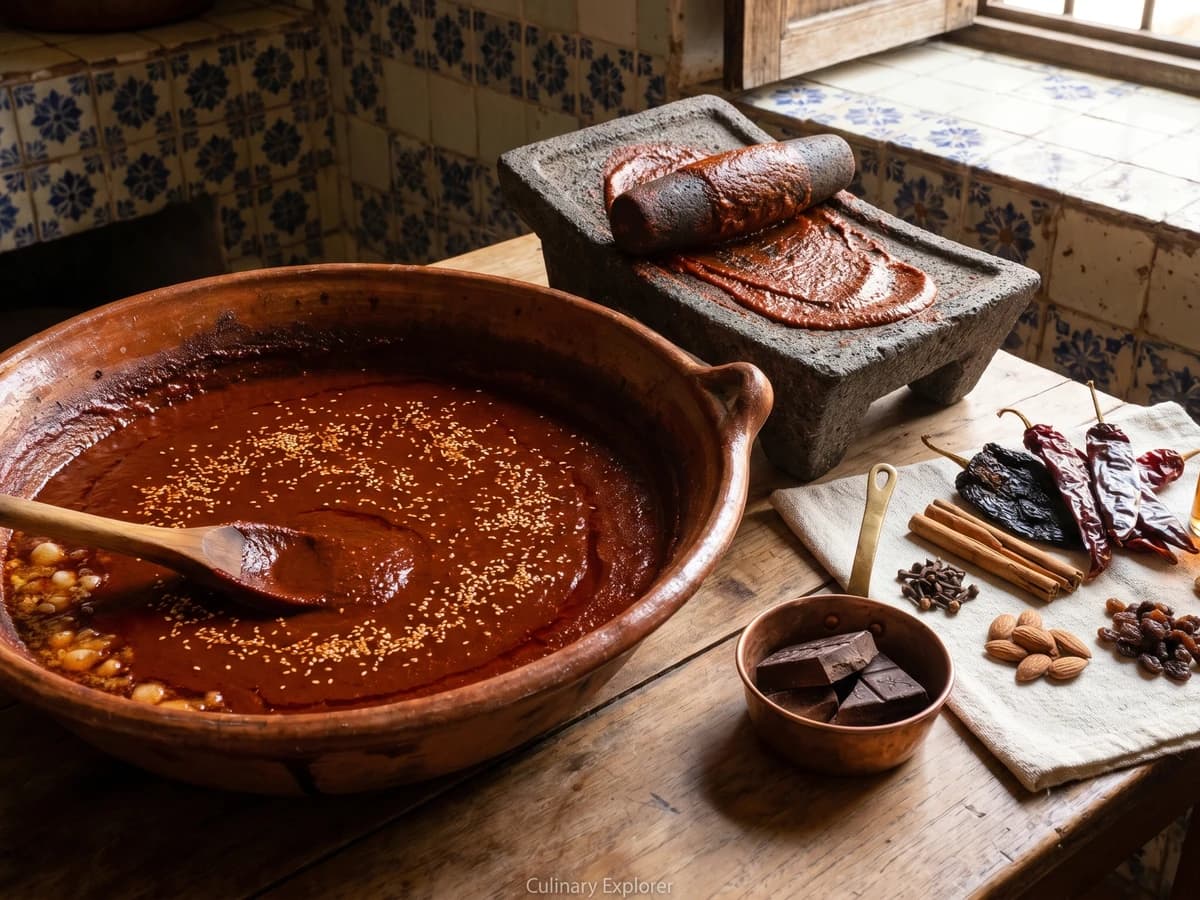
Zacatecas' wedding-table adobo, built from toasted guajillo and ancho, piloncillo, sour orange, chocolate, canela, clavo, almonds, sesame, and lard.

Chef Lupita
Puebla's convent kitchens built this adobo with ancho, guajillo, jerez, almonds, raisins, clove, and lard, a baroque marinade that stains pork loin and finishes as the sauce.