
Chef Lupita
Agua de Alfalfa
Ciudad de México's highland market agua fresca, fresh alfalfa blended with pineapple and lime until bright green, strained clean, and poured cold from the vitrolero.
A cooking platform built around craft, culture, and the stories behind what we eat.
Created by
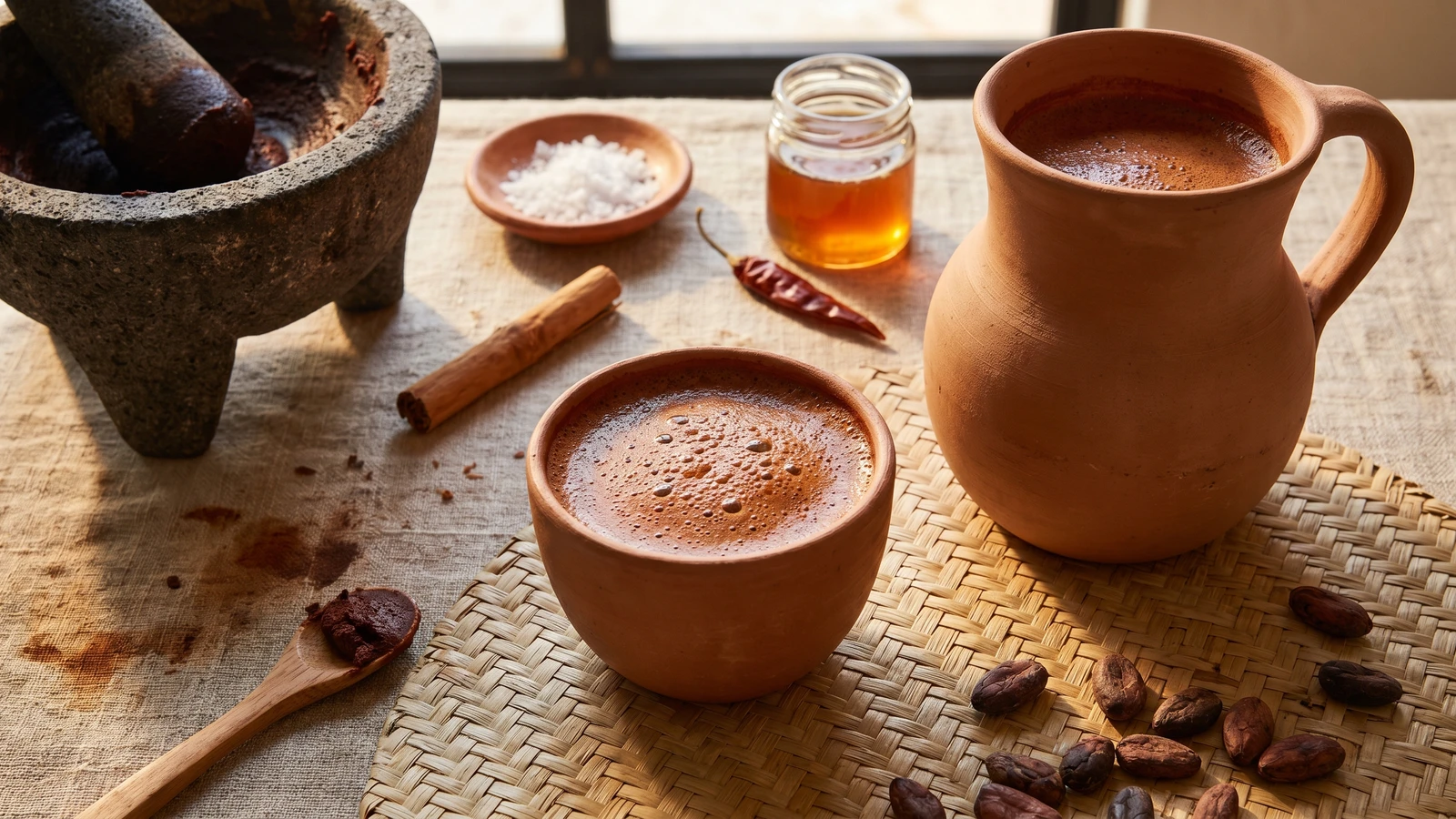
The pre-Hispanic Maya chocolate drink from the Yucatan peninsula. Toasted cacao ground with chile and achiote, dissolved in cool water, frothed by pouring from one clay jarro into another. Bitter, savory, sacred.
Xocolatl is Maya. Not Mexica, not Aztec, not Spanish. Maya. The cacao tree grew in the lowland forests of the Yucatan peninsula and Chiapas long before any other civilization knew what to do with the seed, and the people who first roasted it, ground it, and drank it were the Maya. The Mexica learned the drink later, through trade. The Spanish learned it from the Mexica and ruined it with sugar and milk. What you are making is the original.
There is no sugar in real xocolatl. There is no milk. There is no heat under the pot. Cacao, water, chile, achiote, sometimes a little canela, sometimes melipona honey from the stingless bees the Maya have kept for thousands of years. That is the drink. The achiote stains it red. The chile gives it a slow burn that builds in the back of the throat. The cacao itself is bitter and earthy, and the foam on top, raised by pouring the liquid from one clay jarro into another at arm's length, is the signature of the technique. The molinillo came from central Mexico much later. In the peninsula, you froth by pouring.
I learned this drink from a Maya woman named Doña Felipa who runs a small kitchen outside Valladolid. She showed me how to toast the cacao on a comal so old its surface had gone the color of obsidian, how to peel the husks with my palms, how to grind the beans on a metate until the cacao butter ran. She watched me pour the finished drink from one jarro to another and laughed when my first attempt splashed across the floor. Practice, she said. Two thousand years your ancestors did this. Your hands remember if you let them. Cada estado, su propia cocina, and this one belongs to the peninsula.
The Maya cultivated cacao (Theobroma cacao, 'food of the gods' in Linnaeus's later classification) for at least 3,000 years, with archaeological residue testing on Maya ceramics from Belize and the Yucatan dating cacao consumption to roughly 1900 BCE. The drink was central to elite Maya ritual life: it was used in marriage ceremonies, royal funerals, and as a tribute item, and cacao beans served as a form of currency across Mesoamerica well into the colonial period. The word 'chocolate' derives from the Nahuatl 'xocolatl,' meaning bitter water, a Mexica term that entered Spanish through central Mexican intermediaries; the Maya themselves called the drink 'chokola'j' or 'kakaw,' and the addition of sugar, milk, and the practice of serving the drink hot are all post-conquest European modifications that have nothing to do with the original Mesoamerican preparation.
Quantity
4 ounces
preferably criollo from the peninsula
Quantity
4 cups
at room temperature
Quantity
1
stemmed (or 1 dried chile pequin from the Yucatan)
Quantity
1 teaspoon
or 1/2 teaspoon whole annatto seeds
Quantity
1 small piece (about 1 inch)
Quantity
1 teaspoon, or to taste
Quantity
1/2 teaspoon
Quantity
1 tablespoon
dissolved in 2 tablespoons cold water
| Ingredient | Quantity |
|---|---|
| whole raw cacao beanspreferably criollo from the peninsula | 4 ounces |
| waterat room temperature | 4 cups |
| dried chile de arbolstemmed (or 1 dried chile pequin from the Yucatan) | 1 |
| achiote pasteor 1/2 teaspoon whole annatto seeds | 1 teaspoon |
| canela de Ceylan (optional) | 1 small piece (about 1 inch) |
| honey from melipona bees (optional) | 1 teaspoon, or to taste |
| flaky sea salt from Las Coloradas | 1/2 teaspoon |
| masa harina nixtamalizada (optional)dissolved in 2 tablespoons cold water | 1 tablespoon |
Heat a dry comal or heavy cast-iron skillet over medium-low heat. Spread the cacao beans in a single layer and toast them slowly, shaking the pan every 30 seconds. After about 8 to 10 minutes you will hear faint crackling, like a quieter version of popcorn, and the kitchen will smell like dark chocolate and old wood. That is the cacao butter waking up. Do not rush this with high heat. Burned cacao is bitter in a way that no amount of honey can fix.
Let the toasted beans cool for five minutes, then rub them between your palms or in a clean kitchen towel. The papery husks will flake off easily. Discard the husks. In the same dry comal, lightly toast the chile de arbol for 15 seconds per side until it smells fragrant, never blackened. Transfer the peeled cacao, the toasted chile, the achiote paste, the canela, and the salt to a molcajete or a powerful spice grinder. Grind to a coarse, oily paste. In Yucatan they grind this on a metate until the cacao butter releases and the paste turns smooth. A molcajete or a small food processor will do the work in modern kitchens. No me vengas con atajos, but do not pretend a blender is a metate either.
Transfer the cacao paste to a clay jarro or a heavy pitcher. Add the room-temperature water in a slow stream while stirring with a wooden spoon. This is not hot chocolate. The Maya drank xocolatl cold or at room temperature, and heating it changes the texture and dulls the chile. If you are adding the masa harina slurry for body, stir it in now. Add honey only if you must. The original drink had no sugar.
Hold one clay jarro at chest height and an empty one below at the level of your hip. Pour the xocolatl from the upper vessel into the lower one in a thin steady stream. Switch and repeat. Five or six pours and the liquid will build a thick, reddish-brown foam on top. This is the technique the Maya have used for at least 2,500 years. The Spanish chroniclers wrote about it. The molinillo, the wooden whisk people associate with Mexican chocolate, came later and from central Mexico. In Yucatan, the foam is made by pouring height to height. Asi se hace y punto.
Pour into small clay cups, making sure each one gets a generous crown of foam. Taste it. It will be bitter. It will be a little hot from the chile. It will taste of earth, smoke, and red. This is not the chocolate of a candy bar. This is the chocolate that the Maya elite drank during marriage negotiations and the chocolate that priests offered to the gods. Drink it slowly. Saber cocinar es saber vivir, and saber beber xocolatl is to drink something almost no one in the modern world has tasted properly.
1 serving (about 260g)
Culinary guides, cultural storytelling, and the editorial depth that makes cooking meaningful.
Discover Culinary ExplorerChef Lupita
Ciudad de México's highland market agua fresca, fresh alfalfa blended with pineapple and lime until bright green, strained clean, and poured cold from the vitrolero.
Chef Lupita
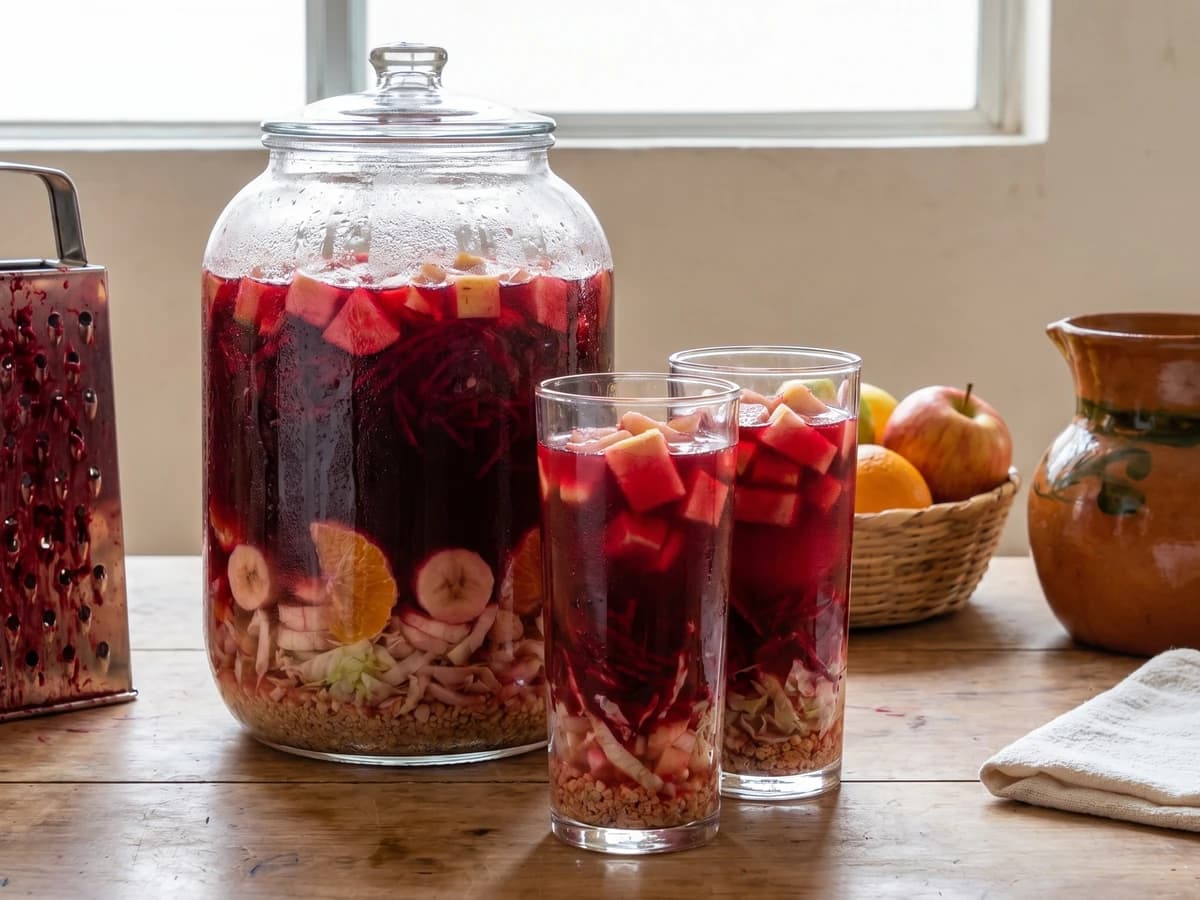
Aguascalientes' Lenten agua fresca, jewel-red from cooked beet and full of apple, banana, orange, lettuce, and ground peanuts, served cold when Holy Week meets the Feria de San Marcos.

Chef Lupita
Sonora and Sinaloa's creamy malted barley water, built on toasted cebada perla, Mexican canela, vanilla from Papantla, and evaporated milk. Pink-beige, rich, and served cold over heavy ice in a heavy glass tumbler. Liquid cookie comfort the northwest way.

Chef Lupita
Yucatán's everyday tonic of boiled chaya leaves blended with lima agria, sugar, and ice. The bright green jarra that sits on every Peninsula table from Mérida to Valladolid.