
Chef Klaus
Berlin Currywurst
The Berlin Imbiss counter on a plate: fried sausage cut thick, a tomato curry sauce cooked until glossy, and enough fries or bread to chase every bit.
A cooking platform built around craft, culture, and the stories behind what we eat.
Created by
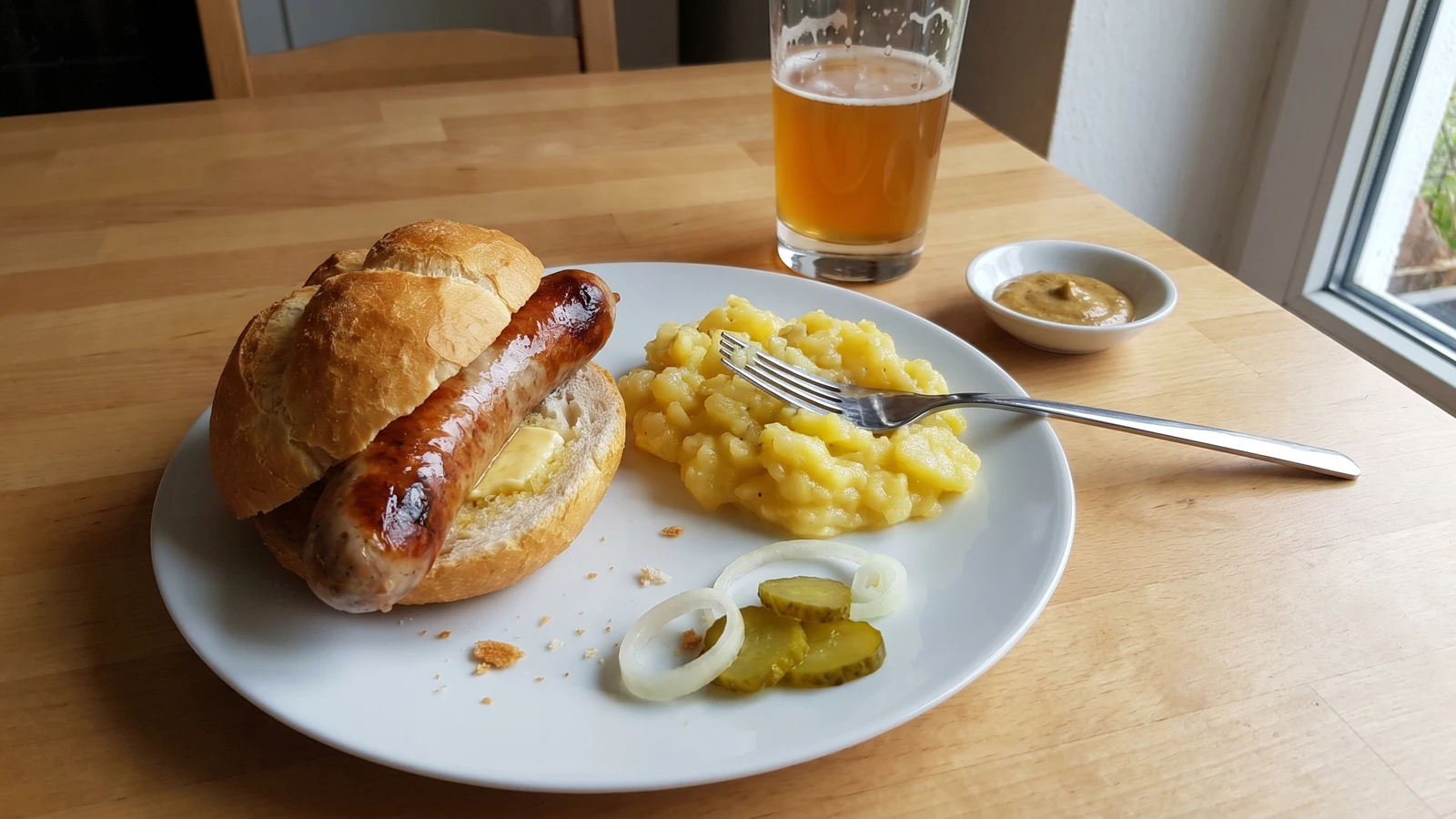
The Bavarian skinless sausage that needs patience in the pan: low heat, enough butter, and no poaching, because there is no casing to protect it.
Wollwurst is Bavarian, strongest around Munich and Upper Bavaria, and it belongs to the quick hot meal, the butcher's supper, the plate you make when the potato salad is already waiting. It is close kin to Weisswurst, but it has no skin, and that changes everything. No casing means no shield. The pan decides the sausage.
In Bavaria you'll hear it called Gschwollene, the swollen one, or Nackerte, the naked one. Swabia knows similar pale scalded sausages, but the Munich table fries this one until the outside goes deep gold and the inside stays soft. Im Norden anders, im Süden anders. The north has its smoked sausages and rye; this is the southern pan with butter and a roll.
The rule is simple: fry it slow. High heat tears the surface before it browns, and poaching washes out the butcher's seasoning because there is no skin holding it in. Runter mit der Temperatur. Give the butter time to foam, baste the sausage, and let the milk proteins help the browning. Das braucht seine Zeit, even when the whole meal is quick.
Serve it in a Semmel, a crusty bread roll, with sharp mustard and onions, or beside potato salad if you want the proper plate. Nothing from a jar except the mustard, and even that should know what it is doing.
Wollwurst developed in Bavaria as a casing-free relative of Weisswurst, traditionally made from finely minced veal and pork with mild seasoning, then scalded by the butcher and sold ready for frying. Its local nicknames, Gschwollene and Nackerte, point to its look in the pan: pale, bare, and swelling as it heats. The dish sits in the Munich and Upper Bavarian sausage tradition, where the argument is not ceremony but handling, whether the sausage is browned gently in fat or ruined by being boiled like a Weisswurst.
Quantity
4
about 100g each
Quantity
40g
Quantity
1 tablespoon
Quantity
4
split
Quantity
4 teaspoons
Quantity
1 small
thinly sliced
Quantity
4 small
sliced lengthwise
Quantity
300g
Quantity
to taste
| Ingredient | Quantity |
|---|---|
| fresh Wollwürsteabout 100g each | 4 |
| unsalted butter | 40g |
| neutral oil | 1 tablespoon |
| Semmeln or small crusty bread rollssplit | 4 |
| sweet Bavarian mustard or medium-hot German mustard | 4 teaspoons |
| white onionthinly sliced | 1 small |
| gherkinssliced lengthwise | 4 small |
| warm German potato salad (optional) | 300g |
| salt (optional) | to taste |
Take the Wollwürste from the refrigerator 15 minutes before frying and pat them dry. A wet skinless sausage sticks and tears before it browns, and there is no casing here to forgive rough handling.
Put the oil and butter in a heavy frying pan over medium-low heat until the butter foams gently. The oil helps the butter tolerate the time in the pan, and the butter gives the browning; use one without the other and the result is either pale or scorched.
Lay in the sausages and cook 14 to 18 minutes, turning often and spooning foaming butter over them, until the outside is deep gold in patches and the sausage feels springy. Do not poach it. A Wollwurst has no skin, so water pulls out seasoning while butter feeds the surface and browns it properly.
Warm the split rolls cut side down at the edge of the pan for the last minute. They pick up a little butter and crisp at the cut face, which keeps the mustard and sausage juices from turning the roll soggy.
Spread each roll with mustard, tuck in a Wollwurst, then add onion and gherkin. Taste before salting; the butcher has already seasoned the sausage. Serve with warm potato salad on the side, because the vinegar and stock in the potatoes cut the butter cleanly. Schön ist, was schmeckt.
1 serving (about 290g)
Culinary guides, cultural storytelling, and the editorial depth that makes cooking meaningful.
Discover Culinary ExplorerChef Klaus
The Berlin Imbiss counter on a plate: fried sausage cut thick, a tomato curry sauce cooked until glossy, and enough fries or bread to chase every bit.

Chef Klaus
A northern fish-stall roll built on sharp Bismarck herring, raw onion, and pickle, with one rule deciding the whole thing: the vinegar cure goes on cold and gets its time.

Chef Klaus
Franconia's sour-poached bratwurst skips the grill: raw sausages, onion, vinegar, wine, and one quiet rule, keep the sud below the boil.

Chef Klaus
A Berlin Brühwurst belongs in hot water, not boiling water: warm it gently, keep the skin tight, then eat it in a roll with sharp mustard.