
Chef Klaus
Bethmännchen
Frankfurt's Advent marzipan ball is small, pale gold, and exacting: real almond paste, rosewater, three almond halves pressed on firmly, then a short bake for gloss.
A cooking platform built around craft, culture, and the stories behind what we eat.
Created by
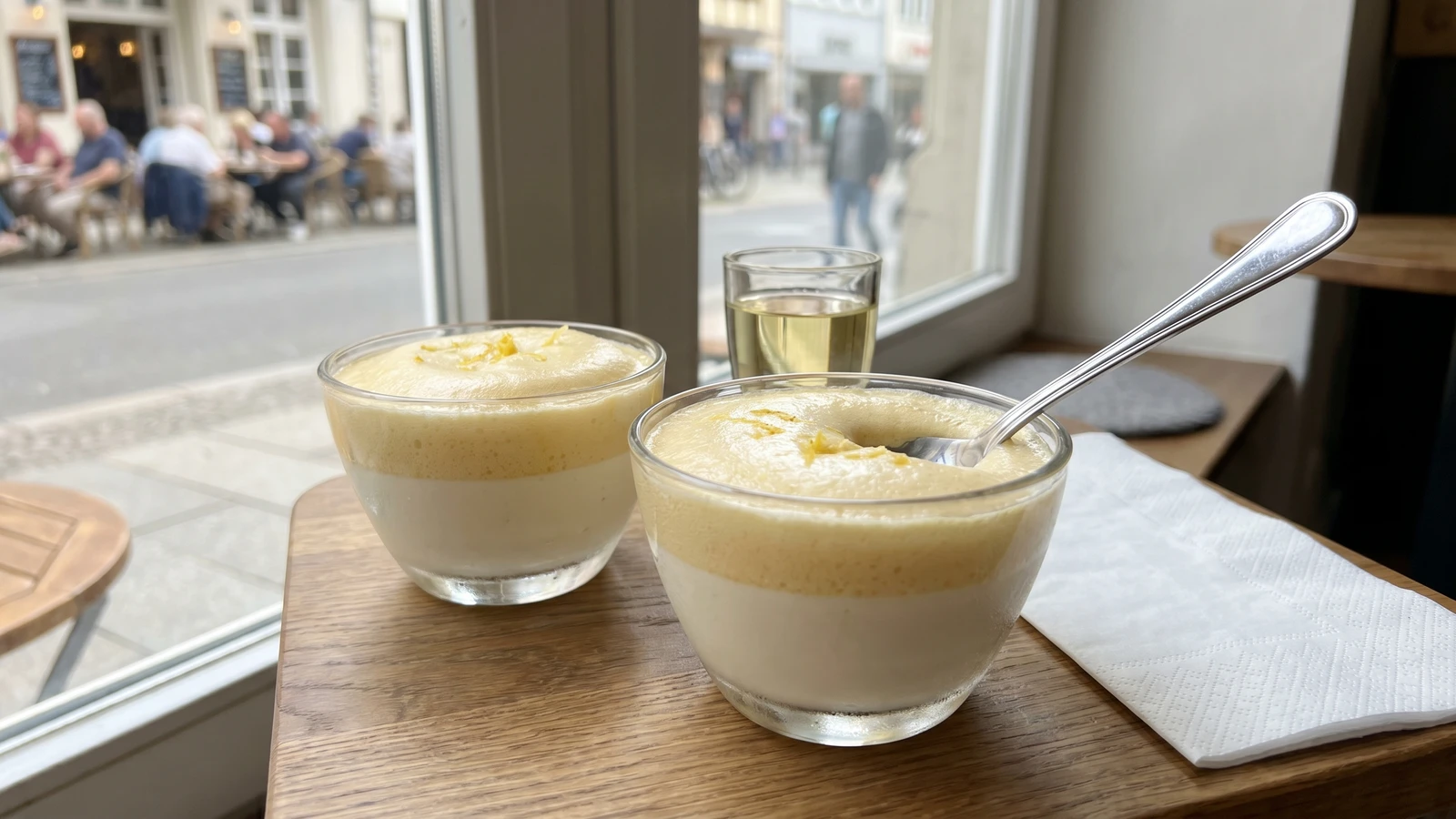
A proper Weinschaumsoße is won with the whisk, not with starch: pale egg yolks, sugar, and wine held over gentle heat until they rise into a warm golden foam.
Weinschaumsoße belongs to the German sweet table where a plain pudding needs a crown. In Hanover it sits on Welfencreme, white vanilla cream underneath, yellow wine foam above, the colours of the Welf house. Further south it comes with Dampfnudeln, steamed yeast dumplings, or apple strudel; along the Rhine and Mosel the argument begins with the wine, Riesling if the cook has sense, sweeter if the pudding underneath is sharp.
The split is simple. Some kitchens stretch it with starch or fold in whipped cream to make it stand longer. I don't. A sauce should be a sauce, not a pudding wearing a hat. Egg yolks, sugar, wine, a little lemon, and a bowl set over water that trembles. That is enough.
The whole dish is temperature and air. Whisk over a gentle bain-marie, a hot-water bath, because the yolks thicken at low heat and trap air while they warm; boil the bowl or stop whisking and the eggs scramble before the foam can build. Runter mit der Temperatur. When the whisk leaves ribbons that sit for a breath before sinking, you're done.
Serve it straight away, warm over Welfencreme, baked apples, rote Grütze, or yeast dumplings. Das braucht seine Zeit, but not much. It just needs your hand on the whisk.
Welfenspeise, the Hanoverian dessert most closely tied to Weinschaumsoße, is commonly dated to 1911, when it was served for the 200th anniversary of the House of Hanover's rule. Its white vanilla base and yellow wine foam echo the colours of the Welf dynasty, which is why the sauce became more than a general sweet garnish in Lower Saxony. German wine-foam sauces also belong to the wider central European egg-and-wine custard family, but regional practice changes the plate: Hanover puts it over Welfencreme, while southern kitchens often spoon it over yeast dumplings, strudel, or fruit.
Quantity
4
Quantity
80g
Quantity
150ml
Quantity
1 tablespoon
Quantity
1 teaspoon
finely grated
Quantity
1 pinch
| Ingredient | Quantity |
|---|---|
| large egg yolks | 4 |
| fine sugar | 80g |
| dry or off-dry German white wine, preferably Riesling | 150ml |
| fresh lemon juice | 1 tablespoon |
| lemon zestfinely grated | 1 teaspoon |
| fine salt | 1 pinch |
Put 3cm of water in a saucepan and bring it to a bare tremble, not a boil. The bowl should sit over the water without touching it, because direct heat cooks the yolks too fast and gives you sweet scrambled egg. Nicht aus dem Glas, and not from a packet either.
Put the yolks, sugar, wine, lemon juice, lemon zest, and salt in the bowl and whisk off the heat until the sugar starts to dissolve and the mixture looks even. Starting smooth matters because undissolved sugar rubs against the yolk and slows the foam before the heat has done its work.
Set the bowl over the trembling water and whisk constantly, reaching around the sides where the egg thickens first. Keep the heat gentle because yolks thicken around the low 70s C, and a rolling boil pushes them past creamy into curdled before the wine foam can rise. The sauce will turn pale, swell, and hold fine bubbles.
Lift the whisk. When the sauce falls back in thick ribbons that sit on the surface for one breath before sinking, take the bowl off the heat at once. It will keep cooking in the warm bowl, so stopping early keeps it spoonable instead of tight.
Whisk for another half minute off the heat to steady the foam, then spoon it warm over Welfencreme, baked apples, rote Grütze, Dampfnudeln, or apple strudel. Serve it now. Weinschaumsoße is air held in egg, and air does not wait politely while you polish the plates.
1 serving (about 75g)
Culinary guides, cultural storytelling, and the editorial depth that makes cooking meaningful.
Discover Culinary ExplorerChef Klaus
Frankfurt's Advent marzipan ball is small, pale gold, and exacting: real almond paste, rosewater, three almond halves pressed on firmly, then a short bake for gloss.
Chef Klaus
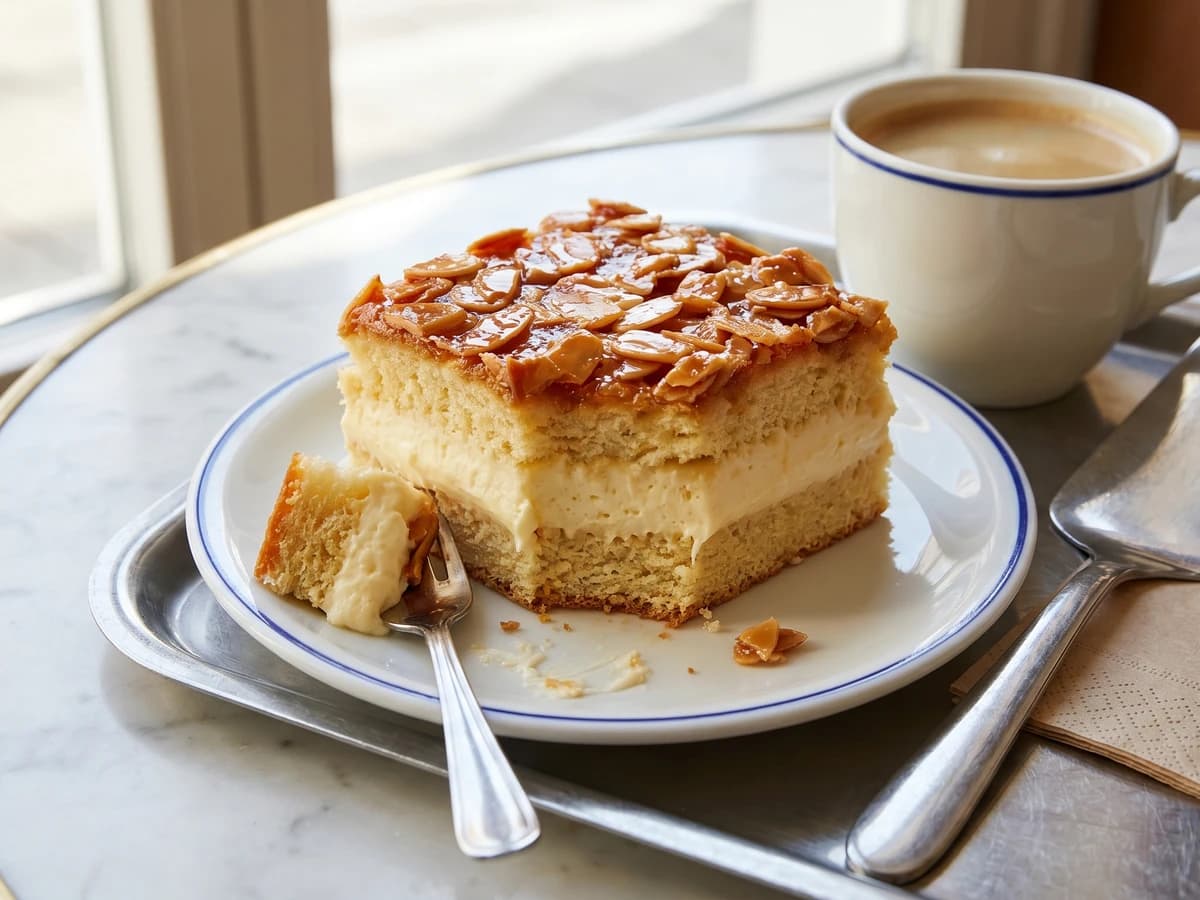
Bienenstich works when the almond top caramelises without burning and the yeast cake cools before the cream goes in. Rush either one and the bee has stung you.

Chef Klaus
North Germany's Freud-und-Leid-Kuchen, the cake for joy and sorrow both: a yeast sheet pressed full of cold butter, sugar, and almonds until the top turns crisp.
Chef Klaus
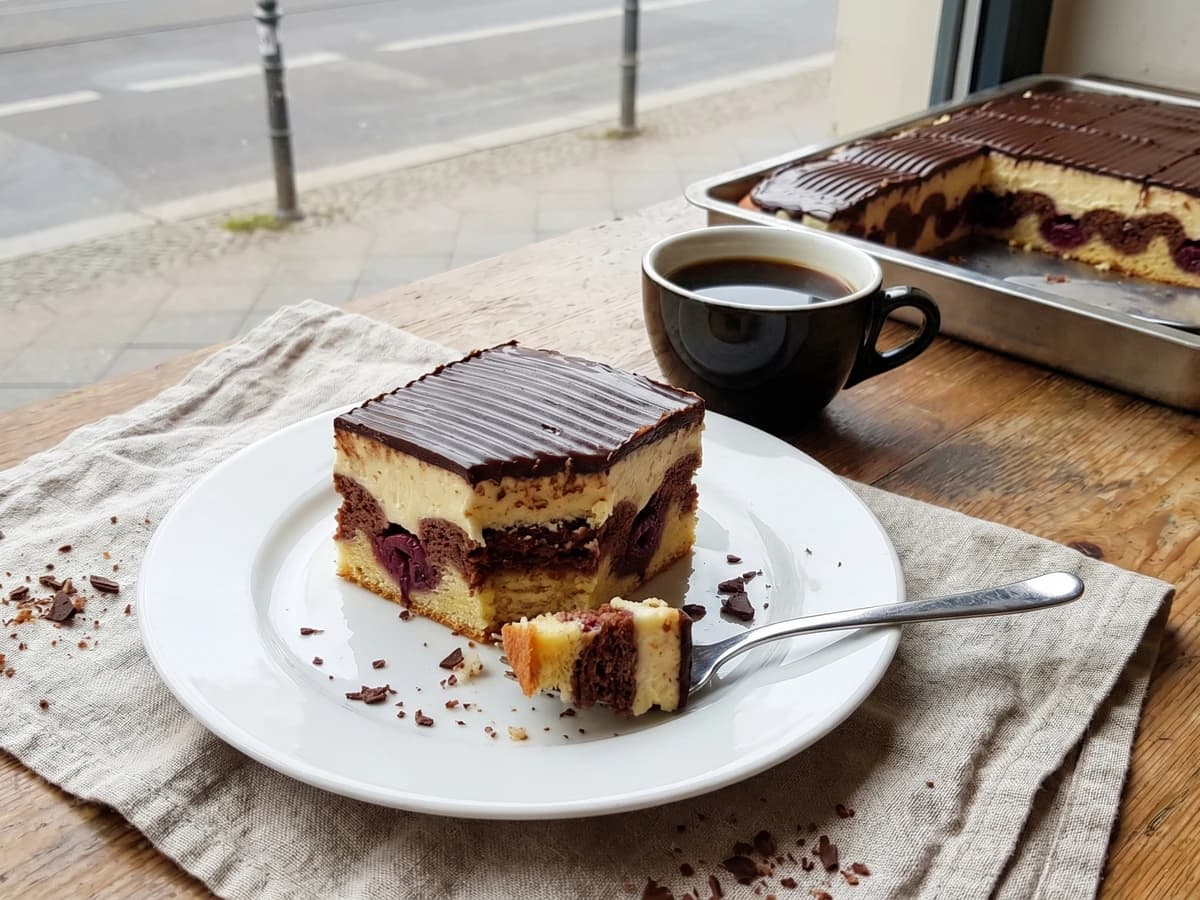
A German coffee-table cake built in layers: pale and cocoa batter, sour cherries sinking into the wave, cool buttercream, and dark chocolate combed like the Danube.