Culinary Explorer
A cooking platform built around craft, culture, and the stories behind what we eat.
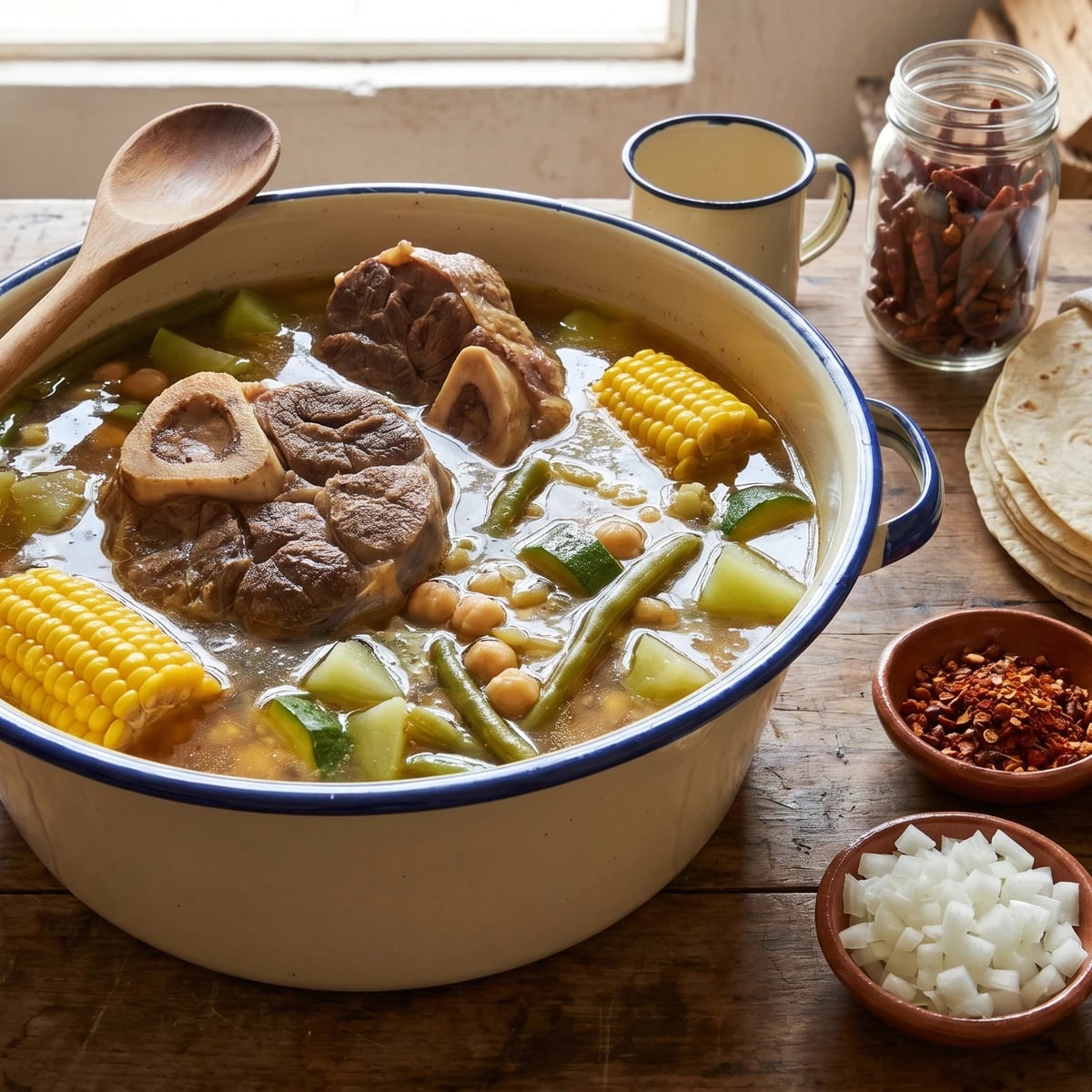
Wakabaki Yoreme
Created by Chef Lupita
The Yoreme and Yaqui ancestral beef-and-vegetable stew from northern Sinaloa and southern Sonora, slow-cooked in a single pot with garbanzos, corn, calabacitas, and ejotes for novenarios, weddings, and Dia de Muertos.
Wakabaki is from the noroeste. Specifically from the Yoreme (also called Mayo) communities of northern Sinaloa and southern Sonora, and from the Yaqui pueblos of the Rio Yaqui valley. The word itself is Cahita, the language family that the Yoreme and Yaqui share, and it means, in plain terms, beef stew. Plain in name, ceremonial in practice.
This is the pot that comes out for a novenario, the nine days of prayer after a death. It comes out for a wedding. It comes out for the fiestas of Holy Week and for Dia de Muertos. The Yoreme cooks I worked with in El Fuerte and the Yaqui women I sat with in Vicam in Sonora cook it in pots that hold thirty or forty liters, set over mesquite fires in outdoor kitchens. The whole community eats from one pot. That is the form of the dish. A small batch on a stovetop is a compromise, but you can still honor the proportions and the patience.
The ingredients are direct: beef on the bone, dried garbanzos, fresh corn cut into rounds, calabacitas, ejotes, chayote, potato. No browning. No tomato. No chile in the broth. The seasoning happens at the table, where each person crushes dried chiltepin (the wild bird chile of the Sonoran desert, the fire of the noroeste) into their own bowl. This is not a chile-forward stew like a mole de olla. The flavor is beef, bone, garbanzo, and the sweetness the vegetables release as they finish.
My mother did not cook wakabaki. She was from Jalisco. I learned this dish in a courtyard in El Fuerte, watching a Yoreme cook named Doña Albina stir a forty-liter pot with a wooden paddle the length of my arm. She told me the broth has to be honest. No browning, no shortcuts, no chile thrown in to cover what the meat cannot do on its own. If your beef is good and your garbanzos are good, the pot tells the truth. Saber cocinar es saber vivir.
Ingredients
beef shank with bone (chambarete)
Quantity
4 pounds
cut into thick cross-cut pieces
beef short ribs or beef neck bones
Quantity
2 pounds
dried garbanzos
Quantity
1 pound
soaked overnight in cold water
| Ingredient | Quantity |
|---|---|
| beef shank with bone (chambarete)cut into thick cross-cut pieces | 4 pounds |
| beef short ribs or beef neck bones | 2 pounds |
| dried garbanzossoaked overnight in cold water | 1 pound |
Where cooking meets culture.
Culinary guides, cultural storytelling, and the editorial depth that makes cooking meaningful.
Discover Culinary Explorer