Culinary Explorer
A cooking platform built around craft, culture, and the stories behind what we eat.
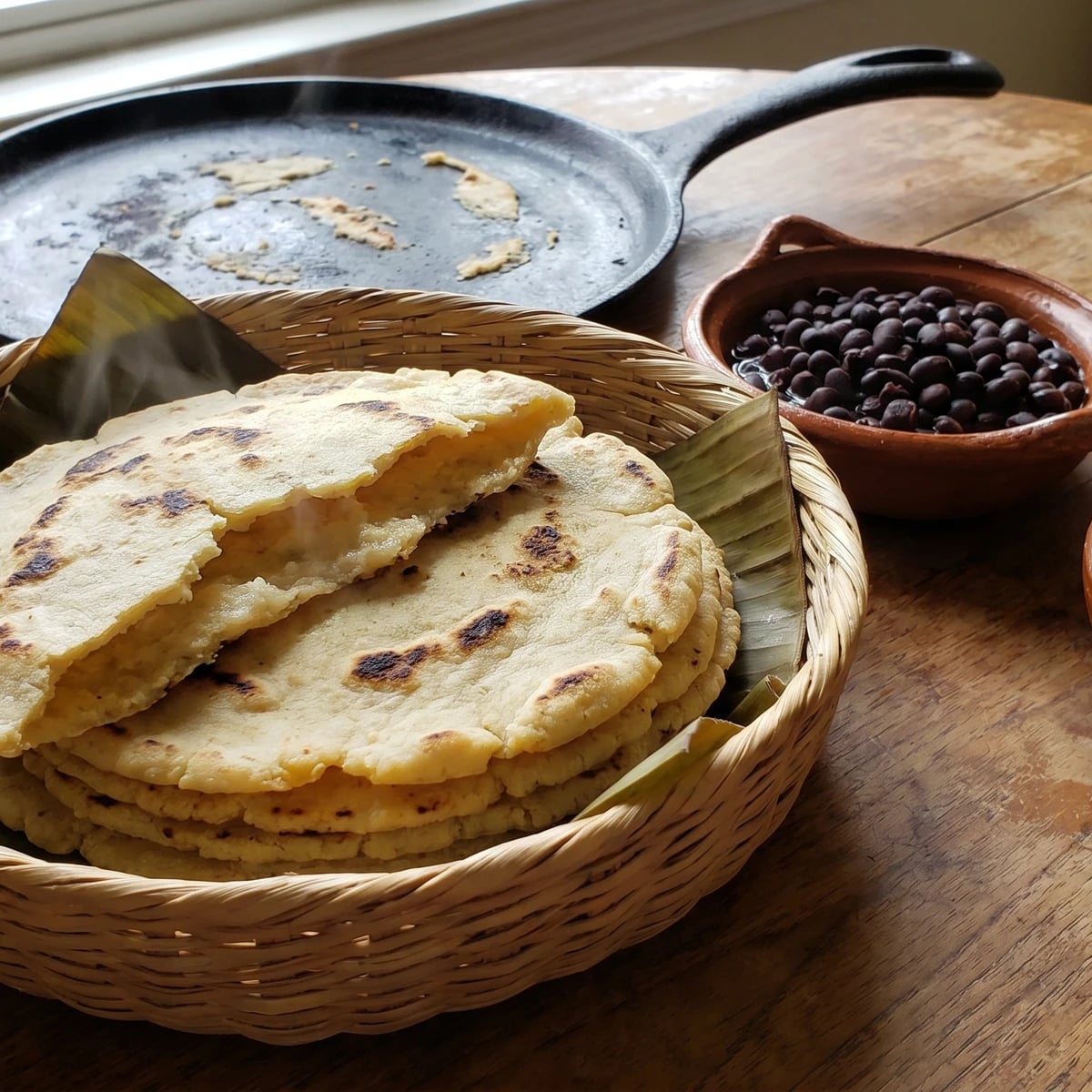
Waj Tabasqueño de Maíz Nixtamalizado
Created by Chef Lupita
Tabasco's daily bread from the Yokot'an kitchen: a thick, hand-pressed nixtamal tortilla with puffed masa, toasted comal spots, and enough body to hold frijol, chaya, plantain, or pejelagarto.
Tabasco, in the wet lowlands of the Grijalva and Usumacinta rivers, has its own bread, and it is not a northern flour tortilla. It is waj, the thick hand-formed tortilla of the Yokot'an kitchen, made from nixtamalized corn and cooked on a comal until the surface blisters and the center finishes soft.
I learned this one in Nacajuca, where the masa was still warm from the molino and the women shaped each tortilla thicker than the Mexico City kind. That thickness matters. Waj is not a wrapper for a taco. It is food with structure, made to sit beside frijol negro, chaya, plátano macho, queso de poro, or pejelagarto. Cada estado, su propia cocina.
The ingredient that defines it is the corn, not a chile, not a sauce, not decoration. Use fresh nixtamal masa if you can get it. If you cannot, use good masa harina and hydrate it properly, then let it rest. No me vengas con atajos that give you cracked, dry tortillas and then blame the comal. The masa has to feel alive in your hands: moist, pliable, and firm enough to hold a thick edge.
My mother used to say that the tortilla tells on the cook. She was right. If your comal is too cold, the waj dries out before it cooks. If it is too hot, the outside burns while the center stays raw. You learn the heat with your fingers, your nose, and your patience. Saber cocinar es saber vivir.
Ingredients
fresh nixtamal masa for tortillas
Quantity
2 pounds
preferably from a molino
fine sea salt
Quantity
1 1/2 teaspoons
warm water
Quantity
1/2 to 3/4 cup
as needed to soften the masa
| Ingredient | Quantity |
|---|---|
| fresh nixtamal masa for tortillaspreferably from a molino | 2 pounds |
| fine sea salt | 1 1/2 teaspoons |
| warm wateras needed to soften the masa | 1/2 to 3/4 cup |
Where cooking meets culture.
Culinary guides, cultural storytelling, and the editorial depth that makes cooking meaningful.
Discover Culinary Explorer