Chef Lupita
Aceite de Chiltepin Bajacaliforniano
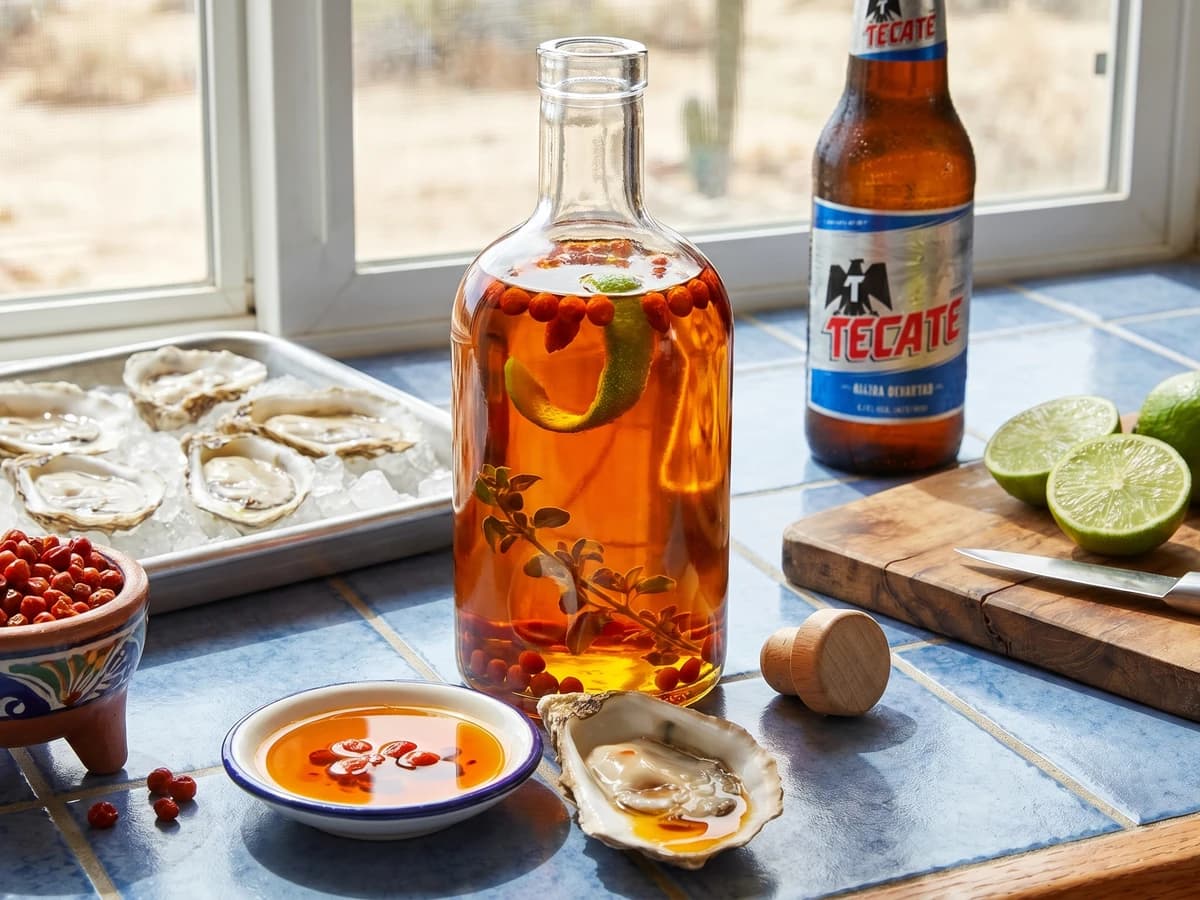
Baja California's wild chiltepin steeped in olive oil with garlic, orejon, and lime peel, until the oil turns ruby-amber and carries the slow, sneaky burn of the desert coast.
A cooking platform built around craft, culture, and the stories behind what we eat.

Created by
Jalisco's table pickle of jalapeños, carrots, onion, garlic, bay, thyme, and Mexican oregano, simmered in vinegar and set beside birria like it belongs there.
Jalisco gives you these verduras en escabeche at the table, especially in Guadalajara and the towns around the birria route toward Tlaquepaque, Tonalá, and Los Altos. This is not decoration. It cuts the richness of goat or beef birria, wakes up beans, and gives a torta ahogada the bite it needs.
The chile is fresh jalapeño. Not serrano, not canned slices from a tired jar. Jalapeño has enough flesh to hold its shape in vinegar, and the carrot carries the oregano and bay the way a good table condiment should. The women who taught me this did not measure timidly. Bay, thyme, marjoram, black pepper, and a heavy hand of dried Mexican oregano. That is the perfume of a Jalisco escabeche.
My mother kept a jar in the refrigerator in Colonia Roma because she was from Jalisco and she knew a meal sometimes needs acid more than it needs another salsa. You soften the vegetables in oil first, then simmer them briefly in vinegar. Briefly. If the carrot collapses, you cooked it too long. Saber cocinar es saber vivir.
Escabeche entered Mexico through Spanish preserving techniques, especially the use of vinegar, oil, bay, and herbs to hold cooked foods for several days before refrigeration. In Jalisco, the method became a practical table condiment for rich dishes such as birria, where acidic pickled chiles and carrots balance meat cooked with dried chiles and spices. The jalapeño itself is named for Xalapa, Veracruz, but it spread through central and western Mexico as a market chile because its thick walls make it especially good for pickling.
Quantity
1 pound
stems trimmed and chiles slit lengthwise
Quantity
1 pound
peeled and sliced into 1/4-inch coins
Quantity
1 large
sliced into thick half-moons
Quantity
8
peeled and lightly crushed
Quantity
1/2 small head
cut into bite-size florets
Quantity
1/3 cup
Quantity
2 cups
Quantity
1 cup
Quantity
1 tablespoon
Quantity
1 teaspoon
Quantity
4
Quantity
1 tablespoon
Quantity
1 teaspoon
Quantity
1/2 teaspoon
Quantity
1 teaspoon
Quantity
4
Quantity
2
| Ingredient | Quantity |
|---|---|
| fresh chile jalapeñostems trimmed and chiles slit lengthwise | 1 pound |
| carrotspeeled and sliced into 1/4-inch coins | 1 pound |
| white onionsliced into thick half-moons | 1 large |
| garlic clovespeeled and lightly crushed | 8 |
| cauliflowercut into bite-size florets | 1/2 small head |
| vegetable oil or mild olive oil | 1/3 cup |
| white vinegar | 2 cups |
| water | 1 cup |
| kosher salt | 1 tablespoon |
| sugar | 1 teaspoon |
| bay leaves | 4 |
| dried Mexican oregano | 1 tablespoon |
| dried thyme | 1 teaspoon |
| dried marjoram | 1/2 teaspoon |
| black peppercorns | 1 teaspoon |
| whole allspice berries | 4 |
| whole cloves | 2 |
Trim the jalapeños and slit each one lengthwise so the vinegar can enter without the chile falling apart. Slice the carrots evenly, cut the onion thick, and keep the cauliflower in bite-size pieces. Escabeche is not a chopped salad. The vegetables need enough body to stay crisp after the hot brine.
Heat the oil in a wide cazuela or heavy pot over medium heat. Add the carrots and cook for 3 minutes, stirring often. Add the jalapeños, onion, garlic, and cauliflower. Cook for 4 to 5 minutes, just until the onion starts to shine and the jalapeño skins deepen in color. You are not frying them brown. You are waking them up before the vinegar goes in.
Add the vinegar, water, salt, sugar, bay leaves, Mexican oregano, thyme, marjoram, peppercorns, allspice, and cloves. Stir once and bring to a firm simmer. The kitchen should smell sharp, herbal, and clean. That heavy hand of oregano is jalisciense, especially beside birria.
Simmer uncovered for 6 to 8 minutes, until the carrots bend slightly but still resist the tooth. Do not cook them soft. The vinegar will keep working as they cool, and soft escabeche tastes like neglect. Así se hace y punto.
Use clean heatproof jars. Spoon the vegetables in first, then pour the hot brine over them, making sure the bay leaves, garlic, and herbs are distributed. Press the vegetables down so they are covered by liquid. Let cool to room temperature, then cover and refrigerate.
Let the escabeche rest at least 24 hours before serving. Two days is better. Serve it cold or at room temperature beside birria, tortas ahogadas, tacos dorados, beans, or a plate of eggs. This is refrigerator escabeche, not shelf-stable canning. Keep it cold.
1 serving (about 120g)
Culinary guides, cultural storytelling, and the editorial depth that makes cooking meaningful.
Discover Culinary ExplorerChef Lupita
Baja California's wild chiltepin steeped in olive oil with garlic, orejon, and lime peel, until the oil turns ruby-amber and carries the slow, sneaky burn of the desert coast.

Chef Lupita
Puebla's Lenten convent adobo, a brick-red vinegar chile paste of ancho, guajillo, garlic, oregano, and comino made to dress fish for the meatless calendar.
Chef Lupita
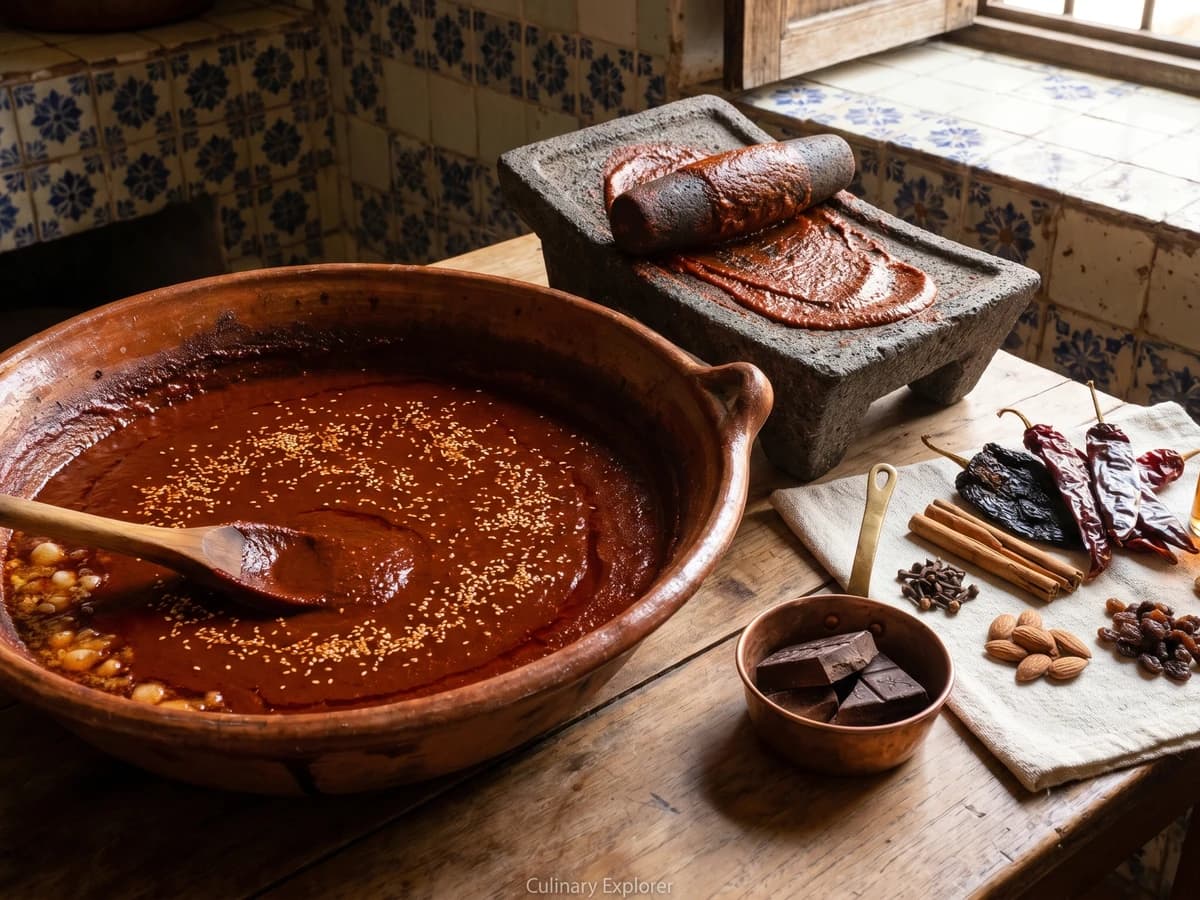
Zacatecas' wedding-table adobo, built from toasted guajillo and ancho, piloncillo, sour orange, chocolate, canela, clavo, almonds, sesame, and lard.

Chef Lupita
Puebla's convent kitchens built this adobo with ancho, guajillo, jerez, almonds, raisins, clove, and lard, a baroque marinade that stains pork loin and finishes as the sauce.