
Chef Lupita
Agua de Alfalfa
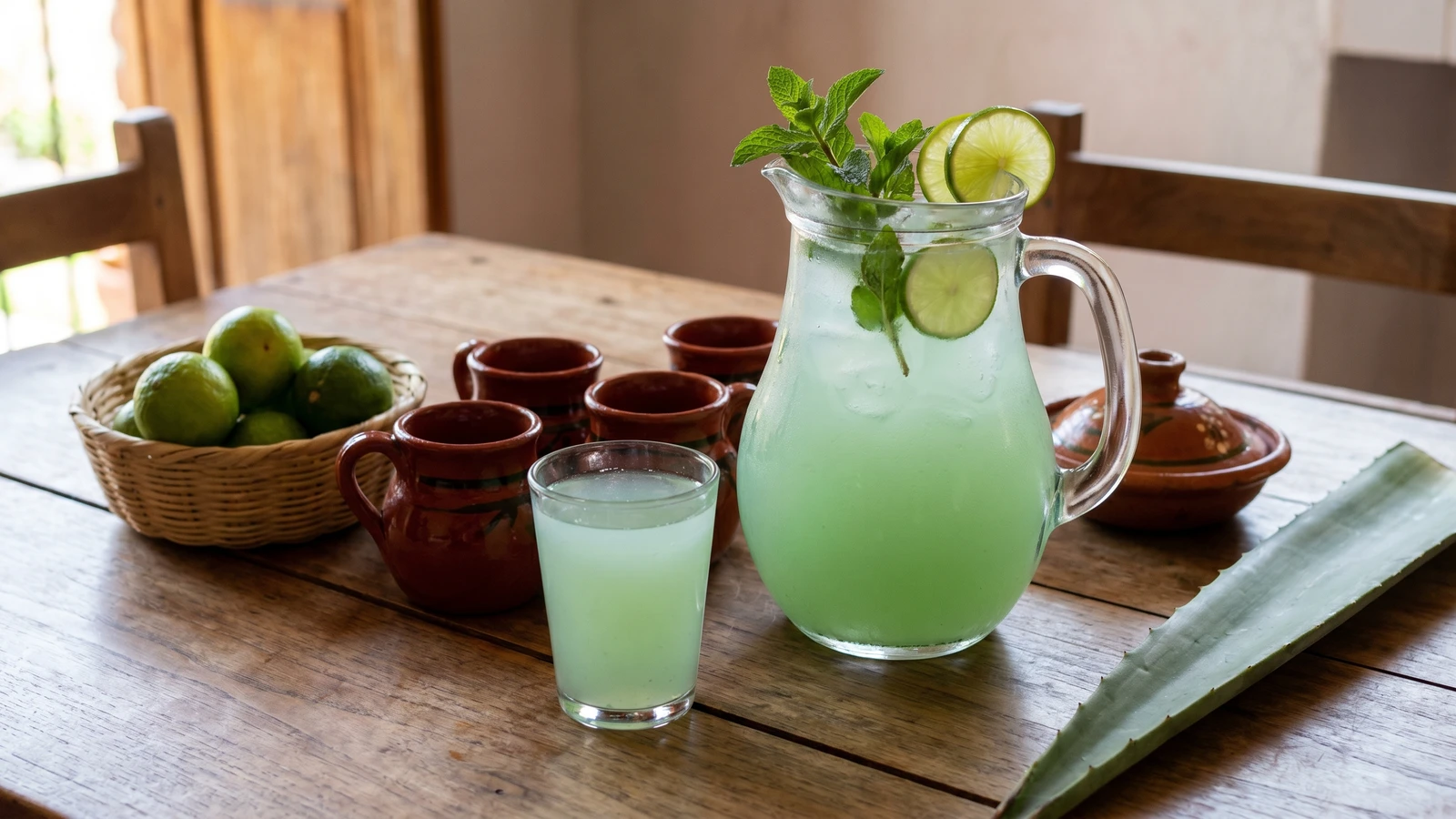
Ciudad de México's highland market agua fresca, fresh alfalfa blended with pineapple and lime until bright green, strained clean, and poured cold from the vitrolero.
A cooking platform built around craft, culture, and the stories behind what we eat.
Created by
Tlaxcala's maguey-field cocktail, bright with fresh aguamiel, hierbabuena, lime, and destilado de pulque, belongs to outdoor tables where the drink stays cold and the conversation does not rush.
Tlaxcala, the Altiplano tlaxcalteca, and the maguey country around Nanacamilpa and Tlaxco give this drink its spine. Verde de Tlaxcala is not a beach cocktail with rum trying to be clever. It belongs to cold mornings in the maguey fields, to tinacales, to clay cups on an outdoor table, and to people who know that the plant gives more than one kind of drink.
The ingredient that defines it is fresh aguamiel, the sweet sap drawn from maguey pulquero before it becomes pulque. The hierbabuena gives the green lift, the lime cuts the sweetness, and the destilado de pulque gives backbone without turning the drink into tequila's cousin. It is distilled from fermented aguamiel, not from cooked agave hearts. Different material, different memory.
At a roadside puesto near Tlaxco, the señora who taught me her verde did not measure the herbs. She measured the color. A handful of hierbabuena, a smaller pinch of alfalfa when the leaves were young and clean, lime squeezed until the sweetness stopped feeling heavy, then a cloth strainer over a clay jar. That is kitchen intelligence. No me vengas con atajos.
There is no chile here and that is correct. Not every Mexican drink needs heat. This is a 32-state cuisine, and Tlaxcala's green drink speaks in maguey, mint, lime, and field grass. Serve it very cold, before the herbs fade. Asi se hace y punto.
Fresh aguamiel and pulque predate the Spanish conquest and were central to ritual and agricultural life in the central highlands, where maguey pulquero grows in dry, cold soils. By the late 19th century, pulque haciendas in the broader llanos de Apan, including Tlaxcala's neighboring corridors with Hidalgo and Puebla, were moving pulque to Mexico City by rail. Verde de Tlaxcala is a modern cocktail built from that older maguey economy; some public recipes use vodka, but destilado de pulque keeps the alcohol tied to fermented aguamiel rather than cooked agave hearts.
Quantity
3 cups
Quantity
1 packed cup
rinsed
Quantity
1/4 cup
rinsed
Quantity
1/2 cup
Quantity
6 ounces
chilled
Quantity
1 teaspoon
only if the aguamiel tastes weak
Quantity
1 small pinch
Quantity
2 cups, plus more for serving
Quantity
4
Quantity
4 small sprigs
| Ingredient | Quantity |
|---|---|
| fresh chilled aguamiel from maguey pulquero | 3 cups |
| fresh hierbabuena leaves and tender stemsrinsed | 1 packed cup |
| tender fresh alfalfa leaves (optional)rinsed | 1/4 cup |
| fresh lime juice from limon criollo or small Mexican limes | 1/2 cup |
| destilado de pulquechilled | 6 ounces |
| miel de maguey or light agave syrup (optional)only if the aguamiel tastes weak | 1 teaspoon |
| fine sea salt | 1 small pinch |
| ice | 2 cups, plus more for serving |
| thin lime wheels (optional) | 4 |
| fresh hierbabuena sprigs (optional) | 4 small sprigs |
Pour a spoonful of the aguamiel into a cup and taste it before you touch the blender. It should be sweet, green, lightly mineral, and smell like cut maguey. If it is sharply sour, foamy, or already alcoholic, it has started becoming pulque. That is not bad, but it is not this drink. Chill the aguamiel, the destilado de pulque, and the jarra before you start.
In a blender, combine 1 cup of the aguamiel, the hierbabuena, the alfalfa if using, the lime juice, and the pinch of salt. Blend on high for 15 to 20 seconds, just until the leaves break into a bright green liquid. Do not grind it for a full minute. Heat and friction dull the herbs, and then your verde tastes like a tired licuado.
Set a fine-mesh strainer or damp manta cloth over a cold glass jarra. Pour in the green base and press gently with the back of a spoon. You want the color and the perfume, not a mouthful of torn stems. If you squeeze hard enough to force bitter fibers through, that is on you.
Stir the remaining 2 cups aguamiel into the strained green base. Add the chilled destilado de pulque and taste. If the aguamiel was thin, stir in the teaspoon of miel de maguey. The drink should be herbal, sour-sweet, clean, and carrying a quiet pulque note in the back. Not tequila. Not rum. Tlaxcala.
Fill small glasses or barro rojo jarritos with ice. Pour the Verde de Tlaxcala over the ice and garnish with a thin lime wheel and a small sprig of hierbabuena. Serve immediately. No club soda. If you want bubbles, make another drink. This one is clean and direct. Cada estado, su propia cocina.
1 serving (about 330g)
Culinary guides, cultural storytelling, and the editorial depth that makes cooking meaningful.
Discover Culinary ExplorerChef Lupita
Ciudad de México's highland market agua fresca, fresh alfalfa blended with pineapple and lime until bright green, strained clean, and poured cold from the vitrolero.
Chef Lupita
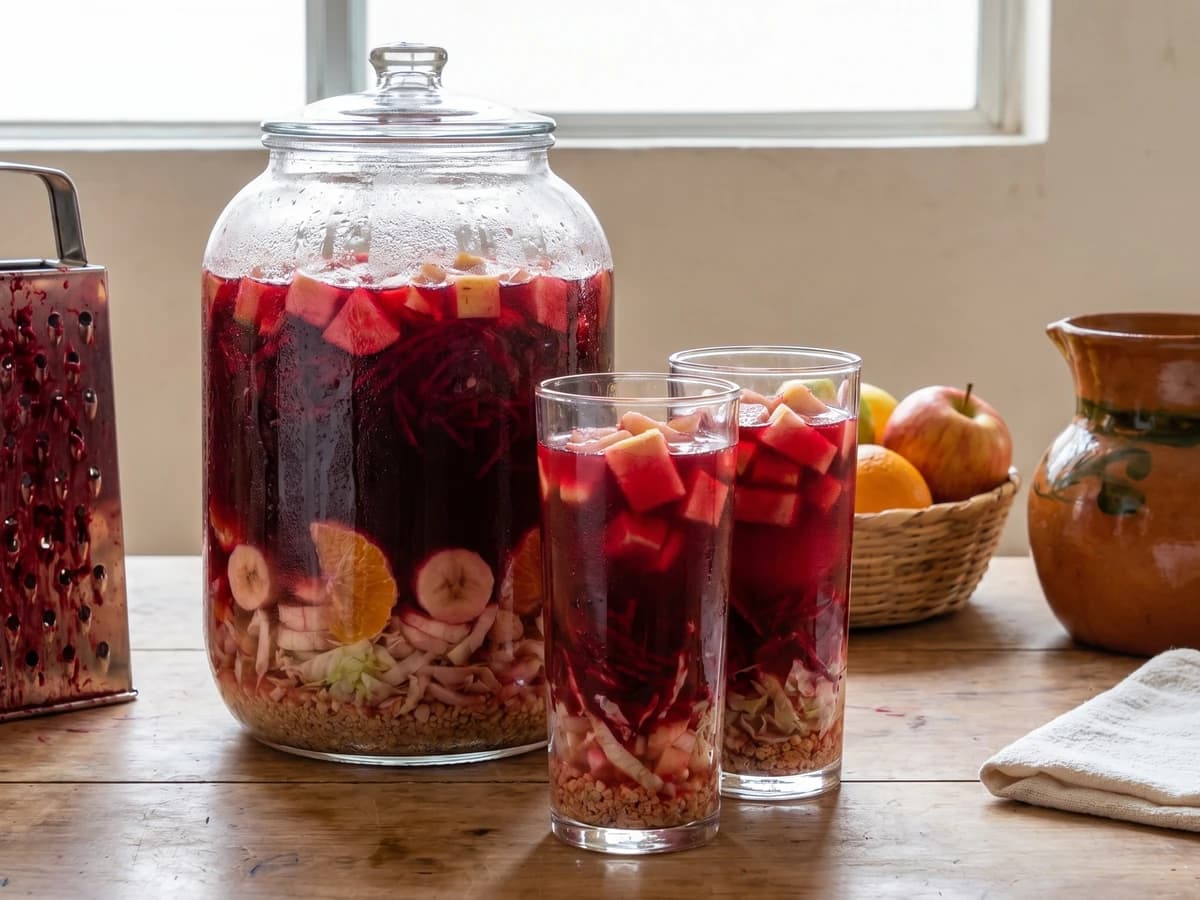
Aguascalientes' Lenten agua fresca, jewel-red from cooked beet and full of apple, banana, orange, lettuce, and ground peanuts, served cold when Holy Week meets the Feria de San Marcos.

Chef Lupita
Sonora and Sinaloa's creamy malted barley water, built on toasted cebada perla, Mexican canela, vanilla from Papantla, and evaporated milk. Pink-beige, rich, and served cold over heavy ice in a heavy glass tumbler. Liquid cookie comfort the northwest way.

Chef Lupita
Yucatán's everyday tonic of boiled chaya leaves blended with lima agria, sugar, and ice. The bright green jarra that sits on every Peninsula table from Mérida to Valladolid.