
Chef Lupita
Aguascalientes Beef Tongue Pozole (Pozole de Lengua)
Aguascalientes' Bajio pozole de lengua, built with cacahuazintle hominy, tender beef tongue, chile ancho and guajillo, with xoconostle brightness and table garnishes.
A cooking platform built around craft, culture, and the stories behind what we eat.
Created by
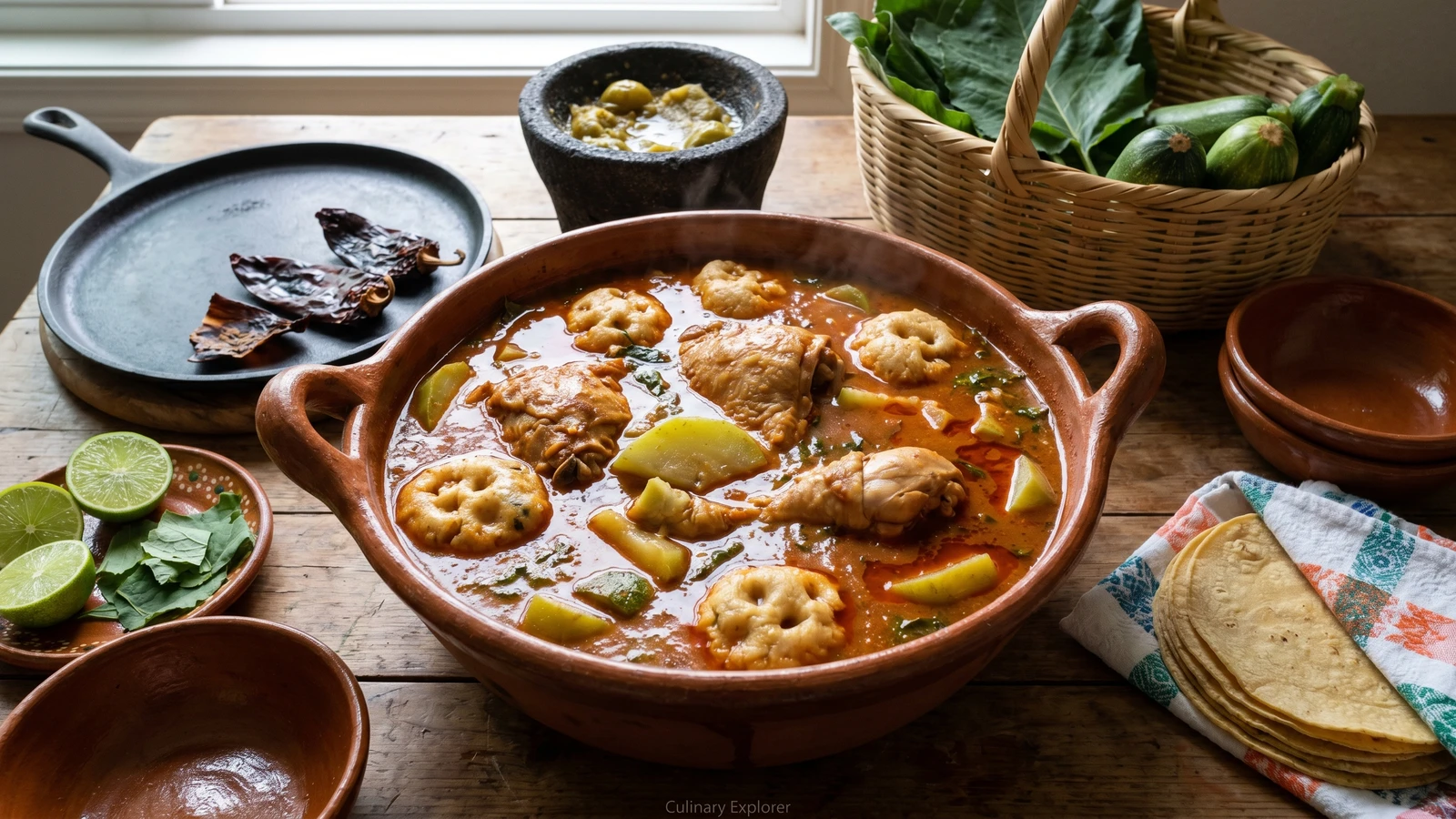
Central Veracruz's masa-thickened stew, built with bone-in chicken, toasted chile ancho, tomatillo, hoja santa, and thumb-marked chochoyones that give the broth its body.
This is Veracruz, especially the central highland kitchens between Xalapa, Coatepec, and the road toward Huatusco, where the humidity changes the way corn smells on the comal. Tesmole is not mole de olla with a new name. It is a masa-thickened stew, older in its bones, with chochoyones floating in the broth like small reminders that corn is the structure of this cuisine.
The chile here is chile ancho, sometimes joined by a little guajillo, but ancho gives the body and dark fruit. The green edge comes from tomatillo and hoja santa. Hoja santa is not decoration. It tastes of anise, pepper, and wet earth, and in Veracruz it belongs in the pot the way the clay cazuela belongs on the table.
I learned this version from a señora near the Xalapa market who pinched every chochoyon with her thumb and told me, without looking up, that a smooth ball of masa is laziness. The dimple catches broth, cooks the center, and thickens the stew little by little. No me vengas con atajos. You make the broth, you toast the chile, you work the masa. Así se hace y punto.
Tesmole belongs to the family of masa-thickened stews that reach back to pre-Columbian corn cooking, when ground nixtamal was used not only for tortillas and tamales but also to give body to broths. In Veracruz, especially in the central and mountain regions, the dish absorbed colonial ingredients such as chicken and pork while keeping the older technique of thickening with masa and seasoning with local herbs such as hoja santa. Regional versions differ sharply: some Veracruz cooks use chicken, others pork or beef, and some add vegetables, but the masa and the chochoyones are the identity of the dish.
Quantity
3 pounds
preferably thighs and drumsticks
Quantity
10 cups
Quantity
1 medium
halved
Quantity
4
2 whole and 2 peeled for the sauce
Quantity
2 teaspoons, plus more to taste
Quantity
3
stemmed and seeded
Quantity
2
stemmed and seeded
Quantity
8
husked and rinsed
Quantity
2 ripe
Quantity
2 tablespoons
Quantity
2 large
one chopped and one left whole
Quantity
1 large sprig
Quantity
2 medium
peeled, pitted, and cut into 1-inch pieces
Quantity
2 medium
cut into thick half-moons
Quantity
1 1/2 cups
Quantity
2 tablespoons
Quantity
1/2 teaspoon
Quantity
2 to 4 tablespoons
only if needed for the masa
Quantity
for serving
Quantity
for serving
| Ingredient | Quantity |
|---|---|
| bone-in chicken piecespreferably thighs and drumsticks | 3 pounds |
| water | 10 cups |
| white onionhalved | 1 medium |
| garlic cloves2 whole and 2 peeled for the sauce | 4 |
| kosher salt | 2 teaspoons, plus more to taste |
| dried chile anchostemmed and seeded | 3 |
| dried chile guajillostemmed and seeded | 2 |
| tomatilloshusked and rinsed | 8 |
| Roma tomatoes | 2 ripe |
| manteca de cerdo | 2 tablespoons |
| hoja santa leavesone chopped and one left whole | 2 large |
| epazote | 1 large sprig |
| chayotespeeled, pitted, and cut into 1-inch pieces | 2 medium |
| calabacitascut into thick half-moons | 2 medium |
| fresh masa for tortillas or masa harina dough | 1 1/2 cups |
| manteca de cerdo, for the chochoyones | 2 tablespoons |
| kosher salt, for the chochoyones | 1/2 teaspoon |
| warm wateronly if needed for the masa | 2 to 4 tablespoons |
| lime halves (optional) | for serving |
| warm corn tortillas (optional) | for serving |
Put the chicken, water, halved onion, 2 whole garlic cloves, and salt in a heavy pot. Bring to a steady simmer over medium heat and skim the foam during the first 10 minutes. Lower the heat and cook gently for 40 to 45 minutes, until the chicken is tender but not falling apart. Bone-in chicken gives the broth body. Boneless breast gives you sadness.
Heat a dry comal over medium. Toast the chile ancho and chile guajillo one at a time, about 20 to 30 seconds per side, just until the skins soften, puff slightly, and smell deep. Do not blacken them. Burned chile turns bitter and Veracruz did not ask for that.
Place the toasted chiles in a bowl and cover with hot water for 20 minutes. While they soften, roast the tomatillos, tomatoes, and 2 peeled garlic cloves on the comal until blistered in spots and softened. The tomatillos should turn dull green and collapse slightly. That tartness is what keeps the stew from becoming heavy.
Drain the chiles and put them in a blender with the roasted tomatillos, tomatoes, roasted garlic, chopped hoja santa, and 1 cup of the chicken broth. Blend until completely smooth. Strain if your blender leaves chile skin behind. Tesmole should feel thick from masa, not rough from chile skins.
Lift the cooked chicken to a plate and strain the broth. Wipe the pot clean. Melt 2 tablespoons manteca de cerdo over medium heat, then pour in the blended sauce. It will sputter. Stir for 8 to 10 minutes, until the color deepens and the fat begins to show at the edges. La manteca es el sabor. Oil will cook it, yes, but it will not give the same roundness.
Pour 7 cups of the strained broth into the fried sauce and stir well. Add the whole hoja santa leaf, epazote, and chayote. Simmer for 18 to 20 minutes, until the chayote is almost tender. Add the calabacitas and return the chicken to the pot. Taste for salt. The broth should taste slightly stronger than you think because the masa dumplings will soften it.
Mix the masa with 2 tablespoons manteca de cerdo and 1/2 teaspoon salt. Knead until soft and smooth, adding warm water a tablespoon at a time only if the masa cracks. Pinch off pieces the size of a walnut, roll them into balls, then press your thumb into the center of each one to make a deep dimple. That thumbprint is not decoration. It helps the chochoyon cook evenly and hold the broth.
Drop the chochoyones gently into the simmering stew, one by one, without stirring hard. Shake the pot or move them with a spoon so they do not stick. Cook 18 to 22 minutes, until the dumplings float and the broth turns velvety from the masa. If the stew thickens too much, add a little reserved broth. If it is thin, simmer uncovered for a few more minutes. The pot will tell you.
Remove the epazote stem and the whole hoja santa leaf. Ladle the tesmole into deep clay bowls with chicken, vegetables, and several chochoyones in each serving. Put lime halves and warm corn tortillas on the table. Do not serve this with flour tortillas. Flour tortillas belong to the north. Cada estado, su propia cocina.
1 serving (about 560g)
Culinary guides, cultural storytelling, and the editorial depth that makes cooking meaningful.
Discover Culinary ExplorerChef Lupita
Aguascalientes' Bajio pozole de lengua, built with cacahuazintle hominy, tender beef tongue, chile ancho and guajillo, with xoconostle brightness and table garnishes.

Chef Lupita
Veracruz's Gulf coast rice from Alvarado, built with seafood stock, tomato, chile chipotle, epazote, shrimp, fish, jaiba, and pulpo, served loose and brothy in a clay cazuela.

Chef Lupita
Costa Chica's wet salt-beef stew, built from chile costeño, guajillo, tomato, manteca, yuca, plantain, and masa dumplings, the ranching pot of Cuajinicuilapa and Pinotepa.

Chef Lupita
Michoacán's P'urhépecha atápakua is a masa-thickened sauce and stew at once, built with pork, chile guajillo, and hierbabuena added only at the end.