Chef Lupita
Aceite de Chiltepin Bajacaliforniano
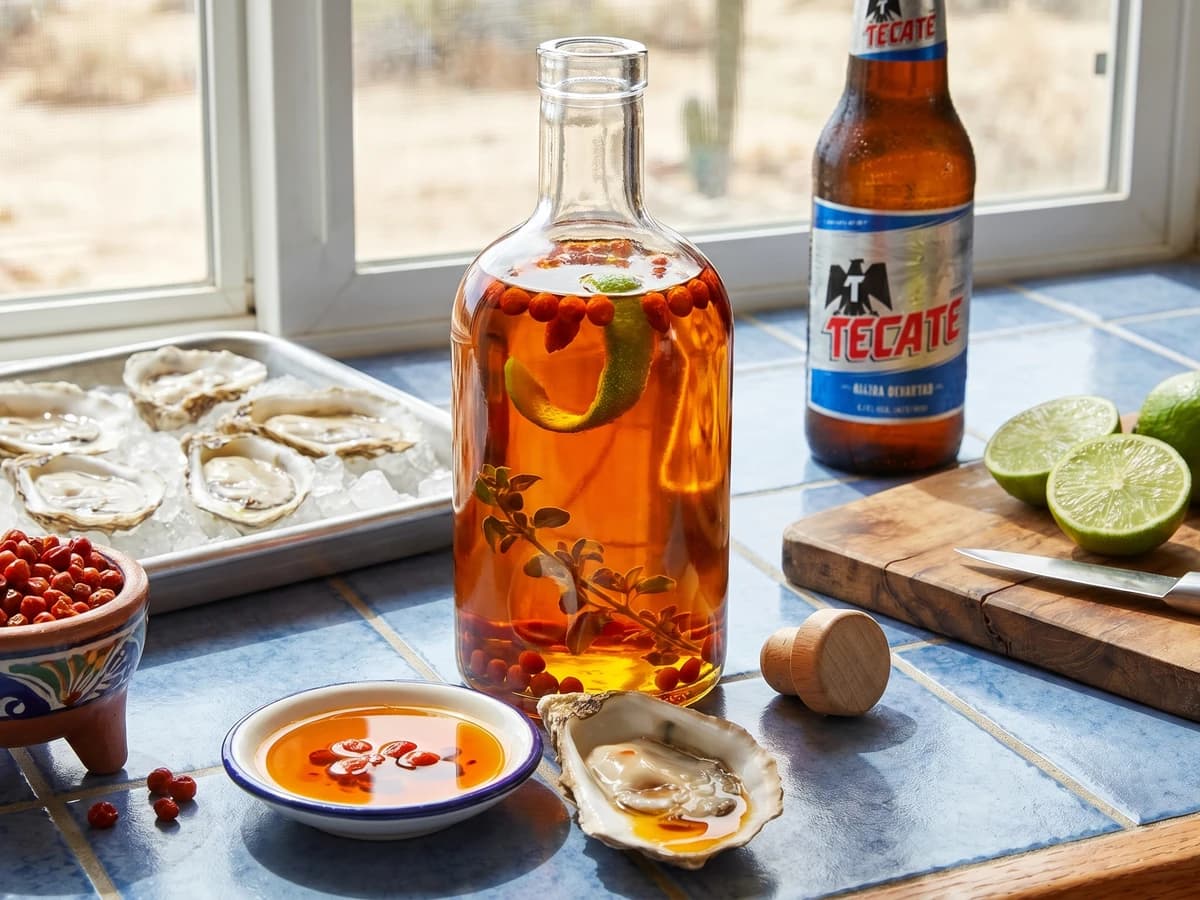
Baja California's wild chiltepin steeped in olive oil with garlic, orejon, and lime peel, until the oil turns ruby-amber and carries the slow, sneaky burn of the desert coast.
A cooking platform built around craft, culture, and the stories behind what we eat.
Created by
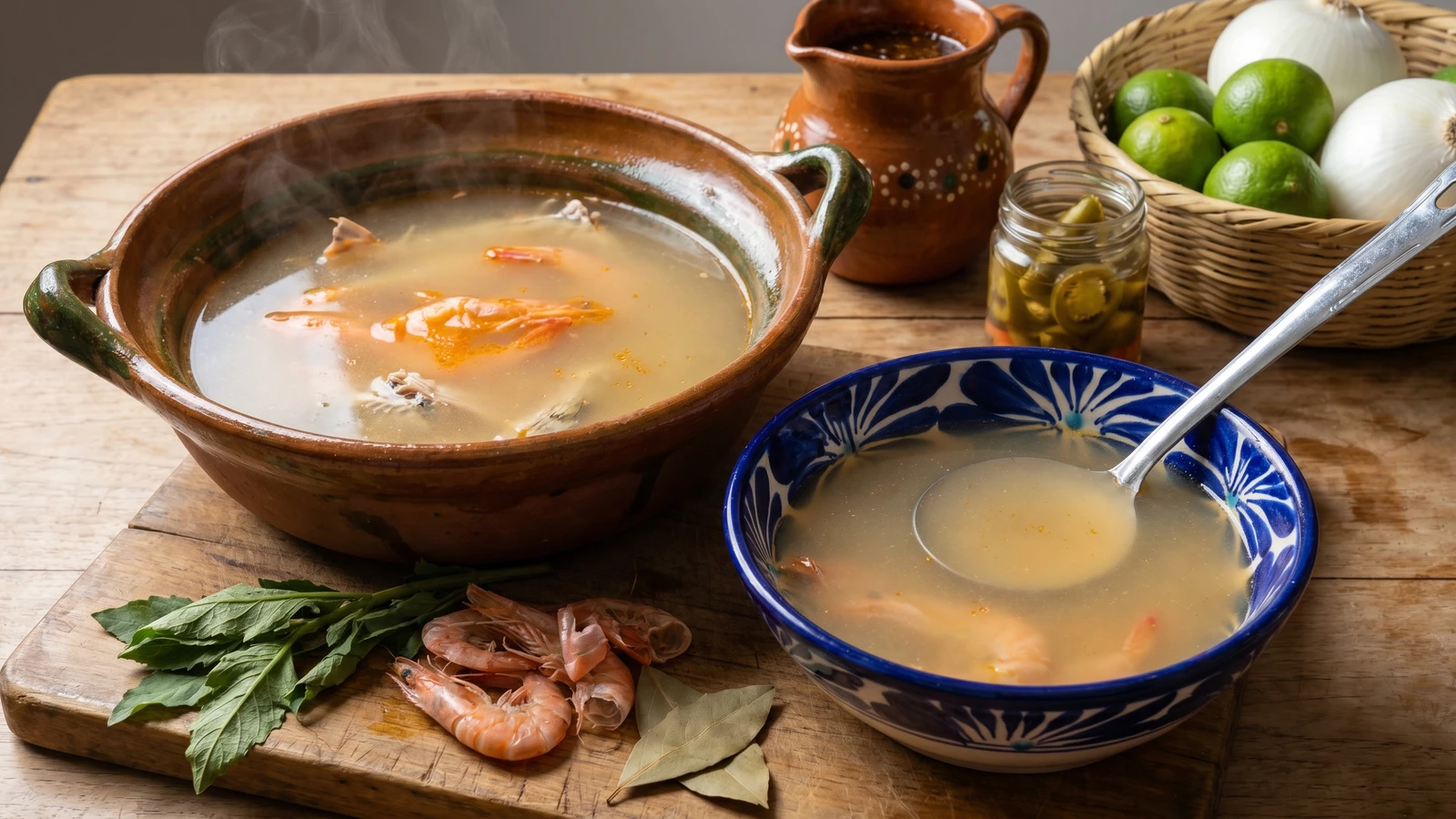
Veracruz's Gulf-coast stock, built from white fish bones, shrimp shells, epazote, garlic, and bay leaf, the quiet foundation behind arroz a la tumbada, chilpachole, and every serious jarocho caldo.
Veracruz lives on the Gulf, and this fumet belongs to the port, Alvarado, Boca del Rio, Tlacotalpan, and every kitchen where fish bones are not trash. They are the beginning of the next pot. Arroz a la tumbada does not start with rice. Chilpachole does not start with crab. They start here, with bones, shrimp shells, garlic, bay leaf, and epazote.
This is not a chile-heavy stock. Listen carefully. Not all Mexican food is built to burn your mouth. Veracruz cooking carries the Gulf, the Spanish ships, the olives, the capers, the vinegar sauces, and the seafood vendors who know which fish came in before sunrise. The defining herb here is epazote, not because it is fashionable, but because it cuts through the sweetness of shellfish and gives the broth that jarocho green edge.
I learned this kind of stock from women who kept a pot going behind the seafood counter, saving shrimp heads in a bowl and fish frames wrapped in newspaper. They would laugh at anyone buying boxed seafood broth. No me vengas con atajos. If you know the market, the vendor gives you the bones. If you don't know the market, you pay too much for less flavor.
Use clean white fish bones, not oily fish. Use shrimp heads if you can get them. Simmer gently and stop before the broth turns bitter. This is foundation work. La cocina no es decoración, es trabajo. Cada estado, su propia cocina.
Veracruz cuisine was shaped by the Gulf trade routes that connected Indigenous Totonac, Huastec, and Nahua foodways with Spanish, Afro-Caribbean, and Mediterranean ingredients after the port of Veracruz became Spain's main Atlantic entry point in the 16th century. Seafood broths like fumet jarocho grew from practical coastal cooking: fish bones, shrimp shells, epazote, tomato, garlic, and bay leaf were used to build the base for dishes such as arroz a la tumbada from Alvarado and chilpachole de jaiba. The use of olive oil, bay leaf, olives, capers, and vinegar in Veracruz seafood cooking marks the state's long port history more clearly than any single national idea of Mexican food.
Quantity
2 pounds
preferably robalo, huachinango, pargo, or mojarra, gills removed and rinsed well
Quantity
1 pound
rinsed
Quantity
2 tablespoons
Quantity
1 medium
sliced
Quantity
6
crushed
Quantity
2
chopped
Quantity
1
chopped
Quantity
1
quartered
Quantity
2
Quantity
2 large
Quantity
6
Quantity
1 teaspoon, plus more only if using immediately
Quantity
10 cups
Quantity
1/4 cup wine or 2 tablespoons vinegar
| Ingredient | Quantity |
|---|---|
| white fish bones and headspreferably robalo, huachinango, pargo, or mojarra, gills removed and rinsed well | 2 pounds |
| raw shrimp shells and headsrinsed | 1 pound |
| olive oil | 2 tablespoons |
| white onionsliced | 1 medium |
| garlic clovescrushed | 6 |
| celery ribschopped | 2 |
| small carrotchopped | 1 |
| ripe Roma tomatoquartered | 1 |
| bay leaves | 2 |
| fresh epazote sprigs | 2 large |
| black peppercorns | 6 |
| kosher salt | 1 teaspoon, plus more only if using immediately |
| cold water | 10 cups |
| dry white wine or white vinegar (optional) | 1/4 cup wine or 2 tablespoons vinegar |
Pull the gills from the fish heads if the fishmonger did not do it. Rinse the bones and heads under cold water until the water runs mostly clear. This matters. Gills and blood make a bitter, muddy stock, and Veracruz cooks who work with Gulf fish know that clean bones give clean broth.
Heat the olive oil in a heavy stockpot over medium. Add the onion, garlic, celery, carrot, and tomato. Cook for 6 to 8 minutes, stirring often, until the onion turns translucent and the tomato begins to collapse. Do not brown the vegetables. This fumet should taste like the coast, not like roasted stew.
Add the shrimp shells and heads first and stir for 2 minutes, just until they turn pink and smell sweet. Add the fish bones and heads, bay leaves, epazote, peppercorns, salt, and the wine or vinegar if using. The shrimp heads are where the deep shellfish flavor lives. Throw them away and you have already weakened the pot.
Pour in the cold water. The bones should be covered by about one inch. Bring the pot slowly to a gentle simmer over medium heat. Skim the gray foam that rises during the first 10 minutes. Cold water pulls flavor from the bones. A hard boil breaks them up and clouds the stock.
Lower the heat until the surface moves with small lazy bubbles. Simmer uncovered for 35 to 40 minutes. No more. Fish stock is not beef stock. Cook it for hours and it turns dull, bitter, and tired. The epazote should perfume the broth without taking over.
Set a fine-mesh strainer over a large bowl and strain the fumet without pressing hard on the solids. Pressing forces grit and broken fish bits into the broth. Let gravity do its work. You should have a pale golden stock with a light orange tint from the shrimp shells and tomato.
Taste only after straining. If you are using the fumet today for arroz a la tumbada or chilpachole, salt it lightly. If you are freezing it, leave it under-salted because reduction concentrates salt. Cool quickly, portion into containers, and refrigerate or freeze. Recetas probadas y garantizadas.
1 serving (about 240g)
Culinary guides, cultural storytelling, and the editorial depth that makes cooking meaningful.
Discover Culinary ExplorerChef Lupita
Baja California's wild chiltepin steeped in olive oil with garlic, orejon, and lime peel, until the oil turns ruby-amber and carries the slow, sneaky burn of the desert coast.

Chef Lupita
Puebla's Lenten convent adobo, a brick-red vinegar chile paste of ancho, guajillo, garlic, oregano, and comino made to dress fish for the meatless calendar.
Chef Lupita
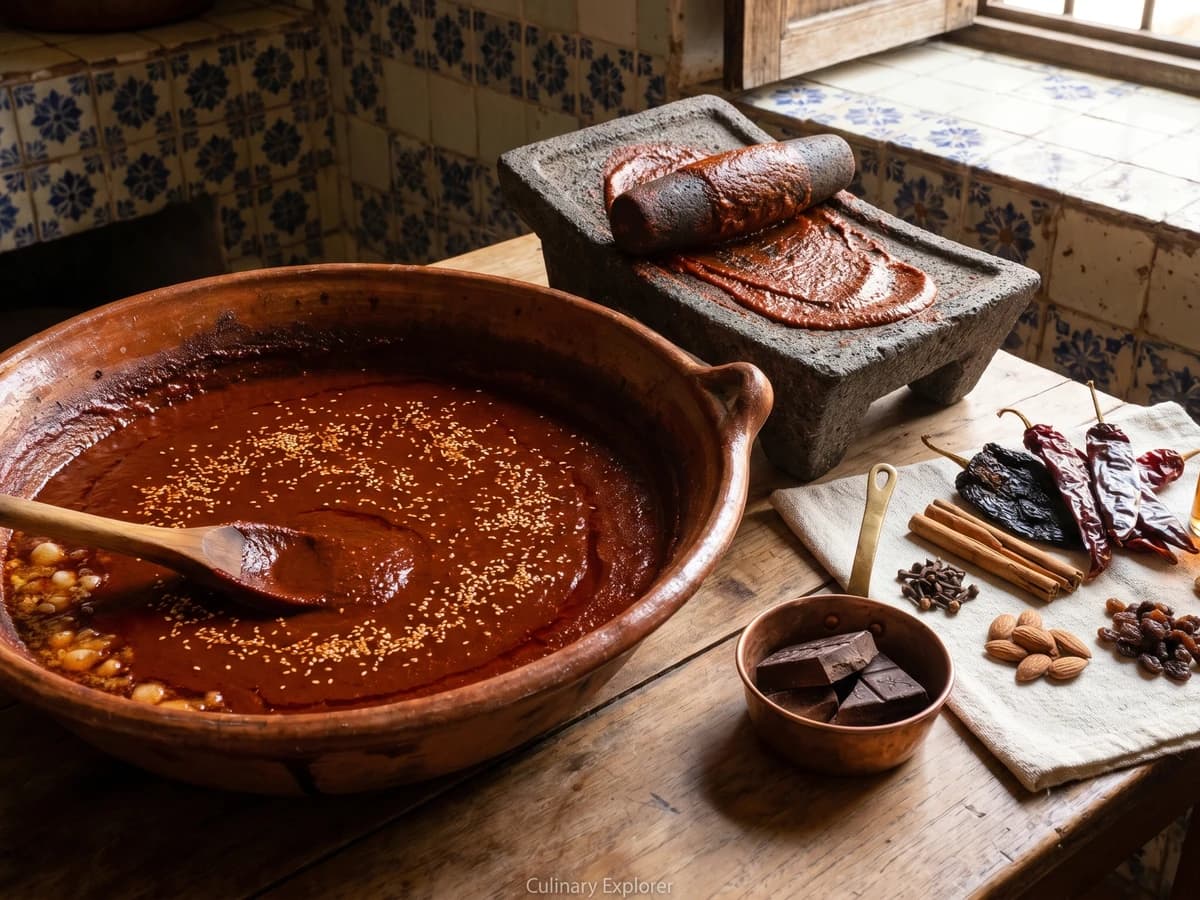
Zacatecas' wedding-table adobo, built from toasted guajillo and ancho, piloncillo, sour orange, chocolate, canela, clavo, almonds, sesame, and lard.

Chef Lupita
Puebla's convent kitchens built this adobo with ancho, guajillo, jerez, almonds, raisins, clove, and lard, a baroque marinade that stains pork loin and finishes as the sauce.