
Chef Lupita
Aguascalientes Beef Tongue Pozole (Pozole de Lengua)
Aguascalientes' Bajio pozole de lengua, built with cacahuazintle hominy, tender beef tongue, chile ancho and guajillo, with xoconostle brightness and table garnishes.
A cooking platform built around craft, culture, and the stories behind what we eat.
Created by
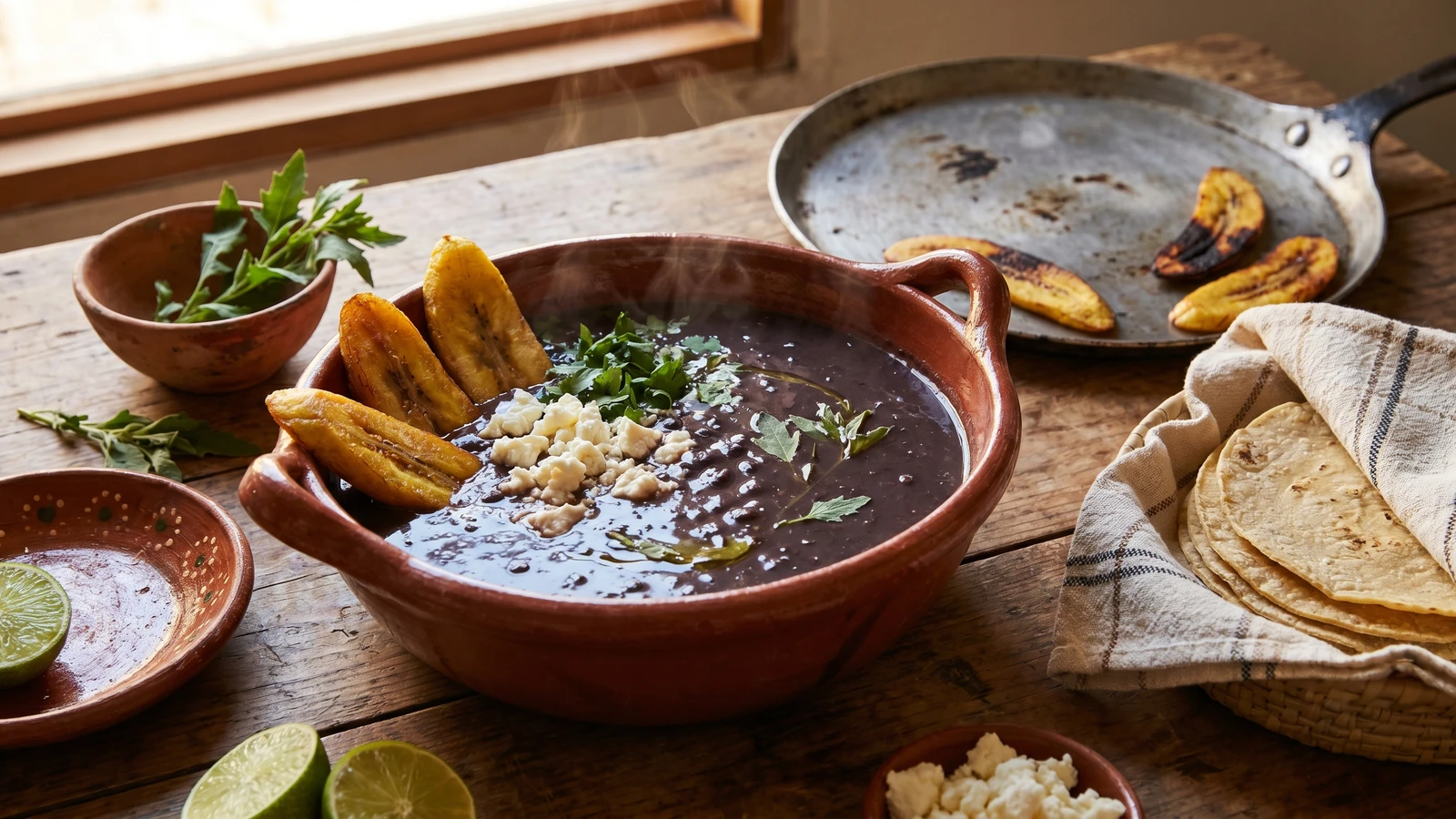
Veracruz's jarocho black-bean caldo, simmered with epazote and finished with ripe plátano macho fried in manteca, queso fresco, and corn tortillas for a pot that feeds well without showing off.
Veracruz, especially the Sotavento and the port towns along the Gulf, knows what black beans can do. This is a jarocho pot: dark beans, epazote, chile jalapeño, and ripe plátano macho fried at the edge until it turns gold and sweet. It belongs to almuerzo, to a light supper, to the kind of kitchen where a clay cazuela sits on the stove because somebody will be hungry again in two hours.
The geography is in the spoon. Black beans are the daily bean of Veracruz, not a garnish. Plantain came through the Caribbean current and stayed because Veracruz cooks understood the balance: earthy bean broth, herbal epazote, a little chile, and the soft sweetness of plátano macho. This is not a hot dish. Not all Mexican food is a contest of heat. The jalapeño gives direction, not punishment.
I learned a version like this near Tlacotalpan from a señora who mashed one ladle of beans back into the pot and told me, without looking up, that watery beans were for people who don't pay attention. She was right. You don't need meat here, but you do need patience with the beans and a ripe plantain. Saber cocinar es saber vivir.
Veracruz's black bean cooking reflects the state's Gulf position, where Indigenous, Spanish, African, and Caribbean foodways met from the 16th century onward through the port of Veracruz. Plantains, brought to the Americas through Iberian and African Atlantic routes, became especially important in coastal Mexican states including Veracruz, Tabasco, and Campeche, where humid lowlands favored their cultivation. The pairing of frijol negro with plátano macho is part of the broader Afro-Caribbean imprint on Veracruz cooking, the same regional current that shaped dishes with rice, seafood, yuca, and tropical fruit along the Gulf coast.
Quantity
1 pound
rinsed and picked over
Quantity
10 cups, plus more as needed
Quantity
1/2 medium
left in one piece for the bean pot
Quantity
2
left whole for the bean pot
Quantity
2 large
Quantity
2 teaspoons, plus more to taste
Quantity
2 tablespoons
Quantity
1/2 medium
finely chopped for the sofrito
Quantity
2
finely chopped for the sofrito
Quantity
1
finely chopped
Quantity
1 large
yellow with black spots, peeled and cut into 1/2-inch half-moons
Quantity
1 tablespoon
only if the plantain needs more fat to fry
Quantity
1/2 cup
crumbled, for serving
Quantity
2 tablespoons
chopped, for serving
Quantity
for serving
Quantity
for serving
| Ingredient | Quantity |
|---|---|
| dried black beansrinsed and picked over | 1 pound |
| water | 10 cups, plus more as needed |
| white onionleft in one piece for the bean pot | 1/2 medium |
| garlic clovesleft whole for the bean pot | 2 |
| fresh epazote sprigs | 2 large |
| kosher salt | 2 teaspoons, plus more to taste |
| manteca de cerdo | 2 tablespoons |
| white onionfinely chopped for the sofrito | 1/2 medium |
| garlic clovesfinely chopped for the sofrito | 2 |
| fresh chile jalapeñofinely chopped | 1 |
| ripe plátano machoyellow with black spots, peeled and cut into 1/2-inch half-moons | 1 large |
| neutral oil (optional)only if the plantain needs more fat to fry | 1 tablespoon |
| queso fresco (optional)crumbled, for serving | 1/2 cup |
| fresh cilantro (optional)chopped, for serving | 2 tablespoons |
| lime halves (optional) | for serving |
| warm corn tortillas (optional) | for serving |
Put the black beans in a heavy pot with 10 cups water, the half onion, 2 whole garlic cloves, and one epazote sprig. Bring to a steady simmer, then lower the heat so the beans move gently. Cook uncovered until the beans are tender, 1 hour 45 minutes to 2 hours, adding hot water if the level drops below the beans. Salt goes in only after the beans begin to soften. Tough beans are usually impatient beans.
When the beans are tender but not collapsing, add 2 teaspoons kosher salt and the second epazote sprig. Simmer 15 minutes more. The broth should taste dark, herbal, and a little earthy from the epazote. Remove the onion half, whole garlic cloves, and the older epazote stems.
Melt 1 tablespoon of the manteca in a skillet over medium heat. Add the plátano macho in one layer and fry until the edges are deep gold and the centers are soft, about 2 minutes per side. If the skillet looks dry, add the tablespoon of neutral oil. Do not use a green plantain here. Veracruz wants the ripe sweetness against the black bean broth.
In the same skillet, add the remaining tablespoon of manteca. Stir in the finely chopped onion and cook until translucent, about 4 minutes. Add the chopped garlic and chile jalapeño and cook 1 minute more, just until the garlic smells sharp and sweet. La manteca es el sabor, especially in beans. Oil works in some dishes. Here, the lard carries the onion and chile into the broth.
Scoop 1 cup of cooked beans into the skillet with the sofrito and mash them roughly with the back of a spoon. Stir this dark paste back into the pot. This is how you give the caldo body without flour, cream, or nonsense. Simmer 10 minutes, until the broth lightly coats the spoon but still eats like a soupy stew.
Slide the fried plantain into the pot and simmer 5 minutes, just long enough for the edges to drink some bean broth without falling apart. Taste for salt. The final spoonful should be black bean first, ripe plantain second, epazote in the background, and jalapeño as a small clean bite, not a dare.
Ladle into clay bowls. Scatter queso fresco and chopped cilantro over the top and put lime halves on the table. Serve with warm corn tortillas. Not flour tortillas. Flour belongs to the north, and Veracruz knows perfectly well what it is doing. Recetas probadas y garantizadas.
1 serving (about 365g)
Culinary guides, cultural storytelling, and the editorial depth that makes cooking meaningful.
Discover Culinary ExplorerChef Lupita
Aguascalientes' Bajio pozole de lengua, built with cacahuazintle hominy, tender beef tongue, chile ancho and guajillo, with xoconostle brightness and table garnishes.

Chef Lupita
Veracruz's Gulf coast rice from Alvarado, built with seafood stock, tomato, chile chipotle, epazote, shrimp, fish, jaiba, and pulpo, served loose and brothy in a clay cazuela.

Chef Lupita
Costa Chica's wet salt-beef stew, built from chile costeño, guajillo, tomato, manteca, yuca, plantain, and masa dumplings, the ranching pot of Cuajinicuilapa and Pinotepa.

Chef Lupita
Michoacán's P'urhépecha atápakua is a masa-thickened sauce and stew at once, built with pork, chile guajillo, and hierbabuena added only at the end.