
Chef Freja
Boller
Soft, round, barely sweet Danish buns made with milk, butter, and patient yeast. The first thing most Danish children learn to bake, and the smell that means someone is home.
A cooking platform built around craft, culture, and the stories behind what we eat.
Created by Chef Freja
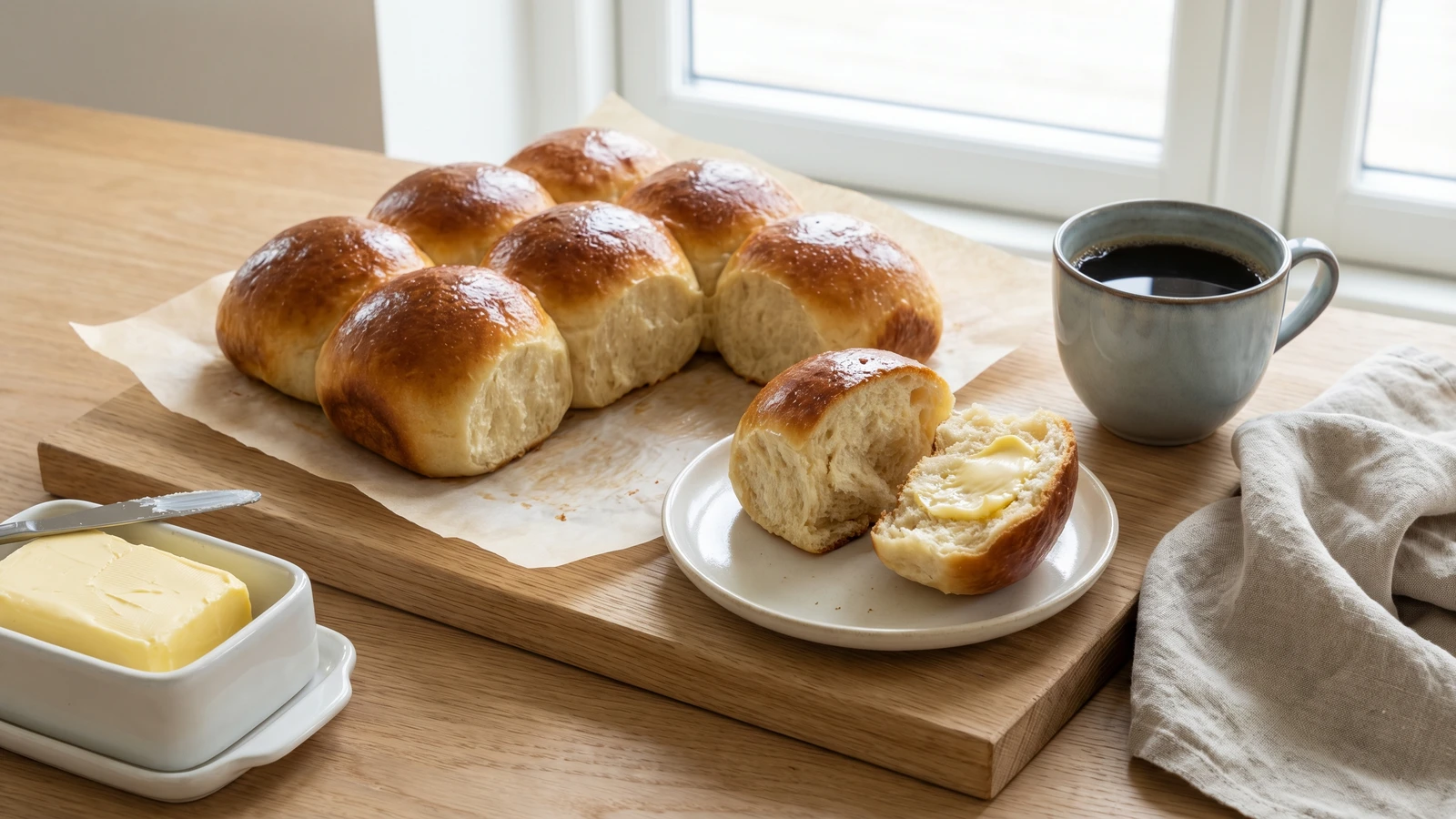
Cardamom wheat buns baked close together until their sides fuse soft and pale. Pulled apart warm, spread thick with cold butter the evening before Store Bededag, the way Copenhagen has done it since the 1600s.
There's an evening in late April or early May, it moves with Easter, when something shifts in Danish kitchens. The holiday is Store Bededag, Great Prayer Day, and the night before it belongs to hveder. Warm wheat buns, fragrant with cardamom, baked so close together that they press into one another and fuse at the sides. You pull them apart with your hands, split them open, and spread them thick with cold butter while the bread is still warm enough to just begin melting it at the edges. Strong coffee alongside. That's the whole ritual.
The dough itself is simple. Flour, milk, butter, egg, a generous measure of cardamom. No lamination, no layers, no shaping tricks. What makes hveder special isn't technique. It's understanding the few things that matter: the cardamom must be present and warm, not faint. The buns must be placed close enough to join as they rise. And they must be served warm, because a cold hvede is just a roll, and a warm one is the reason you're in the kitchen tonight.
I'll walk you through every step so you understand not just what to do but why. Pay attention to the shaping and the spacing. The soft, pale sides where the buns pressed together during baking are what distinguish hveder from any other wheat bun. When you tear one from the batch and feel that gentle give, you'll know when it's right.
Store Bededag was established in 1686 by King Christian V, who consolidated numerous minor prayer and penance days scattered across the calendar into a single national holiday on the fourth Friday after Easter. Because no work, including baking, was permitted on the holy day itself, Copenhagen bakers prepared hveder the evening before and sold them warm through the streets, their cry of "varmehveder!" becoming one of the city's most recognizable seasonal sounds. The tradition persisted for over three centuries, surviving even the 2023 parliamentary decision to abolish Store Bededag as a public holiday, a move that prompted Danes across the country to bake hveder at home in quiet, determined protest, turning a baker's custom into something closer to a civic act.
Quantity
500g, plus extra for dusting
Quantity
75g
Quantity
1 teaspoon
Quantity
1.5 teaspoons
freshly ground if possible
Quantity
7g
Quantity
250ml
warmed to body temperature
Quantity
75g
softened
Quantity
1 large
Quantity
1
beaten with 1 tablespoon milk, for glazing
Quantity
to serve
| Ingredient | Quantity |
|---|---|
| strong white bread flour | 500g, plus extra for dusting |
| caster sugar | 75g |
| fine sea salt | 1 teaspoon |
| ground cardamomfreshly ground if possible | 1.5 teaspoons |
| instant dry yeast | 7g |
| whole milkwarmed to body temperature | 250ml |
| unsalted butter (for the dough)softened | 75g |
| egg | 1 large |
| eggbeaten with 1 tablespoon milk, for glazing | 1 |
| cold unsalted butter | to serve |
Combine the flour, sugar, salt, cardamom, and yeast in a large bowl. Make a well in the centre and pour in the warm milk and the egg. Stir with a wooden spoon until the mixture comes together into a rough, shaggy mass. Add the softened butter in pieces and work it in, kneading for about ten minutes by hand or six in a stand mixer with the dough hook. The dough should become smooth, soft, and slightly springy. It will feel a little tacky to the touch, not sticky. That tackiness is the butter and the egg doing their work, giving the crumb its tenderness.
Shape the dough into a ball and place it back in the bowl. Cover with a damp cloth and leave it somewhere warm for about an hour and a half, until it has doubled in size. Don't rush this. A slow, patient rise gives the dough its flavor. The yeast is converting the sugars, and the longer it works, the more complex that sweetness becomes. The cardamom deepens during this time too, moving from sharp and bright to something warmer and rounder.
Turn the risen dough onto a lightly floured surface and press it down gently to release the largest air pockets. Divide the dough into twelve equal pieces. The easiest way is to halve it, then halve each half, then divide each quarter into thirds. Roll each piece into a smooth, tight ball: cup your hand over the dough on the counter and move it in a small circle, letting the friction of the surface pull the outside taut. The tension on the surface is what gives the bun its shape in the oven. Loose, slack balls spread sideways. Tight balls rise upward.
Place the twelve balls on a baking sheet lined with parchment, arranging them in rows so they are almost touching, about one centimetre apart. This is the detail that makes hveder what they are. As they rise and bake, the buns push into one another and fuse at the sides. The tops and bottoms become golden and slightly firm, but the sides where they've pressed together stay pale and impossibly soft. When you pull one away from its neighbour, you get that soft, tender tear. That's the whole point.
Cover the tray loosely with a damp cloth and let the buns rise again for about forty-five minutes. They should puff up and close the gaps between them, pressing gently into one another. The surface will look smooth and taut. Don't let them overproof. If the surface starts to wrinkle or the buns lose their shape, they've gone too long, and the crumb will be coarse instead of fine.
Heat the oven to 190C. Brush the tops of the buns with the egg wash, using a light hand so the glaze doesn't pool in the crevices between them. The egg wash gives the crust its colour and its faint sheen, the look that tells you someone made these at home, not a factory. Bake for sixteen to eighteen minutes until the tops are a deep, even gold. The buns will sound hollow if you tap the top of the batch gently. Don't overbake. The moment they go past golden into brown, the crumb dries out, and hveder should be soft all the way through.
Let the buns cool for just five minutes on the tray, then pull them apart while they're still warm. Split each one open with your hands, not a knife, and spread thickly with cold butter straight from the fridge. The cold butter against the warm bread is the whole experience. It starts to melt at the edges but stays firm in the centre, so every bite gives you both: the soft, cardamom-scented crumb and the clean, cold richness of good butter. Serve with strong coffee. This is how Danes have greeted Store Bededag for centuries. Tak for mad.
1 serving (about 75g)
Culinary guides, cultural storytelling, and the editorial depth that makes cooking meaningful.
Discover Culinary ExplorerChef Freja
Soft, round, barely sweet Danish buns made with milk, butter, and patient yeast. The first thing most Danish children learn to bake, and the smell that means someone is home.

Chef Freja
Dark rye crackers from the island of Bornholm, laminated in twenty-seven butter-layered folds and scattered with caraway and sea salt. The kind of thing you keep in a tin for cheese, good butter, and cold dark beer.

Chef Freja
The soft Danish white loaf with a milk-brushed crust and blue poppy seeds that belongs on every weekday breakfast table. Simple dough, gentle rise, toast and butter and jam.

Chef Freja
Danish whole wheat rolls made with grahamsmel, ready in just over an hour. The weekday bun that fills lunch boxes, sits beside soup, and smells like a kitchen where someone cares.