Culinary Explorer

A cooking platform built around craft, culture, and the stories behind what we eat.
Discover Culinary Explorer
Varenyky z Kartopleyu (вареники з картоплею, potato dumplings)

Varenyky z Kartopleyu (вареники з картоплею, potato dumplings)

Created by

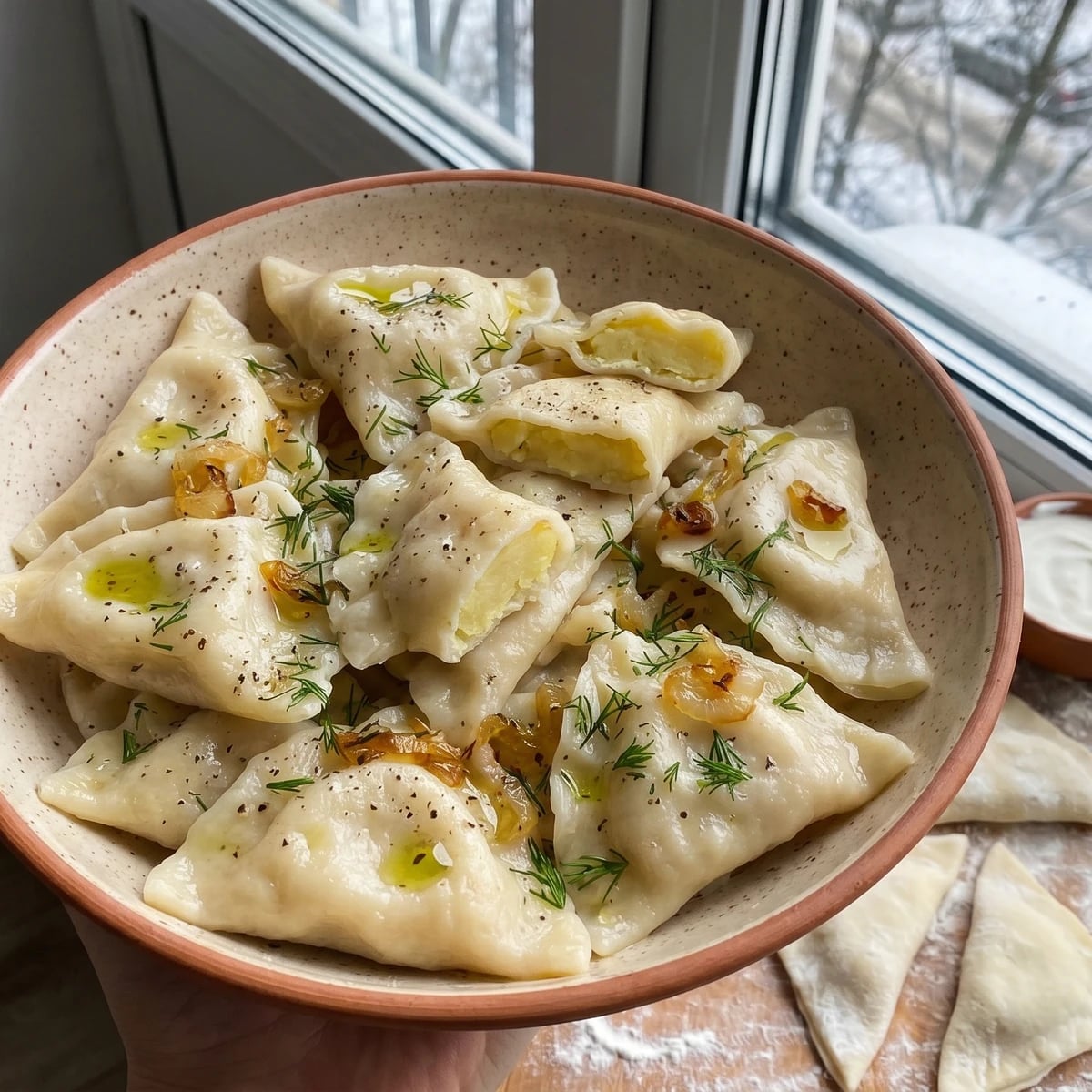
The cheapest varenyky often disappear first: tender dough around hot oniony potato, green-gold oil shining in the folds, dill on top, smetana cold at the side.

Main Dishes
Ukrainian
Comfort Food
Make Ahead
Budget Friendly
1 hr 20 min
Active Time
30 min cook1 hr 50 min total
Yield6 to 8 servings, about 60 varenyky

The first thing you notice is not the potato. It is the onion: sharp at the knife, loud in the pan, then suddenly sweet and golden, the moment the kitchen stops smelling raw and starts smelling like supper. That fried onion fat is the whole argument for potato varenyky. Without it, you've wrapped mash in dough; with it, you have a bowl people reach into before they sit down.

The mash wants a knob of fat and a fistful of fried onion, nothing fancier. Stir the onion and its oil through while the potatoes are still hot, because hot potato drinks flavor; cold potato wears it on the outside and tastes flat. Let the filling cool until it holds itself. Wet filling bursts dumplings. Dry filling behaves.

I fold mine in triangles because grandmother Vira put one piece of dough in my hand in 1997 and decided that was enough training. My hands remember. Cut squares, fold corner to corner, press out the air, and don't fuss if every edge looks different; half the beauty of a family bowl is that you can see who made which one. Serve them slicked with more onions, dill, a cold spoon of smetana if you like, enough for eight guests or one hungry Ukrainian.

Varenyky take their name from the Ukrainian verb varyty (варити), to boil, and nineteenth-century ethnographic records describe them as both everyday food and ritual food at weddings, Christmas Eve, and memorial meals, with fillings changing by season and region. Potato filling became common after potatoes spread through Ukrainian village kitchens in the nineteenth century; in the sunflower-growing south and steppe, onions fried in unrefined oil made them fasting-day friendly and cheap enough for a full table.

The technique, the tradition, and the story behind every dish.

Discover Culinary Explorer

Ingredients

plain flour

Quantity

600g

plus more for dusting

fine sea salt

Quantity

2 teaspoons, plus more for boiling water

divided

hot water

Quantity

300ml

just off the boil

unrefined sunflower oil

Quantity

2 tablespoons

for the dough

floury potatoes

Quantity

1 kg

peeled and cut into even chunks

large onions

Quantity

3

finely diced

unrefined sunflower oil

Quantity

5 tablespoons

for frying and serving

unsalted butter or extra sunflower oil (optional)

Quantity

40g butter or 2 tablespoons oil

optional, for richness

black pepper

Quantity

1 teaspoon

freshly ground

fresh dill

Quantity

small bunch

finely chopped

smetana (sour cream) (optional)

Quantity

to serve

Equipment Needed

  • A wide heavy pan for the onions
  • A potato masher or ricer
  • A rolling pin
  • An 8cm cutter or a knife for squares
  • A large stockpot and slotted spoon

Instructions

  1. 1

    Fry the onions

    Warm the sunflower oil in a wide pan and add the onions with a pinch of salt. Let them cook slowly, stirring when you hear the edges begin to hiss, until the sharp onion smell turns sweet and the pieces are soft amber with a few darker freckles. Scoop half into a serving bowl for later and keep half in the pan for the filling; if you're using butter, melt it into the filling half at the end.

    The onions are not garnish here. They season the filling and dress the cooked dumplings, so cook more than feels sensible.
  2. 2

    Dry the potatoes

    Cover the potatoes with cold salted water and bring them to a steady boil. Cook until the edges begin to break and a knife slides through without a push. Drain hard, return them to the warm empty pot, and shake over the lowest heat until the wet shine disappears and the potatoes look floury at the edges.

  3. 3

    Make the filling

    Mash the potatoes while they are still hot, then stir in the filling half of the fried onions with all their oil, the remaining salt, and plenty of black pepper. Taste it warm. It should taste a little too seasoned, because the dough will soften everything. Let the filling cool until it holds a spoon mark and no longer slumps.

    Do not whip the potatoes. A rough mash with small soft lumps eats better than glue, and it behaves better inside the dough.
  4. 4

    Make the dough

    Put the flour and salt in a large bowl. Pour in the hot water and sunflower oil, stirring with a fork until shaggy crumbs form. When it is cool enough to touch, knead until the dough turns smooth, elastic, and warm under your palms. Cover it and let it rest until it relaxes when pressed.

    Hot-water dough gives you stretch without egg. That means the vegan version is not a sad version; it is a very old, very practical dough.
  5. 5

    Roll and cut

    Work with a quarter of the dough at a time and keep the rest covered so it does not skin over. Roll it thin enough that you can see the shadow of your fingers through it, then cut into 8cm squares for the triangle fold. Dust lightly, but not so much that the edges refuse to seal.

  6. 6

    Fill and fold

    Place a heaped teaspoon of cooled potato filling in the centre of each square. Fold corner to corner, press from the filling outward to push out the air, then seal the two sides firmly with your fingertips. The edge should feel fused, not just pressed politely together.

    If triangles are not your family habit, cut circles and make half-moons. The filling will not complain.
  7. 7

    Boil in batches

    Bring a big pot of salted water to a lively boil. Slide in one layer of varenyky and stir gently from the bottom so they do not catch. Listen for the water to find itself again, a rolling knock rather than an angry thrash. When the varenyky bob up and the dough looks satiny, let them ride a little longer so the potato warms through, then lift them out with a slotted spoon.

  8. 8

    Dress and serve

    Drop the cooked varenyky straight into the bowl with the reserved fried onions and toss gently until every fold shines. Scatter with dill and black pepper. Serve with smetana if you want the cold sour spoon against the onion oil, or keep them all sunflower oil and they are fully vegan.

Chef Tips

  • Use floury potatoes, the kind you would choose for mash. Waxy potatoes hold too much water and make a filling that slips around inside the dough.
  • The filling forgives rough mashing and uneven onion pieces. The seal does not forgive trapped air, so press from the middle outward before you pinch the edges shut.
  • If the dough fights the rolling pin, cover it and walk away for ten minutes. Dough has moods, same as people.
  • This recipe is already nearly vegan. Use sunflower oil instead of butter and serve with extra fried onion instead of smetana.
  • Cooked leftovers are a gift. Fry them the next day in a little onion oil until they have golden patches on both sides.

Advance Preparation

  • The potato filling can be made a day ahead and kept covered in the fridge. Let it soften slightly before filling so it scoops cleanly.
  • Raw shaped varenyky freeze beautifully. Set them on a floured tray until solid, then bag them; boil from frozen and wait for the dough to turn satiny.
  • Cooked varenyky keep in the fridge for up to 3 days. Cool them quickly, cover them well, and fry or reboil gently before serving.

Frequently Asked Questions

Nutrition Information

1 serving (about 350g)

Calories
625 calories
Total Fat
19 g
Saturated Fat
5 g
Trans Fat
0 g
Unsaturated Fat
14 g
Cholesterol
10 mg
Sodium
800 mg
Total Carbohydrates
100 g
Dietary Fiber
7 g
Sugars
4 g
Protein
13 g

Note: Chef personas and recipes are created with AI assistance. Cook with care: follow safe food-handling practices, check doneness with a thermometer when needed, and adapt for allergies and your kitchen.

Where cooking meets culture.

Culinary guides, cultural storytelling, and the editorial depth that makes cooking meaningful.

Discover Culinary Explorer

More from Varenyky & Holubtsi

Browse the full collection