Culinary Explorer
A cooking platform built around craft, culture, and the stories behind what we eat.
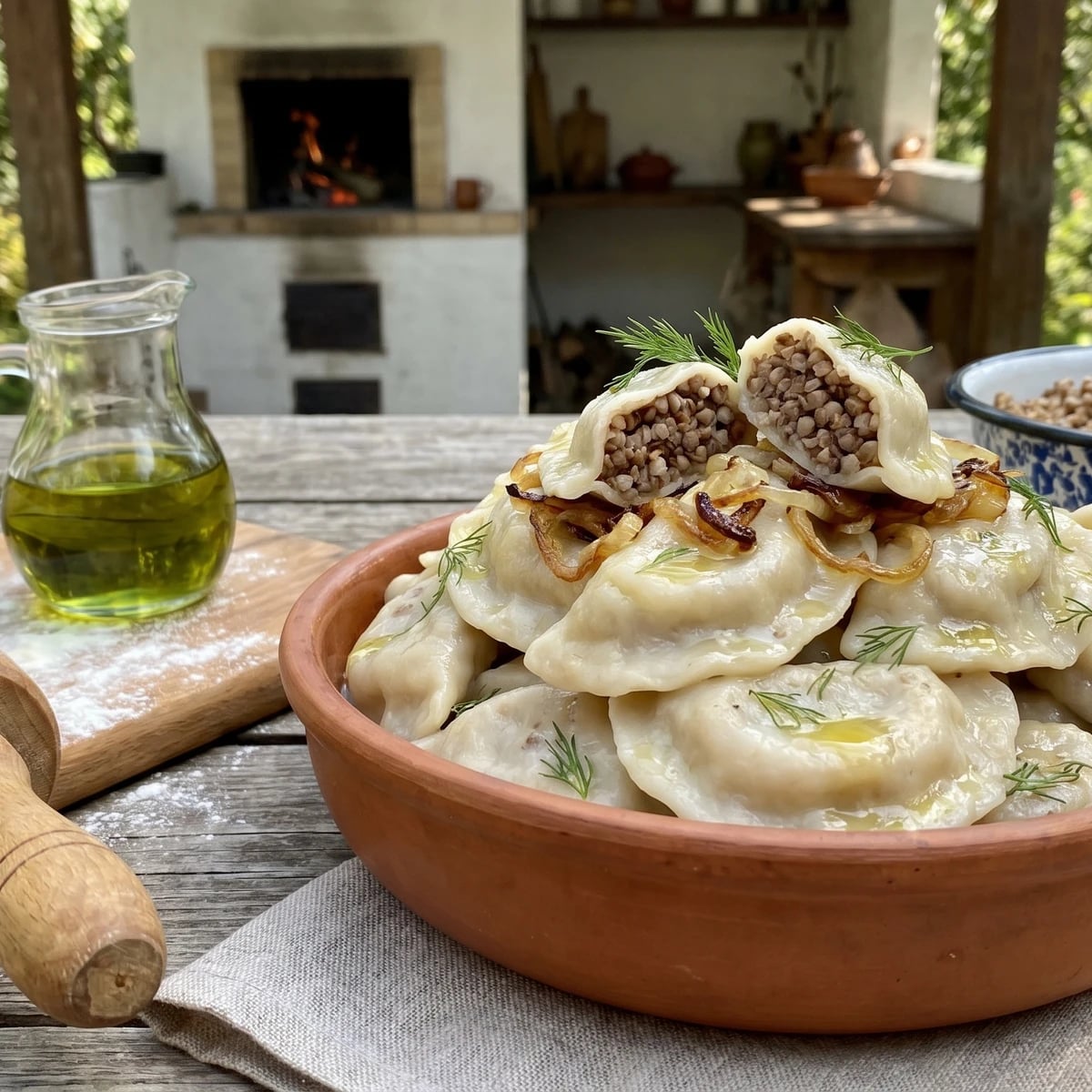
Varenyky z Hrechkoyu (вареники з гречкою, buckwheat dumplings)
Created by Chef Lesia
Buckwheat is not soft background here. Each grain sits inside the dumpling like a small brown bead, nutty, separate, and sweetened by onion.
Buckwheat is brown, plain, and badly underestimated until it meets hot onion oil. Then the grains open, the nutty smell rises, and suddenly this is not a filler at all but the whole reason for the dumpling. Each grain should stay itself. That is the one thing that decides the dish.
These are Poltava varenyky, from a central Ukrainian kitchen where wheat dough and hrechka, buckwheat kasha, have sat together for a long time without asking for permission from meat. The filling is cheap, yes, but never small. Slow-fried onion sweetens it, dill wakes it up, black pepper keeps it from behaving too politely, and the dough holds it like a pocket of warm field earth after rain.
Cook the hrechka loose, not creamy. If it goes soft, the filling becomes paste and the dumpling loses its little bite. Aunt Nadia never gave me a number for this, only 'until the smell changes,' which was annoying until I understood: raw buckwheat smells green and dusty, cooked buckwheat smells toasted and round. Your nose will get there.
Make a trayful, freeze half, feed whoever is nearest. Varenyky are not delicate food, though the folding can feel tender in your hands. A recipe only lives while somebody cooks it, and this one has survived because it feeds people well when the purse is thin and the table still needs to feel generous.
Ingredients
plain flour
Quantity
500g
plus more for dusting
warm water
Quantity
250ml
unrefined sunflower oil
Quantity
2 tablespoons
for the dough, plus more for tossing
| Ingredient | Quantity |
|---|---|
| plain flourplus more for dusting | 500g |
| warm water | 250ml |
| unrefined sunflower oilfor the dough, plus more for tossing | 2 tablespoons |
Where cooking meets culture.
Culinary guides, cultural storytelling, and the editorial depth that makes cooking meaningful.
Discover Culinary Explorer