Chef Lupita
Aceite de Chiltepin Bajacaliforniano
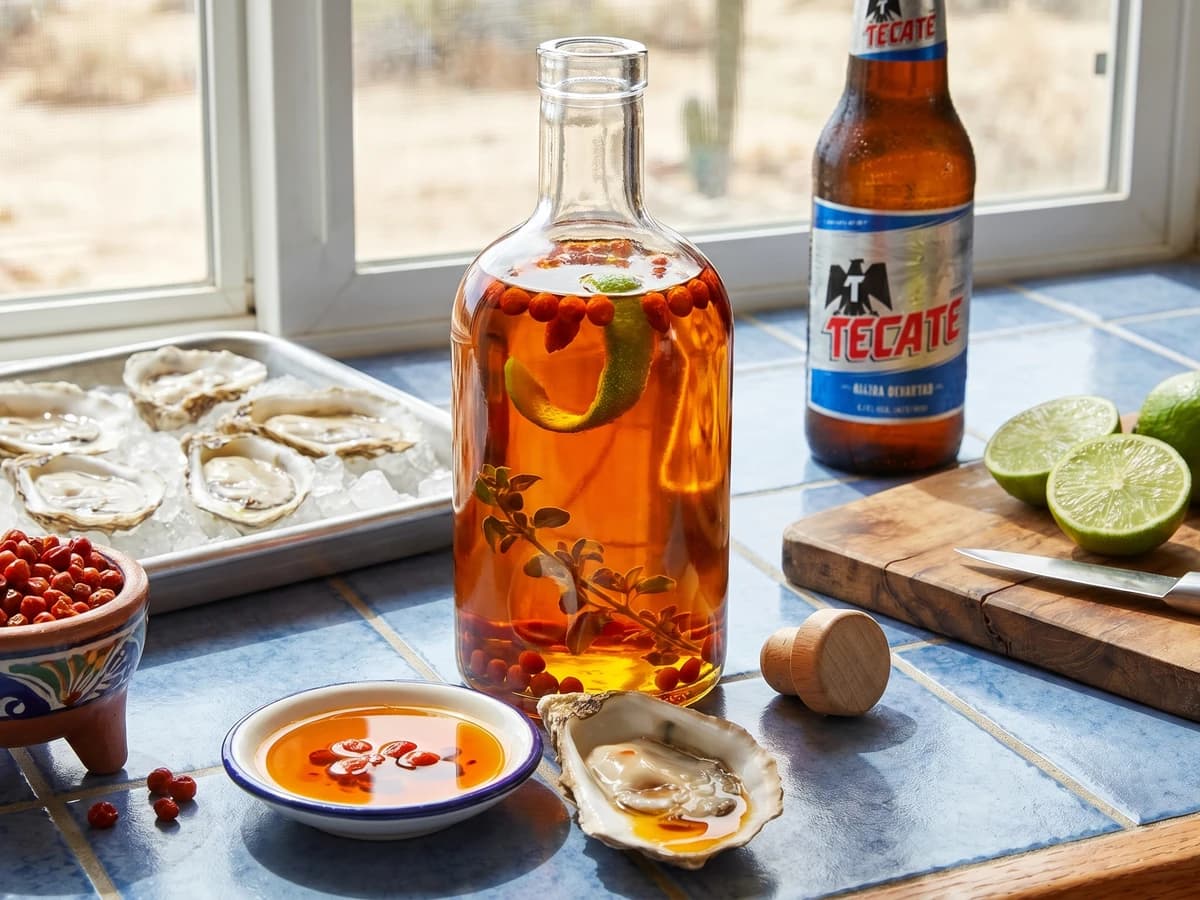
Baja California's wild chiltepin steeped in olive oil with garlic, orejon, and lime peel, until the oil turns ruby-amber and carries the slow, sneaky burn of the desert coast.
A cooking platform built around craft, culture, and the stories behind what we eat.
Created by
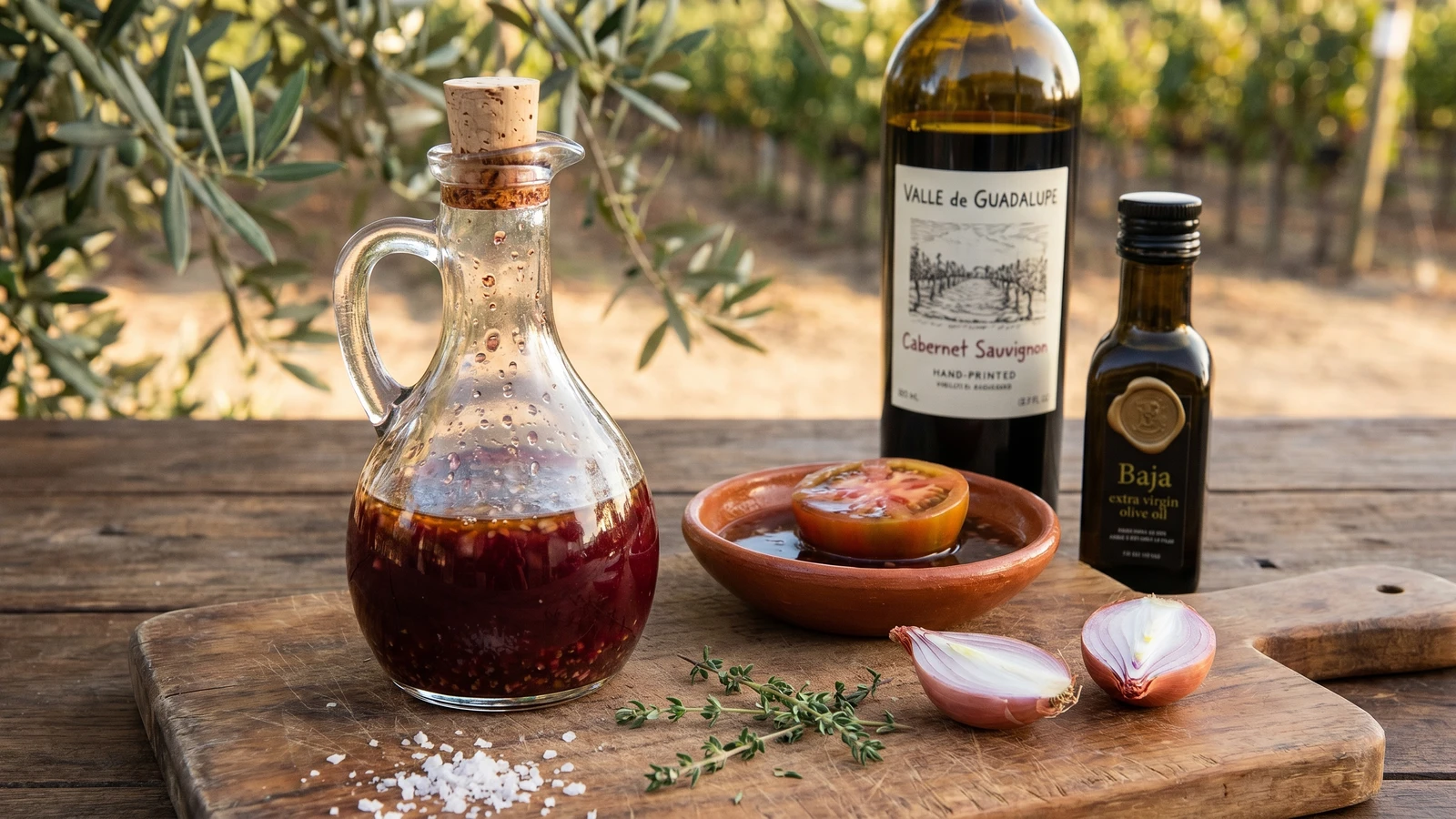
Baja California's farm-table vinaigrette, built on a Cabernet reduction from Valle de Guadalupe, shallots cooked down to syrup, and olive oil pressed in the same Mediterranean-climate valley. Dresses tomatoes, seafood, and crisp greens.
This is from Valle de Guadalupe. Baja California. The valley north of Ensenada where the fog rolls in from the Pacific in the morning and the soil grows Cabernet and Nebbiolo the way the soil in Tuscany grows Sangiovese. If you have not been there, understand this clearly: this is not Mexico City and it is not Oaxaca. This is wine country, olive country, a Mediterranean pocket on Mexican land, and the cooking that comes out of it reflects that geography. Cada estado, su propia cocina.
The vinaigrette I am giving you is the dressing of the campestre table. The open-air farm restaurants tucked among the vineyards, Laja, Corazon de Tierra, Deckman's en el Mogor, where the food is dressed in olive oil from the mill down the road and red wine from the bodega across the highway. Two ingredients carry this dish: the wine and the olive oil. Both grow inside a forty-kilometer radius of the bowl you mix it in. If you are cooking outside of Baja, find a Valle de Guadalupe wine you can buy and a good Mediterranean olive oil. The principle is the same. Hyperlocal where you stand.
The technique is not a shortcut, even if the dressing is fast. You reduce the wine with shallots until it turns to syrup. You let it cool. You whisk in mustard, vinegar, and honey. Then you stream the olive oil in slowly enough to build an emulsion that holds. Hot wine breaks the oil. Fast pouring breaks the oil. Cheap oil makes a dressing that tastes like the bottle, not the valley. La cocina no es decoracion, es trabajo, and a vinaigrette is just as much work as it needs to be.
My mother did not have a recipe for this in her notebook. Valle de Guadalupe was not yet what it is now when she was cooking. But I have eaten this dressing at long wooden tables under the olive trees with a glass of Nebbiolo in my other hand, and I will tell you the women who run those kitchens, Drew Deckman's cooks, Diego Hernandez's team, the families who have been pressing oil in this valley for a hundred years, are guarding a tradition as real as any I have collected from the mercados of the south. Saber cocinar es saber vivir, and in Baja that means knowing your winemaker and your olive press by name.
Valle de Guadalupe's viticultural identity was shaped by Russian Molokan immigrants who arrived in 1905 fleeing religious persecution under the Tsars, settling the valley and establishing the cooperative farms, vineyards, and olive groves that still anchor the region; the small Russian cemetery and museum in the Colonia Rusa remain. The Spanish missionaries had planted the first vines in the late 18th century at Mision Santo Tomas, but it was the Molokan and Italian immigrants who industrialized wine and olive oil production through the 20th century. The cocina campestre movement of the early 2000s, led by Jair Tellez at Laja, Javier Plascencia, and later Diego Hernandez at Corazon de Tierra, redefined Baja cooking around hyperlocal ingredients: the valley's olive oil, the Pacific's seafood from nearby Ensenada, the desert's wild herbs, and the wines from the more than 150 bodegas now operating within the valley.
Quantity
1 cup
a wine you would drink
Quantity
2 medium (about 1/3 cup)
finely minced
Quantity
1 small sprig
plus more for serving
Quantity
2 tablespoons
Quantity
1 tablespoon
Quantity
1 teaspoon
preferably Baja honey
Quantity
3/4 cup
or a good Mediterranean oil
Quantity
to taste
Quantity
to taste
| Ingredient | Quantity |
|---|---|
| Valle de Guadalupe Cabernet Sauvignon or Nebbioloa wine you would drink | 1 cup |
| shallotsfinely minced | 2 medium (about 1/3 cup) |
| fresh thymeplus more for serving | 1 small sprig |
| red wine vinegar | 2 tablespoons |
| Dijon mustard | 1 tablespoon |
| honeypreferably Baja honey | 1 teaspoon |
| extra virgin olive oil from Valle de Guadalupeor a good Mediterranean oil | 3/4 cup |
| flor de sal from Guerrero Negro or flaky sea salt | to taste |
| freshly cracked black pepper | to taste |
Combine the wine, minced shallots, and thyme sprig in a small heavy-bottomed saucepan. Bring to a steady simmer over medium heat. Cook for 12 to 15 minutes, until the wine has reduced to about 3 tablespoons and coats the back of a spoon. The bubbles will turn small and tight as you near the finish. The shallots will be soft and stained deep purple. Watch it. Walk away and you have jam, not a reduction.
Pull the thyme sprig out and discard it. Scrape the reduction and the shallots into a medium bowl. Let it sit for 10 minutes until it comes down to room temperature. Hot reduction will break the emulsion the moment it meets the olive oil. No me vengas con atajos.
Whisk the red wine vinegar, Dijon mustard, and honey into the cooled reduction. The mustard is what holds the dressing together. Skip it and you have oil and wine that separate at the table. Taste the base. It should be sharp, slightly sweet, deeply red. Season with flor de sal and cracked black pepper now, before the oil goes in.
Whisking constantly, pour the olive oil in a thin, steady stream. Take your time. About 30 seconds for the whole 3/4 cup. The vinaigrette should turn glossy and ruby-amber, thick enough to coat the back of a spoon but pourable. If it breaks, it broke because you rushed. Start over with a fresh teaspoon of mustard in a clean bowl and whisk the broken dressing into it slowly.
Let the vinaigrette rest for 10 minutes so the shallots release into the dressing and the flavors settle. Taste again. Almost always it needs a pinch more salt at this point. Sometimes a drop more vinegar. Trust your tongue, not the measuring spoon.
Pour what you need over heirloom tomatoes, grilled octopus, butter lettuce, roasted beets, or whatever the campestre table is set with that day. Store the rest in a glass jar in the refrigerator. Shake hard before each use. The olive oil will solidify in the cold. Leave the jar out for 20 minutes before serving so it loosens back up.
1 serving (about 30g)
Culinary guides, cultural storytelling, and the editorial depth that makes cooking meaningful.
Discover Culinary ExplorerChef Lupita
Baja California's wild chiltepin steeped in olive oil with garlic, orejon, and lime peel, until the oil turns ruby-amber and carries the slow, sneaky burn of the desert coast.

Chef Lupita
Puebla's Lenten convent adobo, a brick-red vinegar chile paste of ancho, guajillo, garlic, oregano, and comino made to dress fish for the meatless calendar.
Chef Lupita
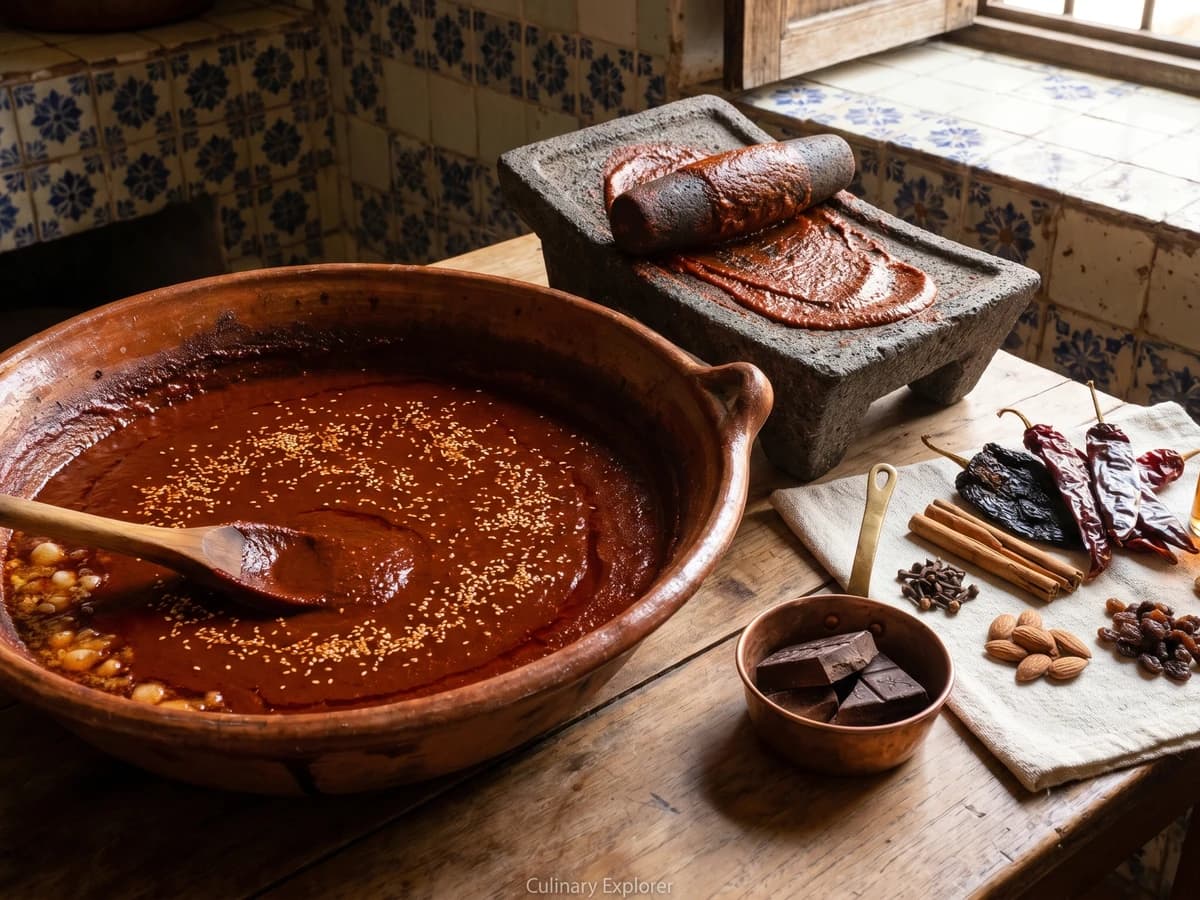
Zacatecas' wedding-table adobo, built from toasted guajillo and ancho, piloncillo, sour orange, chocolate, canela, clavo, almonds, sesame, and lard.

Chef Lupita
Puebla's convent kitchens built this adobo with ancho, guajillo, jerez, almonds, raisins, clove, and lard, a baroque marinade that stains pork loin and finishes as the sauce.