
Chef Lesia
Berezovyi Sik (березовий сік, birch sap drink)
Birch sap looks like water until you taste it: cold, faintly sweet, mineral, and gone almost as soon as spring admits it has arrived.
A cooking platform built around craft, culture, and the stories behind what we eat.
Created by
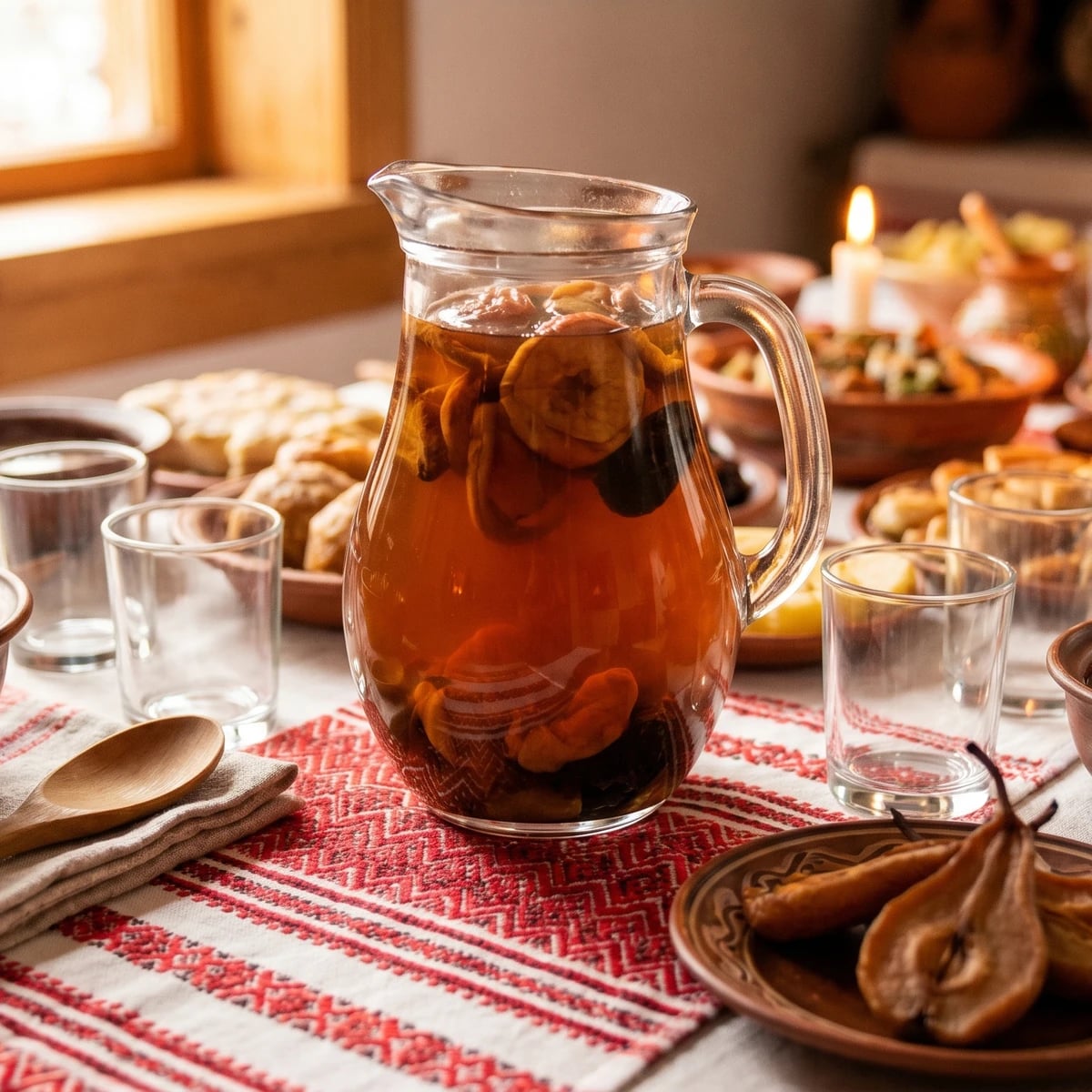
Dried pears and apples go into the pot looking like scraps from autumn and come out as Christmas amber, smoky, honeyed, and deep enough to sit beside kutia.
The most beautiful thing about uzvar is the color arriving slowly. At first the water is only stained at the edges, then the dried pears give up their smoke, the apples turn soft and golden, the prunes darken the pot, and suddenly you have amber deep enough to hold a winter evening.
This is the drink that stands beside kutia on Sviata Vecheria, Christmas Eve supper. Not poured like juice from a carton, not boiled into fruit tea, but steeped gently so the dried fruit opens without losing itself. Aunt Nadia wrote only, "Don't frighten it with the boil," which is very her and also exactly right. A hard boil makes the fruit taste tired. A low murmur pulls out the sweetness and leaves the liquid clean.
Honey goes in after the heat, when the pot has calmed down. That's the one why that matters here: boil honey and you flatten its flower smell, stir it into warm uzvar and it stays alive. Make a big pot. Everyone says they only want a glass, then they come back with the cup still in their hand.
Uzvar belongs to Sviata Vecheria, the Ukrainian Christmas Eve meal of twelve lean dishes, where it is traditionally served beside kutia, the wheat and poppy seed dish of remembrance and abundance. In central Ukraine, especially around Poltava, dried smoked pears are prized for the drink, while the southern steppe leans on sun-dried apples, pears, plums, and sometimes apricots from the litnya kuhnia, the summer kitchen. The name comes from the old verb for brewing or boiling, but the best uzvar is barely boiled at all.
Quantity
3 litres
Quantity
150g
Quantity
120g
smoked if you can find them
Quantity
100g
Quantity
60g
Quantity
50g
Quantity
1 small strip
yellow part only
Quantity
1
Quantity
3 to 5 tablespoons
to taste
| Ingredient | Quantity |
|---|---|
| cold water | 3 litres |
| dried apples | 150g |
| dried pearssmoked if you can find them | 120g |
| prunes | 100g |
| dried apricots (optional) | 60g |
| raisins | 50g |
| lemon peel (optional)yellow part only | 1 small strip |
| cinnamon stick (optional) | 1 |
| honeyto taste | 3 to 5 tablespoons |
Put the dried apples, pears, prunes, apricots if using, and raisins in a bowl and rinse them quickly under cool water. You're not washing away flavor, only dust from drying and storage. If the fruit feels very hard, let it sit in fresh cold water while you find the big pot.
Put the fruit into a large pot with 3 litres cold water. Starting cold matters because the fruit has time to swell and give itself to the water before the heat tightens it. Add the lemon peel and cinnamon if you want them, but keep a light hand; uzvar should taste first of orchard, not spice cupboard.
Bring the pot slowly up until you hear the first soft movement, then lower the heat at once. It should murmur at the edges, not roll. Let it cook gently until the smell changes from plain dried fruit to something rounder and darker, with the pear smoke and prune sweetness coming forward.
Turn off the heat, cover the pot, and leave it alone for at least four hours, or overnight if Christmas cooking has already taken over your kitchen. This is where the uzvar deepens. The fruit sinks, the liquid clears, and the color settles into dark honey.
When the uzvar is warm rather than hot, stir in honey to taste. Start with three tablespoons, then listen to your mouth. It should be gently sweet, not sticky, with a little tannin from the pears and a dark edge from the prunes.
Strain if you want a clear jug, or serve it with a few swollen pieces of fruit in each glass. Warm is beautiful on Christmas Eve; chilled the next day is sharper and very good with leftovers. Keep it in the fridge and drink within four days.
1 serving (about 250g)
Culinary guides, cultural storytelling, and the editorial depth that makes cooking meaningful.
Discover Culinary Explorer
Chef Lesia
Birch sap looks like water until you taste it: cold, faintly sweet, mineral, and gone almost as soon as spring admits it has arrived.

Chef Lesia
Raw beets turn water into something dark, sour, and alive: a crimson drink for the glass, and the old quiet souring for borshch when vinegar has no business there.

Chef Lesia
Dried chebrets looks like a handful of dusty twigs until hot water wakes it, and suddenly the cup smells of bees, sun-baked grass, and rain on the steppe.

Chef Lesia
Dried pears turn water the color of late honey, then the jar begins to whisper. Serve it cold and tart, with fine bubbles, orchard smoke, and August still in the glass.