
Chef Joost
Bietensalade (Dutch Beetroot Salad)
Cold beetroot, tart apple, walnuts, and a crumble of salty cheese: the Dutch buffet dish that proves winter storage food can arrive wearing its brightest coat.
A cooking platform built around craft, culture, and the stories behind what we eat.
Created by
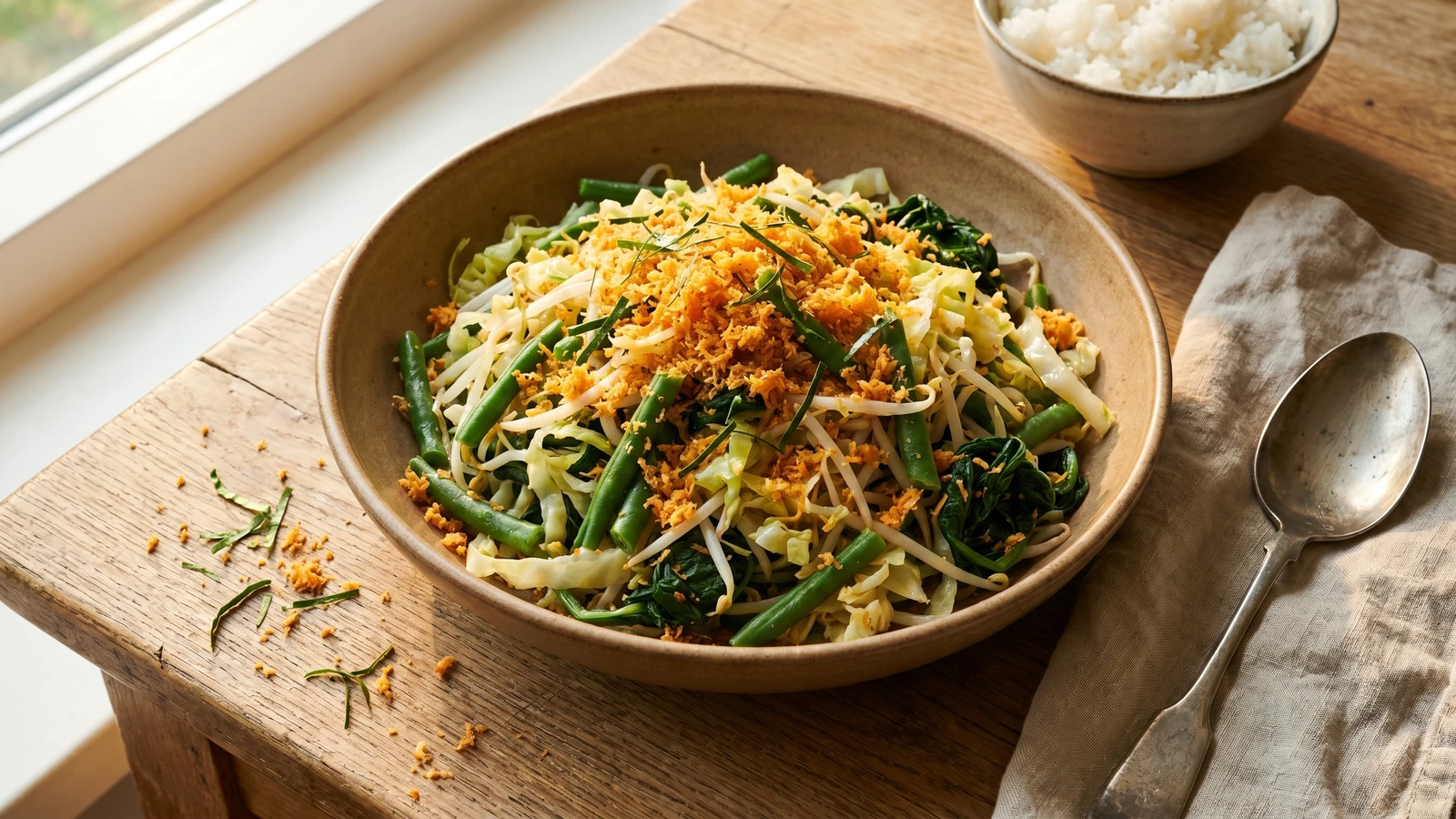
Urap is the green, coconut-bright dish that keeps a rijsttafel honest: vegetables barely cooked, coconut warmly spiced, and every bite reminding the Dutch table where its colonial memory still sits.
During my year of reading manuscripts, I learned again and again that history and cookery, they cannot be separated. But the Indo-Dutch table teaches the lesson without needing a library. Put a rijsttafel on the table, that grand colonial parade of small dishes around rice, and the quiet bowl of urap does something essential: it brings the garden back into a meal that can otherwise become all meat, sambal, and spectacle.
But let me tell you a secret. Urap is not Dutch food because the Netherlands owns it. It is Dutch food because Dutch history cannot wash its hands of Indonesia, and because generations of Indo-Dutch families carried these dishes into Dutch kitchens after the war and after independence. The honest thing is to name the journey plainly. This is an Indonesian, here specifically Balinese, vegetable salad that found a second table in the Netherlands through colonial entanglement, migration, memory, and dinner.
The method is wonderfully strict in its simplicity. Blanch the vegetables only until they brighten, then cool them hard so they keep their bite. The coconut must be worked with the bumbu, the spice paste, before it meets the vegetables, so the chili, kencur, shallot, garlic, and lime leaf cling to every shred. Hou het altijd simpel, always keep it simple: green things, spiced coconut, clean hands, a wide bowl. The salad should taste alive, not cooked into obedience.
Urap, also called urab in parts of Indonesia, is a vegetable dish dressed with seasoned grated coconut and appears across Java, Bali, and other islands with regional spice differences. It entered many Dutch homes through the Indo-Dutch rijsttafel, a colonial dining form developed in the nineteenth-century Dutch East Indies and later carried to the Netherlands by repatriated Indo-European families after Indonesian independence in 1949. The dish is a useful corrective to the idea of rijsttafel as only abundance: urap shows the vegetable, coconut, and herb backbone of the Indonesian table.
Quantity
200g
cut into 4cm lengths
Quantity
200g
finely sliced
Quantity
150g
rinsed
Quantity
150g
tough stems removed
Quantity
150g
Quantity
3
chopped
Quantity
2
chopped
Quantity
2
chopped
Quantity
1 small
Quantity
2cm piece
peeled and chopped
Quantity
2
very finely sliced
Quantity
1 teaspoon
Quantity
1 teaspoon
Quantity
1/2 teaspoon, plus more for blanching water
Quantity
1 tablespoon
Quantity
2 tablespoons
| Ingredient | Quantity |
|---|---|
| green beans or long beanscut into 4cm lengths | 200g |
| white cabbagefinely sliced | 200g |
| bean sproutsrinsed | 150g |
| spinach or water spinachtough stems removed | 150g |
| fresh grated coconut, unsweetened | 150g |
| shallotschopped | 3 |
| garlic cloveschopped | 2 |
| red chilieschopped | 2 |
| bird's eye chili (optional) | 1 small |
| kencurpeeled and chopped | 2cm piece |
| makrut lime leavesvery finely sliced | 2 |
| toasted shrimp paste (optional) | 1 teaspoon |
| palm sugar or dark brown sugar | 1 teaspoon |
| salt | 1/2 teaspoon, plus more for blanching water |
| lime juice | 1 tablespoon |
| neutral oil | 2 tablespoons |
Bring a large pot of well-salted water to a boil. Blanch the beans for 3 minutes, the cabbage for 1 minute, the bean sprouts for 20 seconds, and the spinach just until it collapses. Lift each vegetable into cold water as soon as it is done, then drain very well. The cold water is not fussiness; it stops the cooking while the greens still look like themselves.
Spread the drained vegetables on a clean towel and press out extra water, especially from the spinach. Urap hates a wet bowl. If the vegetables carry too much water, the coconut slides off them and the whole salad tastes tired before it reaches the table.
Pound or blend the shallots, garlic, chilies, kencur, lime leaves, shrimp paste if using, sugar, and salt into a rough paste. Kencur is the small root that gives Balinese urap its lifted, peppery perfume; if you cannot find it, use the ginger and galangal substitute, but know what has changed.
Warm the oil in a wide frying pan over medium heat and cook the bumbu for 2 to 3 minutes, until the raw shallot smell softens. Add the grated coconut and stir for 5 to 7 minutes, until it is fragrant, lightly dry, and stained orange by the chili. Do not brown it hard; you want spiced coconut, not a brittle topping.
Let the coconut cool until just warm, then put it in a wide bowl with the dry vegetables. Add the lime juice and toss with your hands or two spoons until the coconut clings through every handful. Taste for salt, lime, and chili. The finished urap should be bright, nutty, and gently fierce, with the vegetables still crisp under the tooth.
Serve at room temperature, not refrigerator-cold, as part of a rijsttafel or beside plain rice, grilled fish, chicken, or tempeh. I prefer to keep it a bit more relaxed, in the Dutch way: one generous bowl on the table, people serving themselves, the coconut falling where it likes.
1 serving (about 165g)
Culinary guides, cultural storytelling, and the editorial depth that makes cooking meaningful.
Discover Culinary ExplorerChef Joost
Cold beetroot, tart apple, walnuts, and a crumble of salty cheese: the Dutch buffet dish that proves winter storage food can arrive wearing its brightest coat.
Chef Joost
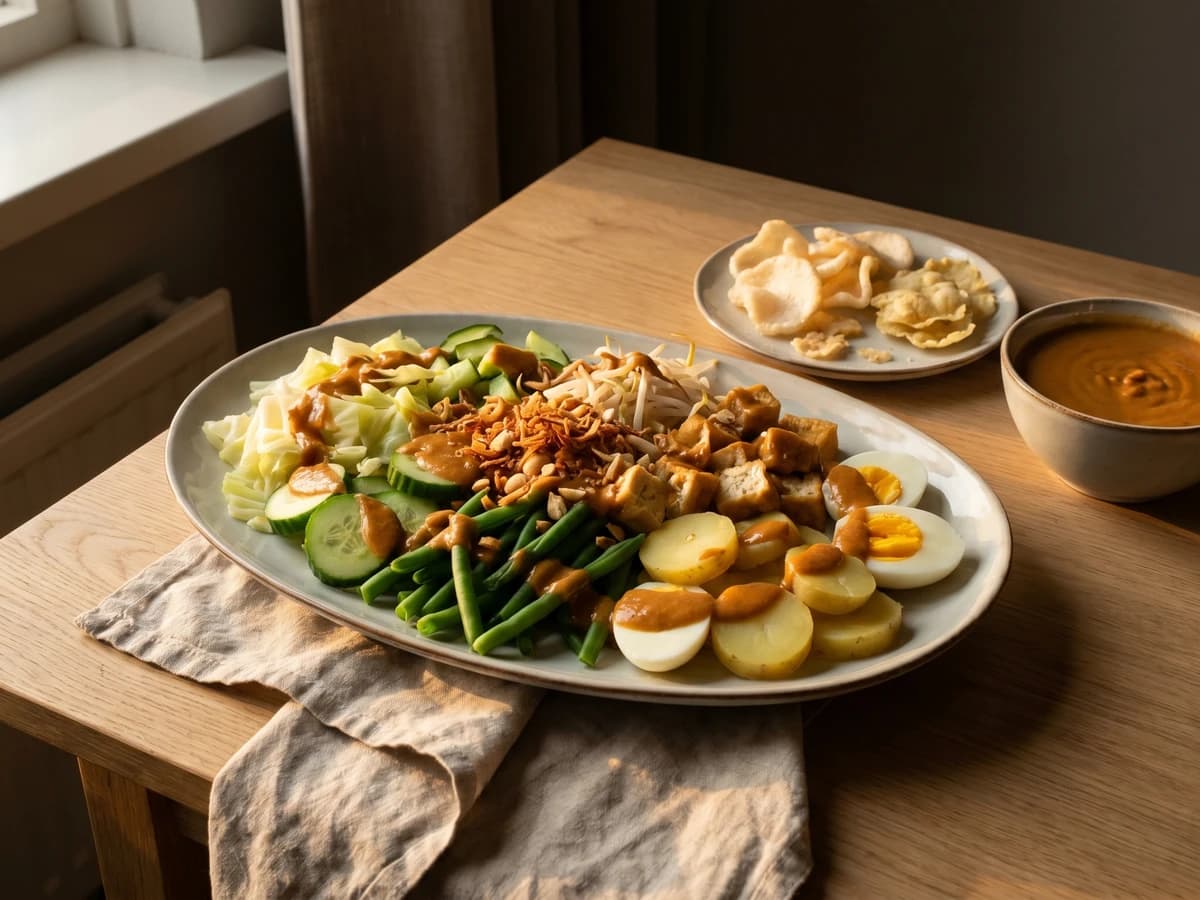
The name means a jumble, and the plate proves it: green beans, cabbage, egg, potatoes, and tofu gathered under pindasaus, Java carried into the Dutch rijsttafel.

Chef Joost
The harbor herring salad that catches June at its fattest: fresh Hollandse Nieuwe, beetroot, apple, potato, egg, and pickle, laid on lettuce like the North Sea has agreed to come indoors.
Chef Joost
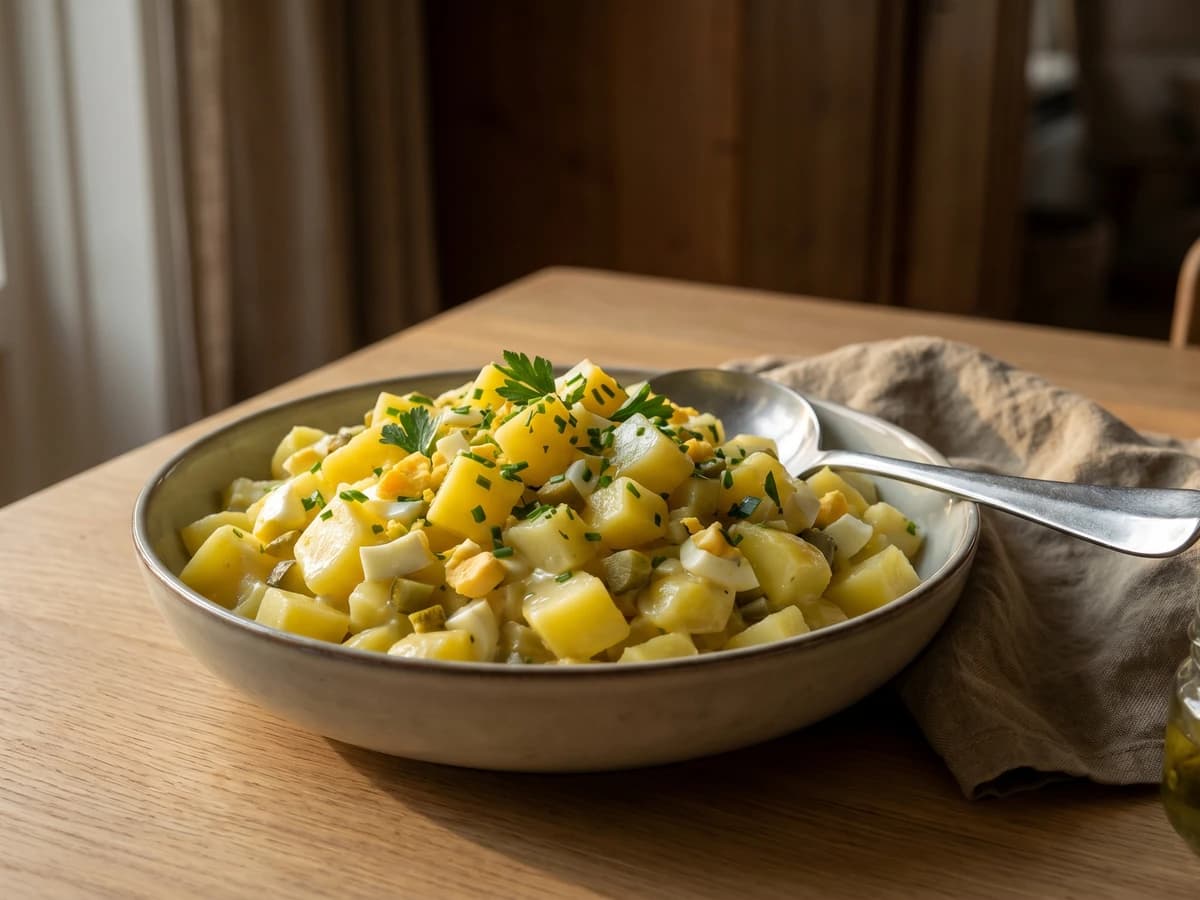
The everyday Dutch potato salad that proves thrift can be generous: waxy potatoes, sharp mustard, pickle, egg, and chives folded cool for the barbecue table.