Culinary Explorer
A cooking platform built around craft, culture, and the stories behind what we eat.
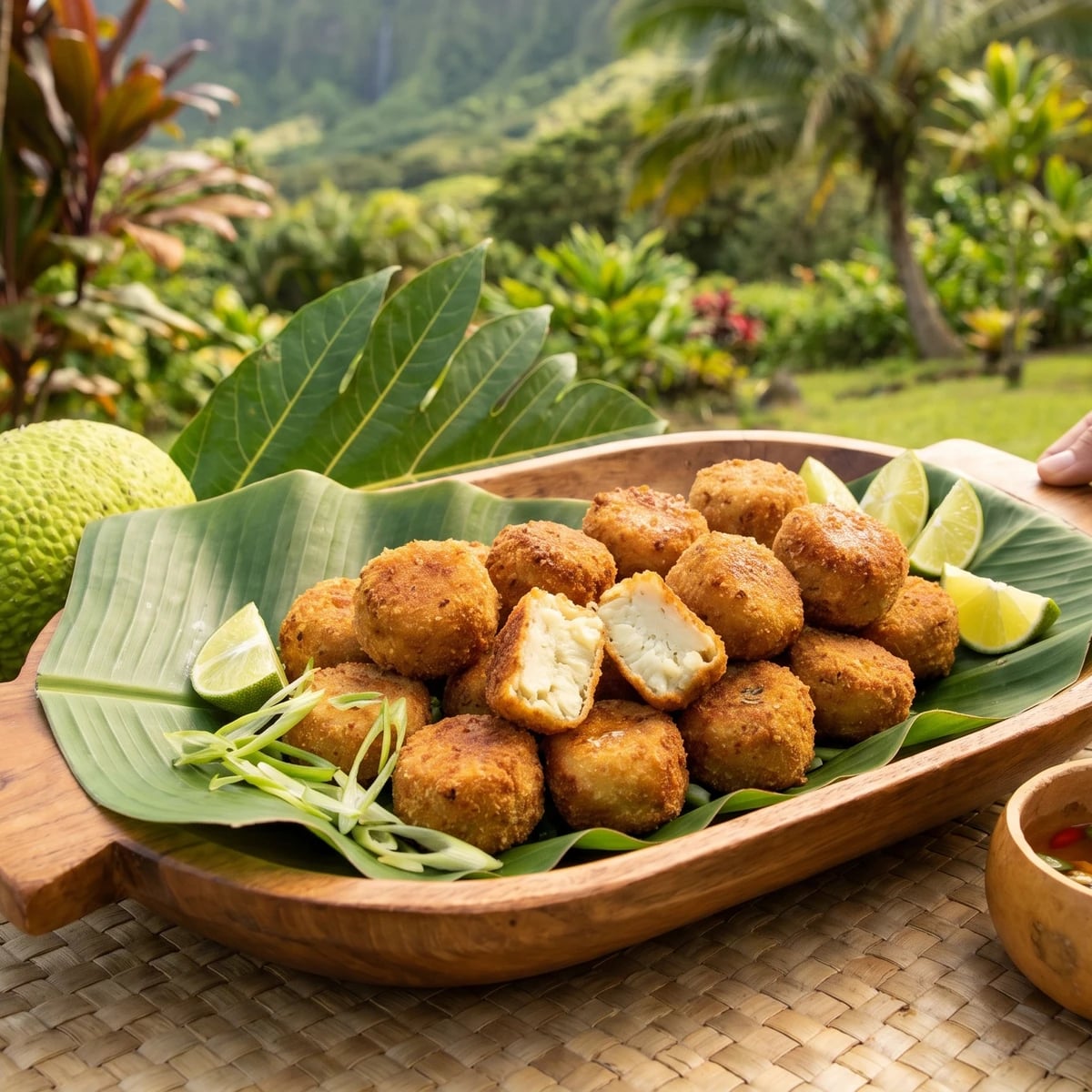
ʻUlu Croquettes (Hawaiian Breadfruit Patties)
Created by Chef Makoa
Hawaiʻi's ʻulu, the breadfruit carried by canoe, mashed with onion and herbs, shaped into small patties, and fried golden for a potluck table that still remembers the tree.
The old people said Kū, the god, gave himself as the ʻulu tree so his family could eat. That's how Hawaiʻi talks about breadfruit, not as some plain starch, but as kin standing in the yard, feeding whoever comes under the shade. My home seat is Oʻahu, but the tree's family runs wider: ʻulu in Hawaiʻi, ʻuru in Tahiti, mei in the Marquesas, kuru in the Cooks. One ocean, one canoe, one root.
These croquettes are Hawaiian by hand, and contemporary by shape. Nobody needs pretend the kūpuna were standing around making party patties for game day. What they carried was deeper: the crop, the patience, the rule that good food from the ʻāina, the land, should not be wasted. The modern Hawaiʻi table takes that old ʻulu and lets it sit beside plate lunch, fried snacks, potluck pans, all the everyday food we actually eat now.
Cook the ʻulu until it gives up clean under a fork, then mash it while it's warm, when the flesh is still willing. The starch should bind like mashed potato but taste nuttier, earthier, with a little sweetness if the fruit was mature. Fry it crisp, yes, but don't make the crispness the whole story. The outside is just the doorway. Inside is the canoe crop, still doing what it came here to do: feed the people.
Ingredients
mature firm ʻulu (breadfruit)
Quantity
1 (2 to 3 pounds)
sea salt
Quantity
1 tablespoon, plus more to taste
for cooking water and seasoning
unsalted butter or neutral oil
Quantity
2 tablespoons
| Ingredient | Quantity |
|---|---|
| mature firm ʻulu (breadfruit) | 1 (2 to 3 pounds) |
| sea saltfor cooking water and seasoning | 1 tablespoon, plus more to taste |
| unsalted butter or neutral oil | 2 tablespoons |
Where cooking meets culture.
Culinary guides, cultural storytelling, and the editorial depth that makes cooking meaningful.
Discover Culinary Explorer