Chef Dimitra
Aegean Island Kalamarakia Tiganita (Καλαμαράκια Τηγανητά)
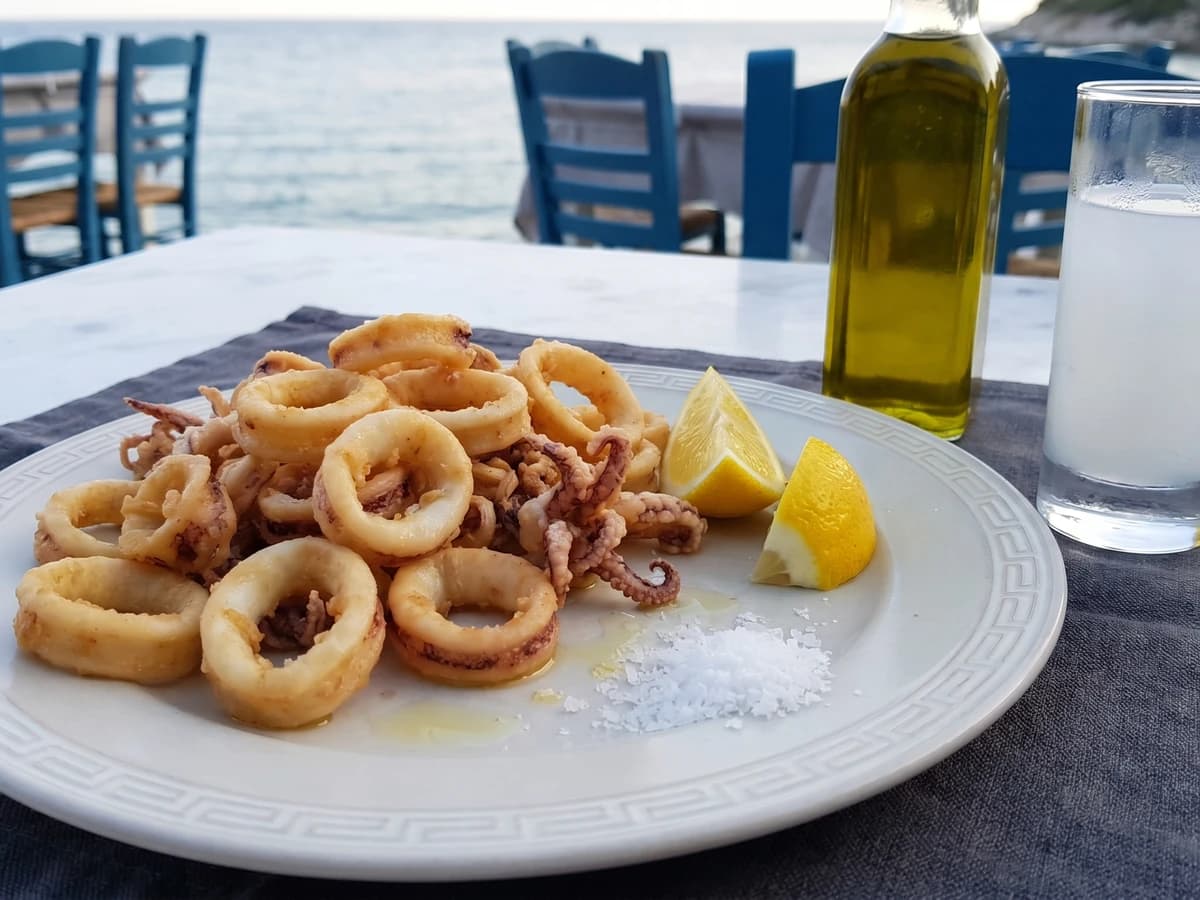
Aegean island fried squid is flour, hot oil, lemon, and nerve. Fry it for a minute or two, no longer, and it stays tender under its crisp coat.
A cooking platform built around craft, culture, and the stories behind what we eat.

Created by
Thessaloniki's tzatziki is thick, cold, and sharp with garlic: strained yogurt, cucumber wrung dry, red wine vinegar, dill, and good olive oil.
Tzatziki in Thessaloniki is a cold yogurt meze, thick enough to hold the mark of a spoon, with cucumber, garlic, vinegar, dill, and olive oil. It is not a sauce poured thinly over everything. It belongs on the table in a small bowl, beside grilled lamb, fried courgettes, warm pita, and the first glass poured before dinner.
The cucumber is the whole truth. Salt it, let it give up its water, then wring it harder than feels polite. If you skip this, the yogurt loosens and a pale puddle forms around the edge. Do it properly and the tzatziki stays cool, set, and clean-tasting, with the garlic carrying through instead of shouting.
Use real strained yogurt if you can, sheep-milk or a goat-and-sheep blend. Cow's milk yogurt works when it is thick and sour enough, but don't start with anything runny and hope patience will save it. Λίγα και καλά: a few things, and good ones.
This is the kind of bowl that disappears first at a summer table in Macedonia. I write it down because people think simple dishes don't need a recipe, and then they wonder why theirs tastes watery. Your grandmother cooked by eye because she'd made it a thousand times. Here are the numbers until you have.
Tzatziki in Greece belongs to the family of yogurt-and-cucumber preparations spread through Ottoman kitchens, related in name to Turkish cacık but changed on the Greek table into a thick dip rather than a loose cold soup. In northern Greece and Thessaloniki, the version most often served with grilled meats and meze uses strained yogurt, garlic, vinegar, dill, and olive oil. Its place beside souvlaki came later; the older logic is the meze table, where sharp, cold yogurt cuts smoke, salt, and fried oil.
Quantity
500g
cold
Quantity
300g
coarsely grated, unpeeled if thin-skinned
Quantity
5g
divided
Quantity
2
finely grated
Quantity
20ml
Quantity
45ml
plus more to finish
Quantity
10g
finely chopped
Quantity
1g
| Ingredient | Quantity |
|---|---|
| strained sheep-milk or goat-and-sheep Greek yogurtcold | 500g |
| cucumbercoarsely grated, unpeeled if thin-skinned | 300g |
| fine sea saltdivided | 5g |
| garlic clovesfinely grated | 2 |
| red wine vinegar | 20ml |
| extra virgin Koroneiki olive oilplus more to finish | 45ml |
| fresh dillfinely chopped | 10g |
| freshly ground black pepper | 1g |
Coarsely grate the cucumber into a sieve set over a bowl. Toss it with 3g of the salt and leave it for 15 minutes. The cucumber will darken a little and release its water. This is the step that decides tzatziki: if the cucumber goes in wet, it thins the yogurt and the bowl weeps before it reaches the table.
Pile the salted cucumber into a clean towel and twist hard over the sink until no more liquid runs freely. You should be left with a tight handful, about half its first volume. Don't be gentle. The yogurt can carry garlic and oil, but it can't carry a soaked cucumber.
Put the cold strained yogurt in a bowl. Stir in the grated garlic, vinegar, 45ml olive oil, the remaining 2g salt, dill, and black pepper until smooth and glossy. Taste after a minute, because garlic blooms in yogurt and gets sharper as it sits.
Fold in the wrung cucumber until evenly spread through the yogurt. Cover and chill for at least 1 hour. The rest matters. The garlic softens, the dill settles, and the yogurt firms around the cucumber instead of tasting like separate parts.
Spoon the tzatziki into a shallow bowl and make a small well on top. Pour in a little more green-gold olive oil and serve cold with warm pita, grilled meat, fried courgettes, or raw vegetables. Stir once before serving if it has sat overnight.
1 serving (about 135g)
Culinary guides, cultural storytelling, and the editorial depth that makes cooking meaningful.
Discover Culinary ExplorerChef Dimitra
Aegean island fried squid is flour, hot oil, lemon, and nerve. Fry it for a minute or two, no longer, and it stays tender under its crisp coat.

Chef Dimitra
Pale Aegean taramosalata is cured roe, soaked bread, lemon, and olive oil worked slowly until it turns thick and clean, made for lagana on Clean Monday.
Chef Dimitra
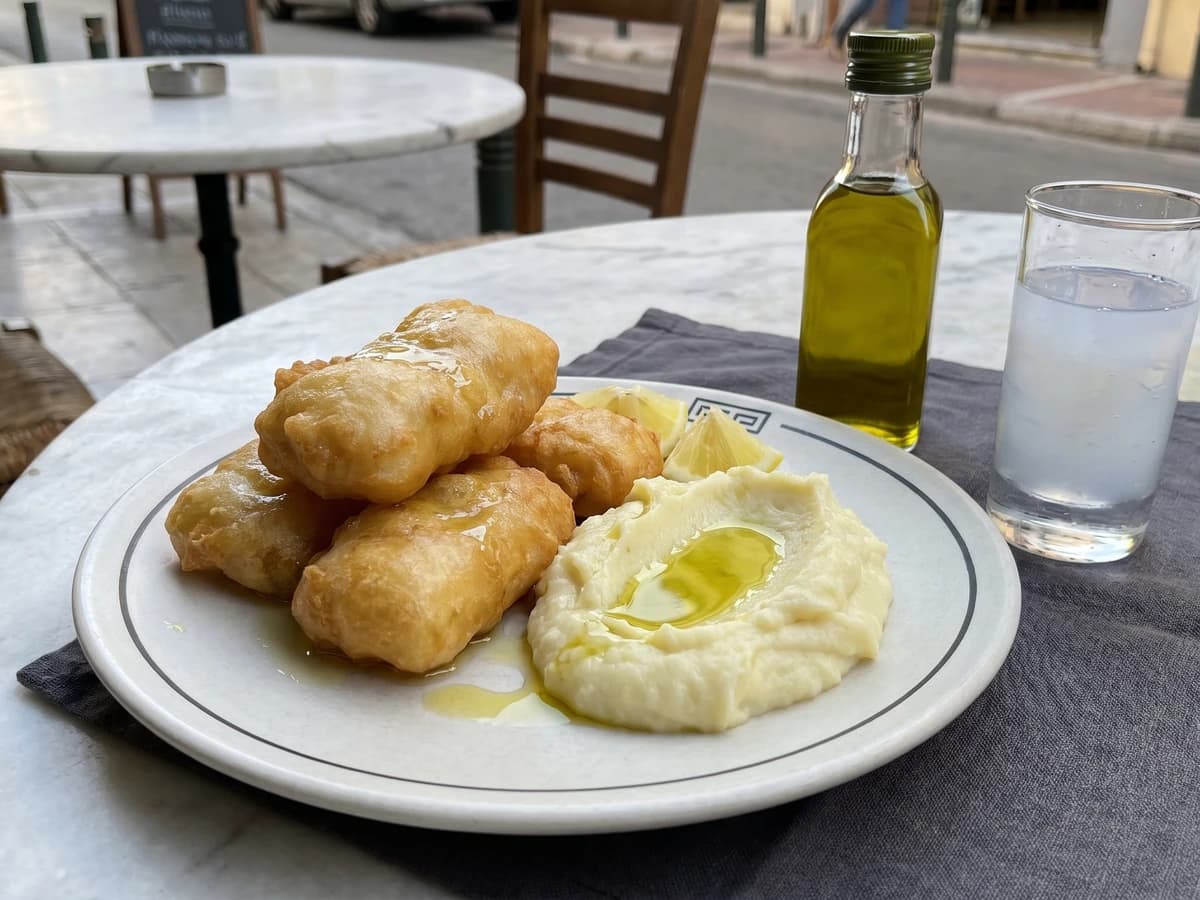
Athenian March 25 salt cod, crisp in a puffed beer batter and served with garlic skordalia, the Lenten fish dish Greece keeps for Annunciation day.
Chef Dimitra
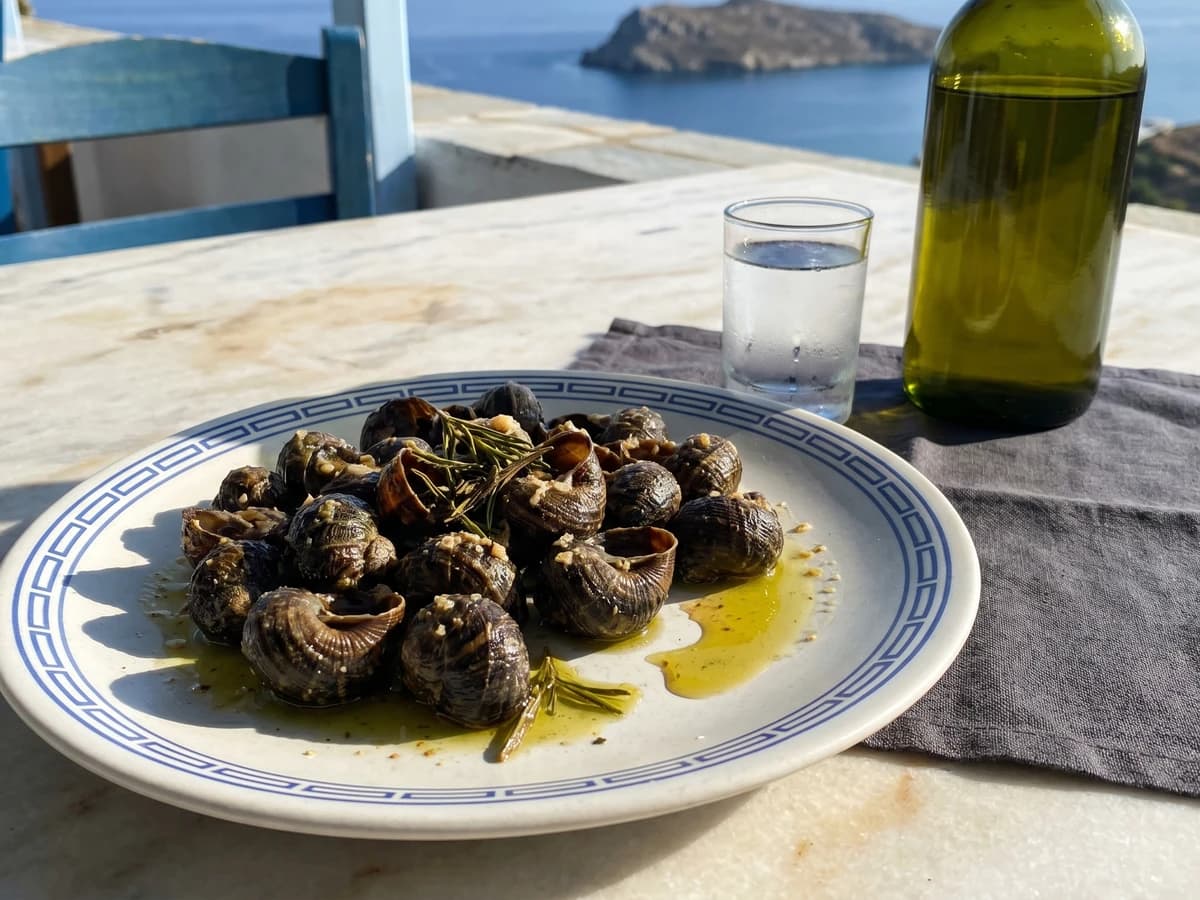
Crete names this dish by the pan motion: snails set mouth-down in salted flour, fried in good olive oil, then hit with rosemary and vinegar.