
Chef Graziella
Tramezzino with Shrimp, Egg, and Arugula
The refined tramezzino of Venice, where sweet Adriatic shrimp meet sliced egg and arugula between slices of impossibly soft bread. This is what Venetians eat standing at the bar before dinner.
A cooking platform built around craft, culture, and the stories behind what we eat.
Created by
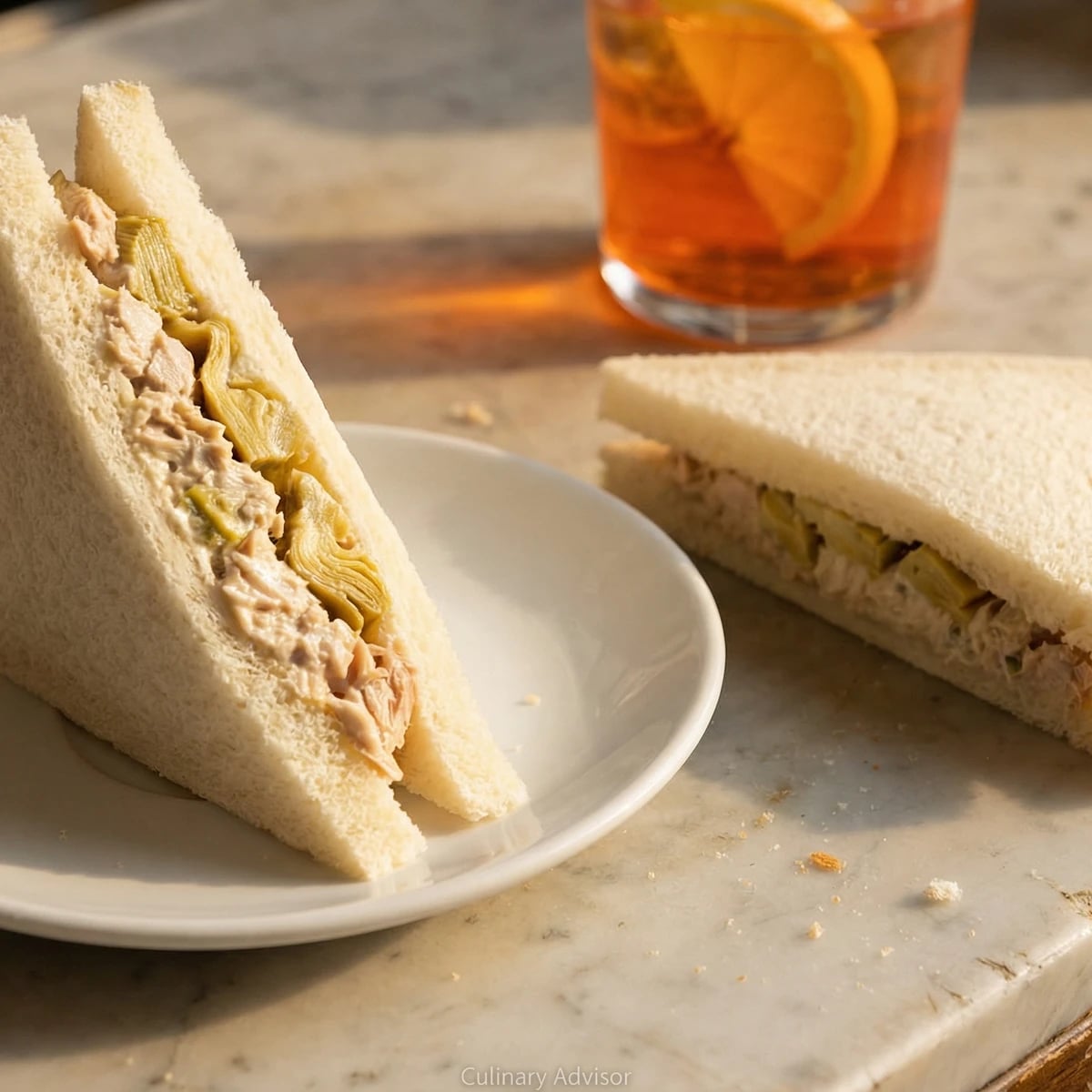
The soft, crustless triangles found in every Venetian bar, filled with oil-packed tuna and tender artichoke hearts. This is what Venetians eat standing at the counter with their afternoon spritz.
The tramezzino is not a sandwich. Or rather, it is, but the word fails to capture what happens when soft white bread meets a generous filling in the bars of Venice. These triangular parcels are everywhere in the Veneto: stacked in glass cases, eaten standing at marble counters, washed down with prosecco or a spritz while the afternoon light falls across the canals.
Americans make sandwiches sturdy. They pile ingredients high and expect to grip them with two hands. Tramezzini are different. The bread is soft, almost pillowy. The crusts are always removed. The filling is generous but spreadable, never chunky. You eat one in three bites, then perhaps another.
Tuna and artichoke is among the most beloved combinations. The briny richness of good oil-packed tuna, the earthy tenderness of artichoke hearts, the binding smoothness of mayonnaise. What you keep out matters: no onion, no celery, no distracting crunch. The flavors speak clearly because there are only a few of them.
Though tramezzini were born at Caffè Mulassano in Turin around 1925, Venice claimed them as her own. The poet Gabriele D'Annunzio coined the name as an Italian alternative to 'sandwich,' from 'tramezzare,' to divide. By mid-century, every Venetian bar displayed dozens of varieties in refrigerated cases, and the afternoon tramezzino became as essential to Venetian life as the gondola.
Quantity
8 slices
Quantity
1 can (5 ounces)
drained
Quantity
1 jar (6 ounces)
drained and chopped
Quantity
4 tablespoons
Quantity
1 teaspoon
Quantity
to taste
Quantity
to taste
freshly ground
| Ingredient | Quantity |
|---|---|
| soft white sandwich bread (pan carrè) | 8 slices |
| Italian oil-packed tunadrained | 1 can (5 ounces) |
| artichoke hearts in oildrained and chopped | 1 jar (6 ounces) |
| mayonnaise | 4 tablespoons |
| fresh lemon juice | 1 teaspoon |
| fine sea salt | to taste |
| black pepperfreshly ground | to taste |
In a bowl, break apart the drained tuna with a fork. It should remain in flaky pieces, not be mashed into paste. Add the chopped artichoke hearts and toss gently to combine. Add the mayonnaise and lemon juice. Fold everything together until the filling is cohesive but still textured. Season with salt and pepper. Taste it. Adjust.
The bread for tramezzini must be soft, fresh, and pliable. Stale bread will crack when you cut the triangles. If your bread is not perfectly fresh, cover the slices with a barely damp kitchen towel for five minutes to restore suppleness. This is not a trick. It is a necessity.
Lay four slices of bread on your work surface. Divide the tuna and artichoke filling evenly among them, spreading it to cover the entire surface in a generous layer. The filling should be abundant. Venetian tramezzini are not delicate. Place the remaining bread slices on top and press gently to adhere.
Using a sharp serrated knife, trim the crusts from all four sides of each sandwich. Cut each sandwich diagonally into two triangles. The triangular shape is correct and traditional. A rectangle is something else entirely.
Arrange the tramezzini on a plate or stand them upright to display the filling. In Venice, they are served at room temperature alongside an Aperol spritz or a small glass of prosecco. This is the proper context. Serve immediately or within a few hours.
1 serving (about 115g)
Culinary guides, cultural storytelling, and the editorial depth that makes cooking meaningful.
Discover Culinary Explorer
Chef Graziella
The refined tramezzino of Venice, where sweet Adriatic shrimp meet sliced egg and arugula between slices of impossibly soft bread. This is what Venetians eat standing at the bar before dinner.

Chef Juliette
Five classical fillings between bread buttered to every edge, cut into tidy rectangles and held under a light weight: a French buffet lesson in softness, proportion, and restraint.

Chef Juliette
Steak grilled dark at the edges, cooled, sharpened with horseradish and mustard, then pressed between buttered loaf heels until the crumb catches every juice: a race-day sandwich substantial enough to be supper.

Chef Thomas
Back bacon crisped in a hot pan, a ripe tomato that actually tastes of something, crisp lettuce and real butter on proper toast. A sandwich that earns its place in the notebook.