Culinary Explorer

A cooking platform built around craft, culture, and the stories behind what we eat.
Discover Culinary Explorer
Tovchanka (товчанка, mashed potato and beans with poppy)

Tovchanka (товчанка, mashed potato and beans with poppy)

Created by

Poppy seed is the surprise here: tiny black seeds pounded until they perfume a pale mash of potatoes and beans, making poor-pantry food taste quietly rich.

Side Dishes
Ukrainian
Comfort Food
Budget Friendly
Make Ahead
20 min
Active Time
1 hr 40 min cook10 hr total
Yield8 servings

Poppy seed is the surprise here. You expect potatoes and beans to behave themselves, soft and pale and sensible, then the poppy goes under the pestle and releases that nutty, almost milky smell, and suddenly the whole bowl changes its mind.

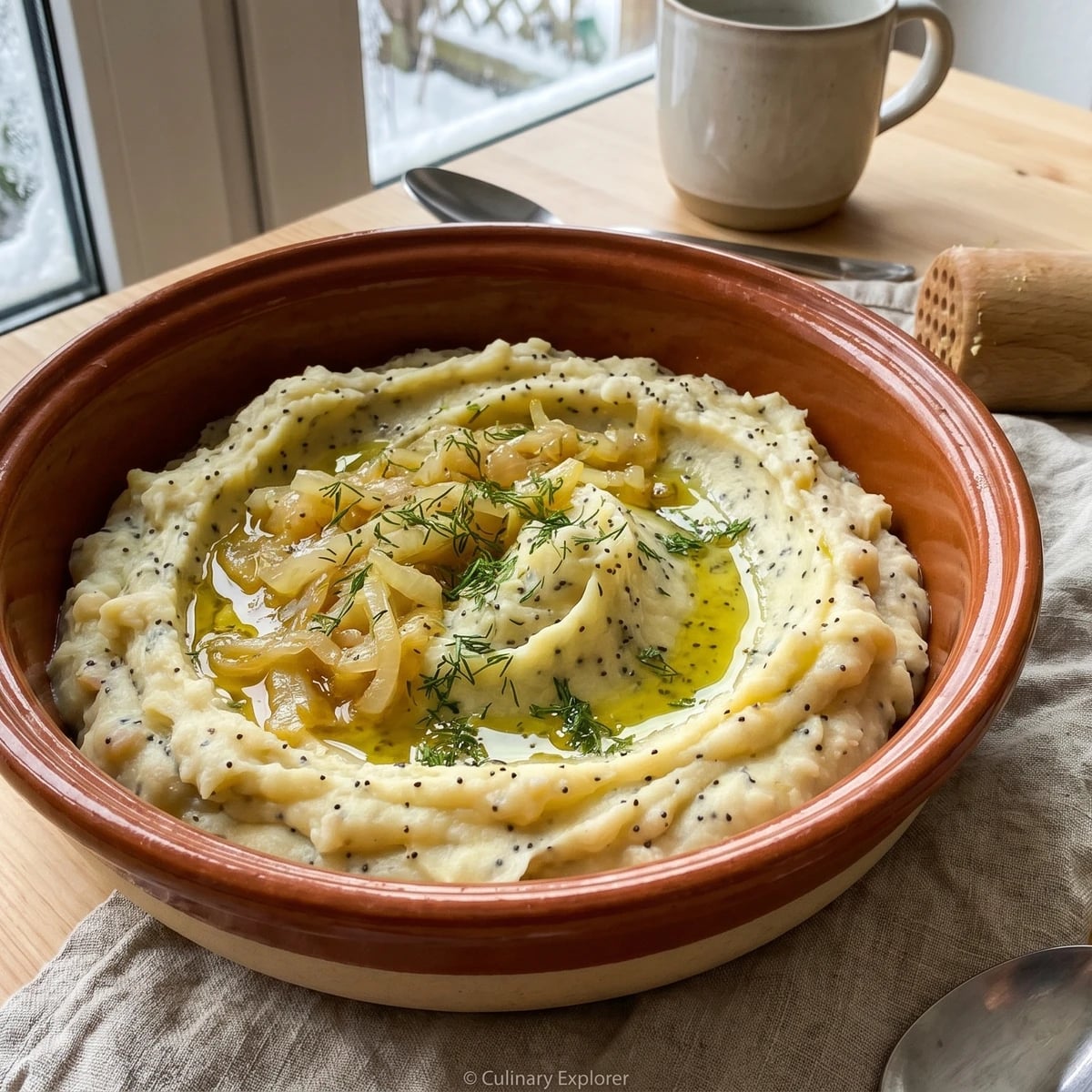
Tovchanka comes from the verb tovchty, to pound, and that is the one why that decides the dish. You don't whip it. You pound boiled potatoes and tender white beans together while they're still warm, with onions softened in unrefined sunflower oil and poppy seeds bruised enough to wake them up. The texture should be silken but not baby food, with little bean skins and poppy specks reminding you this came from a pantry, not a packet.

Aunt Nadia wrote only, "pound until it sounds right," which is comedy if you're reading it cold and perfectly clear once the spoon starts making that thick, soft thud against the bowl. Add enough cooking liquid to loosen it, enough oil to make it shine, enough salt that the beans stop tasting shy. Make a big bowl. There is no tradition of a small one.

Tovchanka is especially associated with Ternopil and the wider Podillia and Galicia borderlands, where potatoes, beans, onions, poppy seed, and sunflower oil made filling food for fasting days and lean winter tables. Its name comes from the Ukrainian tovchty, to pound, pointing to the older mortar-and-makitra method before modern mashers made the work quieter. Poppy appears across Ukrainian ritual baking and everyday pantry cooking, but here it does a clever poor-kitchen thing: it gives richness without meat, butter, or cream.

The technique, the tradition, and the story behind every dish.

Discover Culinary Explorer

Ingredients

dried white beans

Quantity

250g

soaked overnight

floury potatoes

Quantity

1.2kg

peeled and cut into large chunks

poppy seeds

Quantity

3 tablespoons

onions

Quantity

2 large

finely diced

unrefined sunflower oil

Quantity

5 tablespoons, plus more to finish

garlic

Quantity

2 cloves

finely grated or crushed

bay leaf

Quantity

1

fine sea salt

Quantity

1 teaspoon, plus more to taste

black pepper

Quantity

to taste

dill (optional)

Quantity

small handful

finely chopped

Equipment Needed

  • A large pot for beans
  • A separate potato pot
  • A mortar and pestle or sturdy bowl and spoon for the poppy
  • A potato masher or wooden pestle
  • A wide pan for the onions

Instructions

  1. 1

    Soak the beans

    Cover the dried beans with plenty of cold water and leave them overnight. By morning they should look swollen and smooth, not wrinkled. Drain them, cover with fresh water, add the bay leaf, and simmer gently until they crush easily between finger and thumb.

    Salt the beans lightly only once they have started to soften. Old beans take their own time, and no clock in London has ever bullied one tender.
  2. 2

    Cook the potatoes

    Put the potatoes in a separate pot, cover with cold salted water, and simmer until a knife slips through without a fight. Keep back a mug of the potato water before draining. That starchy water is your looseness later, much better than making the mash wet with plain water.

  3. 3

    Wake the poppy

    Pour boiling water over the poppy seeds and let them sit while the potatoes cook, then drain very well. Pound them in a mortar, or crush them with the back of a spoon in a small bowl, until they darken, smell nutty, and begin to clump. Whole poppy seeds are decoration. Bruised poppy seeds are flavor.

  4. 4

    Soften the onions

    Warm the sunflower oil in a wide pan and add the onions with a pinch of salt. Let them soften slowly until golden at the edges and sweet-smelling, stirring often. You're not chasing a hard brown crust. You want onion sweetness sitting brightly through the pale mash, with green-gold oil carrying it.

  5. 5

    Pound the mash

    Tip the hot potatoes into a large bowl or pot and crush them first, then add the tender beans, garlic, pounded poppy, most of the onion oil, salt, and black pepper. Pound and fold until the beans break down into the potatoes and the spoon makes a thick soft thud. Add splashes of bean broth or potato water until it moves heavily but doesn't slump into a puddle.

    This is the step that wants your hands more than your timer. Stop before it turns gluey; a few visible beans and poppy specks are part of its character.
  6. 6

    Finish the bowl

    Taste it properly, not politely. Beans swallow salt, so add more until the mash tastes full and warm. Spoon it into a deep bowl, drag the remaining onion oil over the top, scatter dill if you're using it, and let it sit a few minutes so the poppy and garlic settle into the potatoes.

Chef Tips

  • Canned white beans make this a weeknight dish. Use about 700g drained beans, warm them with a splash of water, and pound them in hot so they don't cool the potatoes into paste.
  • Floury potatoes are best because they break down willingly. Waxy potatoes make a tighter, heavier tovchanka, still edible, just less generous under the spoon.
  • Unrefined sunflower oil matters because it goes right through the dish. It is Ukraine in a bottle of oil. If you use butter instead, that's a bit more modern and softer, but the sunflower version tastes more like the pantry this dish came from.
  • Serve it beside roast meat, mushrooms, fried eggs, fermented cucumbers, or a sharp tomato salad. Something sour on the table makes the beans taste brighter.
  • Leftovers firm up in the fridge. Loosen with a splash of water, bean broth, or milk as you reheat, then finish with fresh onion oil.

Advance Preparation

  • Soak the beans overnight, at least 8 hours. If your beans are old, give them a longer soak and more patient simmering.
  • The whole dish can be made a day ahead. Reheat gently with a splash of reserved cooking liquid and finish with fresh sunflower oil.
  • Cooked beans can be frozen in their broth, which turns tovchanka into a quick supper later.

Frequently Asked Questions

Nutrition Information

1 serving (about 270g)

Calories
350 calories
Total Fat
12 g
Saturated Fat
1 g
Trans Fat
0 g
Unsaturated Fat
11 g
Cholesterol
0 mg
Sodium
450 mg
Total Carbohydrates
50 g
Dietary Fiber
9 g
Sugars
4 g
Protein
12 g

Note: Chef personas and recipes are created with AI assistance. Cook with care: follow safe food-handling practices, check doneness with a thermometer when needed, and adapt for allergies and your kitchen.

Where cooking meets culture.

Culinary guides, cultural storytelling, and the editorial depth that makes cooking meaningful.

Discover Culinary Explorer

More from Kasha, Potato & Garden Sides

Browse the full collection