
Chef Isabel
Almussafes Valenciano
Almussafes is Valencian bar-counter food: a crusty roll filled with sobrasada, cheese, and onion, then pressed on the plancha until the bread crisps and the filling runs together.
A cooking platform built around craft, culture, and the stories behind what we eat.

Created by
Zurrapa de lomo is Andalusia's chunky pork preserve, lomo cooked slowly in seasoned manteca until it shreds, then spooned onto warm bread with its red fat.
Tosta de zurrapa de lomo is Andaluz, especially the breakfast and merienda counter of the south: pork loin cooked slowly in manteca, pork lard, with garlic, oregano, bay, and pimentón until the meat breaks into rough shreds. It is not the smooth smear of manteca colorá. The zurrapa is the good bit at the bottom, the meat, the spice, the fat, all together on warm bread.
The method that decides it is the heat. Keep the pork at the quietest bubble in the manteca, never frying hard, or the lean lomo tightens and turns dry before it can soften. Low heat gives you tender shreds and red, seasoned fat that melts into the toast. Rush it and you get tough pork in greasy bread. Nobody needs that on a Tuesday.
If you can't find mollete, the soft Andalusian breakfast roll, use a white country roll or a mild sourdough with a tender crumb. It won't be quite the same, because mollete drinks the manteca without scratching your mouth, but it gets you there. Use real pork lard, not butter, and pimentón de la Vera if you can find it. Siempre sale, si lo sigues.
Zurrapa belongs to the Andalusian habit of preserving pork from the matanza, the household slaughter, by cooking it in manteca so the fat sealed and carried it for later meals. In places such as Cádiz, Málaga, and Sevilla, it became breakfast food on toasted molletes, sold beside manteca colorá and served simply because the preserve was already waiting in the larder. The name points to the scrapings and shredded bits left in the seasoned fat, once humble, now the part people ask for first.
Quantity
600g
trimmed and cut into 3cm cubes
Quantity
350g
Quantity
5
lightly crushed
Quantity
2 teaspoons
Quantity
1/2 teaspoon
Quantity
1 teaspoon
Quantity
2
Quantity
90ml
Quantity
1 tablespoon
Quantity
10g
Quantity
1/2 teaspoon
Quantity
6
split or sliced
Quantity
as needed
for brushing the bread
| Ingredient | Quantity |
|---|---|
| pork lointrimmed and cut into 3cm cubes | 600g |
| pork lard | 350g |
| garlic cloveslightly crushed | 5 |
| sweet pimentón de la Vera | 2 teaspoons |
| hot pimentón de la Vera (optional) | 1/2 teaspoon |
| dried oregano | 1 teaspoon |
| bay leaves | 2 |
| dry white wine | 90ml |
| vinagre de Jerez (sherry vinegar) | 1 tablespoon |
| fine sea salt | 10g |
| freshly ground black pepper | 1/2 teaspoon |
| molletes or thick slices of rustic white breadsplit or sliced | 6 |
| extra virgin olive oil (optional)for brushing the bread | as needed |
Put the pork loin in a bowl with the salt, black pepper, oregano, bay leaves, crushed garlic, wine, and sherry vinegar. Turn it well, cover, and leave it 30 minutes at room temperature, or up to 8 hours in the refrigerator. Pésalo, no lo adivines: lean pork needs the salt measured so it seasons through without turning harsh.
Set a heavy pan over low heat and melt the pork lard gently. Lift the pork from its marinade and pat it mostly dry, saving the liquid. Add the pork and garlic to the melted manteca. The fat should barely murmur around the meat, not spit and brown hard.
Cook the pork uncovered over low heat for 45 to 55 minutes, turning now and then, until a piece presses apart easily with a fork. If the fat starts to snap or the meat browns fast, lower the heat. This is the whole dish: quiet cooking in manteca so the lomo softens instead of tightening.
Stir the pimentón into the saved marinade, then pour it into the pan. Let it bubble gently for 8 to 10 minutes, until the wine smell is gone and the fat turns brick red and glossy. Do not scorch the pimentón; burnt pimentón tastes bitter and no bread can hide it.
Take out the bay leaves. Crush and pull the pork into rough shreds with two forks right in the pan, leaving some small chunks. Stir so every piece is coated in the red manteca. Taste for salt while it is warm.
Toast the molletes or bread until the surface is crisp but the middle stays tender. Brush with a little olive oil if the bread is very dry. Spoon the warm zurrapa over the toast with enough red manteca to soak in at the edges. Serve at once, with a little extra fat from the pan for the person who knows what they're doing.
1 serving (about 210g)
Culinary guides, cultural storytelling, and the editorial depth that makes cooking meaningful.
Discover Culinary ExplorerChef Isabel
Almussafes is Valencian bar-counter food: a crusty roll filled with sobrasada, cheese, and onion, then pressed on the plancha until the bread crisps and the filling runs together.
Chef Isabel
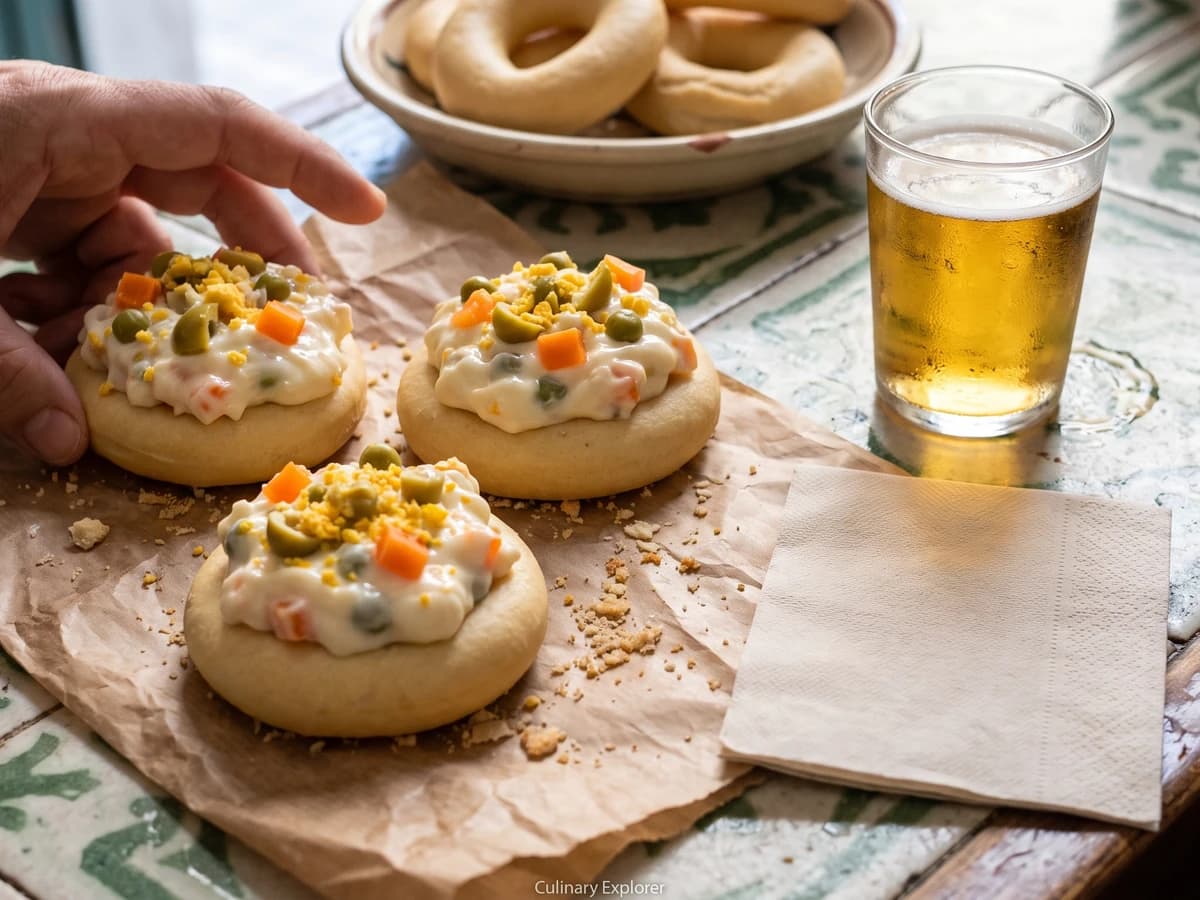
The Murcian bicicleta is the anchovy-free cousin of the marinera: ensaladilla rusa mounded on a crisp rosquilla de pan. Keep the salad cold and the bread dry until the last minute.

Chef Isabel
The Barcelona bikini is Catalan bar food at its plainest: white bread, jamón dulce, melting cheese, butter, and gentle heat until the crust crisps and the middle runs.

Chef Isabel
This is the bocadillo of the northern pantry: good tuna in olive oil, sweet piquillo peppers from Navarra, and a crusty barra that stays clean if you drain the tin properly.