
Chef Lupita
Acambaritas de Acámbaro
Guanajuato's daily bread from Acámbaro, a small glazed roll built on pata, enriched with manteca de cerdo, and baked until the top shines lightly for merienda.
A cooking platform built around craft, culture, and the stories behind what we eat.
Created by
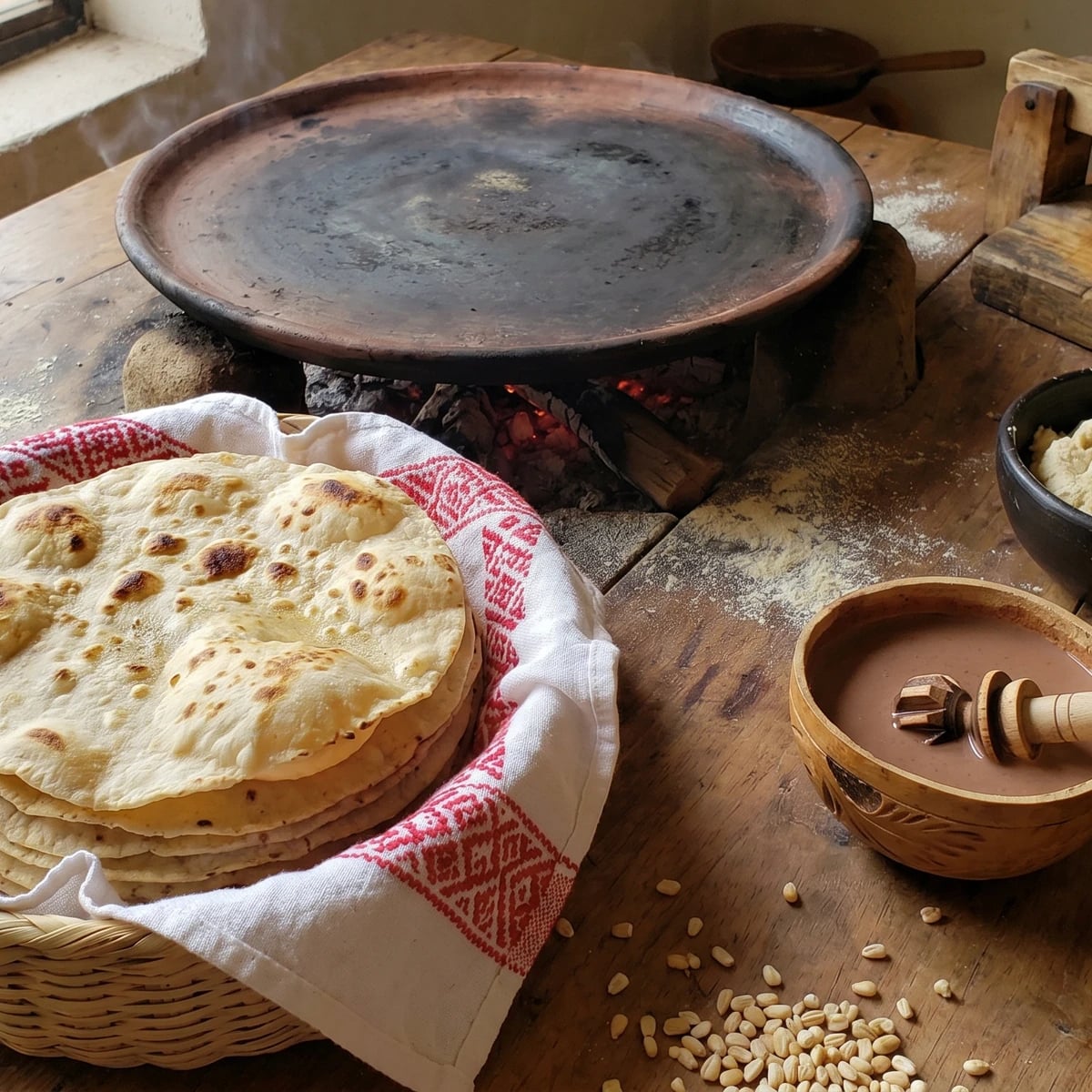
Oaxaca's everyday soft tortilla, hand-pressed from nixtamalized maíz criollo, blistered on a clay comal, larger and thicker than the central Mexican version and made for the table, not the taqueria.
This is a Oaxacan tortilla. Not a Mexico City tortilla, not a Sonoran flour tortilla, not the small thin disc that gets rolled around carnitas at a taquería in the Roma. The Oaxacan tortilla blanda is six to seven inches across, slightly thicker than its central Mexican cousin, and made to hold a piece of tasajo, a spoonful of black bean paste, a smear of chile pasilla mixe. It is the bread of the Valles Centrales, eaten with every meal, and it tastes like the corn it came from.
The corn is the dish. In Oaxaca the masa is ground from maíz criollo, heirloom corn varieties grown by small farmers in the milpas of the Sierra Norte, the Valles Centrales, and the Mixteca. White corn, yellow corn, the small round bolita corn of Tlacolula. Each one tastes different. Each one belongs to a place. If your tortilla starts with industrial masa harina from yellow dent corn, you have a tortilla. You do not have a Oaxacan tortilla. La diferencia es el maíz.
My mother was from Jalisco and pressed her tortillas small. The first time I sat at a table in Mitla and a senora handed me a tortilla blanda the size of my open hand, still warm, faintly speckled from the clay comal, I understood that I had been eating one tortilla and Oaxaca had been eating another. I have been chasing the right Oaxacan press ever since. Cada estado, su propia cocina, and the tortilla is the place where the kitchen begins.
No me vengas con atajos here. The masa needs the right hydration, the comal needs real heat, and the tortilla needs three turns to puff. Skip any of those and the tortilla will tell on you.
Tortillas in Mesoamerica predate the Spanish arrival by at least 3,500 years, with archaeological evidence of nixtamalization, the alkaline cooking of corn with cal that releases niacin and makes the amino acids in maize bioavailable, found at sites in the Valley of Oaxaca dating to roughly 1500 BCE. The Zapotec and Mixtec peoples of Oaxaca developed dozens of regional tortilla forms beyond the blanda, including the tlayuda, the memela, and the totopo from the Isthmus of Tehuantepec, each tied to a specific corn variety and a specific comal type. The widespread Mexican shift toward industrial masa harina in the late 20th century was resisted in Oaxaca more than in most states, where the small molinos de nixtamal in market towns like Etla, Zaachila, and Tlacolula remain the cultural and economic backbone of daily tortilla making.
Quantity
2 cups (about 1 pound)
freshly ground, ideally same day from the molino
Quantity
3/4 to 1 cup
as needed to bring the masa to a soft, pliable consistency
Quantity
1 teaspoon
Quantity
2 cups
preferably from criollo corn, hydrated with 1 1/2 cups warm water
| Ingredient | Quantity |
|---|---|
| fresh masa from nixtamalized maíz criollofreshly ground, ideally same day from the molino | 2 cups (about 1 pound) |
| warm wateras needed to bring the masa to a soft, pliable consistency | 3/4 to 1 cup |
| fine sea salt (optional) | 1 teaspoon |
| masa harina (only if fresh masa is unavailable) (optional)preferably from criollo corn, hydrated with 1 1/2 cups warm water | 2 cups |
If you can buy fresh masa from a molino that grinds nixtamalized maíz criollo, buy it the morning you plan to cook. That is the masa that makes a Oaxacan tortilla taste Oaxacan. The white maíz from the Valles Centrales, the yellow from the Sierra Norte, the bolita corn from Tlacolula, each one tastes different and a Oaxacan cook knows the difference. If you have no molino, hydrate good masa harina with warm water and let it rest 20 minutes. It is a compromise, not an upgrade.
Place the masa in a wide bowl. Add the salt if using. Drizzle in warm water a few tablespoons at a time, kneading with your hand for three to four minutes. The dough is ready when it feels like the soft inside of an earlobe and a small ball pressed between your palms does not crack at the edges. Too dry and the tortilla will split on the press. Too wet and it will stick. Asi se hace y punto.
Set a clay comal or heavy cast iron griddle over medium-high heat for at least ten minutes before you press the first tortilla. Clay is what they use in Oaxaca and it gives a different blister, drier and more even, than metal. The comal is ready when a few drops of water dance and disappear within a second. A cold comal makes a leathery tortilla. Cada estado, su propia cocina, and Oaxaca's tortilla wants real heat.
Divide the dough into 12 portions, about 1.6 ounces each (45 grams). Roll each into a smooth ball between your palms. The Oaxacan tortilla is larger than the central Mexican one, six to seven inches across, and slightly thicker. Keep the balls covered with a damp cotton servilleta so they do not dry out while you work.
Cut a sandwich bag along the seams to make two squares of plastic, or use a sheet of cut grocery bag. Place one square on the bottom plate of the press, set a ball of masa slightly off-center toward the hinge, and lay the second square on top. Press down firmly, then rotate the press 180 degrees and press again to even the thickness. The tortilla should be about an eighth of an inch thick, thicker than a tortilla taquera. In Oaxaca many cooks pat by hand on a banana leaf instead of using a press. The press is fine. Recetas probadas y garantizadas.
Peel the top plastic off, lay the tortilla on your fingers, and peel the bottom plastic away. Lay the tortilla on the hot comal in one smooth motion. Cook for 15 to 20 seconds, until the bottom edges look dry and lift easily. Flip. Cook the second side for about 45 seconds, until pale brown freckles appear. Flip a third time back to the first side and press lightly with a folded servilleta. This is the moment the tortilla puffs. If it does not puff, the masa is too wet, the comal is not hot enough, or the second cook was too short. Three turns. No more, no less.
Lift each cooked tortilla into a basket or insulated tortillero lined with a clean cotton servilleta. Stack them as you go and fold the cloth over the top. They steam each other and finish softening in the cloth. A fresh tortilla eaten standing at the comal is a privilege of the cook. The rest go to the table. Saber cocinar es saber vivir.
1 serving (about 45g)
Culinary guides, cultural storytelling, and the editorial depth that makes cooking meaningful.
Discover Culinary Explorer
Chef Lupita
Guanajuato's daily bread from Acámbaro, a small glazed roll built on pata, enriched with manteca de cerdo, and baked until the top shines lightly for merienda.

Chef Lupita
Michoacan's Tinguindin aguacatas are flat, leaf-scored sweet breads made with harina de trigo, piloncillo, anise, and manteca de cerdo, shaped by hand for the wood oven.

Chef Lupita
From Ajijic on Lake Chapala, Pan Tachihual is a lightly sweet wedding loaf built with harina de trigo, harina de maiz, piloncillo, manteca, anise, and the old Guadalajara pata.

Chef Lupita
Comitán's pan de yema shaped into little pigs, birds, and rabbits, a Chiapas bakery bread rich with egg yolks, manteca de cerdo, and anís, baked golden on hoja de plátano.