Culinary Explorer
A cooking platform built around craft, culture, and the stories behind what we eat.
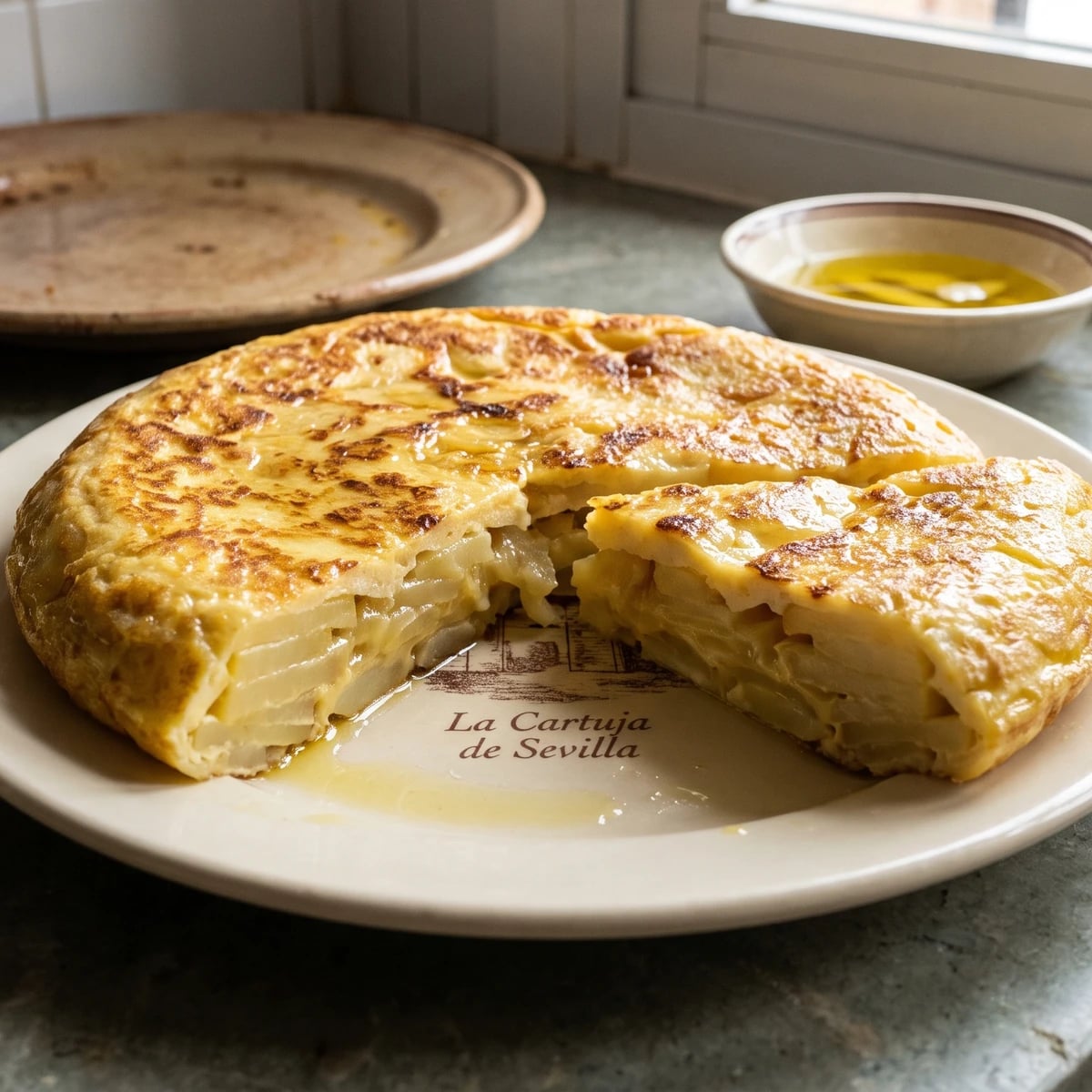
Tortilla de Patatas
Created by Chef Isabel
Tortilla de patatas belongs to every region of Spain: potatoes softened slowly in olive oil, folded through egg, and turned in one committed flip for a golden outside and tender centre.
Tortilla de patatas has no single regional surname. Navarra gives us one of its earliest written records, but every region of Spain has taken the dish into its home kitchens. What makes it tortilla is the thick, round marriage of potato and egg, browned gently on both sides and tender within, not crisp potatoes with an omelette poured over them.
The potatoes decide whether it works. Slice them about 3mm thick and cook them slowly in plenty of olive oil until they bend, crush easily, and taste almost sweet. You're poaching, not crisping. That soft potato absorbs the beaten egg and gives the tortilla its close, creamy middle. Drain it well, salt it away from the hot oil, and let it sit in the egg for ten minutes before it returns to the pan.
If you can't find the Monalisa or Kennebec potatoes common in Spanish kitchens, use Yukon Gold or another yellow all-purpose potato. It will be a little firmer, but it holds together well and absorbs the egg properly. Use fresh eggs and ordinary good olive oil. No hace falta haber pisado España, you don't need to have set foot in Spain.
Then comes the flip. Use a flat plate wider than the pan, cover the pan completely, and turn it in one clean movement. Hesitation makes more trouble than speed. My Margin says only this: dry plate, hot pan, commit. Siempre sale, si lo sigues, it turns out if you follow it.
Ingredients
waxy or all-purpose potatoes
Quantity
700g peeled weight
cut into irregular 3mm slices
yellow onion (optional)
Quantity
180g
halved and thinly sliced
large eggs
Quantity
7, about 350g without shells
| Ingredient | Quantity |
|---|---|
| waxy or all-purpose potatoescut into irregular 3mm slices | 700g peeled weight |
| yellow onion (optional)halved and thinly sliced | 180g |
| large eggs | 7, about 350g without shells |
Where cooking meets culture.
Culinary guides, cultural storytelling, and the editorial depth that makes cooking meaningful.
Discover Culinary Explorer