Culinary Explorer

A cooking platform built around craft, culture, and the stories behind what we eat.
Discover Culinary Explorer
Torta de Frijol con Puerco Yucateca

Torta de Frijol con Puerco Yucateca

Created by

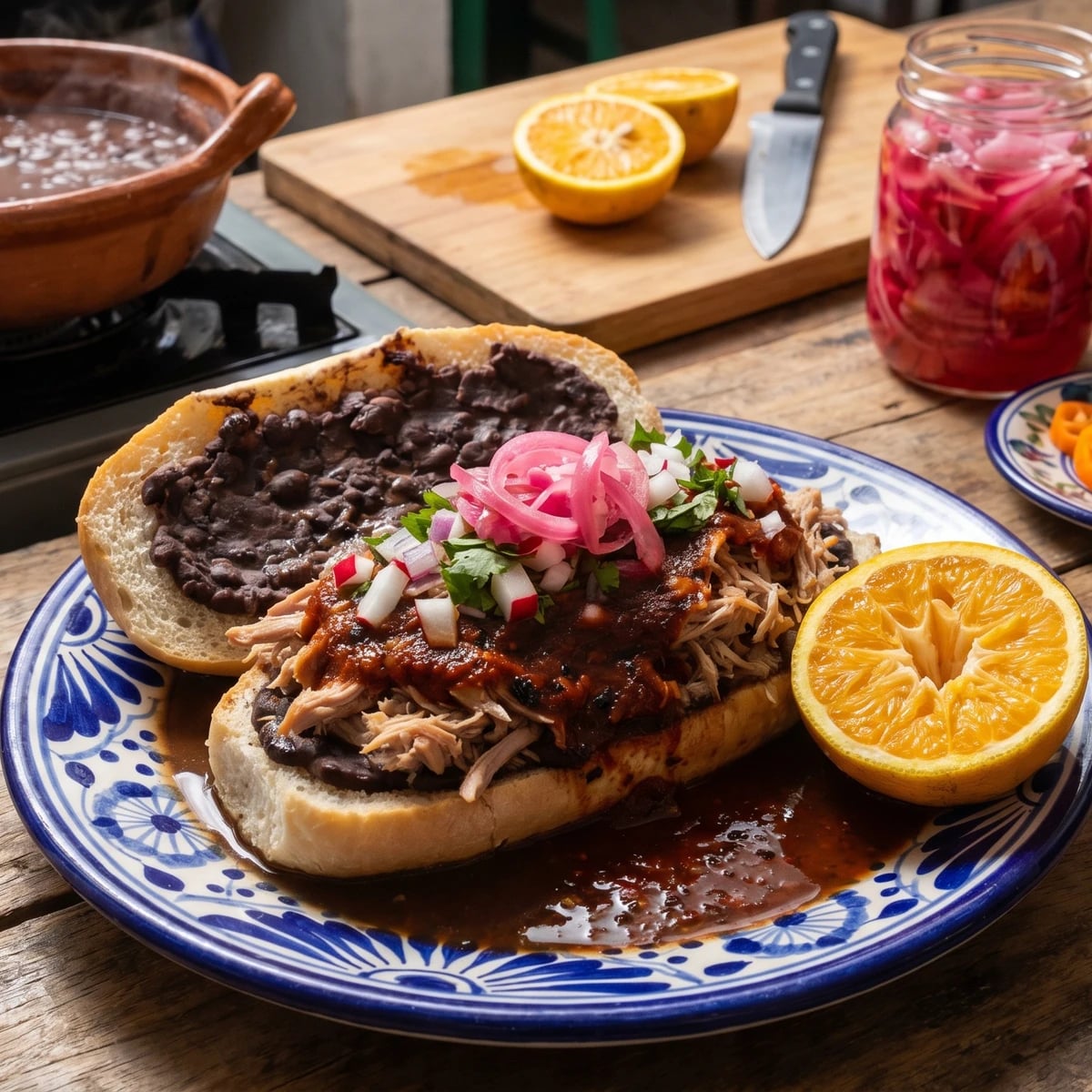
The Yucatecan Monday torta, built from the frijol con puerco pot that every Peninsula household cooks at the start of the week, mashed into pan frances and crowned with chiltomate, radish, and red onion.

Sandwiches & Wraps
Mexican
Comfort Food
Weeknight
Budget Friendly
30 min
Active Time
2 hr 30 min cook3 hr total
Yield6 tortas

This torta is from Yucatan. Not from Mexico City, not from the north, not from any pan-Mexican menu. From the Peninsula, where Mondays mean a pot of frijol con puerco on the stove and the leftovers become a torta the next day. If you have never eaten in a Merida household on a Monday, this is what you missed.

The bread is pan frances and the bread matters. Not a baguette. Not a bolillo. Pan frances, the Peninsula's own roll, with a crackling crust and a soft crumb that drinks the bean broth and the pork juices without collapsing. Pull a little crumb out of the center before you fill it. That hollow is where the dish lives. The bread is supposed to soak. If you keep it dry you have a sandwich. If you let it absorb, you have a torta yucateca.

Frijol con puerco itself is one of the oldest weekly traditions in the Peninsula, a Lunes dish so reliable that the day and the dish are practically the same word in some households. Black beans cooked with epazote and pork shoulder until both surrender. The torta is what you do with what is left. Nothing wasted. The chiltomate goes on top, charred tomato and habanero ground rough in the molcajete, and the radish and cilantro and red onion cut through the richness. A squeeze of naranja agria pulls the whole thing together. There is no cheddar here. No sour cream. No flour tortilla anywhere near this dish.

My mother was from Jalisco and she did not cook Yucatecan food. I learned this torta from a senora named Dona Olga who ran a fonda off the Mercado Lucas de Galvez in Merida, the year I spent collecting recipes across the Peninsula. She made me come back on a Monday specifically. Lunes es para frijol con puerco, she said, and the torta is for Tuesday. She was right about the order and she was right about everything else. Saber cocinar es saber vivir.

Frijol con puerco is documented in Yucatecan home cooking since the colonial period, when Spanish pork production met the pre-Columbian black bean and epazote tradition of the Maya, producing a one-pot dish that became the Peninsula's de facto Monday meal by the 19th century. The accompanying chiltomate, a charred tomato and habanero salsa, descends from older Maya cooking that ground roasted vegetables in stone mortars (the word combines the Nahuatl 'chil' for chile with the regional 'tomate'). Pan frances, despite its name, is a 19th-century Yucatecan bread that emerged when French cultural influence reached Merida during the henequen boom, and it has been the Peninsula's torta bread ever since, distinct from the bolillo of central Mexico in both crust and crumb.

The technique, the tradition, and the story behind every dish.

Discover Culinary Explorer

Ingredients

bone-in pork shoulder

Quantity

2 pounds

cut into 2-inch chunks

black beans

Quantity

1 pound

soaked overnight in cold water

white onion

Quantity

1 large

halved (half for the beans, half for the pork)

head of garlic

Quantity

1

halved crosswise

fresh epazote

Quantity

1 bunch

manteca de cerdo (pork lard)

Quantity

2 tablespoons, plus more for finishing

kosher salt

Quantity

1 tablespoon, plus more to taste

ripe Roma tomatoes

Quantity

4 large

fresh chile habanero

Quantity

1, plus more to taste

white onion (for chiltomate)

Quantity

1/2 medium

charred whole

garlic cloves (for chiltomate)

Quantity

3

unpeeled

kosher salt for the chiltomate

Quantity

1 teaspoon

pan frances (Yucatecan French rolls)

Quantity

6 pieces

the length of a small baguette

radishes

Quantity

1 bunch

finely chopped

fresh cilantro leaves

Quantity

1/2 cup

chopped

red onion

Quantity

1 medium

finely diced

naranjas agrias (sour oranges)

Quantity

2

halved (or substitute equal parts orange and lime juice)

cebolla morada encurtida (pickled red onion) (optional)

Quantity

for serving

lime wedges (optional)

Quantity

for serving

Equipment Needed

  • Heavy 6-quart stockpot for the frijol con puerco
  • Cast iron comal for charring the chiltomate vegetables and toasting the bread
  • Bean masher or sturdy wooden spoon
  • Molcajete (preferred) or blender for the chiltomate
  • Wide skillet for refrying the beans

Instructions

  1. 1

    Cook the frijol con puerco

    Drain the soaked black beans and put them in a heavy stockpot. Cover with cold water by three inches. Add half the white onion, the halved garlic head, and a generous handful of epazote. Bring to a low simmer over medium heat. After 30 minutes, add the pork shoulder chunks and the salt. Continue at a lazy simmer, partially covered, for two hours. The beans should be soft enough to crush against the side of the pot. The pork should pull apart with a fork. This is the foundational dish of Yucatecan Mondays, the same pot every household builds the week around.

    Do not salt the beans at the start. Add the salt with the pork at the 30-minute mark. Salt too early and the bean skins toughen and refuse to soften, no matter how long you cook them.
  2. 2

    Make the chiltomate

    Heat a dry comal over medium-high. Char the tomatoes, the half onion, the unpeeled garlic, and the whole habanero on the comal, turning them so they blister and blacken in patches. The tomatoes take about eight minutes. The garlic and habanero take less. The skins should be loose and the flesh just soft. Peel the garlic. Leave the char on the tomatoes. That black is the flavor.

    The habanero is the Peninsula's signature chile and there is no substitute. If you cannot tolerate the full heat, char it whole and add only half to the blender. The flavor of habanero is floral and citrusy, not just hot.
  3. 3

    Blend and fry the chiltomate

    Transfer the charred tomatoes, onion, garlic, and habanero to a blender with the teaspoon of salt. Pulse a few times. You want chunky, not smooth. Chiltomate is a rustic salsa, not a puree. Melt a tablespoon of manteca in a small skillet over medium heat and pour in the chiltomate. Cook for five minutes, stirring, until the salsa darkens and concentrates. Taste and adjust salt. Set aside warm.

  4. 4

    Separate the pork from the beans

    Lift the pork chunks out of the bean pot with a slotted spoon. Set them on a cutting board and shred or chop them into rough pieces. Discard the spent epazote, onion, and garlic from the beans. Reserve the bean broth in a separate bowl. You will need some of it back.

  5. 5

    Mash the beans into a refried paste

    Heat the remaining tablespoon of manteca in a wide skillet over medium heat. Add the cooked black beans with a small ladle of their broth. Using a bean masher or the back of a wooden spoon, crush them into a thick, spreadable paste. Add more broth if they tighten too much. You want the texture of soft refried beans, loose enough to hug the bread but firm enough to hold its shape. La manteca es el sabor. Do not skip it.

  6. 6

    Split and warm the pan frances

    Slice each pan frances lengthwise without cutting all the way through. Pull out a little of the soft crumb from the center. This makes room for the filling and lets the bread soak up the juices without falling apart. Toast the cut sides briefly on a dry comal until just warm and a little crisp at the edges. Pan frances is the bread of the Peninsula and there is no substitute. A baguette is too tough. A bolillo is closer but still wrong. Find a Yucatecan panaderia if you can.

  7. 7

    Build the torta

    Spread a generous layer of the mashed beans across the bottom half of each pan frances, all the way to the edges. Pile the shredded pork on top. Squeeze a half of naranja agria over the pork. The bread will start to soak up the juices. That is the dish. Top with the chopped radish, cilantro, and diced red onion. Spoon the warm chiltomate over the top, letting it run into the bread. Close the torta loosely and serve immediately.

  8. 8

    Serve at the table

    Set the torta on a talavera plate with extra chiltomate, pickled red onion, and lime wedges on the side. This is a working person's lunch, a Monday torta built from the bean pot every Yucatecan household has on the stove at the start of the week. Cada estado, su propia cocina, and this one belongs to the Peninsula.

Chef Tips

  • If you cannot find pan frances outside the Peninsula, the closest substitute is a fresh telera or a soft bolillo with a thin crust. A French baguette is the worst choice. It is too tough and the crumb does not absorb. A compromise is still a compromise.
  • Naranja agria is the sour orange of the Peninsula and it is not the same as regular orange. If you cannot find it at a Caribbean or Latin market, mix two parts orange juice with one part grapefruit juice and one part lime juice. Tell yourself you are missing something, because you are.
  • Make the frijol con puerco on Sunday. Eat it as a stew that night with rice and tortillas. Build the tortas the next day with what is left. This is how the dish is meant to flow through the week in a Yucatecan household. Do not rush it into a single afternoon.
  • The habanero is the chile of the Peninsula. Do not substitute jalapeno or serrano. They are different chiles with different flavors and they belong to different cuisines. If the heat is too much, use less habanero, but do not change the chile.

Advance Preparation

  • The frijol con puerco can and should be made one day ahead. It improves overnight as the beans absorb the pork broth and the epazote settles. Refrigerate the beans, pork, and broth together and rewarm gently before building the tortas.
  • The chiltomate keeps in the refrigerator for four days and is good on everything: eggs, panuchos, tacos, more tortas. Make a double batch.
  • Pickled red onion (cebolla morada encurtida) made with sliced red onion, naranja agria, and a pinch of oregano yucateco keeps for two weeks refrigerated and belongs on every Yucatecan table.

Frequently Asked Questions

Nutrition Information

1 serving (about 460g)

Calories
825 calories
Total Fat
32 g
Saturated Fat
10 g
Trans Fat
0 g
Unsaturated Fat
20 g
Cholesterol
95 mg
Sodium
1520 mg
Total Carbohydrates
87 g
Dietary Fiber
15 g
Sugars
6 g
Protein
47 g

Note: Chef personas and recipes are created with AI assistance. Cook with care: follow safe food-handling practices, check doneness with a thermometer when needed, and adapt for allergies and your kitchen.

Where cooking meets culture.

Culinary guides, cultural storytelling, and the editorial depth that makes cooking meaningful.

Discover Culinary Explorer

More from Yucatecan Panuchos, Salbutes & Handhelds

Browse the full collection