
Chef Lupita
Aporreadillo Michoacano con Huevo
Michoacán's Tierra Caliente almuerzo, where salted beef is softened, pounded, fried in lard, folded with egg and chile perón salsa, then served beside morisqueta like a proper working table.
A cooking platform built around craft, culture, and the stories behind what we eat.
Created by
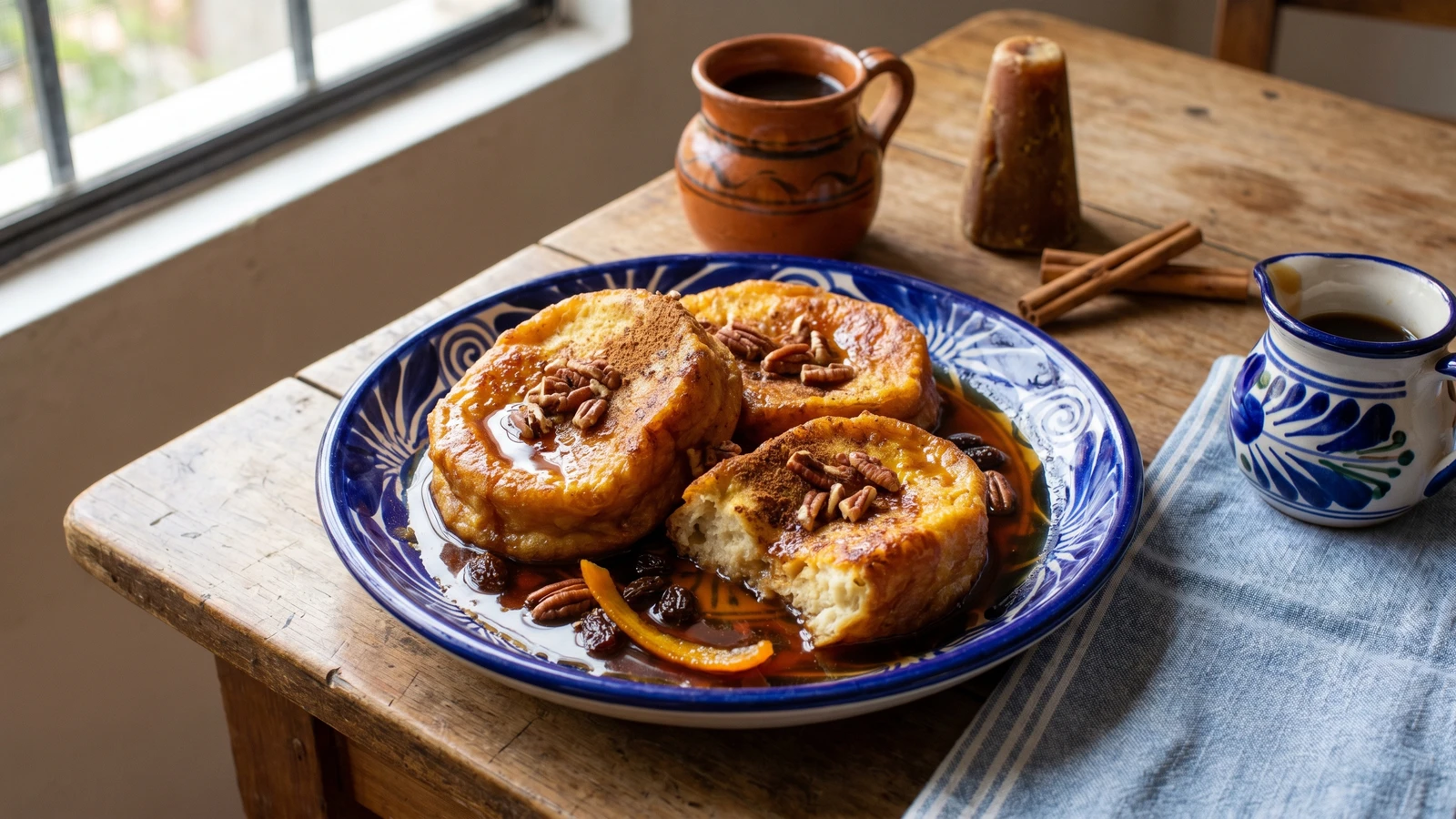
Puebla and CDMX's Cuaresma sweet, day-old bolillo soaked in spiced milk, capeado and fried in lard, then bathed in piloncillo syrup with canela and clavo. The Spanish torrija, made Mexican on the comal and in the cazuela.
Torrejas belong to Puebla and to Ciudad de Mexico, the colonial heart of the country where Spanish convent recipes were rewritten with Mexican ingredients and Mexican patience. This is a Cuaresma dish, eaten through Lent, when the Catholic calendar called for no meat and the kitchens of central Mexico turned to bread, eggs, dairy, and the dark sweetness of piloncillo.
The inheritance is Spanish. The torrija arrived with the conquistadores and the nuns, made with stale bread, milk, wine, and white sugar. Mexico kept the bones and changed the soul. Out went the wine and the refined sugar. In came piloncillo, the unrefined cane sugar cone with its smoky mineral edge, infused with canela mexicana and clavo until the syrup tastes like the inside of a colonial pantry. Out went vegetable oil or butter. In came manteca de cerdo, because lard is what the convents had and lard is what makes the crust crackle. La manteca es el sabor.
Use bolillo or telera, the everyday white breads of Mexican panaderias, and use them stale. Fresh bread collapses in the milk and shames the dish. The bread has to be a day or two old, dry enough to drink the milk without surrendering. The capeado, the whipped egg coating, is the same one you use for chiles rellenos and it puffs into a golden crust around the soaked bread.
My mother made torrejas every Viernes Santo, Good Friday, in her kitchen in Colonia Roma. The syrup simmered for an hour on the back burner while she ironed my school uniform and the apartment filled with the smell of piloncillo and clove. The recipe in her notebook is three lines long and ends with a note in the margin: 'el pan tiene que estar duro,' the bread has to be hard. She was right. Saber cocinar es saber vivir.
Torrejas descend directly from the Spanish torrija, a Lenten dish documented in Iberian cookbooks as early as the 15th century and likely older, where stale bread was soaked in milk or wine, fried, and sweetened to stretch household resources during the meatless weeks before Easter. The recipe crossed the Atlantic with Spanish nuns in the 16th and 17th centuries and took root in the convents of Puebla and Mexico City, where indigenous and mestiza cooks substituted piloncillo for refined sugar, added canela and clavo from the trans-Pacific spice trade routed through the Manila galleon, and replaced the European wine bath with a syrup. The Convento de Santa Rosa in Puebla, more famous for mole poblano, also helped codify torrejas as a Cuaresma staple, and the dish remains tied to Holy Week tables across central Mexico, though it now appears year-round on fonda breakfast menus in Puebla, Tlaxcala, and the historic center of CDMX.
Quantity
12 slices
cut about 1 inch thick
Quantity
2 cups
Quantity
1 stick (about 3 inches)
Quantity
1/4 cup
Quantity
1 teaspoon
Quantity
pinch
Quantity
4
separated
Quantity
1/2 cup, plus more as needed for frying
Quantity
2 cones (about 16 ounces total)
chopped
Quantity
3 cups
Quantity
2 sticks (about 3 inches each)
Quantity
4
Quantity
1 strip (about 3 inches)
no pith
Quantity
1/4 cup
Quantity
1/4 cup
lightly toasted
Quantity
for dusting
| Ingredient | Quantity |
|---|---|
| day-old bolillo or telera breadcut about 1 inch thick | 12 slices |
| whole milk | 2 cups |
| canela mexicana (Ceylon cinnamon) stick | 1 stick (about 3 inches) |
| granulated sugar | 1/4 cup |
| pure vanilla extract | 1 teaspoon |
| fine sea salt | pinch |
| large eggsseparated | 4 |
| manteca de cerdo (pork lard) | 1/2 cup, plus more as needed for frying |
| piloncillo coneschopped | 2 cones (about 16 ounces total) |
| water | 3 cups |
| canela mexicana sticks (for syrup) | 2 sticks (about 3 inches each) |
| whole clavos (cloves) | 4 |
| orange peel stripno pith | 1 strip (about 3 inches) |
| raisins | 1/4 cup |
| chopped pecans or sliced almonds (optional)lightly toasted | 1/4 cup |
| ground canela (optional) | for dusting |
If your bolillo is fresh, slice it the night before and leave it uncovered on the counter. Torrejas need stale bread. Fresh bread turns to mush in the milk and falls apart in the lard. The bread has to be dry enough to drink the milk without surrendering its shape. This step is the recipe. No me vengas con atajos.
In a small saucepan, warm the milk with the canela stick, sugar, vanilla, and a pinch of salt over medium-low heat. Stir until the sugar dissolves. Bring it just to the edge of a simmer, then pull it off the heat. Cover and let the canela steep for 15 minutes. The milk should taste sweetly spiced, not just sweet. Use canela mexicana, the soft Ceylon bark, not the hard cassia sticks sold as cinnamon in American supermarkets. Cassia is harsher and the flavor is wrong for this dish.
While the milk steeps, combine the chopped piloncillo, water, two canela sticks, clavos, orange peel, and raisins in a medium saucepan. Bring to a simmer over medium heat, stirring until the piloncillo dissolves completely. Let it bubble gently for 15 to 20 minutes, until the syrup coats the back of a spoon but still runs off. You want a loose syrup, not a thick caramel. The torrejas will keep soaking it up after they go in. Piloncillo is not brown sugar. It carries a smoky, mineral edge from the unrefined cane, and that is the flavor you came for.
Strain the spiced milk into a wide shallow dish and discard the canela. Lay the bread slices in the milk in a single layer. Let them soak for one minute per side. They should drink up the milk without collapsing. If a slice falls apart, your bread was not stale enough. Lift each piece out gently with a spatula and rest them on a plate.
In a clean dry bowl, beat the egg whites with a pinch of salt until they hold soft peaks. Add the yolks one at a time and beat just until incorporated. The batter should be foamy, golden, and thick enough to cling. This is the capeado, the same technique you use for chiles rellenos. The whipped whites are what give the torreja its puffy golden crust. Skip this and you have plain fried bread.
Melt the lard in a wide heavy skillet over medium heat until it shimmers. A drop of batter should sizzle on contact and float. La manteca es el sabor. Dip each soaked bread slice into the egg batter, turning to coat both sides, then lower it into the hot lard. Fry three or four at a time, not crowding the pan, for about two minutes per side. The crust should turn deep gold, the color of toasted piloncillo. Lift them out with a slotted spatula and rest them on a wire rack. Do not drain on paper towels. The towel steams the bottom and you lose the crisp.
Lower the fried torrejas into the simmering piloncillo syrup, fitting as many as the pan holds without stacking. Let them bathe for two to three minutes, spooning syrup over the tops, then turn them once. The bread will swell as it drinks the syrup. Pull the pan off the heat and let them rest in the syrup for another five minutes. This is where the dish becomes torrejas and not just fried bread. The piloncillo, the canela, the clavo all settle into the crumb.
Plate two or three torrejas per person on a shallow talavera bowl or saucer. Spoon extra syrup over the top so the bread is glistening, scatter the raisins from the syrup across each plate, and finish with toasted pecans and a dusting of ground canela. Eat them warm with strong coffee or a clay jarro of atole. Recetas probadas y garantizadas.
1 serving (about 285g)
Culinary guides, cultural storytelling, and the editorial depth that makes cooking meaningful.
Discover Culinary ExplorerChef Lupita
Michoacán's Tierra Caliente almuerzo, where salted beef is softened, pounded, fried in lard, folded with egg and chile perón salsa, then served beside morisqueta like a proper working table.

Chef Lupita
Guerrero's Costa Grande aporreado is salted cecina pounded soft, scrambled with egg, and finished in a red guajillo and chile de árbol salsa loud with garlic and cilantro.

Chef Lupita
Los Altos de Chiapas turns two-night fermented white corn into a tart-sweet atole, cooked with canela and piloncillo, then poured hot into jícaras for desayuno.

Chef Lupita
Oaxaca's Mixteca region ferments nixtamalized masa for days until it turns tart and alive, then simmers it with piloncillo and canela into a thick, warm atole served at first light in clay.