
Chef Lupita
Agua de Alfalfa
Ciudad de México's highland market agua fresca, fresh alfalfa blended with pineapple and lime until bright green, strained clean, and poured cold from the vitrolero.
A cooking platform built around craft, culture, and the stories behind what we eat.

Created by
Boca del Río's creamy coconut drink, where fresh coconut and condensed milk ride on a backbone of cane spirit. The jarras come out cold at every fandango in the Sotavento, and the aguardiente is the spine, not the afterthought.
This is a Veracruz drink. From the Sotavento, the stretch of coast south of the port where the Papaloapan meets the Gulf, and from Boca del Río in particular, where the cantinas line up against the water. A torito is built on three things: a cane spirit, sweet milk, and fruit. Aguardiente de caña, leche condensada, and in this case coco. Learn that architecture and you understand every torito there is. Cada estado, su propia cocina, and this one belongs to the jarochos.
Understand one thing before you start. The torito is not a cream cocktail. The aguardiente de caña is the spine, and the rest hangs off it. It is called torito, little bull, because it kicks. The coconut and the condensed milk are there to carry the cane spirit, not to bury it. If you make this and it tastes like a coconut milkshake, you have made the wrong drink. Taste as you go and keep the cane honest.
The coconut has to be fresh. A real mature coco, cracked open, the water saved, the white meat grated and blended until it gives up its milk. Coconut palms grow the length of the Veracruz coast, and the women who sell toritos by the pitcher would never reach for a can. I learned this drink in Boca del Río, from a woman who kept four flavors going at once in sweating glass jarras under a palapa: coco, cacahuate, guanábana, nuez. She served them so cold the glasses wore frost. The secret, she said, was nothing more than good aguardiente and patience in the freezer.
My mother was from Jalisco. Toritos were not her drink, and I will not pretend they were. But I have spent enough afternoons at the fandangos of the Sotavento, where the tarima keeps time and the jarra goes around, to tell you how it is done. Make it the day before. Let it get cold to the bone. Saber cocinar es saber vivir.
Toritos come from the Sotavento region of southern Veracruz, where sugarcane planted along the Gulf coast in the 16th century, worked largely by enslaved Africans on colonial plantations, gave rise to aguardiente de caña, the spirit at the drink's core. The name torito, little bull, points to the kick of the cane spirit beneath the sweetness of fruit and milk; the peanut version, torito de cacahuate, is the most emblematic and is often called the original, with coconut, guanábana, and nut versions following. Veracruz's Sotavento is one of Mexico's principal Afro-descendant regions alongside the Costa Chica, and Afro-Mexican peoples gained federal constitutional recognition in a 2019 reform to Article 2, then were counted for the first time in the 2020 national census.
Quantity
1 large
cracked open, water reserved, meat grated (about 2 cups)
Quantity
1 1/2 cups
reserved from the coconut, topped up with bottled coconut water if needed
Quantity
1 can (354 ml / 12 oz)
Quantity
1 can (397 g / 14 oz)
Quantity
1 to 1 1/2 cups
Quantity
1 pinch
Quantity
for dusting
Quantity
for serving
| Ingredient | Quantity |
|---|---|
| fresh mature coconutcracked open, water reserved, meat grated (about 2 cups) | 1 large |
| coconut waterreserved from the coconut, topped up with bottled coconut water if needed | 1 1/2 cups |
| evaporated milk (leche evaporada) | 1 can (354 ml / 12 oz) |
| sweetened condensed milk (leche condensada) | 1 can (397 g / 14 oz) |
| aguardiente de caña (cane spirit) | 1 to 1 1/2 cups |
| fine sea salt | 1 pinch |
| ground canela de Ceilán (Ceylon cinnamon) (optional) | for dusting |
| ice (optional) | for serving |
Pierce two of the three soft eyes of the coconut with a screwdriver or a sturdy knife and drain the water into a bowl. Save every drop, you will use it. Crack the shell by tapping firmly around its middle with the back of a heavy knife or a hammer until it splits. Pry out the white meat, peel off the brown skin with a vegetable peeler, and grate or roughly chop it. You need about two cups.
Put the grated coconut and the reserved coconut water in the blender. If the water from your coco does not reach a cup and a half, top it up with bottled coconut water. Blend on high for two full minutes, until the coconut breaks down and the liquid turns milky white. This is fresh coconut milk, and it is the reason you cracked a coco instead of opening a can.
For a torito with body, leave the base as it is. For a silkier pour, strain it through a fine-mesh sieve and press hard on the solids to wring out the milk. Either way is correct. In Boca del Río you will find both, and a few flecks of coconut settling at the bottom of the glass are nothing to apologize for.
Return the coconut base to the blender. Add the evaporated milk, the condensed milk, and the pinch of salt. The salt is not optional, it wakes the coconut up. Blend for thirty seconds until everything is smooth and even. Do not add sugar. The condensed milk has already done that work.
Pour in one cup of aguardiente de caña and blend a few seconds, just to combine. Now taste. You should get coconut and warm cane in the same sip. If the cane disappears under the sweetness, add the rest a splash at a time until it stands up straight. Remember what you are making. It is called torito because the bull has to kick. Así se hace y punto.
Pour the torito into a glass jarra or pitcher and refrigerate for at least two hours, longer if you can. This drink lives and dies by how cold it is. A warm torito is a sad thing. Twenty minutes before serving, put your glasses in the freezer so they come out wearing a skin of frost.
The torito separates as it sits, the coconut rising and the cane settling. That is normal. Stir or shake it well before you pour. Serve in the frosted glasses over a single ice cube or none at all, with a light dusting of ground canela de Ceilán on top. Pour the next round before the first is finished. That is how the jarra goes around at a fandango. Recetas probadas y garantizadas.
1 serving (about 220g)
Culinary guides, cultural storytelling, and the editorial depth that makes cooking meaningful.
Discover Culinary ExplorerChef Lupita
Ciudad de México's highland market agua fresca, fresh alfalfa blended with pineapple and lime until bright green, strained clean, and poured cold from the vitrolero.
Chef Lupita
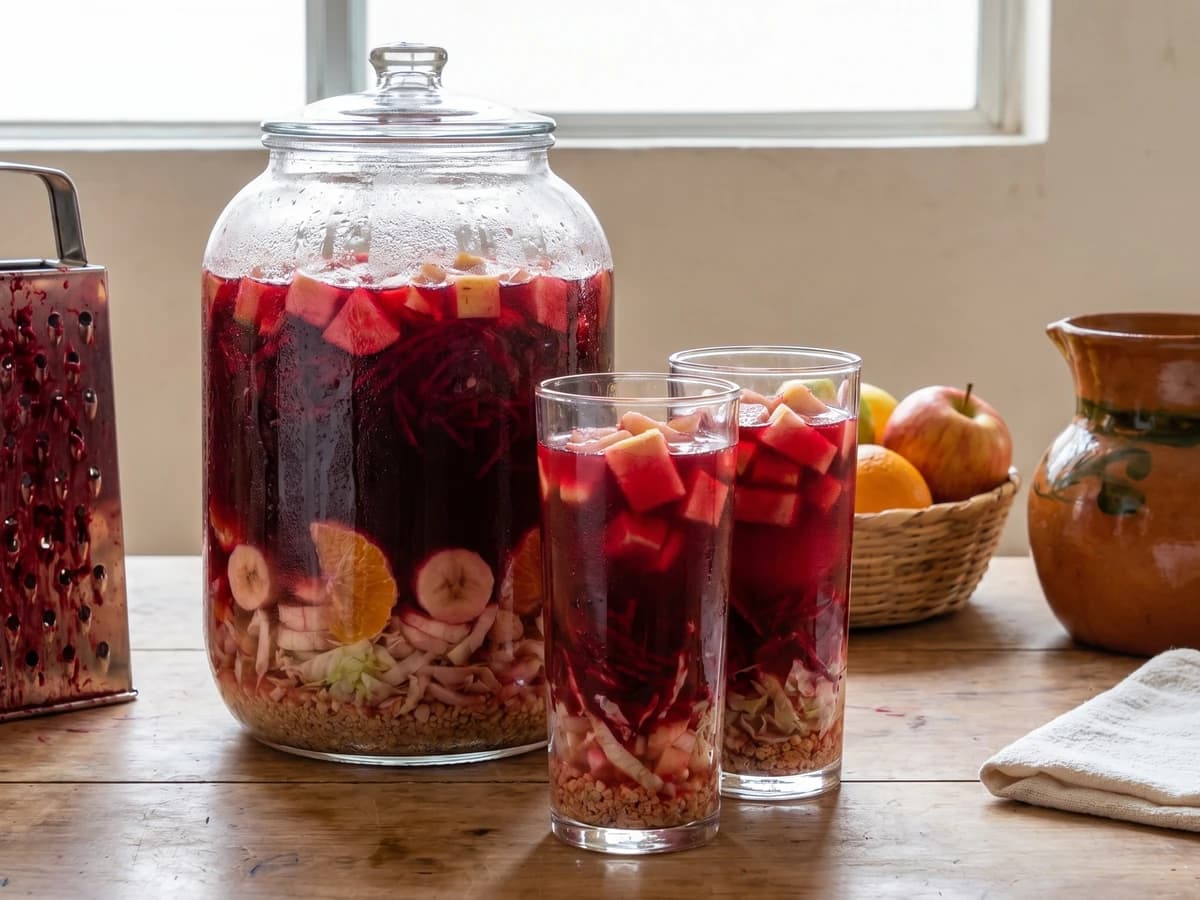
Aguascalientes' Lenten agua fresca, jewel-red from cooked beet and full of apple, banana, orange, lettuce, and ground peanuts, served cold when Holy Week meets the Feria de San Marcos.

Chef Lupita
Sonora and Sinaloa's creamy malted barley water, built on toasted cebada perla, Mexican canela, vanilla from Papantla, and evaporated milk. Pink-beige, rich, and served cold over heavy ice in a heavy glass tumbler. Liquid cookie comfort the northwest way.

Chef Lupita
Yucatán's everyday tonic of boiled chaya leaves blended with lima agria, sugar, and ice. The bright green jarra that sits on every Peninsula table from Mérida to Valladolid.