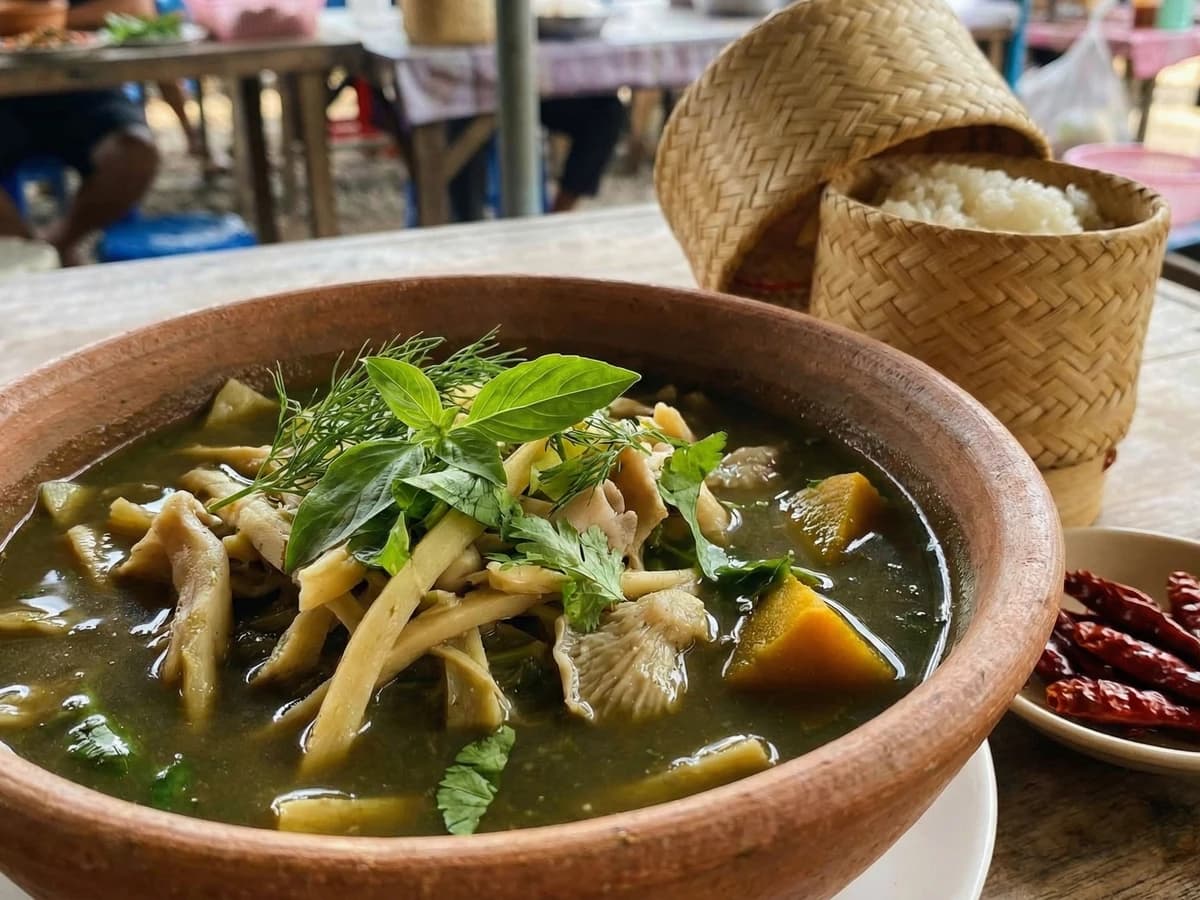
Tamarind, not lime. Ginger, not galangal. Tom som is tom yum's quiet sibling, the soup that follows the kreung tam rule, uses a different acid, and lives in home kitchens, not on tourist menus.
Soups & Stews
Thai
Weeknight
Comfort Food
15 min
Active Time
20 min cook•35 min total
Yield4 servings
Tamarind is not lime. That sounds obvious, but most people treat every sour Thai soup the same way. They shouldn't. Tom som and tom yum are two completely different systems that happen to share the word "sour."
Tom yum uses lime: raw, volatile, bright. You squeeze it in at the end, off the heat, because the acid is fragile. Tom som uses makham (tamarind): cooked, rounded, patient. Tamarind water goes into the broth and simmers. It mellows. It deepens. It becomes part of the liquid, not a last-second addition. Different acid, different method. That's the system talking.
Here's what makes tom som interesting for anyone who's learned the kreung tam foundation: this soup uses a paste. A light one. Shallots, dried chilies, kapi (shrimp paste), pounded in the mortar and cooked into the broth. Tom yum breaks the kreung tam rule by infusing whole herbs. Tom som follows it. The mortar comes back. Krok ก่อน. And the aromatics change with the acid. Tom yum gets galangal, lemongrass, kaffir lime leaves. Tom som gets ginger. Just ginger. Sliced into matchsticks, simmered until it softens. Ginger's warm, peppery bite complements tamarind's mellow sourness the way galangal's citrus edge complements lime's brightness. Ajarn always said: "The aromatic follows the acid." I didn't understand what he meant until I tried swapping ginger into a tom yum and galangal into a tom som. Both tasted wrong. The system knows what it's doing.
This is grandmother soup. Nobody's filming tom som for social media. It's what gets made on a Tuesday night when the fish is fresh and the family needs feeding. My mother made it when someone was sick because ginger and tamarind settle the stomach. No drama. No presentation. Just a pot of sour soup with rice on the side. That's Central Thai home cooking at its most honest.
Tom som is likely one of Thailand's oldest soup forms, predating tom yum's international fame by centuries. The word 'som' (ส้ม) originally meant 'sour' and referred specifically to tamarind-based acidity before shifting to mean 'orange' (the fruit) in modern Thai. Tom som has remained stubbornly domestic: a Central Thai home kitchen staple that rarely appears on restaurant menus, making it one of the most underrepresented dishes in Thai cuisine's global image.
The technique, the tradition, and the story behind every dish.
firm white fish (sea bass, snapper, or snakehead/pla chon)
Quantity
400g
cut into 2-inch pieces
tamarind pulp (makham piak)
Quantity
50g
seeds removed
warm water
Quantity
3/4 cup
for dissolving tamarind
water
Quantity
4 cups
shallots (hom daeng)
Quantity
4
peeled
dried red chilies (prik haeng)
Quantity
3
deseeded and soaked in warm water 10 minutes
shrimp paste (kapi)
Quantity
1 teaspoon
ginger (khing)
Quantity
50g
peeled and cut into fine matchsticks
fish sauce (nam pla)
Quantity
3 tablespoons
palm sugar (nam tan pip)
Quantity
1 tablespoon
white radish (hua chai tao) (optional)
Quantity
100g
sliced into thin half-moons
Chinese celery (khuen chai)
Quantity
3 stalks
roughly chopped
steamed jasmine rice
Quantity
for serving
Ingredient
Quantity
firm white fish (sea bass, snapper, or snakehead/pla chon)cut into 2-inch pieces
400g
tamarind pulp (makham piak)seeds removed
50g
warm waterfor dissolving tamarind
3/4 cup
water
4 cups
shallots (hom daeng)peeled
4
dried red chilies (prik haeng)deseeded and soaked in warm water 10 minutes
3
shrimp paste (kapi)
1 teaspoon
ginger (khing)peeled and cut into fine matchsticks
50g
fish sauce (nam pla)
3 tablespoons
palm sugar (nam tan pip)
1 tablespoon
white radish (hua chai tao) (optional)sliced into thin half-moons
100g
Chinese celery (khuen chai)roughly chopped
3 stalks
steamed jasmine rice
for serving
Equipment Needed
•Granite mortar and pestle (krok), at least 8 inches diameter
•Medium stockpot or saucepan
•Fine mesh strainer for tamarind water
Instructions
1
Make the tamarind water
Put the tamarind pulp in a small bowl and pour the warm water over it. Knead it with your fingers for a minute or two, squeezing and pressing until the water turns thick and muddy brown. Strain through a fine sieve into a clean bowl, pressing the pulp against the mesh to extract every bit of flavor. Discard the fibrous leftovers. What you have now is concentrated tamarind water: sour, fruity, slightly sweet. This is your acid. It plays a completely different role than lime. Lime is sharp and volatile. Tamarind is deep and patient. It can take heat. It can simmer. It doesn't disappear the moment it hits a hot broth.
Use block tamarind pulp, not the pre-made concentrate in a jar. The concentrate is too processed and too sweet. You want the raw sourness and the slight bitterness of real tamarind. If the pulp is very dry, let it soak for 5 minutes before kneading.
2
Pound the kreung tam
In your granite mortar, pound the soaked dried chilies and shallots to a rough paste. Not smooth. You want visible shallot fibers and chili flecks. Add the kapi (shrimp paste) and pound again until it's incorporated, about ten more strikes. The smell should hit you: funky, sharp, roasted. That's three ingredients doing the work of a full curry paste. This is a light kreung tam, but it's still a kreung tam. Tom som follows the paste rule. The mortar matters here.
Ajarn always said: the kreung tam doesn't need to be elaborate to be essential. Three ingredients pounded properly will carry a soup. That's the foundation doing its job.
3
Build the broth
Bring the 4 cups of water to a boil in a medium pot. Drop the pounded paste into the boiling water and stir to dissolve. The broth will turn slightly cloudy and take on a pinkish tint from the chilies. Add the ginger matchsticks. Let it simmer for 3 minutes. The ginger's warm, peppery aroma should start filling the kitchen. This is not galangal territory. Ginger is gentler, rounder. It matches tamarind the way galangal matches lime. If you have the white radish, add it now too. It needs a few minutes to soften.
Cut the ginger into proper matchsticks, not chunks. Thin matchsticks release their flavor faster and soften in the broth. Thick slices stay tough and you end up biting into raw ginger, which is not the point.
4
Cook the fish
Slide the fish pieces into the simmering broth gently. Don't stir. Don't poke. Fish is not pork. It falls apart if you look at it too hard. Let the pieces sit undisturbed in the broth for 3 to 4 minutes until the flesh turns opaque and flakes easily. If you're using sea bass, the flesh will go from translucent to bright white. If you're using snakehead (pla chon), the traditional Central Thai choice, the texture will be firmer and more forgiving.
5
Season and finish
Pour in the tamarind water. Add the fish sauce and palm sugar. Stir once, gently, without disturbing the fish. Let it simmer for another 2 minutes so the tamarind integrates into the broth. Now taste. The balance should be: sour first, salty second, sweet barely a whisper. This soup leans sour and salty. The palm sugar is there to round the edges, not to make it sweet. Adjust. More tamarind if it's flat. More nam pla if it needs depth. Kill the heat. Scatter the chopped Chinese celery over the top. The celery goes in raw, it wilts in the residual heat and adds a grassy, peppery bite that no other herb gives. Ladle into bowls. Eat with jasmine rice. That's the law.
Chinese celery (khuen chai) is not Western celery. It's thinner, more intensely flavored, with a peppery, herbaceous bite. If you can't find it, use the leaves from regular celery hearts, which are closer in flavor than the stalks. But find the real thing if you can. It's what makes tom som taste like tom som.
Chef Tips
•Tom som and tom yum are two separate soup systems. Tom yum uses lime (added off the heat to preserve bright acidity), lemongrass, galangal, and kaffir lime leaves. Tom som uses tamarind (simmered into the broth), ginger, and a light kreung tam of shallots and dried chilies. Different acid source, different aromatics, different technique. Don't mix the systems. They exist separately for a reason.
•The traditional fish for tom som in Central Thailand is snakehead (pla chon), a freshwater fish with firm, slightly sweet flesh that holds up in broth. Sea bass and snapper work well as substitutes. Avoid delicate fish like sole or tilapia that will dissolve into the soup. You want pieces that stay intact when you ladle them.
•Some Central Thai grandmothers stir a beaten egg into the broth right before serving, creating silky ribbons of cooked egg floating through the soup. It's not universal, but it's a traditional variation worth knowing. If you try it, drizzle the beaten egg slowly into the simmering broth while stirring gently in one direction.
•Don't overdo the palm sugar. Ajarn was very clear: Thai soups lean sour and salty. The sugar rounds the tamarind's edges, that's all. If your tom som tastes sweet, you've broken the balance. Pull it back with more fish sauce and tamarind.
Advance Preparation
•Tamarind water can be made a day ahead and refrigerated. The flavor deepens slightly overnight, which is fine for a cooked acid.
•The kreung tam can be pounded up to a day ahead and stored covered in the refrigerator.
•The fish should be cut and seasoned just before cooking. Don't let it sit. Fresh fish, fresh soup. Once assembled, tom som should be eaten immediately. The ginger softens and the fish breaks down if it sits too long.
Frequently Asked Questions
Nutrition Information
1 serving (about 400g)
Calories
180 calories
Total Fat
2 g
Saturated Fat
1 g
Trans Fat
0 g
Unsaturated Fat
1 g
Cholesterol
40 mg
Sodium
1220 mg
Total Carbohydrates
19 g
Dietary Fiber
2 g
Sugars
10 g
Protein
22 g
Where cooking meets culture.
Culinary guides, cultural storytelling, and the editorial depth that makes cooking meaningful.