
Chef Lupita
Acitrón de Cidra Conventual
Puebla's convent-style acitrón, made from cidra peel instead of endangered biznaga, built through repeated syrup soakings until the cubes turn firm, translucent, and ready for rosca or chiles en nogada.
A cooking platform built around craft, culture, and the stories behind what we eat.
Created by
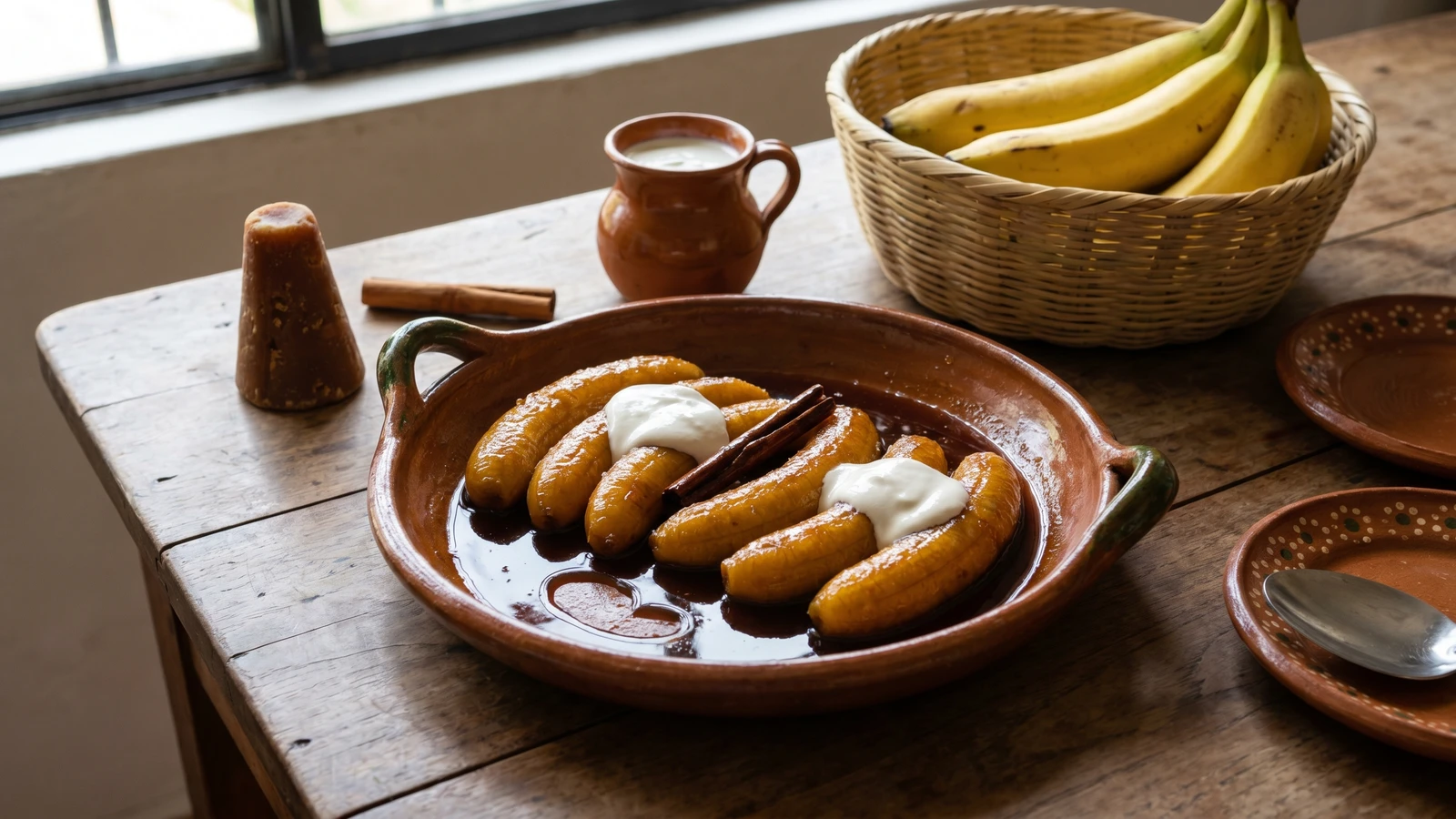
Morelos's rural sweet of whole plátano manzano baked under piloncillo and cinnamon syrup, touched with tequesquite, chilled until the syrup tightens, and served with crema.
Morelos, in the warm rural kitchens below the Chichinautzin and down through Cuautla, Yautepec, and Jojutla, is where tlatoquil belongs. It is a country sweet, not a restaurant trick: plátano manzano, piloncillo, canela, water, and the tiny disciplined pinch of tequesquite that women used before kitchen scales decided they were in charge.
Plátano manzano is not plátano macho and it is not the long Cavendish banana from the supermarket. It is small, firm, a little tart, with that apple perfume that gives the fruit its name. You use it verde-sazón, firm but not hard, because fully ripe bananas collapse into mush. No me vengas con atajos.
The syrup is Morelos on a spoon. Piloncillo comes from sugarcane country, and Morelos has lived with cane fields, mills, and household sweets for generations. The women who kept this dessert alive learned the syrup by sight: thin at first, glossy later, thick enough to cling but not so thick it turns to candy.
I was shown tlatoquil in a kitchen where the bananas cooled in a clay cazuela on the table, waiting for the afternoon heat to pass. They served it cold with crema mexicana, not dressed up, not stacked, not made into a performance. Cada estado, su propia cocina. Morelos keeps this one quiet, and that is exactly why it needs to be written down.
Tlatoquil is identified in Mexican gastronomic dictionaries as a rural Morelos sweet of plátano manzano cooked with water and piloncillo; state cultural records list tlatoquiles among the sweets that distinguish Morelos cooking. It is a mestizo dessert: banana and sugarcane entered Mexico after Spanish contact in the 16th century, while tequesquite belongs to older central Mexican Nahua cooking as an alkaline mineral seasoning. That meeting of introduced cane sweetness with indigenous technique is exactly how much of Morelos's kitchen was built.
Quantity
12 small
firm and tart, peeled and left whole
Quantity
8 ounces
chopped
Quantity
2 cups, plus 2 tablespoons warm water
Quantity
1 piece, about 3 inches
Quantity
1 tiny pinch, about 1/16 teaspoon
crushed
Quantity
1/2 cup
chilled
| Ingredient | Quantity |
|---|---|
| plátano manzano verde-sazónfirm and tart, peeled and left whole | 12 small |
| piloncillochopped | 8 ounces |
| water | 2 cups, plus 2 tablespoons warm water |
| raja canela mexicana | 1 piece, about 3 inches |
| food-grade tequesquitecrushed | 1 tiny pinch, about 1/16 teaspoon |
| crema mexicana (optional)chilled | 1/2 cup |
Use plátanos manzanos that are green-yellow and firm, not fully ripe. They should smell lightly of apple and resist your thumb. Score each peel lengthwise with a paring knife and peel carefully so the fruit stays whole. If the banana is already soft, save it for another dessert. Tlatoquil needs fruit that can hold its shape.
Crush the tiny pinch of food-grade tequesquite and stir it into 2 tablespoons warm water. Let it sit for 5 minutes, then pour only the clear liquid through a fine strainer or clean cloth. Leave any grit behind. Tequesquite is powerful. More is not better.
Put the piloncillo, 2 cups water, and canela in a small clay cazuela or heavy saucepan. Simmer over medium heat, stirring with a wooden spoon, until the piloncillo dissolves completely. Add the strained tequesquite water. The syrup should be dark amber and loose at this stage. It will thicken later in the oven and again in the refrigerator.
Lower the whole peeled plátanos manzanos into the syrup in one layer. Simmer gently for 8 to 10 minutes, turning once with a spoon. Do not let the pot boil hard. A hard boil tears the fruit and makes the syrup muddy. You want the banana to drink in the piloncillo while staying intact.
Heat the oven to 350F. Transfer the bananas and syrup to a shallow clay baking dish if they are not already in an oven-safe cazuela. Bake uncovered for 20 to 25 minutes, spooning syrup over the fruit every 7 minutes. The bananas should turn golden amber and the syrup should drag slowly from the spoon. That is the point. Pull it before the fruit collapses.
Let the tlatoquil cool in its syrup for 30 minutes at room temperature. Cover and refrigerate for at least 4 hours, preferably overnight. This dessert is served cold. The syrup tightens, the canela settles into the fruit, and the sweetness stops shouting.
Set two cold bananas per plate or serve them family-style from the cazuela. Spoon the dark piloncillo syrup over the top and finish with a spoonful of cold crema mexicana. The crema should be pourable, lightly tangy, and white against the dark syrup. Recetas probadas y garantizadas.
1 serving (about 220g)
Culinary guides, cultural storytelling, and the editorial depth that makes cooking meaningful.
Discover Culinary ExplorerChef Lupita
Puebla's convent-style acitrón, made from cidra peel instead of endangered biznaga, built through repeated syrup soakings until the cubes turn firm, translucent, and ready for rosca or chiles en nogada.

Chef Lupita
Ciudad de México's Tulyehualco alegría is popped huautli folded into piloncillo honey, pressed with peanuts, pepitas, and raisins, then cut into the rectangular bars that built a pueblo's identity.

Chef Lupita
Oaxaca's pre-Columbian amaranth bar, popped on a hot comal and bound with piloncillo, honey, and the sacred Zapotec grain that the Spanish tried, and failed, to outlaw.

Chef Lupita
Querétaro's mercado candy of popped amaranto pressed with dark piloncillo syrup, pepitas, pecans, and cacahuate, a Bajío sweet that respects the seed before it decorates the table.