
Chef Lupita
Aguascalientes Beef Tongue Pozole (Pozole de Lengua)
Aguascalientes' Bajio pozole de lengua, built with cacahuazintle hominy, tender beef tongue, chile ancho and guajillo, with xoconostle brightness and table garnishes.
A cooking platform built around craft, culture, and the stories behind what we eat.
Created by
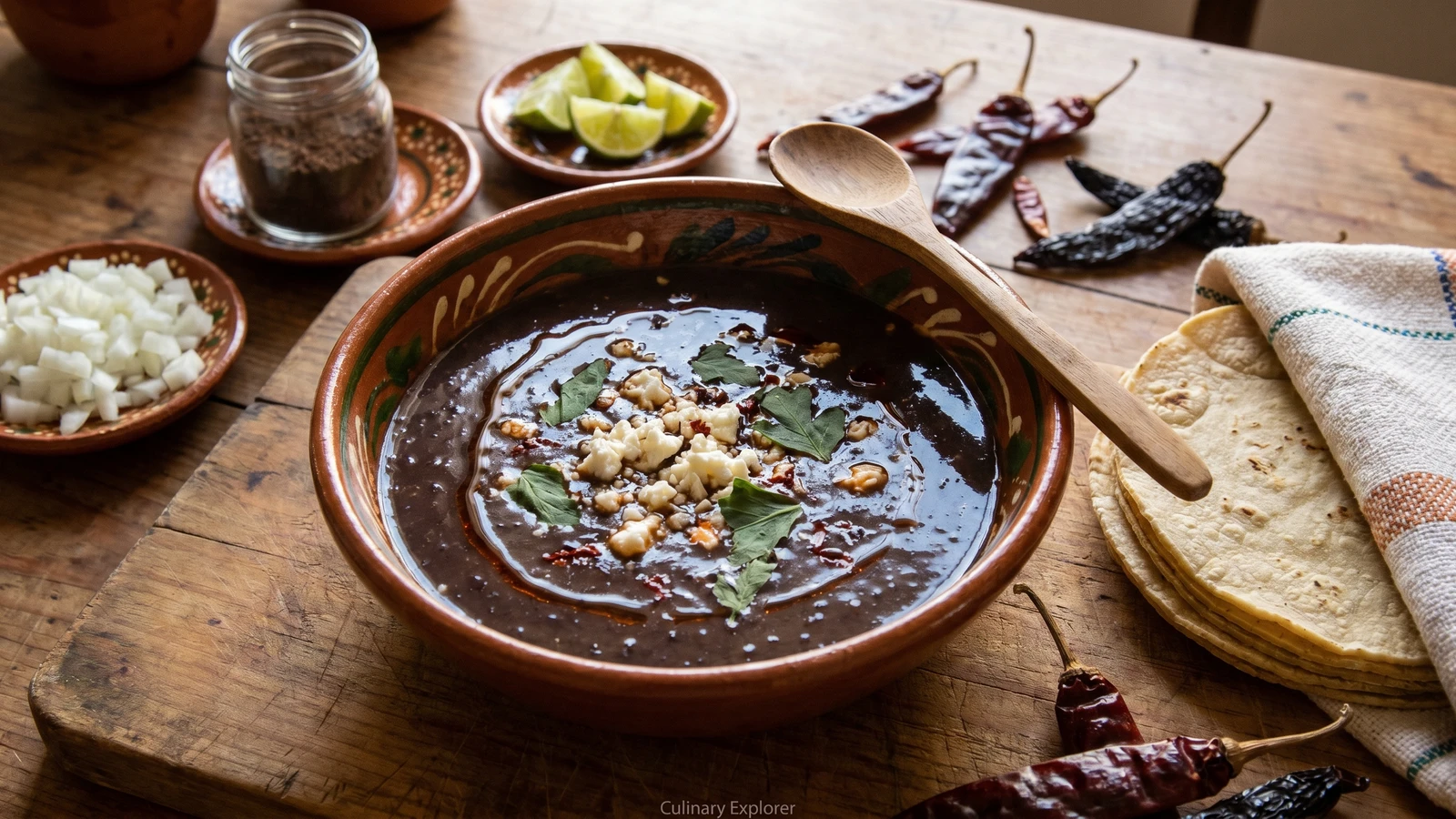
Tlaxcala's pre-Hispanic bean soup, made by toasting black beans on the comal until they crack open, grinding them to powder, and cooking them down with guajillo, pasilla, and epazote into a velvety smoky caldo.
This is Tlaxcala. Not Puebla, not the Valley of Mexico, Tlaxcala. The smallest state in the country, the one that allied with Cortes and never forgave itself, the one that holds onto its pre-Hispanic foodways harder than almost anywhere else in the central highlands.
Tlatlapas is older than the empire. The word comes from Nahuatl, tlatlapa, meaning broken or shattered, and it refers to what happens when you toast dried black beans on a hot comal until the husks split and the beans crack open. You grind them to powder. You cook the powder with chile and epazote. That is the soup. There is no soaking, no simmering whole beans for hours. The whole technique inverts everything most cooks know about how to handle a dried legume, and that inversion is exactly why this dish survived for centuries when so much else did not. It was peasant food. Survival food. Food for the days the meat ran out and the maize was running low. And it is one of the most quietly sophisticated soups in Mexican cooking.
The chiles are guajillo and pasilla. Not ancho, not mulato. Guajillo for the color and the bright sweet heat. Pasilla for that almost cocoa-like smokiness that pairs with the toasted bean and makes the whole pot taste like something cooked over a wood fire even when it was not. The epazote at the end is non-negotiable. Without it, you have a bean soup. With it, you have tlatlapas tlaxcaltecas. Cada estado, su propia cocina.
My mother did not make this. She was from Jalisco, and Jalisco does not know tlatlapas. I learned it from a señora named Doña Esperanza in a small town outside Huamantla, who toasted the beans on a clay comal over a wood fire and ground them on a metate her grandmother had carved. She told me her mother told her this was the soup that fed Tlaxcala through hard times, and that as long as a family had a handful of beans and a chile and an epazote plant in the patio, nobody went to bed hungry. Saber cocinar es saber vivir.
Tlatlapas predates the Aztec empire and is one of the few documented soups in central Mexican cuisine that survived the colonial period essentially unchanged, the toasted-bean technique requires no European ingredient and no European tool, making it a direct line back to pre-Hispanic Tlaxcalteca kitchens. The Nahuatl name 'tlatlapa' describes the cracking of the bean's husk on the comal, the very moment that defines the dish, and the soup remains a marker of regional identity in Tlaxcala alongside other native preparations like mole prieto and the maguey-based mixiotes. Black beans, frijol negro, were domesticated in Mesoamerica more than 7,000 years ago, and the toasted-and-ground preparation in tlatlapas is one of the oldest continuously practiced legume techniques in the Americas.
Quantity
2 cups
preferably criollo from a Mexican market
Quantity
4
stemmed and seeded
Quantity
2
stemmed and seeded
Quantity
1
stemmed (for more heat)
Quantity
1/2 medium, plus 1/4 for the broth
Quantity
3
peeled
Quantity
2 large sprigs
Quantity
2 tablespoons
Quantity
8 cups, plus more as needed
Quantity
1 tablespoon, plus more to taste
Quantity
for serving
Quantity
for serving
Quantity
for serving
Quantity
for serving
toasted and crumbled
Quantity
for serving
| Ingredient | Quantity |
|---|---|
| dried frijol negro (black beans)preferably criollo from a Mexican market | 2 cups |
| dried chile guajillostemmed and seeded | 4 |
| dried chile pasillastemmed and seeded | 2 |
| dried chile de arbol (optional)stemmed (for more heat) | 1 |
| white onion | 1/2 medium, plus 1/4 for the broth |
| garlic clovespeeled | 3 |
| fresh epazote | 2 large sprigs |
| manteca de cerdo (pork lard) | 2 tablespoons |
| water | 8 cups, plus more as needed |
| kosher salt | 1 tablespoon, plus more to taste |
| crumbled queso fresco (optional) | for serving |
| diced raw white onion (optional) | for serving |
| lime wedges (optional) | for serving |
| dried chile de arbol (optional)toasted and crumbled | for serving |
| hand-pressed corn tortillas (optional) | for serving |
Spread the dried black beans on a sheet pan and pick through them. Pull out any stones, broken beans, or shriveled ones. Rinse under cold water and drain. Do not soak. This is not a frijoles de la olla. The beans go into the comal dry. That is the whole point of tlatlapas. The toasting is what gives this soup its smoky depth and its name, tlatlapa means broken or shattered in Nahuatl, referring to the cracked, toasted bean.
Heat a dry cast iron comal or heavy skillet over medium heat. Add the beans in a single layer. Toast them, stirring almost constantly with a wooden spoon, for 15 to 20 minutes. The beans will darken from black-purple to deep matte black, and the kitchen will fill with a smell like roasted coffee and toasted corn. You will hear them crack and pop. That is the husk splitting. When the smell turns sharp and a few beans show pale interior crumbs, they are done. Pull them off the heat immediately.
Let the toasted beans cool for ten minutes. Transfer them to a blender or a spice grinder in batches and grind them to a fine powder. You want the texture of coarse cornmeal, not chunks. In Tlaxcala, the abuelas grind them on a metate, and the texture is finer than anything a blender will give you. A blender works. Just be patient and grind in small batches so the motor does not stall.
On the same comal, still warm, toast the guajillo and pasilla chiles for about 20 seconds per side. They should puff and turn fragrant, never blacken. The guajillo gives color and a bright sweet heat. The pasilla gives the smoky, almost cocoa-like depth that makes this caldo so distinctive. Place the toasted chiles in a heatproof bowl and cover with hot tap water. Soak for 15 minutes until soft.
Drain the chiles and transfer them to a blender with the 1/2 onion, the garlic cloves, and one cup of fresh water. Blend until completely smooth. Strain through a fine-mesh sieve, pressing on the solids with the back of a spoon. Discard the skins. You want a clean, deep red puree with no fibers.
In a heavy 4-quart cazuela or Dutch oven, melt the manteca over medium heat. When it shimmers, pour in the strained chile puree. Stand back. It will sputter aggressively. Cook, stirring constantly, for five to seven minutes, until the puree darkens, the fat starts to separate at the edges, and the raw smell of the chile gives way to something rounder and deeper. La manteca es el sabor. This step is not negotiable.
Add the 8 cups of water to the cazuela along with the quarter onion and one sprig of epazote. Bring to a gentle simmer. Now, whisking constantly to prevent lumps, rain in the ground bean powder a little at a time. Keep whisking until every bit is incorporated. The caldo will look thin at first. Do not panic. The beans need time to bloom.
Lower the heat so the caldo bubbles lazily. Add the salt. Cover partially and cook for 45 minutes to one hour, stirring every five or ten minutes so the bottom does not catch. The caldo will thicken into something between a soup and a thin atole, smooth and dark, with the kind of body that coats a wooden spoon. If it gets too thick, add hot water a half cup at a time. If it is too thin after an hour, keep simmering. The texture is right when it pours from the ladle in a slow, glossy stream.
Pull the spent quarter onion and the first epazote sprig out and discard them. Strip the leaves from the second epazote sprig, tear them roughly, and stir them in. Cook for two more minutes. Taste for salt. The caldo should taste smoky, earthy, faintly sweet from the guajillo, and unmistakably herbal from the epazote. Pregúntale a las señoras del mercado de Tlaxcala, they will tell you epazote is what makes this soup tlaxcalteca.
Ladle into clay cuencos. Set out small platitos of crumbled queso fresco, diced raw onion, lime wedges, and toasted chile de arbol crumbled fine. Each person dresses their own bowl. Hand-pressed corn tortillas go on the table wrapped in a servilleta. Eat it hot, with the tortilla folded into a half-moon and used as a spoon. Así se hace y punto.
1 serving (about 450g)
Culinary guides, cultural storytelling, and the editorial depth that makes cooking meaningful.
Discover Culinary ExplorerChef Lupita
Aguascalientes' Bajio pozole de lengua, built with cacahuazintle hominy, tender beef tongue, chile ancho and guajillo, with xoconostle brightness and table garnishes.

Chef Lupita
Veracruz's Gulf coast rice from Alvarado, built with seafood stock, tomato, chile chipotle, epazote, shrimp, fish, jaiba, and pulpo, served loose and brothy in a clay cazuela.

Chef Lupita
Costa Chica's wet salt-beef stew, built from chile costeño, guajillo, tomato, manteca, yuca, plantain, and masa dumplings, the ranching pot of Cuajinicuilapa and Pinotepa.

Chef Lupita
Michoacán's P'urhépecha atápakua is a masa-thickened sauce and stew at once, built with pork, chile guajillo, and hierbabuena added only at the end.