
Chef Lupita
Aguascalientes Beef Tongue Pozole (Pozole de Lengua)
Aguascalientes' Bajio pozole de lengua, built with cacahuazintle hominy, tender beef tongue, chile ancho and guajillo, with xoconostle brightness and table garnishes.
A cooking platform built around craft, culture, and the stories behind what we eat.
Created by
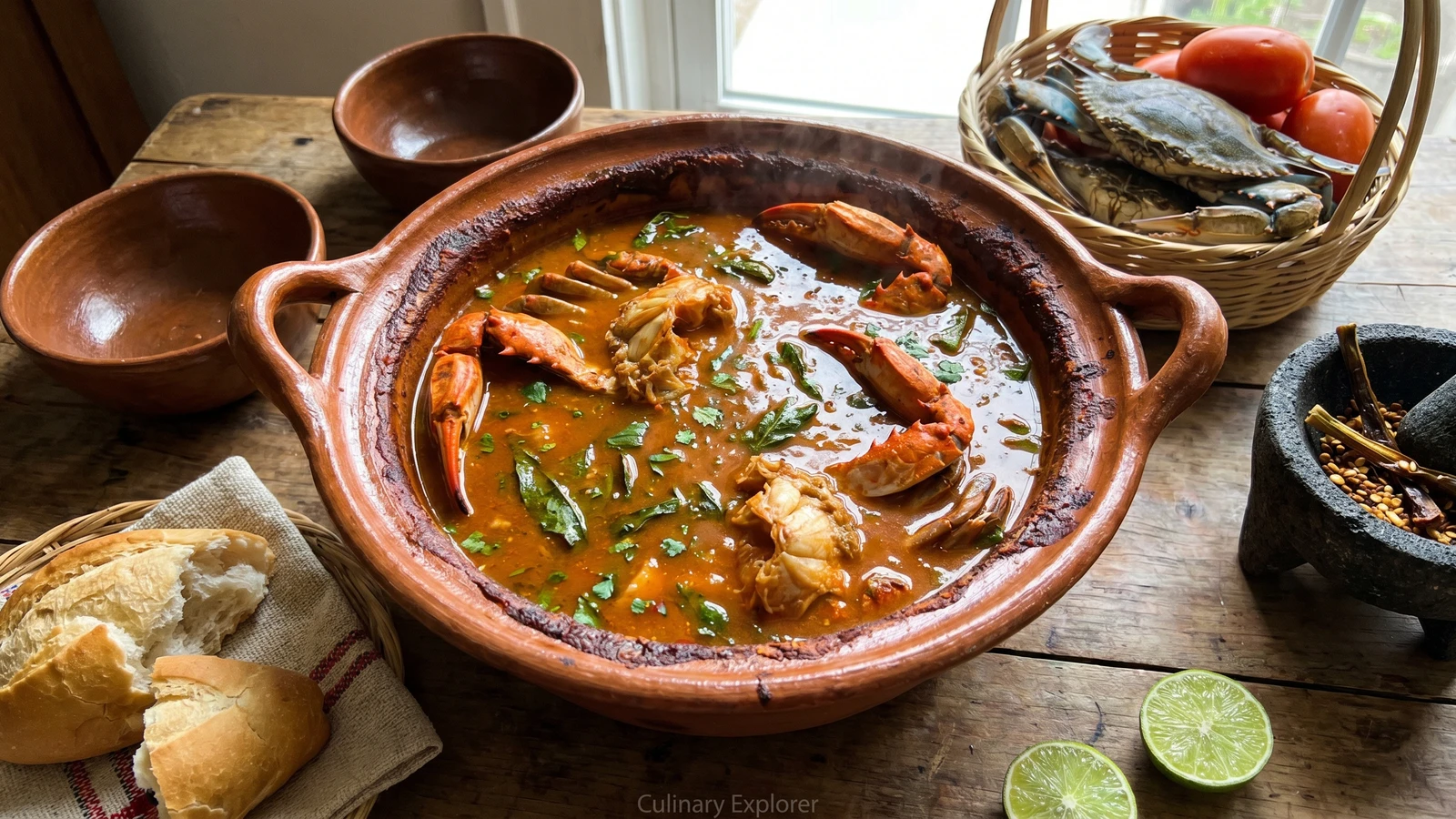
Veracruz's Sotavento crab stew, built with whole blue crabs, toasted guajillo and ancho, corn masa for body, and epazote for the river-and-Gulf flavor that belongs to Tlacotalpan.
Veracruz, the Sotavento, Tlacotalpan on the Papaloapan River. That is where this chilpachole lives. Not in a generic seafood pot. In the humid river country where blue crab comes from the lagoons and the Gulf, where women know how to make a broth taste like the place it came from.
The color comes from chile guajillo and chile ancho, with a little chile de arbol if the cook wants the broth to stand up straighter. The body comes from masa, not flour. The scent comes from epazote. That herb is not decoration. It is what tells you this is a Mexican crab stew and not a tomato soup with seafood thrown in.
In Tlacotalpan, a proper chilpachole is served with the crab still in the shell, because eating it is part of the meal. You crack, you suck the broth from the claws, you pass lime, you tear bolillo with your hands. La cocina no es decoración, es trabajo. If you want tidy food, make something else.
I learned a version like this from a señora near the market in Tlacotalpan who cleaned the jaibas without wasting a drop of their flavor. She told me, "la jaiba manda." The crab gives the order. The cook listens. Saber cocinar es saber vivir.
Chilpachole is a Gulf Coast soup with Nahua roots in its name and technique: chile, shellfish, and a thickened broth, shaped by Veracruz's river systems and ports. The dish is especially associated with Veracruz and southern Tamaulipas, but Tlacotalpan's version belongs to the Papaloapan basin, where blue crab from brackish waters meets corn masa, epazote, and dried chiles. The tomato in modern versions reflects post-conquest cooking, while the masa-thickened chile broth keeps the older Mesoamerican structure intact.
Quantity
6
cleaned and cracked
Quantity
1 pound
optional, for a stronger broth
Quantity
3
stemmed and seeded
Quantity
2
stemmed and seeded
Quantity
1
stemmed
Quantity
1 1/2 pounds
Quantity
1 medium
half sliced and half reserved for blending
Quantity
5
unpeeled
Quantity
2 tablespoons
or neutral oil if cooking for abstinence
Quantity
8 cups
Quantity
1/3 cup
mixed with 1/2 cup warm water
Quantity
2 large sprigs
Quantity
1
Quantity
1 teaspoon
Quantity
1 1/2 teaspoons, plus more to taste
Quantity
1/2 teaspoon
Quantity
for serving
Quantity
for serving
Quantity
for serving
| Ingredient | Quantity |
|---|---|
| whole blue crabs (jaiba azul)cleaned and cracked | 6 |
| crab claws or crab bodies (optional)optional, for a stronger broth | 1 pound |
| dried chile guajillostemmed and seeded | 3 |
| dried chile anchostemmed and seeded | 2 |
| dried chile de arbol (optional)stemmed | 1 |
| ripe Roma tomatoes | 1 1/2 pounds |
| white onionhalf sliced and half reserved for blending | 1 medium |
| garlic clovesunpeeled | 5 |
| manteca de cerdoor neutral oil if cooking for abstinence | 2 tablespoons |
| fish stock, crab stock, or water | 8 cups |
| fresh masa or masa harinamixed with 1/2 cup warm water | 1/3 cup |
| fresh epazote | 2 large sprigs |
| bay leaf | 1 |
| dried Mexican oregano | 1 teaspoon |
| kosher salt | 1 1/2 teaspoons, plus more to taste |
| black peppercorns | 1/2 teaspoon |
| lime halves (optional) | for serving |
| chopped cilantro (optional) | for serving |
| bolillo or warm corn tortillas (optional) | for serving |
Rinse the blue crabs under cold water. Remove the apron, lift off the top shell, discard the gills, and rinse lightly. Crack the claws and bodies with the back of a heavy knife so the broth can enter and the crab can give back its flavor. Do not scrub the crab until it tastes like nothing. The sea is part of the dish.
Heat a dry comal over medium. Toast the guajillo, ancho, and chile de arbol separately for 15 to 25 seconds per side, just until they darken slightly and smell warm. The guajillo turns bitter if you burn it. The ancho should smell like raisins and tobacco. Put the toasted chiles in a bowl and cover with hot water for 20 minutes.
On the same comal, roast the tomatoes, reserved onion half, and unpeeled garlic until blackened in spots and softened. Turn them patiently. The tomato skin should split and the garlic should feel soft inside its peel. This roasting is what gives the broth depth. Raw tomato makes a thin, nervous chilpachole.
Drain the chiles and place them in a blender with the roasted tomatoes, roasted onion, peeled roasted garlic, black peppercorns, Mexican oregano, and 1 cup of stock or water. Blend until completely smooth. Strain through a fine-mesh sieve. Press hard on the solids. Crab stew should be rustic in the bowl, not gritty in the broth.
Heat the manteca de cerdo in a wide clay cazuela or heavy pot over medium. Add the sliced onion and cook until translucent, about 4 minutes. Pour in the strained chile-tomato base. It will sputter. Stir and cook for 8 to 10 minutes, until the sauce darkens and the fat gathers at the edges. La manteca es el sabor, but Veracruz cooks also use oil during Lent. Context matters.
Add the stock, bay leaf, epazote, and salt. Bring to a steady simmer, not a violent boil. Stir in the masa slurry slowly with one hand while the other hand keeps the broth moving. The masa should thicken the soup lightly, enough to coat a spoon, not turn it into atole. No me vengas con atajos. Flour is wrong here.
Add the cracked crabs and any extra claws or bodies. Simmer uncovered for 15 to 18 minutes, turning the pieces once or twice so every shell is stained red. The crab is done when the shells turn bright orange-red and the meat smells sweet, not raw. Taste the broth and correct the salt. It should taste like chile, corn, epazote, and crab in that order, clean and firm.
Turn off the heat and let the pot rest 10 minutes. Remove the bay leaf. Leave the epazote if the leaves still look alive, remove it if it has gone tired and dark. Serve in deep clay bowls with crab pieces, plenty of broth, lime halves, cilantro, and bolillo or warm corn tortillas. Put a bowl on the table for shells. This is not polite food. It is Veracruz food.
1 serving (about 500g)
Culinary guides, cultural storytelling, and the editorial depth that makes cooking meaningful.
Discover Culinary ExplorerChef Lupita
Aguascalientes' Bajio pozole de lengua, built with cacahuazintle hominy, tender beef tongue, chile ancho and guajillo, with xoconostle brightness and table garnishes.

Chef Lupita
Veracruz's Gulf coast rice from Alvarado, built with seafood stock, tomato, chile chipotle, epazote, shrimp, fish, jaiba, and pulpo, served loose and brothy in a clay cazuela.

Chef Lupita
Costa Chica's wet salt-beef stew, built from chile costeño, guajillo, tomato, manteca, yuca, plantain, and masa dumplings, the ranching pot of Cuajinicuilapa and Pinotepa.

Chef Lupita
Michoacán's P'urhépecha atápakua is a masa-thickened sauce and stew at once, built with pork, chile guajillo, and hierbabuena added only at the end.