
Chef Klaus
Allgäuer Kaspressknödel
Pressed bread dumplings from the Alpine south, fried until the cheese catches at the edges and the middle stays soft enough for broth, kraut, or a weekday plate.
A cooking platform built around craft, culture, and the stories behind what we eat.
Created by
Thuringia's Sunday dumpling is decided at the cloth: two parts raw potato wrung bone-dry, one part cooked potato, a crisp bread cube inside, and water that only trembles.
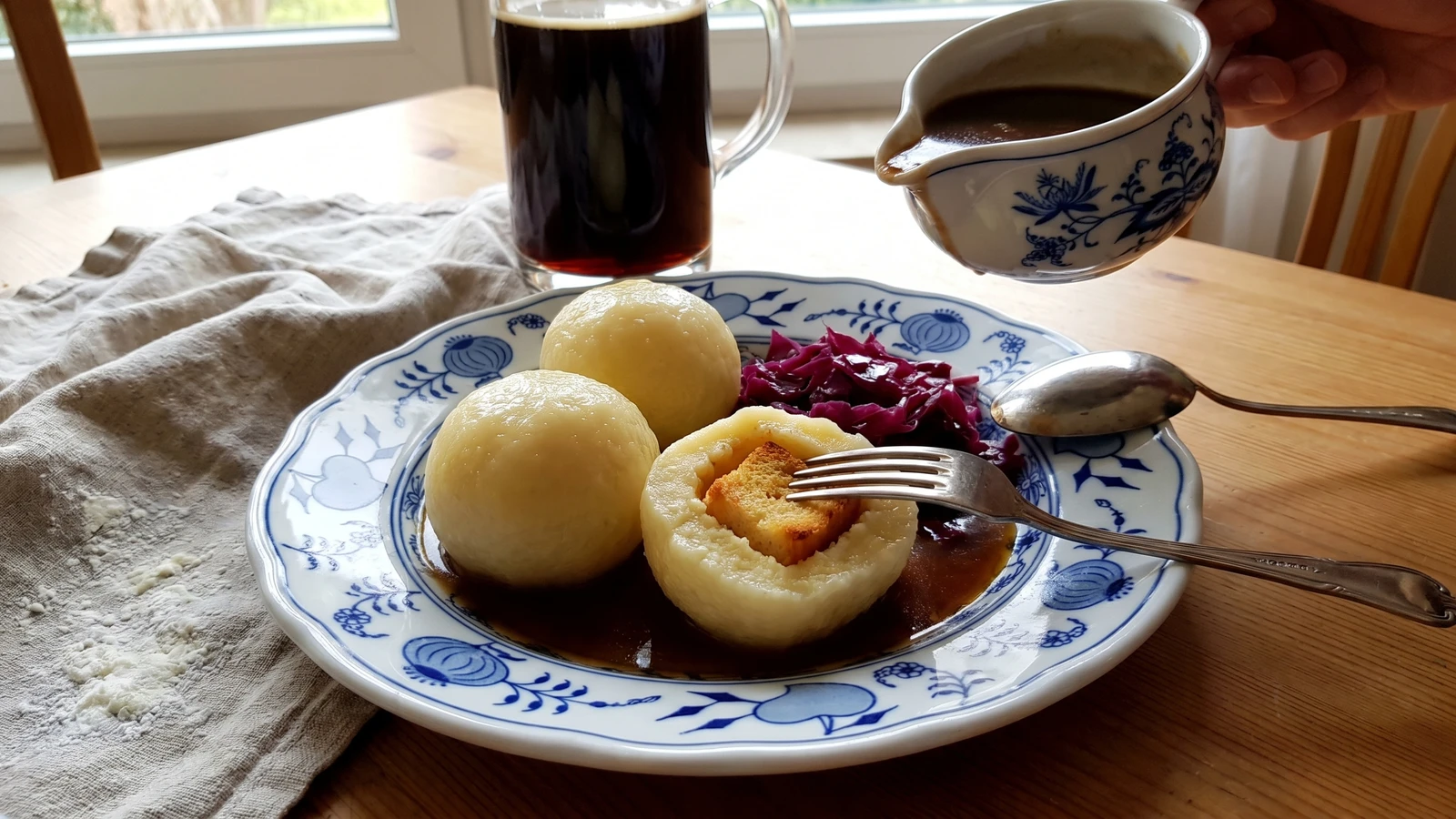
Thüringer Klöße are Sunday food from the middle of Germany, set beside roast goose, beef roulades, Sauerbraten, or a pork roast with enough sauce to justify the whole plate. In Thuringia they are not a garnish. They are the thing everyone checks first. A good Kloß, dumpling, sits pale and round, tender at the edge, springy in the middle, with a toasted bread cube hiding inside like a small reward for paying attention.
Every potato region has its answer. Saxony and Franconia lean their own way, Bavaria has dumplings with more cooked potato or bread, and the north often puts the potato to different work entirely. Im Norden anders, im Süden anders. The Thuringian line is clear: about two-thirds raw grated potato, one-third cooked potato, and no packet. Dumpling powder is not a shortcut. It is surrender in a cardboard box.
The whole dish is decided by one technique: wring the raw grated potato until it is dry enough to break apart in your hands, then return only the settled potato starch, not the water. Wet raw potato makes cloudy cooking water and a loose dumpling that tears. Dry potato gives the cooked mash something to bind, and the starch gives the Kloß its clean hold. Erst verstehen, dann kochen.
Keep the water below a boil. A rolling boil beats the dumplings apart before the starch has set; trembling water lets them firm through gently. Das braucht seine Zeit, but not fuss. Make the sauce properly too. Nicht aus dem Glas.
Potatoes became a foundation crop in central Germany after the eighteenth century, helped by Frederick II of Prussia's potato orders of the 1750s and the hard lesson that grain harvests could fail. Thuringia made the potato dumpling its Sunday marker, especially in forest and farm districts where stored potatoes carried families through winter. The Thuringian version, often called grüne Klöße because the raw potato mass can darken slightly, is distinguished from many southern dumplings by its high share of raw grated potato and the toasted bread cube in the centre.
Quantity
1.5kg
1kg kept raw for grating, 500g boiled for mash
Quantity
2 slices
cut into 1cm cubes
Quantity
30g
Quantity
2 teaspoons, plus more for cooking water
Quantity
2 to 4 tablespoons
Quantity
a small pinch
| Ingredient | Quantity |
|---|---|
| floury potatoes1kg kept raw for grating, 500g boiled for mash | 1.5kg |
| stale white bread or Brötchencut into 1cm cubes | 2 slices |
| butter | 30g |
| fine salt | 2 teaspoons, plus more for cooking water |
| potato starch (optional) | 2 to 4 tablespoons |
| freshly grated nutmeg (optional) | a small pinch |
Melt the butter in a small pan and fry the bread cubes until crisp and golden on all sides. Let them cool on a plate. They go into the middle cold, because a hot buttered cube softens the potato around it before the dumpling has set.
Peel 500g of the potatoes, cut them evenly, and boil them in salted water until they fall apart when pressed. Drain them hard, then pass them through a ricer while hot. Hot potato rices clean and dry; cold potato turns waxy and fights you.
Peel the remaining 1kg potatoes and grate them finely into a bowl of cold water. The water slows browning while you work, but it is not part of the dough. Leave wet potato in the bowl and you have already lost the shape of the Kloß.
Tip the grated potato into a clean linen cloth or Kloßsack and twist until no more liquid runs out. Wring harder than feels polite. The raw potato should crumble, not slop. Let the squeezed liquid stand five minutes, pour off the brown water, and scrape the white starch from the bottom back into the potato. Weggeworfen wird nichts, but only the starch comes back.
Work the hot riced potato into the dry raw potato with the salt and a small pinch of nutmeg if you use it. Mix firmly with a spoon or your hand until the mass comes together. If it feels loose or wet, add potato starch one tablespoon at a time. Starch fixes moisture; flour makes the dumplings dull and bready.
Wet your hands, divide the mixture into 8 portions, and shape each around one or two toasted bread cubes. Close the potato cleanly around the bread so no cube shows. An exposed cube drinks water and opens the dumpling from the inside. Shape one test dumpling first if the potatoes were watery.
Bring a wide pot of salted water to a boil, then lower it until the surface only trembles. Slide in the dumplings and cook uncovered for 20 to 25 minutes, never boiling hard. A hard boil knocks the starch loose before it sets; trembling water lets the dumplings firm through. They are done when they float and feel springy, not soft, when lifted with a slotted spoon.
Lift the Klöße out carefully and let them drain for a minute before serving. Put them beside a roast, red cabbage, and real pan sauce, because these dumplings were built to catch sauce. Cut one open at the table and let the bread cube show. Schön ist, was schmeckt.
1 serving (about 190g)
Culinary guides, cultural storytelling, and the editorial depth that makes cooking meaningful.
Discover Culinary ExplorerChef Klaus
Pressed bread dumplings from the Alpine south, fried until the cheese catches at the edges and the middle stays soft enough for broth, kraut, or a weekday plate.

Chef Klaus
The Bavarian potato salad that works because warm waxy slices drink hot broth first, then oil last, until the bowl turns glossy without mayonnaise.

Chef Klaus
White cabbage shaved thin, wilted with hot caraway vinegar, and finished with crisp Speck fat: the Bavarian salad that belongs beside bread, sausages, and roast pork.

Chef Klaus
The south's sweet-sour white cabbage, cooked from fresh Kraut rather than sauerkraut, soft enough for roast pork and sharp enough to wake the plate.