
Chef Remy
Brandy Milk Punch
The drink that launched a thousand New Orleans brunches: smooth brandy and cold whole milk shaken until frothy, kissed with vanilla, and crowned with a snowfall of fresh nutmeg that perfumes every sip.
A cooking platform built around craft, culture, and the stories behind what we eat.
Created by Chef Remy
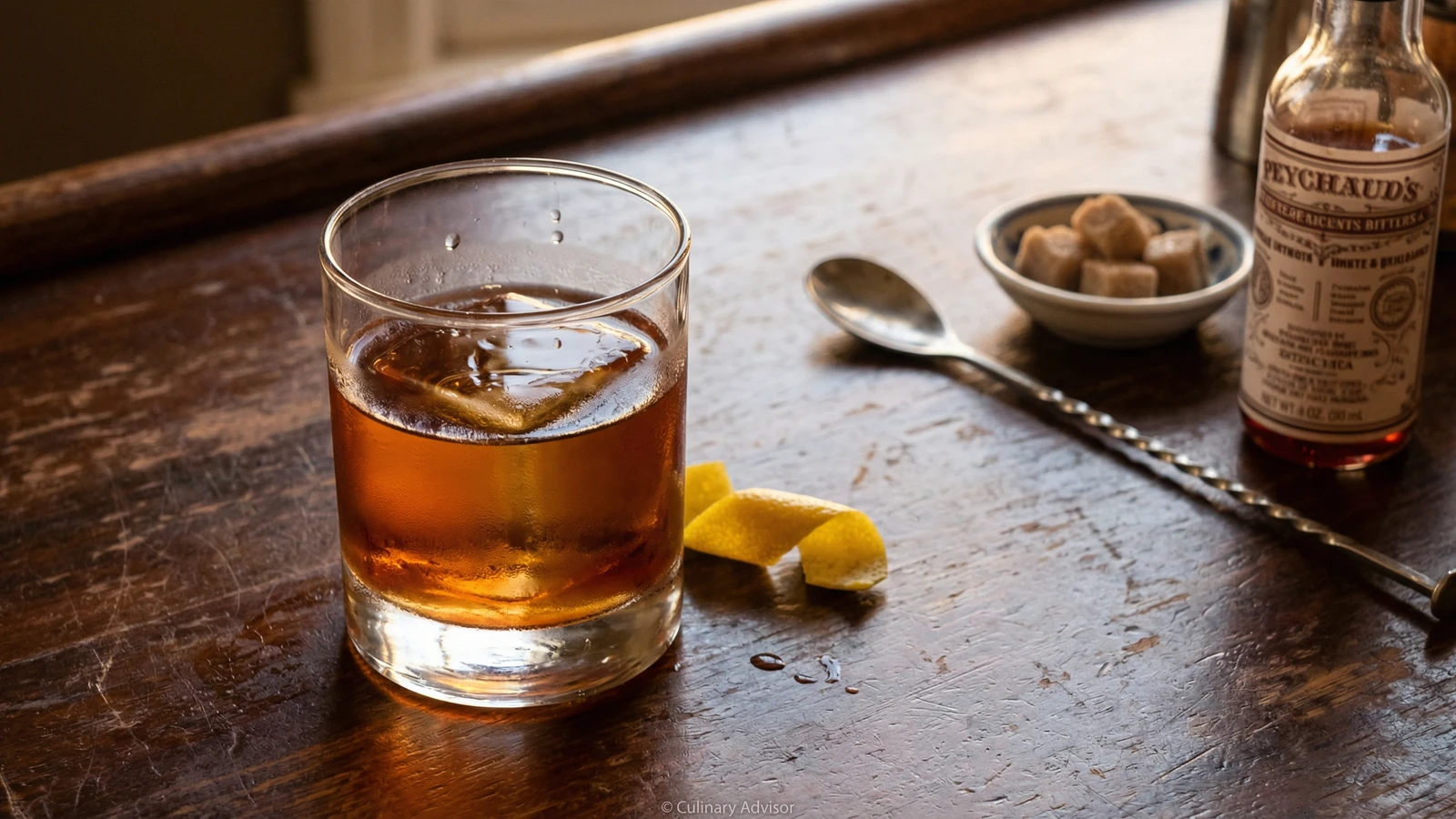
New Orleans in a glass: bold rye whiskey softened by sugar, awakened by Peychaud's bitters, and perfumed with the ghost of absinthe, the cocktail that started it all and still reigns supreme on Bourbon Street.
This is where American cocktail culture begins. Right here. The Sazerac was born in the French Quarter when apothecary Antoine Peychaud started mixing his proprietary bitters with cognac and serving it in egg cups at his Royal Street pharmacy. That was the 1830s. By the 1850s, the Sazerac Coffee House had claimed the drink as its own, and when a vine plague destroyed French cognac production, we switched to American rye whiskey without missing a beat. The cocktail survived. It always does.
At Lagniappe, I've been serving Sazeracs for over twenty years. I've watched tourists take their first sip and go silent. I've seen locals argue about the proper number of bitters dashes until closing time. This drink does that to people. It commands attention.
The ritual matters as much as the ingredients. Two glasses. One chilled with ice, then coated with absinthe. One where you build the drink itself. The transfer between them is the moment of transformation, when cold glass meets aromatic spirit and everything comes together. You cannot rush this. You should not want to.
My grandmother Evangeline never touched alcohol, but she understood ritual. She taught me that the care you put into preparation shows in the final result. Whether you're building a roux or building a cocktail, patience and attention are the secret ingredients nobody writes down.
Quantity
2 ounces
100 proof preferred
Quantity
1
or 1/2 teaspoon simple syrup
Quantity
3-4 dashes
Quantity
1 dash
Quantity
1/4 ounce
for glass rinse
Quantity
1 strip
for expressing
| Ingredient | Quantity |
|---|---|
| rye whiskey100 proof preferred | 2 ounces |
| sugar cubeor 1/2 teaspoon simple syrup | 1 |
| Peychaud's bitters | 3-4 dashes |
| Angostura bitters (optional) | 1 dash |
| absinthe or Herbsaintfor glass rinse | 1/4 ounce |
| lemon peelfor expressing | 1 strip |
Fill an Old Fashioned glass with ice and cold water. Set it aside while you build the drink. The glass needs to be cold, truly cold, because the Sazerac is served without ice. That chilled glass is all that stands between you and a lukewarm disappointment. Give it at least two minutes.
In a mixing glass, place your sugar cube. Add three to four dashes of Peychaud's bitters directly onto the sugar. The red bitters will stain the cube, softening it. Add just a splash of water, maybe a teaspoon, and muddle until the sugar dissolves completely. You should not feel any grit when you stir. If you're using simple syrup instead, just combine it with the bitters and skip the muddling.
Pour two ounces of rye whiskey into the mixing glass. If you want a touch more complexity, add one dash of Angostura bitters here. Fill the mixing glass with ice and stir for a full thirty seconds. You're chilling the mixture and diluting it slightly. This is not shaking. Shaking introduces air bubbles and clouds the drink. Stirring keeps it silky and clear. The glass should be cold to the touch when you're done.
Dump the ice water from your chilled serving glass. Immediately pour in the absinthe or Herbsaint. Swirl it around the entire interior, coating the sides and bottom. This is a rinse, not a pour. You want a thin film of that anise-scented spirit clinging to every surface. Discard the excess liquid. What remains is the perfume of the drink, the first thing your nose encounters.
Strain the stirred whiskey mixture into your absinthe-rinsed glass. No ice in the serving glass. This is how New Orleans has been doing it for over 150 years. The drink should be cold from stirring, amber and clear, maybe two fingers deep in the glass.
Cut a strip of lemon peel about an inch wide and two inches long. Hold it over the drink, yellow side facing down, and pinch it firmly to express the oils. You'll see a fine mist spray across the surface. Run the peel around the rim of the glass so the citrus oil greets your lips with every sip. Here's where tradition splits: some drop the peel in, some discard it. At Lagniappe, we discard it. The oils are delivered, the job is done. The peel floating in the glass looks untidy to my eye.
1 serving (about 70g)
Culinary guides, cultural storytelling, and the editorial depth that makes cooking meaningful.
Discover Culinary ExplorerChef Remy
The drink that launched a thousand New Orleans brunches: smooth brandy and cold whole milk shaken until frothy, kissed with vanilla, and crowned with a snowfall of fresh nutmeg that perfumes every sip.

Chef Remy
The cocktail that put New Orleans on the map for champagne drinks: crisp gin, bright lemon, and a cascade of fine bubbles that hits you with the force of a French field gun.

Chef Remy
Silky butter melting into dark rum and warm spices, the drink that turns a cold night on the gallery into a celebration, served steaming in thick mugs with a grating of fresh nutmeg on top.

Chef Remy
New Orleans' most famous cocktail: a potent, fruit-forward punch of dark and light rums married with passion fruit and fresh citrus, served in that iconic lamp-shaped glass that has beckoned revelers down Bourbon Street since 1942.