
Chef Lupita
Agua de Alfalfa
Ciudad de México's highland market agua fresca, fresh alfalfa blended with pineapple and lime until bright green, strained clean, and poured cold from the vitrolero.
A cooking platform built around craft, culture, and the stories behind what we eat.
Created by
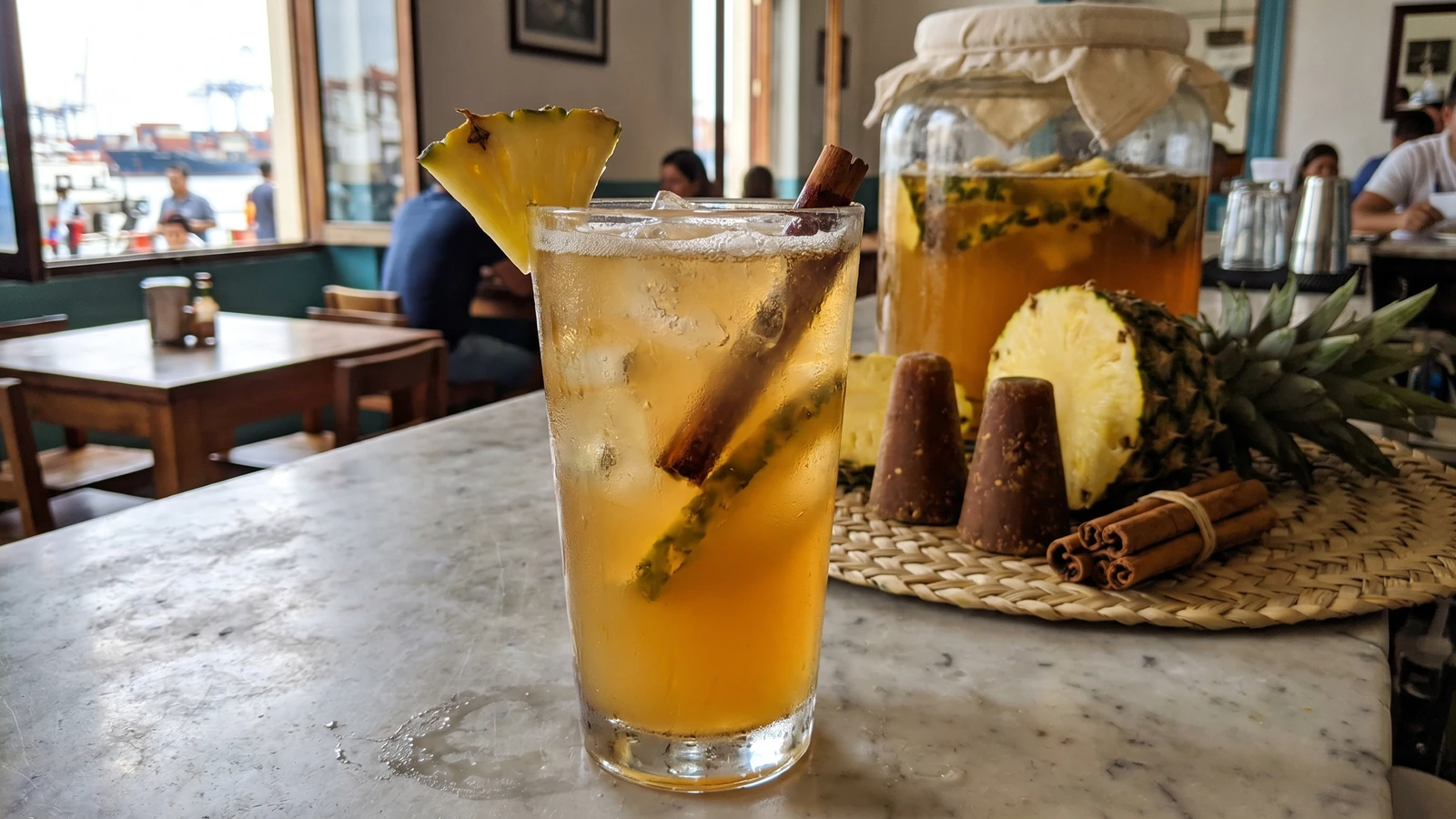
Veracruz's jarocho refresco, built from the pineapple rinds most kitchens throw away. Piña, piloncillo, and canela left under a cloth for three days until the wild yeast turns them fizzy and sweet-sour. Served cold over ice at the afromestizo table.
This is from Veracruz. From the Sotavento, the low green country south of the port, where the sugarcane grows tall and the heat does half your cooking for you. Tepache is a jarocho drink, and the jarocho table is an afromestizo table: Indigenous, Spanish, and African, three roots feeding one cup. You cannot understand this drink without understanding the people who built it.
It is made from what most kitchens throw away. The rinds of the pineapple, la cáscara, the part you peel off and discard. You scrub the fruit, keep the sweet flesh for something else, and ferment the skins with piloncillo and canela until they turn fizzy and sweet-sour and alive. The wild yeast that lives on the pineapple skin does the work. You give it sugar, warmth, and three days, nothing more. I add a few allspice berries, pimienta gorda, because it grows in Veracruz itself, in the same hot country as the cane and the fruit. The spice belongs to the land the drink comes from.
I learned to judge tepache by smell in a courtyard in Tlacotalpan, from a woman who kept her vitrolero in the shade of a mango tree. She owned no thermometer and needed none. She lifted the cloth, leaned in, and knew. Cuando huele a piña borracha, ya está, she told me. When it smells like drunk pineapple, it's ready. I wrote it in the margin of my notebook and I have never found a better instruction.
So do not rush it and do not cheat it. No beer to force the ferment, no lid screwed down tight, no clock telling you when a living thing is finished. The cloth, the warmth, the patience, and your nose. This is a 400-year-old drink from a 400-year-old community, and it asks only that you pay attention. No me vengas con atajos.
The word 'tepache' comes from the Nahuatl 'tepiatl,' a fermented drink originally made from corn; over the colonial centuries the recipe shifted to pineapple, the South American fruit that thrived in the Papaloapan basin shared by Veracruz and Oaxaca. The port of Veracruz was the main point of entry for enslaved Africans brought to New Spain, and the sugarcane estates that produced its piloncillo were worked by African hands; around 1609 Gaspar Yanga led a rebellion that secured one of the first free Black towns in the Americas, the settlement that still carries his name. A 2019 reform to Article 2 of the Constitution finally recognized Afro-Mexican peoples, and the 2020 national census was the first to count them, more than two million, many in the Sotavento and the Costa Chica.
Quantity
1
scrubbed, rind and core reserved for fermenting, flesh saved to eat
Quantity
2 cones (about 1 pound)
chopped if very hard
Quantity
2 sticks
Quantity
4
Quantity
6
lightly cracked
Quantity
3 to 4 liters (12 to 16 cups)
divided
Quantity
for serving
Quantity
for serving
| Ingredient | Quantity |
|---|---|
| large ripe pineapple (piña)scrubbed, rind and core reserved for fermenting, flesh saved to eat | 1 |
| piloncillochopped if very hard | 2 cones (about 1 pound) |
| canela de Ceilán (soft Ceylon cinnamon) | 2 sticks |
| whole cloves (clavo) | 4 |
| allspice berries (pimienta gorda)lightly cracked | 6 |
| waterdivided | 3 to 4 liters (12 to 16 cups) |
| ice (optional) | for serving |
| pineapple wedges and extra canela sticks (optional) | for serving |
Scrub the whole pineapple under cold running water, skin and all. You are going to ferment the rind, and the wild yeast that lives on that skin is your leaven, so wash off the dirt but do not scrub it sterile and never use soap. Cut off the crown and the base. Slice the rind away in wide strips and drop them into your vessel along with the core. Save the sweet flesh to eat. The skins and the core carry all the sugar and yeast this drink needs.
In a small saucepan, combine 2 cups of the water with the piloncillo, canela, cloves, and allspice. Warm over medium heat, stirring now and then, just until the piloncillo melts completely into the water. Do not boil it down. You want it dissolved, not reduced. Pull it off the heat and let it cool all the way to room temperature. This part matters: hot syrup poured over the rinds will kill the yeast, and a dead ferment goes nowhere.
Pour the cooled syrup over the pineapple rinds and core. Add the rest of the water, 3 to 4 liters in all depending on how strong you want it, until the rinds float freely. Stir with a wooden spoon. Never metal. As the drink ferments it turns acidic, and acid reacts with aluminum and tin and leaves a taste you do not want. Use a big glass vitrolero or a glazed clay olla, the way it sits on the counter all over the Sotavento.
Cover the mouth of the vessel with a piece of manta de cielo or cheesecloth and tie it down with string. The cloth keeps the fruit flies out and lets the ferment breathe. A sealed lid is wrong here. The gas needs somewhere to go. Set the vessel in a warm, shaded corner of the kitchen and leave it alone. Three days in an ordinary kitchen, two if your kitchen runs as hot as a Veracruz afternoon.
By the second day a pale foam will rise and you will hear a faint hiss when you lean close. That is the yeast eating the sugar and breathing out bubbles. Skim the foam off the top once a day with your wooden spoon and lay the cloth back down. Watch the liquid deepen toward amber. The drink is working.
Trust your nose, not the clock. Tepache that is ready smells like ripe pineapple with a winey edge, sweet and sour in the same breath. If it still smells flat and only sweet, give it another day. If it smells sharp and biting like vinegar, you waited too long.
Strain the tepache through a fine sieve into a clean jar or pitcher, pressing lightly on the rinds to get the last of it. Taste. If it is too strong or too sweet for you, loosen it with cold water. If it feels thin, stir a spoonful of piloncillo into a little warm water, let it cool, and add it back. Refrigerate until cold. The cold slows the ferment and makes it taste sharper and cleaner.
Serve in a clay jarro or a tall glass packed with ice. Drop in a stick of canela if you like, a wedge of pineapple on the rim. This is a hot-weather drink for a hot-weather state, cold and fizzy and sweet-sour, the taste of the Sotavento in the shade of a palapa. Saber cocinar es saber vivir.
1 serving (about 275g)
Culinary guides, cultural storytelling, and the editorial depth that makes cooking meaningful.
Discover Culinary ExplorerChef Lupita
Ciudad de México's highland market agua fresca, fresh alfalfa blended with pineapple and lime until bright green, strained clean, and poured cold from the vitrolero.
Chef Lupita
Aguascalientes' Lenten agua fresca, jewel-red from cooked beet and full of apple, banana, orange, lettuce, and ground peanuts, served cold when Holy Week meets the Feria de San Marcos.

Chef Lupita
Sonora and Sinaloa's creamy malted barley water, built on toasted cebada perla, Mexican canela, vanilla from Papantla, and evaporated milk. Pink-beige, rich, and served cold over heavy ice in a heavy glass tumbler. Liquid cookie comfort the northwest way.

Chef Lupita
Yucatán's everyday tonic of boiled chaya leaves blended with lima agria, sugar, and ice. The bright green jarra that sits on every Peninsula table from Mérida to Valladolid.