
Chef Takumi
Autumn Mushroom Rice (きのこの炊き込みご飯, Kinoko Takikomi Gohan)
Autumn mushrooms do most of the work here. Rinse the rice well, season the liquid before cooking, and let the pot rest so every grain comes out separate and fragrant.
A cooking platform built around craft, culture, and the stories behind what we eat.
Created by
Obon's temple plate looks complicated because every vegetable keeps its shape. The secret is careful simmering: each piece drinks the same dashi while keeping its own character.
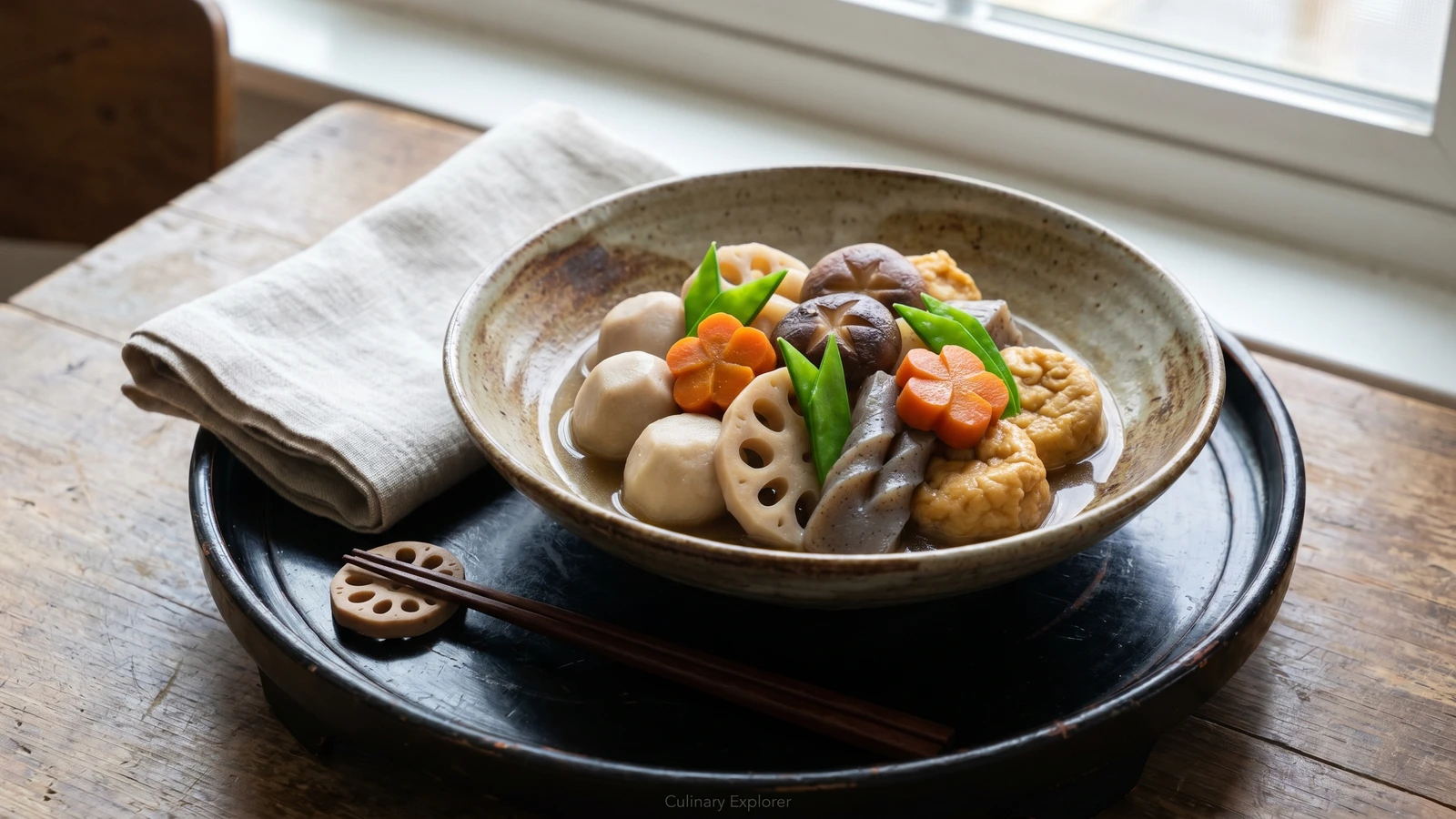
Onishime looks like a little gathering of vegetables, each one still itself: taro, lotus root, carrot, konnyaku, shiitake, ganmodoki. That neatness is what makes people nervous. It shouldn't. This is the method, not the menu: prepare each ingredient so it can cook cleanly, then let it simmer quietly until it drinks a clear konbu-shiitake stock.
The one detail that decides it is restraint in the pot. Don't stir. A wooden drop-lid, otoshibuta, keeps the broth moving over the pieces while your hands stay out of it; a circle of parchment will do the same work. Stirring breaks the taro, clouds the broth, and rubs the careful cuts off the lotus and carrot. A chopstick is for placing, not plowing.
For Obon and other memorial tables, we make this on shōjin dashi, the temple stock of konbu and dried shiitake. That's 本物, honmono, not a lesser version. The seasoning is modest, soy, mirin, and a little sugar, because the pleasure is in each vegetable keeping its own nature. Cook it ahead, let it cool in the broth, and serve it calmly. The resting is when the dish becomes itself.
Nishime began as a method before it became a fixed holiday dish: the verb nishimeru means to simmer until flavor is drawn into the ingredient and the liquid is reduced. The polite o- gives onishime, a name often used for festive or careful preparations. Regional versions appear in osechi ryōri at New Year and in Buddhist memorial meals such as Obon, with the meatless shōjin version relying on konbu and dried shiitake.
Quantity
6 mushrooms (about 30g)
soaked for dashi
Quantity
1 piece (about 10g)
Quantity
4 cups
Quantity
8 small (about 500g)
peeled and rounded
Quantity
1 tablespoon
for rubbing the satoimo
Quantity
1 block (about 250g)
cut and twisted
Quantity
1 small (about 200g)
peeled and sliced
Quantity
1/2 teaspoon
for the soaking water
Quantity
1 large (about 150g)
cut into rounds or flower shapes
Quantity
6 small
rinsed with hot water
Quantity
8
strings removed
Quantity
2 tablespoons
Quantity
1 tablespoon
Quantity
3 tablespoons
Quantity
1 tablespoon
Quantity
pinch
| Ingredient | Quantity |
|---|---|
| dried shiitake mushroomssoaked for dashi | 6 mushrooms (about 30g) |
| konbu (dried kelp) | 1 piece (about 10g) |
| cold water | 4 cups |
| satoimo (taro)peeled and rounded | 8 small (about 500g) |
| coarse saltfor rubbing the satoimo | 1 tablespoon |
| konnyakucut and twisted | 1 block (about 250g) |
| lotus rootpeeled and sliced | 1 small (about 200g) |
| rice vinegarfor the soaking water | 1/2 teaspoon |
| carrotcut into rounds or flower shapes | 1 large (about 150g) |
| egg-free ganmodoki (fried tofu fritters)rinsed with hot water | 6 small |
| kinusaya (snow peas) (optional)strings removed | 8 |
| usukuchi shōyu (light soy sauce) | 2 tablespoons |
| koikuchi shōyu (regular soy sauce) | 1 tablespoon |
| mirin | 3 tablespoons |
| sugar | 1 tablespoon |
| sea salt (optional) | pinch |
Wipe the konbu lightly with a damp cloth if it is sandy, but don't scrub it. The pale bloom on the surface is flavor. Put the konbu, dried shiitake, and cold water in a pot, cover, and soak in the refrigerator for 8 hours or overnight. Set the pot over low heat and bring it up slowly. When the water trembles and small bubbles climb the sides, lift out the konbu before it boils. Boiled konbu gives bitterness and a slick body, and this dish wants a clean broth. Simmer the shiitake 5 minutes more, then strain the liquid through cloth. Trim the stems from the shiitake caps and keep the caps for the pot.
Peel the satoimo and round off the sharp corners with a small knife. Rub the pieces with the coarse salt until the surface turns slick, then rinse. Boil them in fresh water for 4 minutes, drain, and rinse gently again. This takes away the surface starch that would cloud the final broth, and the rounded edges help the taro keep its shape.
Cut the konnyaku into 1/2-inch slices. Make a short slit in the center of each slice and pull one end through the slit to make tazuna konnyaku, the rein-shaped twist used for festive simmered dishes. Boil the pieces for 2 minutes and drain. The boil removes the alkaline smell and roughens the surface just enough for the seasoning to enter.
Peel the lotus root and cut it into 1/2-inch rounds or half-moons. Soak it for 5 minutes in water with the rice vinegar, then drain. The vinegar water keeps it pale and rinses away excess starch while preserving its crisp bite. Peel the carrot and cut it into 1/2-inch rounds, or into plum shapes if you want the holiday look. Pour hot water over the ganmodoki and drain well. That rinse removes surface oil, which would otherwise float on the broth and dull its clarity.
In a wide pot, combine 3 cups of the dashi, the usukuchi shōyu, koikuchi shōyu, mirin, and sugar. Bring it to a gentle simmer and taste. It should be a little stronger than you want at the table, because the vegetables will soften it as they cook. Add the satoimo, lotus root, carrot, konnyaku, and shiitake caps in separate clusters, ideally in one layer. Set an otoshibuta over the surface and simmer quietly for 20 minutes.
Tuck the ganmodoki into the pot, replace the drop-lid, and simmer 10 to 12 minutes more, until the satoimo is tender when pierced and the ganmodoki feels heavier with broth. Add a splash of dashi or water if the pot becomes nearly dry. Ganmodoki goes in late because it only needs to drink and warm through; cook it too long and it begins to break down.
Turn off the heat and leave everything in the broth for at least 30 minutes. Better still, cool it completely and refrigerate it overnight. This waiting is not idle time. As the pot cools, seasoning moves inward. If you try to force that by boiling harder, the edges break before the centers taste seasoned.
Blanch the kinusaya in salted boiling water for 30 seconds, then cool under running water and cut on the diagonal. Serve the onishime at room temperature or gently warmed. Lift each piece with chopsticks or small tongs and arrange in a shallow bowl with a little height: taro, lotus root, carrot, konnyaku, shiitake, ganmodoki, and the green kinusaya set last. Spoon over only a little broth. Leave at least a third of the bowl empty. That empty space, ma, lets the careful work be seen.
1 serving (about 230g)
Culinary guides, cultural storytelling, and the editorial depth that makes cooking meaningful.
Discover Culinary ExplorerChef Takumi
Autumn mushrooms do most of the work here. Rinse the rice well, season the liquid before cooking, and let the pot rest so every grain comes out separate and fragrant.

Chef Takumi
A whole salmon fillet laid on seasoned rice does nearly all the work. Cook it gently, flake it back through, and autumn has found its bowl.

Chef Takumi
Daigakuimo is simple student comfort: sweet potato cut stout, fried until the corners take color, then turned in a soy-sugar syrup that sets shiny instead of sticky.

Chef Takumi
Chawanmushi looks delicate, but the secret is plain: good dashi, strained egg, and quiet heat. Keep the steam soft and the custard sets smooth, tender, and calm.